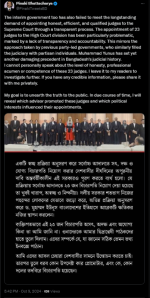
Bangladesh Socio-Political Crisis 2024 and onwards

Man, you guys are so hell bent on banning BAL! Politics and power struggle at Supreme level are not for us. Its for cool headed people who are able to think in the long term and can formate strategies without letting emotional impulses cloud their judgment.

BAL getting its ass whooped in a free and fair election would kill their narrative at home and aboard far more effectively than just trying to 'force stop' it.

No it won't. It will just give them enough time to organize the party and continue to plot until the next election and come back in a big way.
 
Apparently, Hasina moved to UAE.

I wonder if this is the work of the US to transfer Hasina to BD. India can't directly transfer her because of losing face. So, they transfer to UAE and then UAE will transfer her to BD under BD government demand. Just a possibility.

To view this content we will need your consent to set third party cookies.
For more detailed information, see our cookies page.


@Al-Zakir @Afif @UKBengali @LeonBlack08 @AbuShalehRumi @Strider
 
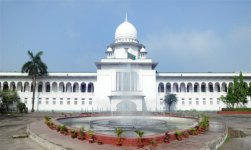
Corrupt 39 Awami judges remain in office

court_front_pic4.jpg

Lawyers of the Supreme Court bar demanded the resignation of 30 corrupt judges. A memorandum has been given to the Chief Justice highlighting the corruption of corrupt and party-minded Awami judges.

This memorandum was given under the banner of 'Common Lawyer' on Monday. Earlier, the lawyers formed a human chain in the Supreme Court bar premises.

The human chain called for the voluntary resignation of partisan and corrupt judges. Otherwise, on October 18, the list of names with photos of partisan and corrupt judges will be announced to the people in a press conference. They are also warned of taking steps to resign or remove them.

At the end of the human chain, a delegation of lawyers led by senior advocate Mohsin Rashid and Syed Mamun Mahbub, Chief Justice Dr. Syed Refat gave the memorandum to Ahmed. The memorandum reads, Chief Justice of Bangladesh We are proud to inform you that the beginning of your glorious mission and vision as the Chief Justice of Bangladesh is the product of the historic and unique revolution of 'July Revolution-2024'. In 2024, we gained our second independence from fascist rule in Bangladesh in exchange for fresh blood. You are now the Guardian of our Judiciary. But in the new Bangladesh the High Court Division and the Judicial Administration and the people sitting as Judges in the Subordinate Judiciary who (some of the judges) acted as supporters and collaborators of the fascist regime. Our hearts bleed when we see them in the judge's seat. These judges were the most corrupt in their duties. Therefore, our first and foremost request and demand to you as the guardian of the judiciary is that these partisan and corrupt judges should immediately resign from their posts on the basis of political bias and corruption for the payment of the blood debt for which 'July Revolution-2024' took place. In order to make life meaningful for those who sacrificed their lives and sacrificed their blood in the 'July Revolution'.

Meanwhile, some lists of dalkana-daldas and corrupt judges who were appointed during Awami period have been made. The lists have been shared on social media for the past two weeks. A lawyer of the Supreme Court posted on the Facebook wall and wrote, 'The high court is still intact. The judges who gave blind support to Sheikh Hasina's dictatorship are still in place. They were not only supporters of Hasina's mafia system, but also allies of fascism. A.League government appoints them on the basis of arbitrariness, Awami League sees. As a result, Hasina has tortured people in the name of justice as a tool of oppression. Instead of upholding the constitution, establishing the rule of law, he committed judicial crimes. Because of this, the victims demand that Justice Namdhari Hasina's followers not only be dismissed from their jobs, but also face trial under the law. The history of alleged corruption, nepotism and Hasina bandana of these judges is well known in the judiciary. Almost all judges appointed during Awami era are corrupt. The lawyer also published a 'shortlist' of corrupt judges. It mentions the names of 39 judges of the High Court Division. They are Justice Naima Haider, Justice MR Hasan, Abdur Rab, Sheikh Md. Zakir Hossain, Gobind Chandra Tagore, AKM Zahirul Haque, Sheikh Hasan Arif, Khasruzzaman, Justice Ruhul Quddus Babu, SM Quddus Zaman, Khizir Hayat, Mostafa Zaman Islam, Md. Badruzzaman, Justice Khurshid Alam Sarkar, Justice JBM Hasan, Justice Zafar Ahmed, Sahidul Karim, Md. Jahangir Hossain, Abu Taher Md. Saifur Rahman, Justice Iqbal Kabir, Md. Salim, Riaz Uddin Khan, Justice Khairul Alam, Shashank Shekhar Sarkar, SM Moniruzzaman, Sardar Md. Rashed Jahangir, Shahed Nuruddin, Md. Akhtaruzzaman, Izarul Haque Akand, Md. Mujibur Rahman Mia, KM Zahid Sarwar Kajal, Khondkar Diliruzzaman, Kazi Zeenat Haque, Md. Mahmud Hasan Talukder, Biswajit Debnath, KM Imrul Kayesh, AKM Rabiul Hasan, Justice Md. The names of Aminul Islam and SM Masud Hossain Dolan have been mentioned.

This lawyer has warned that if they do not resign voluntarily immediately, their 'Awami Amalnama' will be published one by one.


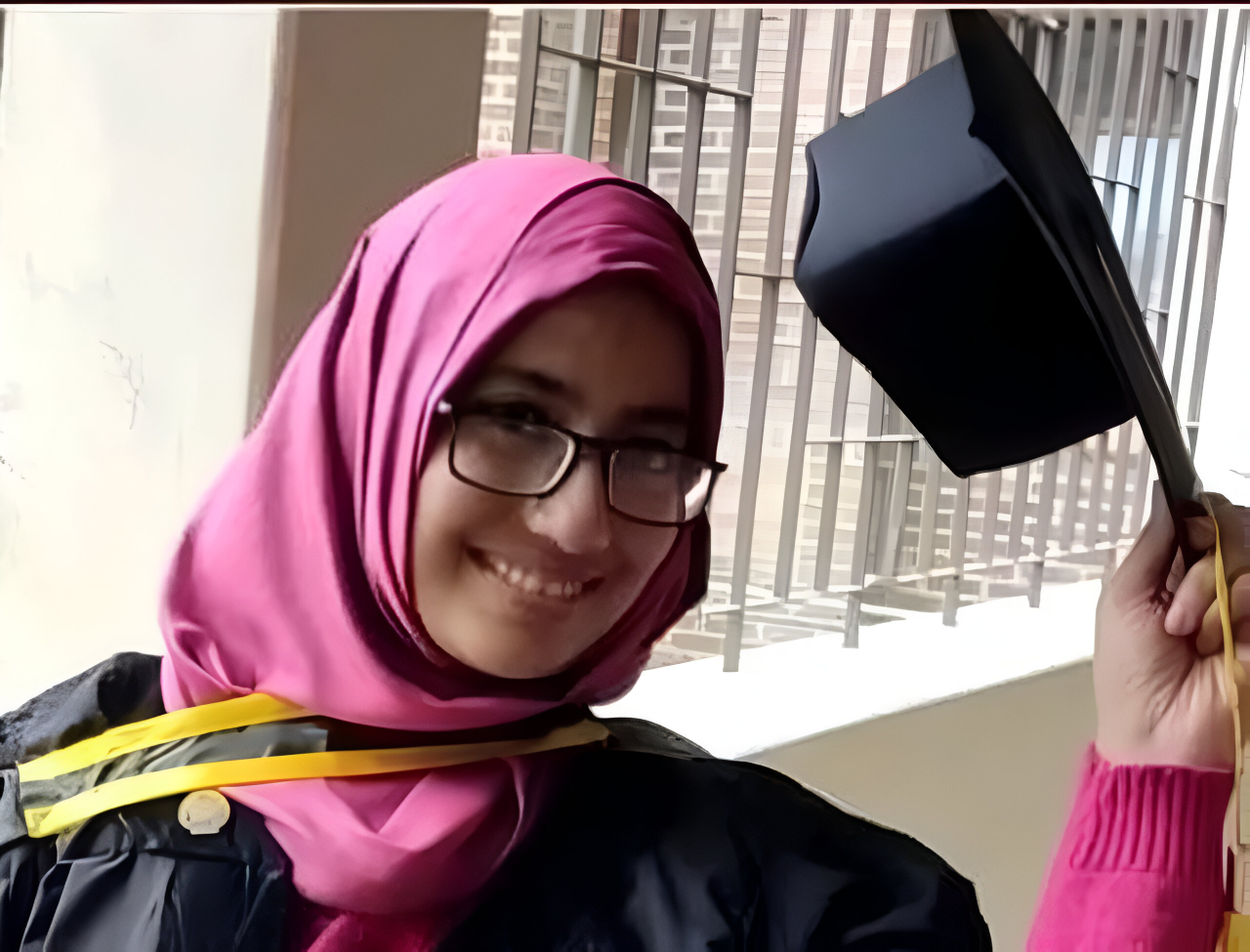
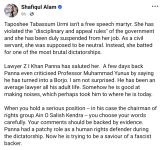
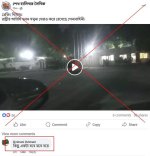
From the press chief of CG explaining the reason for her suspension. This woman is just an attention seeker and part of the BAL gang to stir up a new issue and create instability.


1000026194.png
 
@Bengal71

Ekattor Dada,

They should be banned permanently

I am a bit puzzled that a person of your stature and ability is taking such a hardline stance. Surely, you have seen the consequences of banning of popular political parties/personalities in the country which neighbours us to the West. Do you wish to replicate that in BD?

Now if BAL is truly hated in BD, surely the best course of action is to see it get beaten in a free and fair polls and get marginalised on its own?

Regards
 
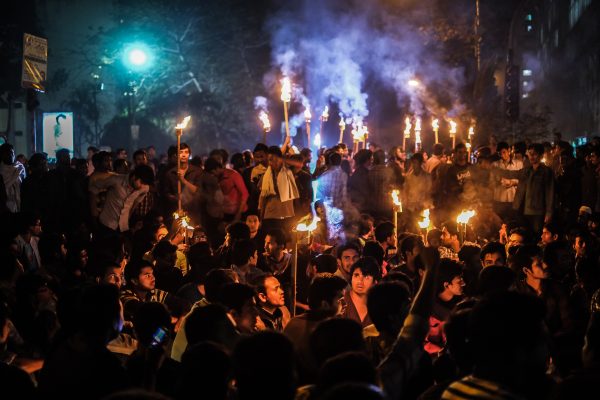
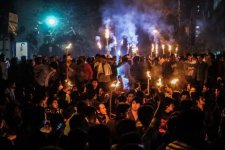
How the Shahbagh-Hefazat Ideological Divide Is Influencing Post-Revolution Bangladesh

Despite the unity during the 2024 protest movement, old divisions between secular leftists and Islamists quickly resurfaced.

By Shahadat Hossain
October 08, 2024
thediplomat_2024-10-08-134233.jpg

The ideological divide that emerged between the Shahbagh Movement and the Hefazat-e-Islam uprising in 2013 has had a lasting impact on Bangladesh’s political and social discourse. The Shahbagh Movement, largely secular with some radical leftist elements, began with demands for the death penalty for war criminals involved in Bangladesh’s 1971 Liberation War. The central slogan of the movement was “Hang the Razakars (collaborators),” referring specifically to leaders of the Bangladesh Jamaat-e-Islami (BJI) who were accused of collaborating with the Pakistani military during the 1971 war.

Lucky Akter from the Bangladesh Students’ Union (BSU), a secular student wing, was the key figure of the Shabagh platform. Later, Imran H. Sarker, who was associated with the ruling Awami League (AL), assumed domination of the movement. With this, the AL quickly moved to co-opt the Shahbagh movement for its own political benefit.

The ideological roots of Shahbagh date back to around 2007 when secular youth began using blogs as platforms for their ideas, some of which leaned toward radical leftist and atheist ideologies. Blogger Ahmed Rajib Haider, a self-proclaimed atheist and Shahbagh supporter, was killed on February 15, 2013. His blogs were later published by Amar Desh, a newspaper critical of Shahbagh.

The focus on Rajib’s writings fueled a perception that Shahbagh was an anti-Islamic movement. In response to Shahbagh, Hefazat-e-Islam (Protector of Islam), a coalition of madrassa-based Islamic organizations, emerged. Hefazat demanded the implementation of 13 points, including a blasphemy law, and staged a mass protest in Dhaka’s Motijheel area on May 5, 2013.

The government crackdown on Hefazat’s May 2013 protest led to significant casualties, with at least 61 deaths reported by human rights group Odhikar. Due to that report, the Awami League government filed a case against Odhikar’s then-Secretary Adilur Rahman Khan and the organization’s sitting director, A.S.M. Nasiruddin Elan, under section 57 of the draconian Information and Communication Technology (ICT) Act, 2006 (amended 2009). However, the crackdown’s portrayal in the media and civil society further polarized opinions. Hefazat members were often labeled as radicals or terrorists in the media, which downplayed the death toll.

Over time, the Shahbagh and Hefazat camps developed into opposing ideological factions. The Shahbagh Movement’s supporters often branded their critics as “new Razakars,” a term carrying immense historical weight in Bangladesh, as it was used to describe those who collaborated with the Pakistani military in 1971.

Even in 2024, during the protests against Sheikh Hasina’s regime, this term was used, contributing to the heated ideological environment. Hasina herself used the term “sons of Razakars” against the protesters, further fueling public anger.

The 2024 protests united a broad coalition against Hasina’s authoritarian rule, because both left-wing activists (like Shahidul Alam) and right-wing figures (like Mamunul Haque) were persecuted by the Hasina regime. The Digital Security Act (DSA) became a tool for silencing dissent. For example, cartoonist Ahmed Kabir Kishore and writer Mushtaq Ahmed were detained under the DSA for posting on Facebook satirical cartoons and comments critical of the Bangladeshi government’s response to COVID-19 pandemic. Later Ahmed died in custody, highlighting the regime’s harsh tactics.

Despite the unity during the 2024 protest movement, old divisions between Shahbagh and Hefazat quickly resurfaced in the post-revolutionary environment, reigniting ideological battles. Despite efforts to reform Bangladesh’s political and social institutions in the wake of the 2024 revolution, the ideological conflict between Shahbagh and Hefazat remains a central issue, complicating attempts to build a more inclusive and democratic society.

Prominent leftist scholars, such as Salimullah Khan and Anu Muhammad, had strongly called for Hasina’s resignation, but they continued to face criticism in post-Hasina Bangladesh, particularly from anti-Shahbagh activists. Both scholars, affiliated with the University Teachers’ Network, had played roles in organizing new platforms like the Gonotantik Odhikar Committee (Democratic Rights Committee). Their platform was also targets of online critics from the right-wing. Anu Muhammad, known for his activism against the Rampal Power Plant due to its environmental impact on the Sundarbans, even withdrew from consideration for a vice chancellor position in Jahangirnagar University (JU) due to the controversy surrounding his candidacy.

The Shahbagh-Hefazat debate has resurfaced recently with the candidacy of practicing Muslim scholars for the vice chancellor and pro vice chancellor positions at the University of Dhaka. Left-leaning activists expressed concerns about these appointments, while right-wing factions accused the critics of Islamophobia.

One of the key figures, Mohammad Ismail, a pro vice chancellor candidate for the University of Dhaka, faced intense scrutiny due to his past association with the Islami Chhatra Shibir, an Islamist student organization. Fahmidul Haq, a former professor of the University of Dhaka and a member of the leftist University Teacher Network, was among those leading the criticism. In the end, while Ismail was not appointed to the University of Dhaka, he was appointed to another rural university.

In another instance, two professors – Samina Lutfa and Kamrul Hasan – who were appointed to an education reform committee, were criticized by pro-right scholars, who labeled them as pro-LGBTQ, anti-Islamic figures. Ultimately, the government dissolved their appointment.

These examples, fueled by the Shahbagh-Hefazat debate, show how these ideological divisions continue to influence policy decisions. The debate, which has spilled into cyberspace, often exacerbates tensions and distress within society. Online attacks, where people are labeled and attacked based on ideological differences, have intensified. A striking example is Mahbub Morshed, appointed managing director of Bangladesh Sangbad Sangstha (BSS), who was criticized online as “pro-Shahbagh,” despite being a vocal critic of Shahbagh’s perceived fascist tendencies.

Mahfuj Alam, the mastermind of the 2024 revolution and special assistant to Chief Adviser Dr. Muhammad Yunus, highlighted in a recent interview that, through intellectual and cultural activities, the interim government has made efforts to bridge the ideological gaps in the country. In post-revolution Bangladesh, the government, students, and civil society have all committed to reforming political and state institutions. The youth are committed to not just institutional reforms but also to building an inclusive nation with contributions from individuals with diverse ideologies. However, the identities formed around being “pro-Shahbagh” or “anti-Shahbagh” continue to shape political discourse and influence policy, creating challenges for the government as it seeks mass support for reform initiatives.

The government has establish six reform commissions for key sectors: an election system reform commission led by Dr Badiul Alam Majumdar, a police reform commission led by Safar Raz Hossain, a judiciary reform commission led by Justice Shah Abu Naeem Mominur Rahman, an anti-corruption reform commission led by Dr. Iftekharuzzaman, a public administration reform commission led by Abdul Mueed Chowdhury, and a constitution reform commission led by Ali Riaz. The constitutional reforms commission may face significant hurdles as secular groups push for a more secular constitution, while Islamist groups apply pressure for pro-Islamic clauses to be added.

Although the 2024 revolution was driven by a spirit of unity across ideological divides to fight against the former regime’s authoritarianism, challenges remain. The police force and public administration are still recovering from the trauma of the previous regime, and while many district commissioners appointed by the Hasina government have been replaced, the process is still incomplete.

The 2024 revolution sparked a sense of collective consciousness and a drive for a democratic and humanistic Bangladesh. However, the practice of labeling and attacking opponents on social media persists. During the revolution, social media played a crucial role in countering Hasina’s narrative with memes and viral videos, often mocking her statements with counterarguments. In the post-revolution period, however, social media has also seen instances of harmful behavior, such as the social media trial of an Indigenous adolescent who claimed “Chittagong Hill Tracts (CHT) is ours” amid unrest in the CHT.

The revolution was also marked by irony, particularly in the way people reclaimed Hasina’s accusations of being Razakars. People responded to her use of the label by chanting: “Who are you, who am I? Razakar, Razakar” as an ironic counter.

Rehnuma Ahmed, a prominent leftist activist, protested on August 3, just before Hasina’s fall, with a placard saying, “Hasina, you are a killer.” More recently, she staged another protest with a placard that ironically countered radical Islamists’ labeling of opponents as “anti-Islamic,” echoing the student protesters’ words: “Who are you, who am I? Anti-religious, anti-religious. Stop tagging.”

Despite the need for unity to rebuild and reform Bangladesh, the ideological tensions from the 2013 Shahbagh-Hefazat conflict continue to influence the political landscape. This ongoing debate complicates efforts to foster the revolutionary spirit of 2024 and creates obstacles for building a more inclusive, reformed nation.

 
According to the constitution, Sheikh Hasina is still the prime minister: Rumin Farhana
Jabi representative


Published: 09 October 2024

155948_127.jpg

BNP international affairs co-editor and former MP Barrister Rumin Farhana said that Sheikh Hasina is right, she is still the Prime Minister of Bangladesh as per the current constitution of the country.

He said these things in a discussion on 'Constitution: Power not the People' organized at the gallery of the Faculty of Sociology of Jahangirnagar University on Tuesday (October 8) evening.

Taking the oath of the interim government under the current constitution, Rumin Farhana said, is there any constitution in the country or not? no If there is no constitution then how did the interim government take oath under this constitution? It is a place for open discussion. One is, if there is no constitution then how does this interim government take oath. Two, if this constitution stands then a terrible news awaits us all. Sheikh Hasina is still the prime minister. According to Article 57(3) of the Constitution, the previous Prime Minister shall remain in office until a newly elected Prime Minister takes over. Sheikh Hasina said on the telephone, I will enter quickly, I am still the Prime Minister of Bangladesh, it was not wrong according to this constitution.

Rumin Farhana urged not to mix religion with the state and said, you are the new generation. I request you with folded hands, put religion in the place of religion. Put the state in the place of the state. Never mix religion with state, religion with politics.

He said, adding Article 2A to the Constitution, it is said that the state religion of the republic will be Islam. But other religions can also be practiced peacefully in the republic. Article 8 of the same constitution states that one of the basic principles of state management is nationalism, another is socialism, the other is democracy and the other is secularism. By keeping Islam as the state religion in the constitution, how did you make secularism the principle of the state?

Regarding the amendment of the constitution, Rumin Farhana said that there should be a separate discussion on whether this constitution will keep the next generation or not. However, whether this constitution will be amended again, or whether we will write a new one, there may be a referendum.

Professor Sharmind Nilormi of the Department of Economics of Jahangirnagar University, a member of the white paper drafting committee of the interim government, and Advocate Hasnat Kayoum, the chief coordinator of the state reform movement, also spoke in the discussion. At the end of the discussion, the panelists answered the questions of the students in the question and answer session.

 
There is a rumour circulating from yesterday that there had been a rowdy meeting between the Chief Advisor Muhammad Yunus and the army chief Waqar-uz-Zaman at Jamuna House but subsequently denied by deputy press secretary to the chief adviser and coordinator Sarajis Alam -

462531772_531197899619082_3146212394431785687_n.jpg

GZY17tMasAIVLGr.jpg

462414120_531217519617120_5425353094115603133_n.jpg
 
A list of 'Traitors and the Servants of the Fascist AL Regime'
 

Attachments

Last edited:
Rumeen Farhana is actually right since if the Interim Government came into being via a revolution then the new dispensation sets the rules and is not bound by the rules of the previous regime. If the IG has taken oath under the constitution then it is applying the old rules and delegitimizing itself and so if the constitution is still in place then it is correct to say that Sheikh Hasina is still PM. Not only has the IG not suspended the constitution but kept almost all the officials appointed by the old regime in place so what the hell kind of revolution is this? Revolution means complete change but the IG wants to apply the old rules and doesn't have any new ones so according to law is illegitimate.

462393752_10164722461213636_400188219048691588_n.jpg
 
𝐈𝐒 𝐁𝐋𝐎𝐎𝐌𝐁𝐄𝐑𝐆 𝐓𝐇𝐄 𝐈𝐍𝐃𝐈𝐀𝐍 𝐆𝐎𝐕𝐄𝐑𝐍𝐌𝐄𝐍𝐓’𝐒 𝐌𝐎𝐔𝐓𝐇𝐏𝐈𝐄𝐂𝐄?

Bloomberg’s coverage of Bangladesh over the last 15 years has simply been the worst among the foreign media. In fact, I’d say it was damaging as it didn’t accurately inform readers interested in the country; rather, it misled readers into thinking that the economy was firing on all cylinders under the Sheikh Hasina-led government. Almost all its reports — by its Bangladesh stringer Mr Arun Devnath —were nothing but Bangladesh Awami League press releases/CRI talking points dressed up as cold hard news on the Bangladesh economy. Mind you, it was Bloomberg' coverage by him that embedded the narrative that Bangladesh was an economic over-performer under Hasina. What Mr Julhas Alam is/was to Associated Press, as Netra News showed, Mr Devnath is to Bloomberg, although the latter operates with more guile.

This week, Bloomberg’s reportage has taken on a menacing turn and we must call out the publication unqualifiedly. Over the past 15 years, Bloomberg was silent on Bangladesh’s steep democratic backsliding and shabby human rights record. I don’t remember seeing any strong report on Bloomberg on the past three rigged elections, extrajudicial killings, enforced disappearances, torture and judicial harassment against the Awami League’s opponents unlike The New York Times, Washington Post, The Guardian, The Economist, Financial Times and so on. I don’t remember seeing any report on the draconian Digital Security Act/Cyber Security Act or the shrinking press freedom. Basically, Bloomberg’s conscience was put in the bottle seeing the stellar economic growth and the bridges and tunnels and metro.

But after Hasina’s ouster, Bloomberg magically grew a conscience. This week, it published a long-form on the rise of Islamic extremism after Hasina fled based on bogus accounts and poor attribution.

If you want a TL;DR, the report basically gave journalistic legitimacy to all the fake news that the Indian media have been spouting since the 5th of August. Let’s count the number of ways how the Bloomberg correspondent Kai Schultz — who, by the way, is based in India — presumably with the help of Mr Devnath established the narrative that minorities are unsafe in a Hasina-less Bangladesh:

1. The report starts with an account of the controversial ICT prosecutor Ms Tureen Afroz, who, apparently, was forced to shave off her head for not wearing hijab and was tortured in her home for days soon after the fall of the Hasina government. Such a big development and all mainstream Bangladeshi media seems to have missed it! If you Google, you’ll see that the Indian media reported extensively on this alleged incident. I watched a few video interviews that Ms Afroz gave to Indian channels and her front door doesn’t look like a group of boys broke through it. And her head doesn’t look like it was shaven at all. Here, I must mention that Ms Afroz was in the news not too long ago for evicting her mother and brother from their own home and for being removed from the kangaroo court that was the ICT for professional misconduct.

2. The report says that “terrorist networks like the Islamic State have made advances in recent years” without any attribution and that the Israel war provides a “ripe environment for recruitment”.

3. The report made it a point to mention that “Hasina was praised by Indian Prime Minister Narendra Modi in particular for keeping Islamists at bay and providing a moderate foil to Pakistan, where terrorist groups have found safe haven for decades”.

4. The report states that “lawlessness rules Dhaka, where embassies are running with reduced staff, teenagers have helped direct traffic and police stations are burned-out shells”. This could have been passed off as dated information had the report not included the army chief’s desired timeline for election. Bloomberg sure had access to the current situation, which couldn’t be farther from what it stated in the report.

5. The report says that “thousands of Hindus have already tried to flee into a sensitive sliver of India that borders Tibet and Myanmar” without any attribution. India’s BSF has already denied this but never let facts get in the way of a good story.

6. The report says there have been “months of curfews” in Bangladesh. There was a curfew for just a few days and not months. Seriously, Bloomberg, this is just desperate.

7. No, Hasina didn’t ban Jamaat after the Holey attack in 2016, she banned the party just three days before her ouster.

8. The report says masked men set Hindu temples ablaze while conveniently ignoring the fact that Bangladesh Nationalist Party-BNP, Bangladesh Jamaat-e-Islami and other Islamic-minded parties and common people kept watch on places of worship of minorities in the days after Hasina fled.

9. The report also conveniently ignores the fact that Jamaat was as much an Awami League ally as it was a BNP ally.

10. The report says “For Hasina’s supporters, the vigilantism of the past few weeks is evidence that the prime minister’s tough approach to governance was necessary” — justifying her autocratic ways.

11. The report interviewed the widow of Faruk Molla, the vice-president of Shariatpur’s Charkumaria Union’s Swechasebak League. He along with his younger brother were hacked to death. His other brother is a local union parishad member. The family has strong Awami League ties but the report says Faruk “wasn’t intimately affiliated with the Awami League”. In local media reports, Faruk’s brother, who is the local UP member, did not categorically state which party the assailants belonged to, but Bloomberg definitively says those were BNP men.

12. To nicely tie up this concocted narrative, Kai Schultz returns to Tureen Afroz, who likens present-day Bangladesh to the “fight for independence from Pakistan in the 1970s”. And what happened at that time? Well, the report mentions that “10 million people — mostly in the Hindu minority — fled to neighbouring India”.

Here, I must say that the Chief Adviser GOB press wing acted utterly irresponsibly by declining to give any comment to Bloomberg for the report. They should have conveyed the government’s position in no uncertain terms on this false Indian narrative as BNP’s secretary general Mirza Fakhrul Islam Alamgir has. This is an extremely defamatory report and the government must strongly object to this.


Man, if Indian stablishment doesn't stop with their anti BD propaganda campaign on the international arena using various soft influences and indian journalists and academics in positions (which is starting to hurt us), animosity will increase significantly. @LeonBlack08 @Bengal71

India and the US have an alliance.
Of course the US media will do the bidding of India, parroting whatever Indian garbage they can come up with.
I dont think theres much we can do here.

The press is not free, nowhere.
Bloomberg will only chnage tune when a US government official tell them to do so. Like they told Bloomberg to push Indian narratives.
 
Parties like BAL dont learn.
Not because they cant but because they wont.
They wont bevause they are NOT the ones who makes desicions. Entire party echelon is a fifth coloumnist of India. They recieve funding, advise, media support and intelligence from India. These people are hired traitors.

The fact that theyre now hiding in INDIA proves it.

They only way to fight this, is by dealing it as a major COUNTERINTELLIGENCE operation. No other way around it, if Bangladesh is to remain independent. There must be a special dedicated force to root out all foreign founded dalals in BD.

When you start hearing this and that BAL politicians died in a suicide, burgulary, road accident, boat capsize etc., only then will you know that the work is being done.
 

Users who are viewing this thread

Pakistan Defence Latest

Latest Posts

Back
Top