PA MLRS, Self Propelled and towed artillery [BM-11, Fatah-I GMLRS, Fatah-II] - News, Updates & Discussions

Why still develop towed 155mm artillery?Is it because SH15 is not suitable for Pakistan?
Towed artillery has been widely retired in China. Large caliber artillery destroyed. Small- and medium-caliber artillery and anti-aircraft guns were transferred to the China Meteorological Administration for use in artificial rainfall.
Terrain.

Can't use self-propelled systems everywhere.
 
Every army should have a system like M777 cheap and effective firepower, hopefully we do develop it.
Hardly cheap.

Also, its distinguishing feature is ultra-light weight and hence portability by rotary-winged aircraft, so, quick re-deployment - get out of tight corners quickly, get into killing positions quickly.
 
Last edited:
Every army should have a system like M777 cheap and effective firepower, hopefully we do develop it.
Oh, and very sadly, the Chinese are not fond of weapons similar to the M777. the PLA has phased out all similar weapons.
If a weapon like M777 is still found in today's Chinese army, I will silently light a cigarette .............

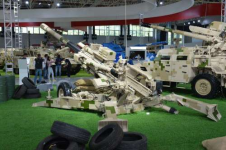
China has a similar product, but it is only exported and the PLA is not equipped with the weapon.
gbi0p2oh.png
rnhmn9ks.png
 
Last edited:
Oh, and very sadly, the Chinese are not fond of weapons similar to the M777. the PLA has phased out all similar weapons.
If a weapon like M777 is still found in today's Chinese army, I will silently light a cigarette .............
Only a rejection of fighting on sloped terrain, and a clear emphasis on Multi-Barreled Rocket Launchers (where the PLA has been well-served by its R&D partners and by its production partners) would explain this curious and intriguing gap.

As far as India-China and the LAC are concerned, only in Arunachal Pradesh could such a conflict on sloped terrain occur. Much of the western reaches of the LAC is (relatively) flat land, only the eastern portions might be so configured.
 
Only a rejection of fighting on sloped terrain, and a clear emphasis on Multi-Barreled Rocket Launchers (where the PLA has been well-served by its R&D partners and by its production partners) would explain this curious and intriguing gap.

As far as India-China and the LAC are concerned, only in Arunachal Pradesh could such a conflict on sloped terrain occur. Much of the western reaches of the LAC is (relatively) flat land, only the eastern portions might be so configured.
The multiple rocket launcher system and the UAV weapon system can well compensate for the blind spot of the vehicle-mounted artillery attack.

We usually assume that if the PLA releases pictures with these old weapons in them, it means they are short of money and want more military spending.
Since the taxes paid by China's tobacco companies each year are roughly equal to China's total defense spending, each additional cigarette we smoke is equal to supporting the national defense effort .................
 
On a lighter note. Please don’t bring that up in the conversation. That give @Joe Shearer vitual PTSD😂
As long as the bloody Pinaka has a range as limited as it does, and as long as the other people to north and west have weapons with more than twice the range, you bet!
 
As long as the bloody Pinaka has a range as limited as it does, and as long as the other people to north and west have weapons with more than twice the range, you bet!
I was referring to the war sim back in the old PDF days. When these became your bane.

It extends to the virtual world too, I guess.
 
The multiple rocket launcher system and the UAV weapon system can well compensate for the blind spot of the vehicle-mounted artillery attack.
It isn't clear that this is a blind spot. IMO, more like the PLA concept of Grand Tactics (in the Napoleonic sense; Operations in modern US usage). That is, the way they bring the enemy to battle.

It looks to the onlooker as if the PLA has taken a conscious turn towards 'de-personalising' the close; that it prefers a long-distance engagement, with a heavy dependence on electronic warfare, and weapons to suit that approach. By the time hostile units reach a 20 to 30 kms range, they would have been subject to sustained attrition due to stand-off weapons hitting them from 200 kms inwards.

Even their paradigm of close-range battle is unsettling; apparently, it is assumed that no detailed battle-planning is useful, as battle plans fall apart so rapidly, so instead, unit commanders - field officers and their immediate superiors of general rank - get certain broad principles instilled in them, through constant training, and left to craft their battle-field decisions based on those principles.

This is a possibility that has been constructed by Anglo-American analysts out of their deep study of available Chinese documents, but nobody has any confirmation that these models exist or that they are followed.
 
I was referring to the war sim back in the old PDF days. When these became your bane.

It extends to the virtual world too, I guess.
Of course.
That was where there was a rude shock, and a permanent post-traumatic stress disorder.
I see no reason why even an average opposing battle-field commander would not see these possibilities, and work with them as working concepts in planning his engagement.
 
Oh, and very sadly, the Chinese are not fond of weapons similar to the M777. the PLA has phased out all similar weapons.
If a weapon like M777 is still found in today's Chinese army, I will silently light a cigarette .............

China has a similar product, but it is only exported and the PLA is not equipped with the weapon.
View attachment 70901
View attachment 70902
AH4 ?
 
It isn't clear that this is a blind spot. IMO, more like the PLA concept of Grand Tactics (in the Napoleonic sense; Operations in modern US usage). That is, the way they bring the enemy to battle.

It looks to the onlooker as if the PLA has taken a conscious turn towards 'de-personalising' the close; that it prefers a long-distance engagement, with a heavy dependence on electronic warfare, and weapons to suit that approach. By the time hostile units reach a 20 to 30 kms range, they would have been subject to sustained attrition due to stand-off weapons hitting them from 200 kms inwards.

Even their paradigm of close-range battle is unsettling; apparently, it is assumed that no detailed battle-planning is useful, as battle plans fall apart so rapidly, so instead, unit commanders - field officers and their immediate superiors of general rank - get certain broad principles instilled in them, through constant training, and left to craft their battle-field decisions based on those principles.

This is a possibility that has been constructed by Anglo-American analysts out of their deep study of available Chinese documents, but nobody has any confirmation that these models exist or that they are followed.
Since 2016, when China launched the largest military reform in its history, the entire Chinese military has completely changed. The Chinese call this military reform “还债 debt repayment”.
However, people usually pay more attention to the changes in PLAAF and PLAN, and most people ignore the changes in PLAGF. So we don't know much.
1, Light Infantry to Special Forces. The PLAGF has now phased out the light infantry service (a small number of light infantry are retained in the Sino-Indian Border Force). The Army has entered the era of fully mechanized information technology. Each group army has a special operations brigade under it, which is used to carry out combat tasks that are not suitable for mechanized forces.
2, Many of the tactics that PLAGF used to use historically have now changed. Some tactics have been eliminated, some tactics have been upgraded, and some tactics have fused into the tactics of the Special Forces.The PLAGF's current training intensity is so high, and there are so many tactical changes, that it is difficult for us to describe current PLAGF tactics.
3. From the current TV exposure of PLAGF training, PLAGF has a lot of modern advanced equipment. Modern equipment such as man-portable computers, UAV/FPV, and robot dogs are very common in PLAGF.

Since the PLAGF is not equipped with this weapon system, it is only for export, so I am not sure of its export code.
Chinese military fans consider it a very old weapon. We don't really like it, so, we don't follow its news. I just checked and China does have an export artillery piece called “AH4”. So, maybe that's it.
 
Since the PLAGF is not equipped with this weapon system, it is only for export, so I am not sure of its export code.
Chinese military fans consider it a very old weapon. We don't really like it, so, we don't follow its news. I just checked and China does have an export artillery piece called “AH4”. So, maybe that's it.
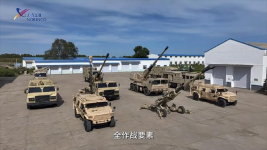
NORINCO is ready to produce the AH4 lightweight howitzer

 
Yes. The second picture I posted in #303 is their product which contains the AH4.

The point in the article you provided a link to is incorrect. the PLAGF does not equip towed artillery similar to the AH4, its for the reasons I stated earlier. the PLAGF does not like the M777 either. towed artillery has no use in the PLAGF's current concept of operations.

Towed artillery. Whether they are large or small caliber, or twin-barreled anti-aircraft guns, PLAGF is phasing them out. The vast majority of towed artillery has been completely phased out, with very few units still waiting for their newer vehicle mounted artillery.
 

Users who are viewing this thread

Pakistan Defence Latest

Latest Posts

Back
Top