Whatever

Sir, religion is a deeply personal subject and contentious. We have to accept that such threads therefore are likely to open to griefing, trolling, flame baiting. Hence the rule, and there are no LAWS.

Laws are made by a state based on statute and acts. Rules are written instructions that serve to keep people safe, maintain order and promote good behavior.
Plato was the first fascist, they say.


but.. understood.. only 1 bouncer per over is ok, yorker pe na laga dena pabandhis etc.
 
good read too, The Republic

the-republic-90.jpg
 
aisi baat ho gai, bhai ? :(

Too flippant, too many snarky one liners, for a full grown man who's probably in the 5th decade if his life.

Gets boring dor me. Kya baat karun , kya common ground khojun.

Cheers, Doc
 
Too flippant, too many snarky one liners, for a full grown man who's probably in the 5th decade if his life.

Gets boring dor me. Kya baat karun , kya common ground khojun.

Cheers, Doc
ground kahin ni jaa raa

air bhi same to same breath kar re hain

fark bas itna, ki.. aap ka vote us taraf, hamara is taraf

I'd like to believe this doesn't go so far as to define either one of us, or the billions like us who also vote either this or that way.

baaki, BJP raj.. I really don't think k itna bhi koi irreparable harm and nuksan kia hai society ka.. chit chat's got a bit more teekha, is about it.

Cheers, Sharma ! 🍻
 
[281550%2F8512002%2Fmceclip0]

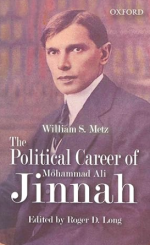
Background Information on the Book:

Mohammad Ali Jinnah (1876-1948) is chiefly known as the founder of Pakistan, and as such is widely revered in Pakistan and reviled in India. This book aims to present an impartial account of his career. Through a wide range of sources the author demonstrates how Jinnah started out as a secular-minded nationalist, dedicated to bringing independence to India through constitutional means, and eager to work through both Congress and the Muslim League to achieve Hindu-Muslim unity in the struggle. The highpoint of this strategy was the Congress-League Pact of 1916, but this could not be maintained. The book charts the stages in Jinnah's disillusion and change of direction. British repression after the First World War led Gandhi and Congress into policies of which he disapproved, and Gandhi's leadership with its Hindu-dominated tone also wounded him both personally and politically. He retired from politics in 1920 and when he returned in 1924 he tried a different tack, seeking to unite the Muslim League as the political vehicle for achieving Hindu-Muslim agreement. But here too he failed; his attempts at agreement with Congress were rebuffed and this weakened him within the League. When the 1930 Round Table Conference failed to produce unity, Jinnah again retired from politics. British initiatives during the 1930s met with divided responses. Increasingly worried at the prospect of active Hindu domination in an independent India, and at Congress's refusal to guarantee safeguards, Jinnah again returned to the fray and, as leader of the Muslim League, adopted Partition as the political principle for the subcontinent's Muslims. By holding unswervingly to this through all the negotiations, against considerable odds he achieved Pakistan.
 

Attachments

  • 1705268090159.png
    1705268090159.png
    284.9 KB · Views: 1
@Waz
@LeGenD

People have read Stanley Wolpert's and Hector Bolitho's books but not this new Historian's book.
 
  • Love
Reactions: Waz
The variance btween Indo-Aryan - the language of the Rg Veda - and the evolving Prakrit that grew after the Vedas increased almost imperceptibly, until a couple of centuries before 600 BC or so, grammarians had written extensively on the differences, specifically differences in the tenses used.

By then, the centre of gravity for the culture of the immigrants had shifted from the north-west, to the heart of the Punjab, to the Delhi region, and progressively into the Gangetic Doab. Essentially the grammar codification you refer to was needed to create some order due to the differences between the Rg Vedic (and almost Avestan) language and the language that was being spoken, early forms of Prakrit.

Panini's codification of the Indo-Aryan language eliminated the 'alien' forms, and codified the language strictly, making it clear which forms and usages were 'legitimate', without quite declaring the others 'illegitimate'. This codification is the reason why there is a gap between the sacerdotal language that Doc has been showing us, and classical Sanskrit; Sanskrit was specifically streamlined to eliminate the similarities with Avestan, the sacred language of the Iranians, a variation of the broader group spoken by the eastern Iranians, the Sakas, known in the Mahabharata as the Parama Kamboja, a valiant tribe of horsemen from the extreme edges of consciousness of the immigrants of the Punjab and upper Doab. Note that this occurrence in the Mahabharata is just before the appearance of the codified Sanskrit, as the Mahabharata was probably last 'enhanced' around 800 BC or so.

So simultaneously, there existed the descended language, Prakrit, and the cleaned up language, Sanskrit. It is important to know that Sanskrit was before then, 600 BC, a cleaned up, codified version of the archaic language of the Vedas, while the language that was spoken in those areas that the immigrants' language had prevailed over the older, pre-existing ones (that is, between the Indus and the mountains to the west to the Rajgir mountains to the east, and between the Himalayas to the north and Vindhya mountains to the south) was Prakrit.

Today's north Indian languages are descendants essentially of Sauraseni Prakrit, from which is derived most of the languages of the west of India, including Punjabi, Marathi, Gujarati, Konkani, or of the more glamorous Magadhi Prakrit, the cultural centre of gravity having shifted to Magadha, that gave rise to a number of languages in the east.

Hindi doesn't figure because Hindi was an artificial creation of the 18th and 19th centuries, with the weaponisation of language by the Hindus of the UP as a reaction to their resentment at a perceived domination. Effectively, these cultural guerrillas were rejecting the earlier lingua franca that everyone in the north spoke, Hindustani, that was often written in Urdu script. Hindi rejected those parts of Hindustani that were 'imported' from Persian, Turkish, Arabic, and created words from Sanskrit to replace some of them, and also rejected the Urdu script in favour of Nagari, soon to become Devnagari. So, ironically, we have a repeat of the north Indian rejection of the Persian, first, due to the codification of Sanskrit excluding Avestan and its secular cognates, second, due to the promotion after codification of Hindustani, excluding Farsi.

Hindi was an adaptation of one of the eight seven dialects that prevailed in today's UP, the heart of the Gangetic Doab, Khadiboli, that describes the language spoken in the extreme west, including some part of Haryana. There were six others, Braj Bhasha, Bundeli, Kanauji, Awadhi, Bagheli and Bhojpuri, besides three others from Bihar, not including Maithil, and the four or five dialects of Rajasthan.


Yes you did all the heavy lifting for the "downstream" explanation of all of this. 10/10.

I should have maybe said the northern languages rather than "Hindi" for the reason you explain.

What did they say about when a dialect becoming a language when it gets an army? (or concerted political action more broadly)

Focusing on the upstream, past the direct phonological correlation of Avestan and RigVedic, regarding the grammar its actually quite interesting.

Lot of grammar in the Rig Veda leaves tenses neutral w.r.t past vs present (there are complex terms in linguistic study like: no augment aorist, injunctive mood tense)...specifically common to it alone (given its size, seniority, generality and thus influence on the subsequent 3 Vedas imbued objectives in being more specific theme/topic-wise, thus shifting to more precise tenses especially for the past given they were downstream to the Rig Veda itself and need not convey the same undefined tenses)

The purpose/reason of these grammar feature in the Rig Veda is longer debate to get into (re-enactive element, how the sruti arrived to the original authors in a maybe 1st person way rather than only 3rd person and what exactly the process was of canonisation/compilation w.r.t the names of Rishis attributed)

But these features share the greatest connect with old Avestan leading to further correlation in phonology between the two if one knows what to listen for.

Younger Avestan starts to drop this (iirc) as does post-rigvedic vedic Sanskrit....due to less scope for "original" ambiguity downstream. Thus the overall phonologies (or maybe euphonics) though still quite similar, start to diverge here. This is well before prakrit "reverse" influence like you describe with Panini and whatever the equivalent process was in Persia.

These ambiguous tenses also survive to some degree in Homeric greek (but unclear their earlier extent given we have mostly writing and not unbroken oral transmission) till this feature disappears entirely too. Other Indo-European (like Old Norse. Latin, Celtic) have no vestiges of this in record AFAIK as distances grow and only arrival of writing leaves concrete objective evidence+reference trail.

Anyway it may be of interest to @vsdoc

If one does get inkling to look up the deeper layers of this stuff (w.r.t what has been translated into English from German on comparative Avestan-Sanskrit in the earliest upstream that is currently possible), I would suggest Almut Hintze, whatever you can find by her thats translated into English and take it from there....as she draws upon lot of the apex of great German researchers before her too.

The Germans at large have done the greatest amount of work on this subject matter....lot of my further understanding is basically what has been translated into English or French (or me running it through a translator).
 
Yes you did all the heavy lifting for the "downstream" explanation of all of this. 10/10.

I should have maybe said the northern languages rather than "Hindi" for the reason you explain.

What did they say about when a dialect becoming a language when it gets an army? (or concerted political action more broadly)

Focusing on the upstream, past the direct phonological correlation of Avestan and RigVedic, regarding the grammar its actually quite interesting.

Lot of grammar in the Rig Veda leaves tenses neutral w.r.t past vs present (there are complex terms in linguistic study like: no augment aorist, injunctive mood tense)...specifically common to it alone (given its size, seniority, generality and thus influence on the subsequent 3 Vedas imbued objectives in being more specific theme/topic-wise, thus shifting to more precise tenses especially for the past given they were downstream to the Rig Veda itself and need not convey the same undefined tenses)

The purpose/reason of these grammar feature in the Rig Veda is longer debate to get into (re-enactive element, how the sruti arrived to the original authors in a maybe 1st person way rather than only 3rd person and what exactly the process was of canonisation/compilation w.r.t the names of Rishis attributed)

But these features share the greatest connect with old Avestan leading to further correlation in phonology between the two if one knows what to listen for.

Younger Avestan starts to drop this (iirc) as does post-rigvedic vedic Sanskrit....due to less scope for "original" ambiguity downstream. Thus the overall phonologies (or maybe euphonics) though still quite similar, start to diverge here. This is well before prakrit "reverse" influence like you describe with Panini and whatever the equivalent process was in Persia.

These ambiguous tenses also survive to some degree in Homeric greek (but unclear their earlier extent given we have mostly writing and not unbroken oral transmission) till this feature disappears entirely too. Other Indo-European (like Old Norse. Latin, Celtic) have no vestiges of this in record AFAIK as distances grow and only arrival of writing leaves concrete objective evidence+reference trail.

Anyway it may be of interest to @vsdoc

If one does get inkling to look up the deeper layers of this stuff (w.r.t what has been translated into English from German on comparative Avestan-Sanskrit in the earliest upstream that is currently possible), I would suggest Almut Hintze, whatever you can find by her thats translated into English and take it from there....as she draws upon lot of the apex of great German researchers before her too.

The Germans at large have done the greatest amount of work on this subject matter....lot of my further understanding is basically what has been translated into English or French (or me running it through a translator).
Deeply satisfying.

Doc, fun fact: the purest pronunciation of Rg Vedic Indo-Aryan is reputedly by people literally down the road from @Nilgiri's ancestral location. That is, most recent ancestral location, in almost unbroken line from Sintashta Culture.
 
More posts like this please Joe.

Don't waste yourself on fools. Including me.

Sacerdotal ❤️👍

Cheers, Doc

You are not a fool, but others are (at least online).

Lot of folks in this forum don't quite know what they are squandering leading Joe into certain arguments to feed their own nasty ill-mannered political triumphalism (or whatever foulness, vice or void created it)....when Joe spares time on them.

Its just damning indictment on the signs of our times now.

Things that are left alone as they are (there are proper ways to explore such things) rather than weaponized for use on other people to make them "others".

So lot of online goons come after Joe same way. Things are weaponised first ....chip on shoulder regarding those that do not conform. Joe's intellect and wisdom gives them largest target in end here. Ive seen equivalents for Pakistani trolls and some of their wiser quality members too in past.

When any discourse is non-weaponised and builds up good faith long term, there is great fruit to be had whatever differences of opinion are. But some people just cannot help but really revel in political weaponisation these days as the thing that needs to be put first, front and centre.

It is ironic earlier in thread you inquired about varying predominance of Ram-worship in India....all because of the over-wrought politicization of Ram by the larger bunch of goons out there and their fellow travellers.

There was a distinct period before the 1990s this was just left to its best space, and folks could come and go to imbue of it as they wished without it being lorded over others in triumphalist fashion.

One Tamil song (of combined creative genius and talent of Illaiyaraja, Vaali and Yesudas) from this earlier time period described that Ram's name "is a Veda all by itself". It was just a full theological+history based movie and the politics was never weaponised like it would be later.

The backdrop of Saivite, Vaishnavite and Smartha is long impactful one by itself among the Tamils....given the large basis has always been heavily leaning to Saivite....something the movie (regd the protagonist Vaishnavite saint) does in its way to gently remind with good faith humble approach....and thus it bore great fruit at same time whatever theological dispensation and prioritisation one might have.

So that song specifically has within it really pleasing combination because it does not seek to assert upon others, rather it expresses what it does and lets people come to it as they may.

One lyrical part of it (my Eng translation really loses a lot of the essence+lustre, especially given context of preceding lyrics in the buildup):

dhinam nee sootidu paamalai (your verses that light up the day)
idhu dhan vasanai poomalai (this is a garland's fragrance)

Lot of Joe's and other high quality members posts I think of the same way when they are given opportunity to flourish their great capacity when you understand the value of their presence here....and the opportunity you have to bring them out.
 
Yes you did all the heavy lifting for the "downstream" explanation of all of this. 10/10.

I should have maybe said the northern languages rather than "Hindi" for the reason you explain.

What did they say about when a dialect becoming a language when it gets an army? (or concerted political action more broadly)

Focusing on the upstream, past the direct phonological correlation of Avestan and RigVedic, regarding the grammar its actually quite interesting.

Lot of grammar in the Rig Veda leaves tenses neutral w.r.t past vs present (there are complex terms in linguistic study like: no augment aorist, injunctive mood tense)...specifically common to it alone (given its size, seniority, generality and thus influence on the subsequent 3 Vedas imbued objectives in being more specific theme/topic-wise, thus shifting to more precise tenses especially for the past given they were downstream to the Rig Veda itself and need not convey the same undefined tenses)

The purpose/reason of these grammar feature in the Rig Veda is longer debate to get into (re-enactive element, how the sruti arrived to the original authors in a maybe 1st person way rather than only 3rd person and what exactly the process was of canonisation/compilation w.r.t the names of Rishis attributed)

But these features share the greatest connect with old Avestan leading to further correlation in phonology between the two if one knows what to listen for.

Younger Avestan starts to drop this (iirc) as does post-rigvedic vedic Sanskrit....due to less scope for "original" ambiguity downstream. Thus the overall phonologies (or maybe euphonics) though still quite similar, start to diverge here. This is well before prakrit "reverse" influence like you describe with Panini and whatever the equivalent process was in Persia.

These ambiguous tenses also survive to some degree in Homeric greek (but unclear their earlier extent given we have mostly writing and not unbroken oral transmission) till this feature disappears entirely too. Other Indo-European (like Old Norse. Latin, Celtic) have no vestiges of this in record AFAIK as distances grow and only arrival of writing leaves concrete objective evidence+reference trail.

Anyway it may be of interest to @vsdoc

If one does get inkling to look up the deeper layers of this stuff (w.r.t what has been translated into English from German on comparative Avestan-Sanskrit in the earliest upstream that is currently possible), I would suggest Almut Hintze, whatever you can find by her thats translated into English and take it from there....as she draws upon lot of the apex of great German researchers before her too.

The Germans at large have done the greatest amount of work on this subject matter....lot of my further understanding is basically what has been translated into English or French (or me running it through a translator).

Its fascinating to me from your and Joe's accounts how languages are actually codified and engineered much like a free flowing river being diverted by dykes and channels. As opposed to natural evolution of terrain and stratum and flow dynamics.

Thanks for the share. You are right of course. Such discussions are a welcome interlude in normal defence forum traffic.

Cheers, Doc
 
Its fascinating to me from your and Joe's accounts how languages are actually codified and engineered much like a free flowing river being diverted by dykes and channels. As opposed to natural evolution of terrain and stratum and flow dynamics.
(y)(y)(y)(y)(y)

I wish I'd thought of that and said it.
 
Its fascinating to me from your and Joe's accounts how languages are actually codified and engineered much like a free flowing river being diverted by dykes and channels. As opposed to natural evolution of terrain and stratum and flow dynamics.

Thanks for the share. You are right of course. Such discussions are a welcome interlude in normal defence forum traffic.

Cheers, Doc
I was thinking about @Nilgiri's interpretations, and realised with a start that you and he share a lot more genetically than either of you do with me. Both of you can probably trace a direct link to the people of the Sintashta culture (I've mentioned the name before, although referring to its successor, the Andronovo, or even the BMAC, would be almost as accurate), that represents the Indo-Iranian speaking people of the steppes before they split and went divergent ways. Both are descended from obsessively endogamous groups, that value your heritage and move heaven and earth to keep it insulated.

On the other hand, I have about 30% of Tibeto-Burmese speaking people in my DNA; that is why my race grow skimpy, even wispy beards, and the eastern reaches have people with prominently high cheekbones and what is perilously close to epicanthic folds of the eyelids.

And here you are, talking to each other on a Pakistani Defence Forum.
 
I was thinking about @Nilgiri's interpretations, and realised with a start that you and he share a lot more genetically than either of you do with me. Both of you can probably trace a direct link to the people of the Sintashta culture (I've mentioned the name before, although referring to its successor, the Andronovo, or even the BMAC, would be almost as accurate), that represents the Indo-Iranian speaking people of the steppes before they split and went divergent ways. Both are descended from obsessively endogamous groups, that value your heritage and move heaven and earth to keep it insulated.

On the other hand, I have about 30% of Tibeto-Burmese speaking people in my DNA; that is why my race grow skimpy, even wispy beards, and the eastern reaches have people with prominently high cheekbones and what is perilously close to epicanthic folds of the eyelids.

And here you are, talking to each other on a Pakistani Defence Forum.

Everytime I have a discussion with someone about blood purity ir Parsis dying out, I get the image in my mind about melavni (Parsi Gujju for that original curd seed stock you keep in the fridge to set the next day's curd).

Or a high content wolf. Kept only to breed back some primal hunter and intelligence pack traits into a new breed of dog.

Parsis know that eventually they are going to merge back into and repurify their base stock.

We preserve ourselves not for ourselves as a community.

If that were the aim, we had lost 1300 years ago itself

Critical mass was never there. 200,000 at our peak in 18th century Bombay.

Cheers, Doc
 

Users who are viewing this thread

Back
Top