BRICS leaders adopt Kazan Declaration— Key Points
The 43-page final communiqué addressed a range of topics including geopolitics, artificial intelligence, and the preservation of endangered species. Here are the key outcomes
By Anushka Sharma
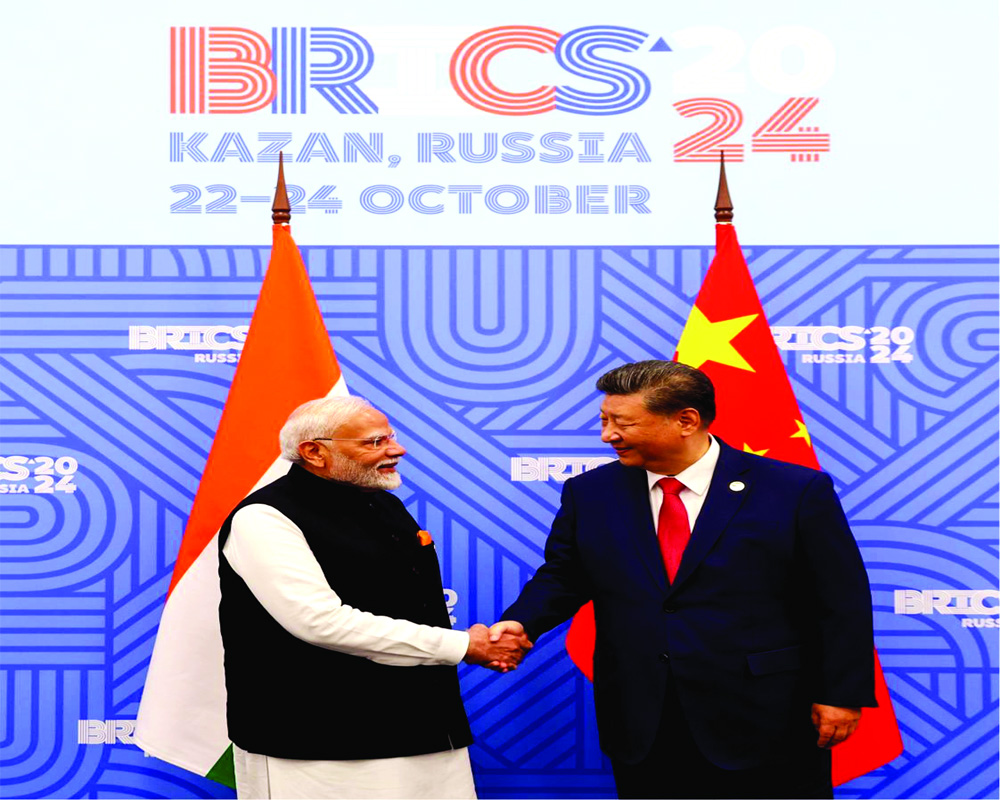
The 16th BRICS Summit concluded on Wednesday, October 23, with the adoption of the Kazan Declaration, a comprehensive document outlining key areas of cooperation and the bloc's unified stance on global issues.
The summit held in Kazan, Russia, saw productive discussions on strengthening multilateralism, countering terrorism, promoting economic growth, and addressing the concerns of the Global South.
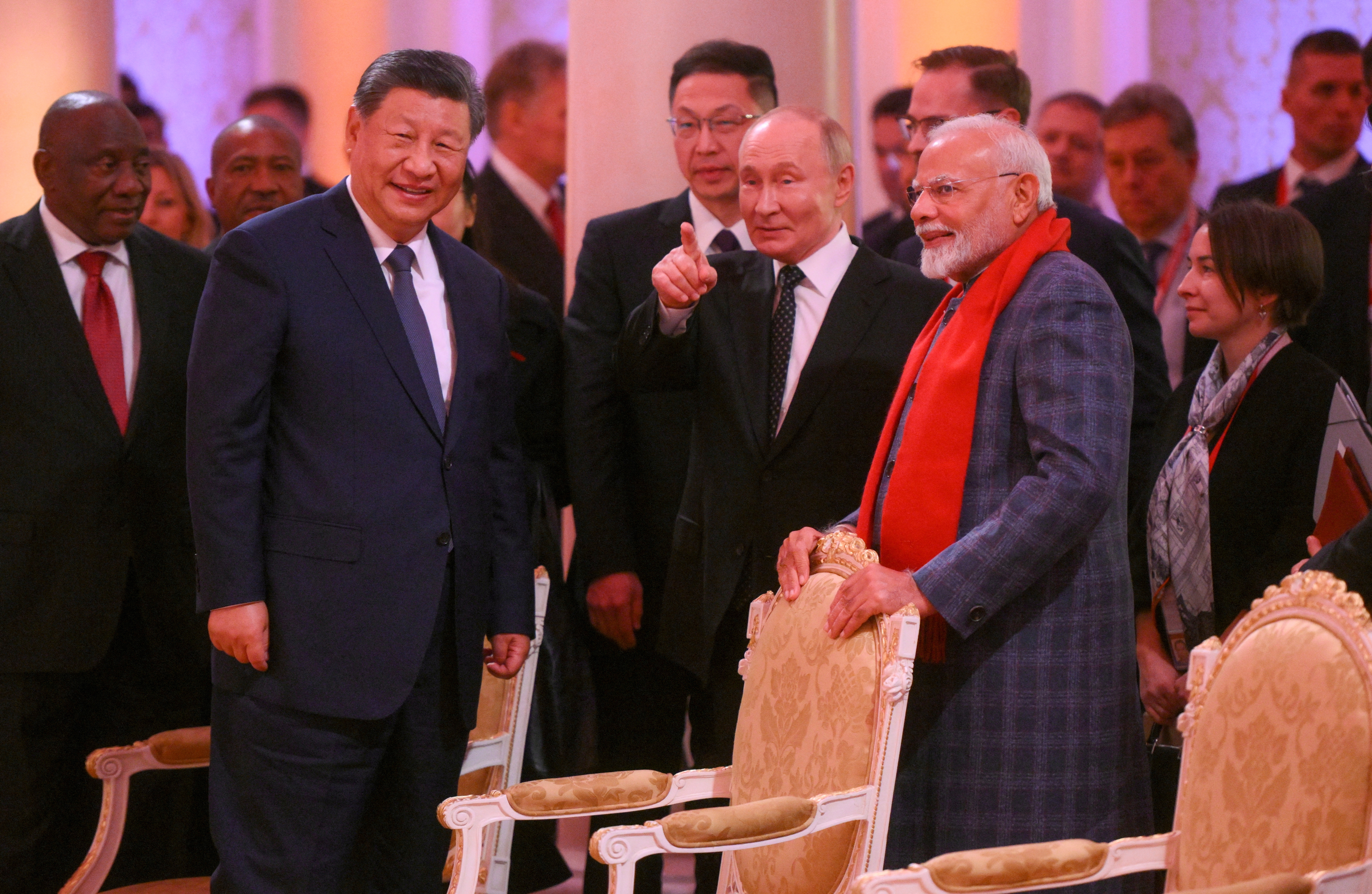
Leaders of more than 20 nations, including Chinese President Xi Jinping, Indian Prime Minister Narendra Modi, UAE President Sheikh Mohammed bin Zayed Al Nahyan, and Iranian President Masoud Pezeshkian, participated in the summit.
The 43-page final communiqué addressed a range of topics, including geopolitics, artificial intelligence, and the preservation of endangered species.
Under the theme "Strengthening Multilateralism for Just Global Development and Security", the Kazan Declaration emphasised the importance of BRICS solidarity and strategic partnerships. The leaders pledged their commitment to fostering peace, ensuring a fairer international order, and promoting sustainable development.
"We, the Leaders of BRICS countries, met in Kazan, Russian Federation, from 22 to 24 October 2024 for the XVI BRICS Summit held under the theme: 'Strengthening Multilateralism for Just Global Development and Security,'" the leaders said.
"We reaffirm our commitment to the BRICS spirit of mutual respect and understanding, sovereign equality, solidarity, democracy, openness, inclusiveness, collaboration, and consensus," the leaders stated.
"As we build upon 16 years of BRICS Summits, we further commit ourselves to strengthening cooperation in the expanded BRICS under the three pillars of political and security, economic and financial, cultural and people-to-people cooperation and to enhancing our strategic partnership for the benefit of our people through the promotion of peace, a more representative, fairer international order, a reinvigorated and reformed multilateral system, sustainable development and inclusive growth."
Key Outcomes of the Kazan Declaration
Geopolitical Concerns
The summit addressed pressing international conflicts, with the declaration emphasising the need for peaceful resolution through diplomacy.
Ukraine conflict: the leaders reaffirmed the importance of adhering to the principles of the United Nations Charter and welcomed mediation efforts. "We note with appreciation relevant proposals of mediation and good offices, aimed at a peaceful resolution of the conflict through dialogue and diplomacy."
Palestine: Expressing concern over the worsening situation in Palestine, the declaration stated, "We reiterate our grave concern at the deterioration of the situation and humanitarian crisis in the Occupied Palestinian Territory, in particular the unprecedented escalation of violence in the Gaza Strip and West Bank."
Middle East Crisis: They also voiced grave concern over the escalating humanitarian crisis in the Middle East. "We express alarm over the situation in Southern Lebanon. We condemn the loss of civilian lives and the immense damage to civilian infrastructure resulting from attacks by Israel in residential areas in Lebanon and call for immediate cessation of military acts."
Global Governance and Multilateralism
G20 Role: The summit underscored the importance of the G20 in global decision-making. "We recognise the importance of the continued and productive functioning of the G20, based on consensus with a focus on result-oriented outcomes".
Financial Architecture Reform: The BRICS nations reiterated their pledge to improve global governance by advocating for a more agile, responsive, and representative multilateral system. This includes reforms to the international financial architecture and promoting inclusive growth.
"We reiterate the importance of further enhancing BRICS solidarity and cooperation based on our mutual interests and key priorities and further strengthening our strategic partnership, "the leaders added. "We underscore the need to reform the current international financial architecture to meet the global financial challenges."
Financial Innovation: The leaders encouraged new financial practices. "We welcome the BRICS Interbank Cooperation Mechanism (ICM) focus on facilitating and expanding innovative financial practices."
International Monetary Fund: The declaration supported maintaining a strong IMF. "We reaffirm our commitment to maintaining a strong and effective Global Financial Safety Net with a quota-based and adequately resourced IMF at its centre."
Economic Cooperation and Local Currencies
Cross-Border Payments: A key highlight of the summit was the agreement to strengthen trade and financial settlements in local currencies. The declaration welcomed the use of local currencies in BRICS financial transactions and supported the exploration of an independent cross-border settlement infrastructure.
"We recognise the widespread benefits of faster, low-cost, more efficient, transparent, safe, and inclusive cross-border payment instruments built upon the principle of minimising trade barriers and non-discriminatory access," the document stated.
BRICS Clear depository: Looking ahead, the BRICS nations agreed to explore initiatives that could further integrate their economies, such as establishing a BRICS Grain Exchange and studying the feasibility of a BRICS Cross-Border Payment System and BRICS (Re)Insurance Company.
BRICS Grain Exchange: The establishment of a BRICS-based grain exchange was welcomed. "We welcome the initiative of the Russian side to establish a grain (commodities) trading platform within BRICS."
BRICS Plus Partnership: With growing interest from nations in the Global South, the leaders endorsed the creation of a BRICS Partner Country category, welcoming new member countries, including Egypt, Ethiopia, Iran, Saudi Arabia, and the UAE.
Pandemic Preparedness and Environmental Conservation
Health Initiatives: The summit emphasised the importance of strengthening health systems through collaboration. "We support the initiatives of the BRICS R&D Vaccine Center, further development of the BRICS Integrated Early Warning System for preventing mass infectious diseases risks and the operations of the BRICS TB Research Network."
The leaders also recognised the threat of antimicrobial resistance (AMR): "We welcome the outcomes of the 79th United Nations General Assembly (UNGA) High-Level Meeting on AMR... and note the timeliness of holding the first BRICS Conference on AMR in May 2024."
Big Cats: India’s initiative to create an International Big Cats Alliance received recognition, as BRICS countries pledged to collaborate on preserving endangered species. "We encourage BRICS countries to work together to make further contributions to the conservation of big cats," the declaration noted.
As BRICS continues to expand its partnerships with the Global South, the bloc aims to strengthen its influence in global governance and provide a platform for emerging markets and developing countries to work together.
The leaders expressed optimism about the future of BRICS cooperation, emphasising that ongoing collaboration will be key to addressing global challenges and fostering a more just and equitable world order.
Read the full
Kazan Declaration here.