Ford's CEO Doesn't Want To Stop Driving China's Apple Car Ford CEO Jim Farley has been driving an imported Xiaomi SU7 for months. He says it's fantast

Beijingwalker

VIP Member
Joined
Nov 4, 2011
Messages
92,135
Reaction score
113,011
Reputation
2,141.9
Country of Origin
Country of Residence

Ford's CEO Doesn't Want To Stop Driving China's Apple Car​

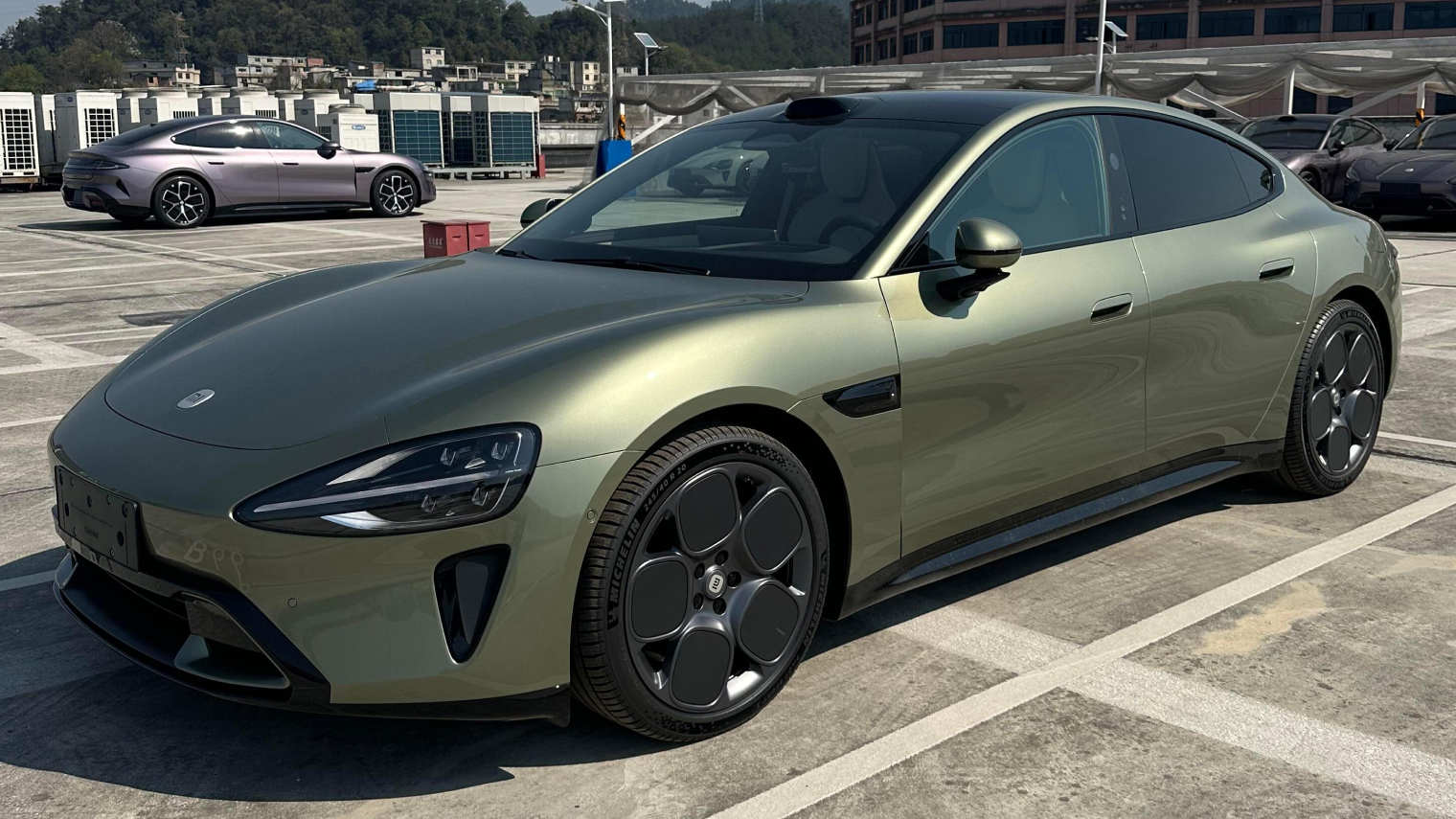
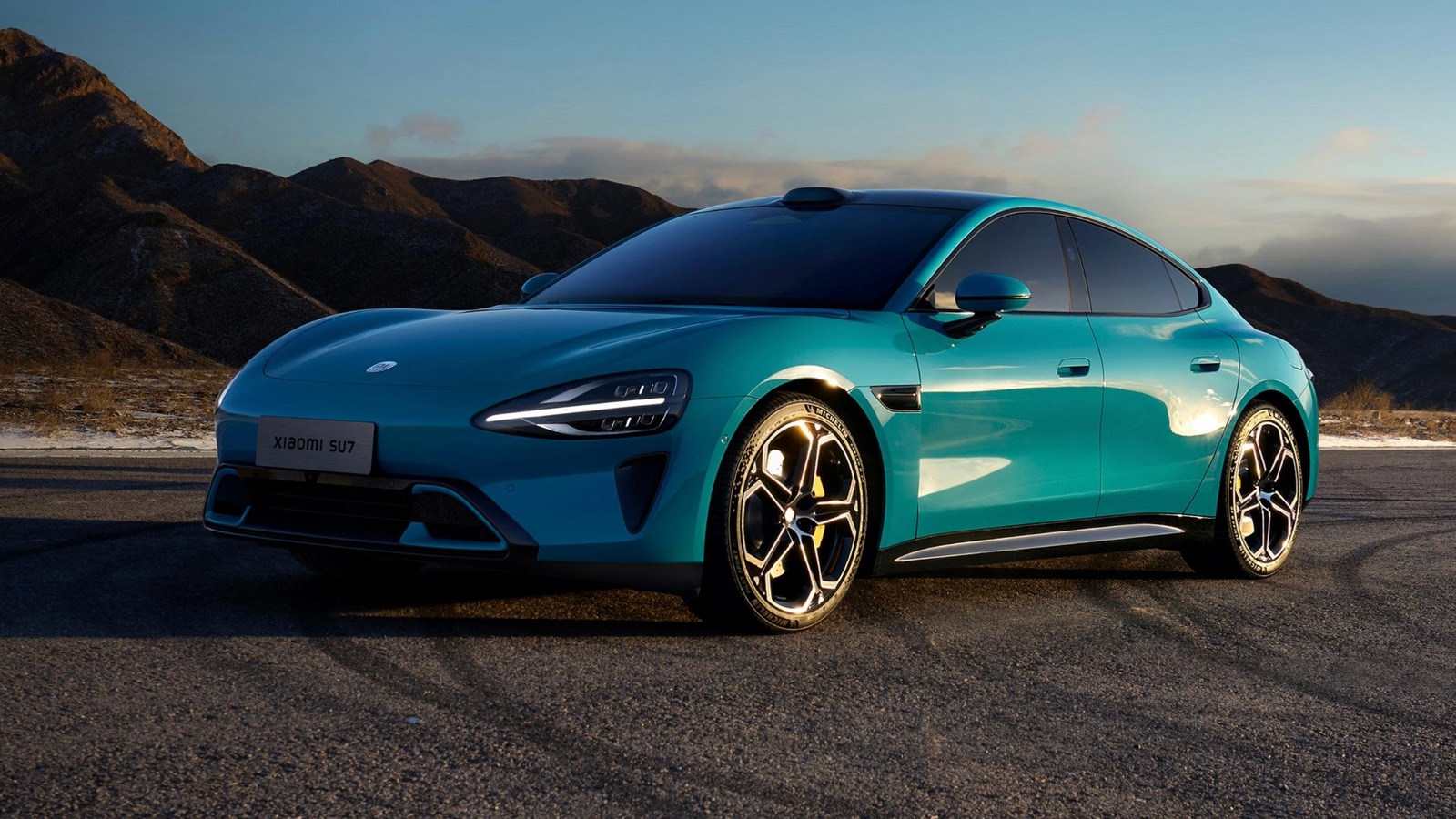
Ford CEO Jim Farley has been driving an imported Xiaomi SU7 for months. He says it's fantastic.​


xiaomi-topshot-ford-ceo.webp

Xiaomi

Oct 23, 2024 at 4:41pm ET

By: Kevin Williams


  • Ford imported a Xiaomi SU7 from Shanghai to Chicago, where CEO Jim Farley has been driving at round for months.
  • The Xiaomi SU7 is sold out for the rest of the year in China, with all 100,000 units spoken for.
  • Xiaomi plans to further expand in the EV market with a crossover in the near future. It could also introduce a range-extended EV with a gas motor, and a low-cost hatchback.
It seems like more and more American automotive CEOs are starting to understand just how “cooked” American companies are in the face of advanced competitors from China. This week, Ford CEO Jim Farley dropped a bombshell on a podcast; he’s been driving an imported Xiaomi SU7 sedan from China around Chicago for six months. He called the car fantastic, and he doesn’t want to give it up. This is the second manufacturer we know of that has imported an SU7 to evaluate. A few weeks ago RJ Scaringe brought one into the country, too.

To view this content we will need your consent to set third party cookies.
For more detailed information, see our cookies page.


This week, Farley did a 40-minute long podcast on the Everything Electric Show, where he discussed Ford’s future and what he experienced in China. The Xiaomi SU7 was one of the big “epiphanies” that Farley had, recognizing just how far off he and other Western manufacturers were when it came to China. “In the West, our cell phone companies aren’t into cars, they don’t have car companies. But in China, both Huawei and Xiaomi are inside every vehicle that is made,” said Farley.

Farley admitted that his trips to China and experience with the Xiaomi made Ford really go into deep thought about what the company needs to do next. “Everyone’s talking about the Apple Car, but the Xiaomi car…The [Xiaomi SU7] exists, and it’s fantastic. They sell 10,000, 20,000 a month and they’re sold out for six months. That is a consumer brand that is much stronger than car companies,” said Farley. Farley's revelation has had a mini viral moment in China, according to Chinese EV analyst and expert Lei Xing.

Farley is speaking on what I, and other journalists, pundits and EV and China experts have noticed for quite a while now: China’s tech and automotive industries are far more interconnected than the automotive and tech industries in the West. The Xiaomi SU7, on its face, is simply another product in Xiaomi’s range of consumer electronics and cell phones. Xiaomi’s car uses the same operating system as its phones and tablets; accessories for the car can be purchased in the same store where you'd buy a phone. Similarly, Huawei’s Harmony OS is quickly permeating the Chinese car industry, as Huawei offers full-stack software solutions for smaller brands uninterested in making their own. Geely by and large doesn’t use Huawei or Xiaomi’s software, because it bought a whole cell phone company (Meizu) that developed Flyme Auto.

We kind of have that with Google's Android Automotive, but from what I (and likely Farley) have experienced, it just isn’t currently on the same level as Chinese EV tech in terms of integration and refinement. China’s tech industry and automotive brands have joined hands, and they are moving in lockstep.

“I can’t unlearn the fact that the Detroit Three never really had a plan,” said Farley, referring to the inroads that Toyota and Honda made in the 1970s and 1980s in the U.S. American companies were slow to adapt to the newfound competition. “And we’re not going to miss this one. This one, we’re going to have to get it right from scratch,” Farley continued. He said that Ford realized that it would have a hard time competing with brands like BYD, thus it needed to start from scratch with a whole new ground-up approach. Which, is where Ford’s skunkworks-like team for its low-cost EVs came from.

The whole podcast is very intriguing to listen to. Will Ford be able to compete? It's not clear. By Farley's own admission, Ford has to get it right the first time it tries. China has such a huge lead on the rest of the world, it will take a lot of work to catch up. Recognizing that, it's not surprising that Farley doesn't want to give up the keys to his Xiaomi just yet.
 

Xiaomi Automobile Super Factory, Producing One SU7 Every 76 Seconds​

To view this content we will need your consent to set third party cookies.
For more detailed information, see our cookies page.
 
With high tariff, Chinese cars are only for the privilleged few in US, US government prohibist the general public access to them.
 
What US vs China war? Ford CEO drives a Xiaomi SUV. And heloves it!
By: HT Auto Desk
Updated on: 24 Oct 2024, 08:37 AM

When the top boss of an American car company says he does not want to give up his Chinese EV, you can assume theEV is great, right?

Xiaomi SU7 electric vehicle can perform like a sports car with top speed of up to 265 kmph and the ability tosprint 0-100 kmph in under three seconds.

The SU7 was launched early 2024 and is the first automobile to have entered massproduction from Xiaomi. The company entered into a contract with BAIC Off-road forthe production part of what is touted as a performance all-electric sedan. As per thecompany, the name itself means ‘Speed Ultra.’

Loaded to the brim with tech-based features, the Xiaomi SU7 has some serious drivecapabilities and can go from 0 to 100 kmph in 2.78 seconds in the Pro Max version. Italso offers a total power output of 672 bhp and torque of 838 Nm.

 
Maybe he will be fired by Ford under American pressure.
 

Xiaomi Automobile Super Factory, Producing One SU7 Every 76 Seconds​

To view this content we will need your consent to set third party cookies.
For more detailed information, see our cookies page.


LOL! I see "gigapress" type machines which certain Chinese PDF members once claimed was an idea that "wouldn't work" and yet another "Elon Musk scam idea" when he announced it in 2019.

Now suddenly people understand it helps with the speed of construction issue.
 
LOL! I see "gigapress" type machines which certain Chinese PDF members once claimed was an idea that "wouldn't work" and yet another "Elon Musk scam idea" when he announced it in 2019.

Now suddenly people understand it helps with the speed of construction issue.
Who said that?
 

WSJ’s Joanna Stern cruised around New Jersey in the Xiaomi SU7 Max

By Joanna Stern | Photography by Matt Genovese for WSJ
Jan. 29, 2026 7:00 pm ET

im-62806236


My dearest Xiaomi SU7 Max,

It’s been about a month since we were last together. Now, every time I climb back into my Ford Mustang Mach-E, I can’t stop thinking about you—your long range, your modular interior, your absurdly large infotainment screen.

At night, I miss your adjustable color lighting. On weekends, the kids talk about your wireless karaoke mics, walkie-talkies and yes, that back-seat minifridge.

The Xiaomi SU7 Max—like other Chinese-made cars—is effectively blocked from the U.S. market. And yet, late last year, I spent two weeks test-driving one of China’s hottest cars around the mean streets of New Jersey. A friend who previously worked at Xiaomi bought the car and got a temporary permit to drive it in the U.S. He generously let me take it for an extended spin.

My time with the car confirmed what experts in the auto industry have long been saying: Holy crap, China is winning the digitally enhanced electric-car race.

Chinese EV makers such as Xiaomi, BYD and Geely have earned global accolades because their cars deliver longer battery ranges and deeply integrated digital platforms. We’re talking software that feels smooth like a brand new smartphone, not a screen you have to jab five times to load a map. Plus, they often cost tens of thousands of dollars less than Western competitors. In Europe and Mexico, they’re blowing past Tesla and other EV rivals.

“The competitive reality is that the Chinese are the 700-pound gorilla in the EV industry," Ford CEO Jim Farley told me in an interview last year. “There’s no real competition from Tesla, GM or Ford with what we’ve seen from China." Even Farley, after driving a Xiaomi SU7, said he didn’t want to part with it. The company is now rebuilding its EVs, starting with a $30,000 pickup, to compete directly with what they have seen from China.

I didn’t understand it all until my Xiaomi tryst. I fell for the SU7 Max inside and out, and now I’m left wanting what I can’t have—at least for now. There are growing signs Americans might not have to wait forever to experience China’s superior take on the EV.

The connected car​

Smartphones, tablets, washing machines, toasters, dust-mite vacuums. If it uses electricity, Xiaomi probably makes it and sells it in China. So as cars increasingly became computers on wheels, Xiaomi started making EVs.

The SU7 Max feels exactly like what you’d expect from a tech company making a car, not a car company making tech. The massive 16.1-inch infotainment screen runs HyperOS, the company’s Android-based software. It’s packed with apps—many of them in Mandarin, which I don’t understand. I am, however, fluent in Apple CarPlay, which looks beautiful on that big screen.

One of my favorite small features: Navigation directions don’t kill the music. They come through speakers in the driver’s seat headrest, while the song or podcast keeps playing everywhere else.

Remember when I chose an EV a few years back? Remember how loudly I complained about Tesla and others ditching buttons and knobs for all-touchscreen everything? With Xiaomi, you don’t have to choose. It sells a slim control bar that magnetically snaps to the bottom of the screen, giving you honest-to-goodness physical buttons for music and climate control. Miracles happen.

You can snap on other modules, too, such as LED bars—if your goal is less family sedan, more Berlin nightclub.

The real magic, though, is for people who live inside Xiaomi’s ecosystem. I could mirror whatever was on a Xiaomi 17 Pro Max phone directly on the main display. Full-fledged Xiaomi tablets—loaded with games and apps—dock into the backs of the front seats to face the rear passengers, instantly becoming climate-control panels.

Bluetooth microphones pair with the sound system, and the karaoke app displays the lyrics to your fave karaoke songs. (Whitney Houston’s “I Wanna Dance With Somebody," obviously.) Long-range walkie-talkies let the driver communicate with kids who have, for obvious reasons, decided to hide under the bed with them. A minifridge locks into the hump between the rear two seats, and you can adjust temperature from, yes, any of the many screens.

As Americans, we don’t live in the Xiaomi universe. It’s like if Apple had actually built the long-rumored Apple Car and everything just…worked.

The easy rider​

I don’t only love this car because it’s like visiting a Chinese tech mall. I love driving it. I’ll leave the deep discussion of torque, suspension and other mysterious car terms to my colleague Dan Neil. What I can say is that this EV sails along smoothly and quietly while somehow feeling sportier than my Mustang Mach-E or the Tesla Model Y I tested a few years back.

Due to my lack of Mandarin skills, I couldn’t test the self-driving features. But on one trip from my home in New Jersey into New York City, I put the car into advanced driver-assistance mode. The car braked, steered and accelerated more smoothly than my Ford Mustang Mach-E. I especially noticed while crawling into the Holland Tunnel, a scenario I’ve been through many times in my Mustang.

On those same New York jaunts, the battery range exceeded my expectations, largely set by my Mustang Mach-E. On one very cold day—when EV batteries typically take a hit—a 50-mile round trip used no more than 30% of the charge. Xiaomi boasts a range of 810 kilometers on a battery charge for the SU7 Max (roughly 500 miles). To charge it at home, I used my Level 2 charger with an adapter, since China uses different plugs.

We don’t know the long-term reliability or safety performance of these cars, according to analysts I spoke to. For me to be a serious customer, I would obviously need more information. But my impression during my brief time with the SU7 was that this is a well-designed and well-constructed vehicle.

The global roadblock​

So you get it, I fell in love with all things about this car, including its price tag. In China, its launch pricing started at 299,900 Chinese Yuan, which converts to roughly $43,000—in the same range as a Tesla Model Y. Yet the Xiaomi experience feels more premium. Of course, experts I spoke to said the SU7 Max would cost more if sold in the U.S.

“If"? Or should I say “when"? Right now, there’s a 100% tariff on Chinese-made electric vehicles—on top of other tariffs—and there are federal restrictions on Chinese connected vehicle technology. But those heavy obstructions might not last.

In early January, in a speech at the Detroit Economic Club, President Trump said Chinese automakers would be welcome if they built cars in the U.S. using American factories and workers. “Let China come in," he said.

“You absolutely will get a car like the Xiaomi SU7 here—no question," Michael Dunne, chief executive of auto-consulting firm Dunne Insights, told me.

“Chinese manufacturers are prepared and poised to pounce as soon as the door opens—and that door opens not through imports, but through manufacturing here," he said, adding that it could happen in the next two years. Geely has even said as much, though Xiaomi said it has no current U.S. plans.

I will wait for you, Xiaomi. We shall be together again one day.
 
Last edited:
I might get an avatr 12 when it comes to aus sometime later this year
 
This thread is now well over a year old with only 10 responses not including mine. Is it even relevant at this point?
 

Ford held talks with China’s Xiaomi over EV partnership


PublishedJanuary 31 2026

Ford has held talks with electric vehicle maker Xiaomi over a partnership that would pave the way for Chinese carmakers to gain a foothold in the US, according to four people familiar with the talks.

While the discussions were preliminary, Ford has explored forming a joint venture with Xiaomi to manufacture EVs in the US, according to the people.

Ford has also spoken with BYD and other Chinese carmakers about potential collaboration in the US.

Such a deal would be controversial in Washington. John Moolenaar, the Republican chair of the House China committee, told the FT that Ford would “be turning its back on American and allied partners, and it will make our country further dependent on China”.

Ford said: “This story is completely false. There is no truth to it.” Xiaomi did not respond to a request for comment. BYD declined to comment.

Ford chief executive Jim Farley is a vocal admirer of Chinese electric vehicles, having imported Xiaomi’s SU7 model for his own personal use. The Chinese group’s roots are in consumer electronics but it shocked the global automotive industry with a spectacular EV debut in 2024.

Farley warned last year that Chinese rivals pose an “existential threat” to western carmakers and had enough capacity in China alone to “put us all out of business”. He has previously said that Chinese companies are “absolutely coming” to the US.

Earlier this month, Farley hosted President Donald Trump at a Ford truck plant in Dearborn outside Detroit. During his visit, Trump told business leaders that if Chinese companies “want to come in and build a plant and hire you and hire your friends and your neighbours, that’s great, I love that”.

Ford has a licensing deal with China’s CATL to produce cells in the US using the battery giant’s technology. The Pentagon has designated CATL as a company with alleged Chinese military ties, which the group denies. The House China committee has also raised repeated concerns about the deal.
 
Last edited:
Ford chief executive Jim Farley is a vocal admirer of Chinese electric vehicles, having imported Xiaomi’s SU7 model for his own personal use. The Chinese group’s roots are in consumer electronics but it shocked the global automotive industry with a spectacular EV debut in 2024.

well i can see one common trait Ford will continue with some joint venture...

Ford: Found on road dead

 
Last edited:

Ford, Geely in talks over manufacturing and technology collaboration, report says​

Feb 4, 2026, 2:44 PM GMT+8

  • Ford and Geely are discussing a potential partnership as both companies seek to share technology and manufacturing costs, Reuters reported.
  • The two parties are exploring the possibility of Geely utilizing Ford's European factory space to produce vehicles for the European market.

Ford Motor and Geely Auto are discussing a potential partnership to share heavier technology and manufacturing costs, Reuters reported Wednesday, citing eight people familiar with the matter.

Three of the people said the companies are discussing Geely using Ford's European factory space to produce vehicles for the European market.

Two people said discussions also covered a potential framework for sharing automotive technologies, including autonomous driving, according to Reuters.

Negotiations around European manufacturing are progressing more smoothly, two sources indicated. One source said Ford's plant in Valencia, Spain, would most likely be the facility under consideration.

Some sources revealed Ford sent a delegation to China this week to intensify talks. Previously, Geely executives and Ford leaders met in Michigan last week, Reuters reported.

Negotiations between Geely and Ford have been ongoing for months, according to the report.

Geely declined to comment. Ford said it regularly engages in discussions with numerous companies on various topics, sometimes leading to agreements and sometimes not, the report noted.

On February 1, the Financial Times reported that Ford had held talks with Xiaomi regarding EV cooperation, exploring the possibility of establishing a joint venture to produce EVs in the US. Both Ford and Xiaomi subsequently denied the report.

Geely is one of China's largest automakers. Geely Auto sold 3.02 million vehicles in 2025, marking a year-on-year increase of 38.96%, according to data compiled by CnEVPost.

Geely Auto exported 419,465 vehicles in 2025, a 1.56% increase year-on-year.


Ford in Talks With China’s Geely on Europe Factory Tie-Up​

Updated on
February 4, 2026 at 9:29 PM GMT+8

Ford Motor Co. has held discussions with China’s Zhejiang Geely Holding Group Co. about sharing manufacturing capacity in Europe, with the US carmaker seeking new global partnerships as it overhauls its electric vehicle strategy.

A delegation of Ford executives visited China this week to discuss opportunities, including the use of its plant in Valencia, Spain, according to a person familiar with the matter, who asked not to be identified as the information is private.
 
And Chinese cars are much quieter

How China crushed Beijing’s crazy traffic noise​

To view this content we will need your consent to set third party cookies.
For more detailed information, see our cookies page.


微信图片_20260205152857.png微信图片_20260205152955.png微信图片_20260205153021.png
 

Users who are viewing this thread

Pakistan Defence Latest

Latest Posts

Back
Top