Iran - Israel/US War: Israel-US declare war on Iran, Iran responds

Some of the publically available information I've been able to gauge, mainly from Clash Report on X and various news articles.

Date
Target
Facility
Area
Location
Comments
26/10/2024Drone PlantUAV Manufacturing FacilityMilitaryShamsabadnear Arak
26/10/2024FactoryShamsabad Industrial CityCivilian?Shamsabad
-​
26/10/2024Space CentreShahroud Military ComplexMilitaryShahroudSouth-East of Shahroud Semnan Province
26/10/2024Missile Test SiteShahroud Military ComplexMilitaryShahroudSouth-East of Shahroud Semnan Province
26/10/2024Mixers (x12)Parchin Rocket Motor Casting FacilityParchin Military BaseParchinnear Tehran
26/10/2024
?​
Missile Production SiteKhojir Military BaseKhojirnear Tehran
26/10/2024Air Defence SystemTange Bijar Central FacilityNatural Gas Production SiteGanjavan, Ilam ProvinceCivilian facility?
26/10/2024
?​
Bandar Imam Khomeini Petrochemical ComplexPetrochemical Production SiteKhuzestan ProvinceCivilian facility?
26/10/2024
?​
Bandar Imam KhomeiniPort?Khuzestan ProvinceCivilian facility?
26/10/2024
?​
Abadan Oil RefineryOil Production SiteKhuzestan ProvinceCivilian facility?
26/10/2024
S-300​
Imam Khomeini International AirportCivilian AirportTehranEither one or two S-300 systems were destroyed
26/10/2024
S-300​
Malad Missile BaseMilitary Baseoutskirts of TehranEither one or two S-300 systems were destroyed
26/10/2024
?​
Missile Production SiteMilitaryFalagh
-​
26/10/2024
?​
Missile Production SiteMilitaryShaid Ghadiri
-​
26/10/2024
?​
Missile Production SiteMilitaryAbdol Fath
-​
26/10/2024
?​
?Parand Military SiteMilitary
-​

Any help with names, description would be appreciated. Please point out any anamoloies.
 
Some of the publically available information I've been able to gauge, mainly from Clash Report on X and various news articles.

Date
Target
Facility
Area
Location
Comments
26/10/2024Drone PlantUAV Manufacturing FacilityMilitaryShamsabadnear Arak
26/10/2024FactoryShamsabad Industrial CityCivilian?Shamsabad
-​
26/10/2024Space CentreShahroud Military ComplexMilitaryShahroudSouth-East of Shahroud Semnan Province
26/10/2024Missile Test SiteShahroud Military ComplexMilitaryShahroudSouth-East of Shahroud Semnan Province
26/10/2024Mixers (x12)Parchin Rocket Motor Casting FacilityParchin Military BaseParchinnear Tehran
26/10/2024
?​
Missile Production SiteKhojir Military BaseKhojirnear Tehran
26/10/2024Air Defence SystemTange Bijar Central FacilityNatural Gas Production SiteGanjavan, Ilam ProvinceCivilian facility?
26/10/2024
?​
Bandar Imam Khomeini Petrochemical ComplexPetrochemical Production SiteKhuzestan ProvinceCivilian facility?
26/10/2024
?​
Bandar Imam KhomeiniPort?Khuzestan ProvinceCivilian facility?
26/10/2024
?​
Abadan Oil RefineryOil Production SiteKhuzestan ProvinceCivilian facility?
26/10/2024
S-300​
Imam Khomeini International AirportCivilian AirportTehranEither one or two S-300 systems were destroyed
26/10/2024
S-300​
Malad Missile BaseMilitary Baseoutskirts of TehranEither one or two S-300 systems were destroyed
26/10/2024
?​
Missile Production SiteMilitaryFalagh
-​
26/10/2024
?​
Missile Production SiteMilitaryShaid Ghadiri
-​
26/10/2024
?​
Missile Production SiteMilitaryAbdol Fath
-​
26/10/2024
?​
?Parand Military SiteMilitary
-​

Any help with names, description would be appreciated. Please point out any anamoloies.

Source : " i found random shit on twitter without any evidence "

its time for another parrot price Jauk

For this desperate fella it needs a special one
 
Honestly as much Israelis have been purposely striking civilians easily looked up bomb shelters isn’t that hard surprisingly not state secrets
Israel is on dead bed. They can't stand by in war for longer.
Israel is on threat of invasion by its opponents 😑
 
Some of the publically available information I've been able to gauge, mainly from Clash Report on X and various news articles.

Date
Target
Facility
Area
Location
Comments
26/10/2024Drone PlantUAV Manufacturing FacilityMilitaryShamsabadnear Arak
26/10/2024FactoryShamsabad Industrial CityCivilian?Shamsabad
-​
26/10/2024Space CentreShahroud Military ComplexMilitaryShahroudSouth-East of Shahroud Semnan Province
26/10/2024Missile Test SiteShahroud Military ComplexMilitaryShahroudSouth-East of Shahroud Semnan Province
26/10/2024Mixers (x12)Parchin Rocket Motor Casting FacilityParchin Military BaseParchinnear Tehran
26/10/2024
?​
Missile Production SiteKhojir Military BaseKhojirnear Tehran
26/10/2024Air Defence SystemTange Bijar Central FacilityNatural Gas Production SiteGanjavan, Ilam ProvinceCivilian facility?
26/10/2024
?​
Bandar Imam Khomeini Petrochemical ComplexPetrochemical Production SiteKhuzestan ProvinceCivilian facility?
26/10/2024
?​
Bandar Imam KhomeiniPort?Khuzestan ProvinceCivilian facility?
26/10/2024
?​
Abadan Oil RefineryOil Production SiteKhuzestan ProvinceCivilian facility?
26/10/2024
S-300​
Imam Khomeini International AirportCivilian AirportTehranEither one or two S-300 systems were destroyed
26/10/2024
S-300​
Malad Missile BaseMilitary Baseoutskirts of TehranEither one or two S-300 systems were destroyed
26/10/2024
?​
Missile Production SiteMilitaryFalagh
-​
26/10/2024
?​
Missile Production SiteMilitaryShaid Ghadiri
-​
26/10/2024
?​
Missile Production SiteMilitaryAbdol Fath
-​
26/10/2024
?​
?Parand Military SiteMilitary
-​

Any help with names, description would be appreciated. Please point out any anamoloies.
Your post qualifies for a simple parrot designation. Although it’s terribly easy, yet your post doesn’t qualify for the grand prize. Far too simple, misinformed, and naive. Go figure.

Sorry and I hope you feel better.
 
Last edited:
Translation: This is the collated Zionist propaganda.

Wikipedia is notoriously unreliable on controversial subjects.
There are plenty of links from Iranian and Arab sources. Besides, pictures and video are not that controversial.
 

Middle East , Missile and Space​

Military Watch Magazine Editorial Staff
October-26th-2024

Iran Makes First Use of 100km+ Range Anti-Air Missiles to Repel Israeli Strikes: Which Air Defence Systems Did It?​


S-300 Missile Launch and Israeli Delilah Ballistic Missile Launch From F-16

S-300 Missile Launch and Israeli Delilah Ballistic Missile Launch From F-16


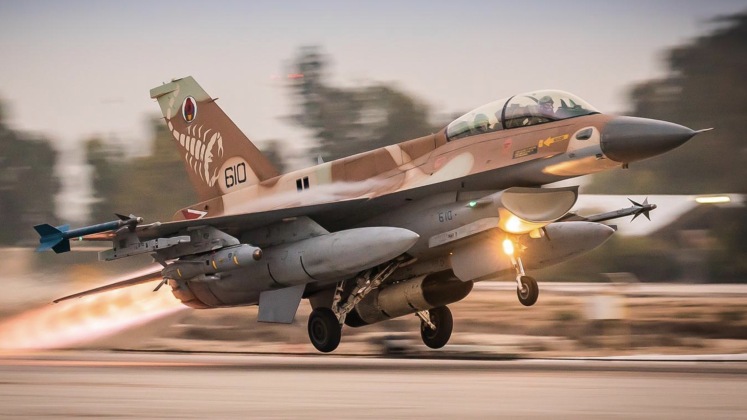
Responding to Israeli attacks in the early hours of October 26, Iranian air defence units were reported to have shot down multiple incoming air launched missiles around the capital Tehran. The intention behind the very small scale attack was evaluated at the time, with circumstantial evidence indicating that air defences were successful in intercepting all targets. Although Western and Israeli sources have made contradictory reports regarding how many waves of Israeli attacks were launched, reports from Iranian sources indicate more than one wave of missile strikes. Israeli attacks notably used long ranged air launched missiles, which could be fired from far outside Iranian airspace and well beyond the range of the country’s air defences - thus minimising risks to Israeli aircraft. This mirrors the approach taken in most strikes on Syrian targets, particularly after the loss of an Israeli F-16I fighter in February 2018 to an Israeli S-200 air defence system. This is also consistent with leaked U.S. intelligence reports that Israel planned to use long range air launched ballistic missiles to strike Iran.


Israeli Air Force F-16I

Israeli Air Force F-16I


Reports from Iranian sources indicate that while medium range surface to air missiles were used to neutralise Israeli missiles used in the first wave of attacks, long range air defence systems were subsequently employed. This included the first ever use by the country’s armed forces of an air defence system to strike a target over 100 kilometres away. The Iranian Air Defence Forces field multiple surface to air missile systems capable of engaging targets at such ranges, including a heavily customised variant of the Russian S-300PMU-2 delivered in 2018. Although the standard longest ranged armament for the S-300PMU-2 is the 48N6E2 which has a 200 kilometre range, the system is reportedly compatible with the much more modern 48N6DM which can engage missiles at very high supersonic speeds including hypersonic speeds exceeding Mach 5, and has a 250 kilometre range. Iran was reported in 2020 to have received new missiles for its S-300s, which were speculated to be 48N6DM missiles. China previously tested this Russian-supplied missile class to successful intercept targets travelling at speeds exceeding Mach 8 at 250 kilometre ranges - a performance far exceeding that of any of Israel’s air launched missiles.


Surface to Air Missile Battery From Iranian S-300PMU-2 System

Surface to Air Missile Battery From Iranian S-300PMU-2 System


Alongside the S-300, Iran also fields a range of less advanced long range air defence systems that are also capable of intercepting targets over 100 kilometres away. The country’s first system capable of engaging targets at such ranges today remains its longest ranged system, namely the Soviet S-200D, which was acquired in the 1990s and has a 300 kilometre engagement range. S-200s have continued to be modernised in the country, including through provision of road mobility. Nevertheless, the systems are not optimally suited to neutralising small targets such as air launched missiles, although they provide an effective defence against larger ballistic missiles such as the Israeli Jericho, and can potentially neutralise fighters far outside Iranian airspace should they be flying at sufficiently high altitudes. The addition of more modern electronic warfare countermeasures, and integration of S-200s with other air defence assets using much more modern radar systems, allows them to still provide a significant contribution to Iranian air defences.


Surface to Air Missile Battery From Bavar-373 System

Surface to Air Missile Battery From Bavar-373 System


Iran’s most capable indigenous long range air defence system the Bavar 373 was reported in April to have also achieved a 300 kilometre engagement range through integration of the new Sayyad 4B missile. There is a significant possibility that the widely used system was employed to repel recent strikes, including possibly for interceptions of incoming Israeli missiles at ranges of over 100 kilometres. Iran’s Khordad 15 system represents a lighter counterpart to the Bavar 373 with notably also retains an engagement range of well over 100 kilometres, although it remains uncertain whether this system has been fielded on a large scale. Little information regarding the Khordad 15 has been revealed since it was first unveiled in the summer of 2019. Iran’s reliance on ground based air defence systems remains very significant due primarily to its lack of modern fighter aircraft, with its multi-layered air defence network representing an unprecendetedly potent challenge for Israel and its Western Bloc allies that complements the country’s formidable ballistic missile deterrent.
 
There are plenty of links from Iranian and Arab sources. Besides, pictures and video are not that controversial.

Most Arab sources are worthless, especially from pro-Israel dictatorships.
Pictures can be doctored.

The Iranians have been quite forthcoming in admitting a number of hits, so the reality would be something in between the two sides. Also, it is now well known that Israel was fed misleading intelligence by Iran and they wasted many hits on worthless targets.
 

Middle East , Missile and Space​

Military Watch Magazine Editorial Staff
October-26th-2024

Iran Makes First Use of 100km+ Range Anti-Air Missiles to Repel Israeli Strikes: Which Air Defence Systems Did It?​


S-300 Missile Launch and Israeli Delilah Ballistic Missile Launch From F-16

S-300 Missile Launch and Israeli Delilah Ballistic Missile Launch From F-16


Responding to Israeli attacks in the early hours of October 26, Iranian air defence units were reported to have shot down multiple incoming air launched missiles around the capital Tehran. The intention behind the very small scale attack was evaluated at the time, with circumstantial evidence indicating that air defences were successful in intercepting all targets. Although Western and Israeli sources have made contradictory reports regarding how many waves of Israeli attacks were launched, reports from Iranian sources indicate more than one wave of missile strikes. Israeli attacks notably used long ranged air launched missiles, which could be fired from far outside Iranian airspace and well beyond the range of the country’s air defences - thus minimising risks to Israeli aircraft. This mirrors the approach taken in most strikes on Syrian targets, particularly after the loss of an Israeli F-16I fighter in February 2018 to an Israeli S-200 air defence system. This is also consistent with leaked U.S. intelligence reports that Israel planned to use long range air launched ballistic missiles to strike Iran.


Israeli Air Force F-16I

Israeli Air Force F-16I


Reports from Iranian sources indicate that while medium range surface to air missiles were used to neutralise Israeli missiles used in the first wave of attacks, long range air defence systems were subsequently employed. This included the first ever use by the country’s armed forces of an air defence system to strike a target over 100 kilometres away. The Iranian Air Defence Forces field multiple surface to air missile systems capable of engaging targets at such ranges, including a heavily customised variant of the Russian S-300PMU-2 delivered in 2018. Although the standard longest ranged armament for the S-300PMU-2 is the 48N6E2 which has a 200 kilometre range, the system is reportedly compatible with the much more modern 48N6DM which can engage missiles at very high supersonic speeds including hypersonic speeds exceeding Mach 5, and has a 250 kilometre range. Iran was reported in 2020 to have received new missiles for its S-300s, which were speculated to be 48N6DM missiles. China previously tested this Russian-supplied missile class to successful intercept targets travelling at speeds exceeding Mach 8 at 250 kilometre ranges - a performance far exceeding that of any of Israel’s air launched missiles.


Surface to Air Missile Battery From Iranian S-300PMU-2 System

Surface to Air Missile Battery From Iranian S-300PMU-2 System


Alongside the S-300, Iran also fields a range of less advanced long range air defence systems that are also capable of intercepting targets over 100 kilometres away. The country’s first system capable of engaging targets at such ranges today remains its longest ranged system, namely the Soviet S-200D, which was acquired in the 1990s and has a 300 kilometre engagement range. S-200s have continued to be modernised in the country, including through provision of road mobility. Nevertheless, the systems are not optimally suited to neutralising small targets such as air launched missiles, although they provide an effective defence against larger ballistic missiles such as the Israeli Jericho, and can potentially neutralise fighters far outside Iranian airspace should they be flying at sufficiently high altitudes. The addition of more modern electronic warfare countermeasures, and integration of S-200s with other air defence assets using much more modern radar systems, allows them to still provide a significant contribution to Iranian air defences.


Surface to Air Missile Battery From Bavar-373 System

Surface to Air Missile Battery From Bavar-373 System


Iran’s most capable indigenous long range air defence system the Bavar 373 was reported in April to have also achieved a 300 kilometre engagement range through integration of the new Sayyad 4B missile. There is a significant possibility that the widely used system was employed to repel recent strikes, including possibly for interceptions of incoming Israeli missiles at ranges of over 100 kilometres. Iran’s Khordad 15 system represents a lighter counterpart to the Bavar 373 with notably also retains an engagement range of well over 100 kilometres, although it remains uncertain whether this system has been fielded on a large scale. Little information regarding the Khordad 15 has been revealed since it was first unveiled in the summer of 2019. Iran’s reliance on ground based air defence systems remains very significant due primarily to its lack of modern fighter aircraft, with its multi-layered air defence network representing an unprecendetedly potent challenge for Israel and its Western Bloc allies that complements the country’s formidable ballistic missile deterrent.
I understand most projectiles were knocked out outside Iranian territory.
 
Most Arab sources are worthless, especially from pro-Israel dictatorships.
Pictures can be doctored.

The Iranians have been quite forthcoming in admitting a number of hits, so the reality would be something in between the two sides. Also, it is now well known that Israel was fed misleading intelligence by Iran and they wasted many hits on worthless targets.
Precisely!
 

Users who are viewing this thread

Back
Top