JF-17 PFX program

Next, we need to focus on the relevant supercomputer. It is another basic condition for the design of modern fighter jets. Of course, it also includes a sufficient number of excellent professionals.
Again, We may not know what the defence organizations are hiding in their facilities but we can extrapolate from what is available outside.

We have 1 PFLOPs (peak) supercomputer in NUST so it’s safe to assume that NESCOM has something better and now NASTP is also planning to have its own.
 
Again, We may not know what the defence organizations are hiding in their facilities but we can extrapolate from what is available outside.

We have 1 PFLOPs (peak) supercomputer in NUST so it’s safe to assume that NESCOM has something better and now NASTP is also planning to have its own.
That's very good.
I can add a message for you.
In June 2024, the Vice President of NESCOM led a delegation to visit NPU.
According to official sources, so far NPU has trained 129 postgraduate students (43 PhD and 86 MSc) for NESCOM.
The strength of NPU, I think, you should have heard about it, so I won't go into details.
1b2ff777f8af41c386d15e169b5cba59.jpeg
 
4.5+ probably means stealth, but instead of a weapons bay, it will just have recessed head points. Hopefully they find a way to add an internal weapons bay to maximize the utility of the design.
That is what I am saying. Basically, something like KF-21 but a single engine one. The current KF-21 which for now doesn't have internal weapons bay it would be something like that. Money will come from Arab countries and Technological help will come from Turkey.
 
That is what I am saying. Basically, something like KF-21 but a single engine one. The current KF-21 which for now doesn't have internal weapons bay it would be something like that. Money will come from Arab countries and Technological help will come from Turkey.
I don’t think the Arab countries would find it but if the deign is built first as a two seat trainer, it could sell to the PLAAF/PLANAF as @Michael has identified that is niche which need to be filled. An unmanned version could function as a UCAV.

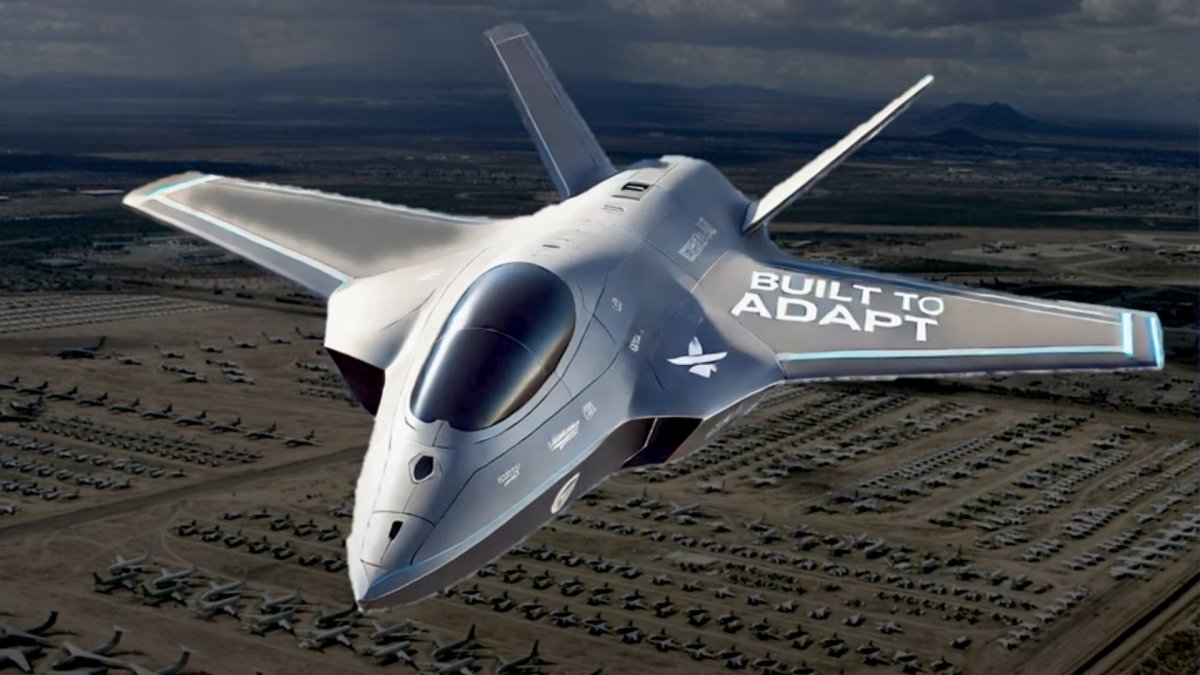
Heck, The USAF Chief outlined a desire for a plane the size of the JF-17 for the USAF, in manned and unmanned versions. “build to adapt”, so we know this is a good size for a collaborate loyal wingman aircraft to partner with the sale of the J-35A, especially if they use the same engine.

 
I don’t think the Arab countries would find it but if the deign is built first as a two seat trainer, it could sell to the PLAAF/PLANAF as @Michael has identified that is niche which need to be filled. An unmanned version could function as a UCAV.

Heck, The USAF Chief outlined a desire for a plane the size of the JF-17 for the USAF, in manned and unmanned versions. “build to adapt”, so we know this is a good size for a collaborate loyal wingman aircraft to partner with the sale of the J-35A, especially if they use the same engine.

Yes. I do think that the follow-on development of the JF-17 should be in the direction of an advanced two-seat light (near-medium) fighter. On the one hand it could provide poorer countries with the ability to approximate 5th gen fighters, and also provide other countries with true 5th gen trainers. At the same time, it fulfills the future UCAV system plans of some countries.

Most importantly, Pakistan must not have a conflict of interest with its partners' target markets. Be it China or Turkey or any other country that is in a position to provide help to Pakistan.

An advanced two-seat light fighter is the current gap in the international market. China's current most advanced trainer is the JL-10. but its development has been slow due to Guiyang's strength. Pakistan can seize this time gap and grab this blank market in China as soon as possible. Once AVIC increases its investment in Guiyang, China's stealth version of the trainer will appear soon. By that time, there will be no more of this huge market.
 
IMO. it's hardly likely.

The JF-17 is a light fighter, that's what it's based on. If you move away from that base and upgrade the JF-17 to a medium fighter, it will clash with the J-10CE. Are you sure CAC is willing to help PAC upgrade the JF-17 to a medium fighter to create commercial competition with its own J-10CE? Even Turkey would not be willing to provide such help. Pakistan is not in a position to do this project on its own at the moment.

The most important feature of a 4.5 or 5 generation fighter is the advanced avionics system. These advanced avionics systems consume a lot of electrical energy. Almost all current generation 4.5 or 5 fighters use twin-engine medium/large thrust engines (the F-35 uses a single-engine large thrust engine), which, in addition to providing propulsive power for the fighters, provide a large amount of electrical energy for the avionics system. A single-engine medium-thrust engine cannot generate enough power. If a twin-engine medium thrust engine is used, please refer to the previous paragraph.
They should, China is somehow really hard on exports of airplanes due geopolitical reasons, meanwhile Pakistan could serve as producer of completely "new" platform atractive for exports with not to much fuss about while money would flow for it.
 
I don’t think the Arab countries would find it but if the deign is built first as a two seat trainer, it could sell to the PLAAF/PLANAF as @Michael has identified that is niche which need to be filled. An unmanned version could function as a UCAV.

Heck, The USAF Chief outlined a desire for a plane the size of the JF-17 for the USAF, in manned and unmanned versions. “build to adapt”, so we know this is a good size for a collaborate loyal wingman aircraft to partner with the sale of the J-35A, especially if they use the same engine.

They will. Pakistan already had good working group with Saudis, UAE and Qatar can also be brought on board
 
Having a supersonic wind tunnel is one of the basic requirements for designing a fighter jet. Next, we need to focus on the relevant supercomputer. It is another basic condition for the design of modern fighter jets. Of course, it also includes a sufficient number of excellent professionals.

In modern industrial society, any final product needs extremely strong behind-the-scenes support. Complete independent design or independent construction is not something that can be realized by a slogan, still less is it a problem that can be solved by politicians shouting loudly.

Let's try to disassemble a complete fighter jet, let's try to analyze every single component, let's try to analyze what it takes to build them. They include the production of raw materials, the manufacturing conditions of the process, and so on. And then work backwards to speculate on what Pakistan currently has and what it still doesn't have. We try to help Pakistan to solve these problems step by step. ------ This is the right approach.

For example:
China uses a monolithic forging and monolithic machining process in the manufacture of the fuselage of its 5th generation fighter jets. It results in the J-20's empty weight being several tons lighter than that of the F-22. This is thanks to the fact that China has built the world's largest super-heavy forging machine. It helped China achieve monolithic forging and molding in building the J-20's titanium main frame.
For the construction of the rest of the airframe, China made extensive use of titanium 3D printing. This is one of the major reasons why Pakistan is currently unable to build the J-35 production line.
So safe to say now that following elements exist:

- manpower
- computational infrastructure
- Wind tunnel(s), both sub and supersonic

Unknown is the manufacturing capability. But we can safely say:

- required machining capabilities exist
- required surface treatment capabilities largely exist
- some level of composite fabrication capability exists ( Shahpar 2 & 3 drone as demonstration of that)
- CAD/CAM capability exists
- Digital design capabilities exists

Not known/does not exist:

- advanced special processes (3D printers, super heavy forging)
- advanced alloys (partially)
- advanced composite raw materials (T800, T1000 carbon fiber, etc.)

All of the above is where support and sourcing from China can help.
 
Last edited:
Adding to that.

- System design and manufacturing exists.
- Software capabilities exists
- electronic board design and manufacturing exists
- harnesses, wires and fiber optic capabilities exists
- Electro-optic capabilities exists
- Limited chip design capabilities exist


Support needed/need to be sourced:

- semiconductors (chips, electro-optic FPA cores, etc)

@Michael
 
Adding to that.

- System design and manufacturing exists.
- Software capabilities exists
- electronic board design and manufacturing exists
- harnesses, wires and fiber optic capabilities exists
- Electro-optic capabilities exists
- Limited chip design capabilities exist


Support needed/need to be sourced:

- semiconductors (chips, electro-optic FPA cores, etc)

@Michael
Oh, I'm sorry, I'm not an airplane designer. I'm not sure about the complete list of the airplane industry.
When I was in high school, I studied electromechanical engineering. I have only a very small knowledge base. I just analyze and reason based on what I already know and combined with some official news from Chinese media.

When we analyze the elements of the aircraft industry, we need to be careful to distinguish between the essential elements and the optional elements. Certain things are not necessary, but it will be better to have them. There is also more than just one technical route to make anything; other technical routes are just as valid.

What I do know is that having a complete airplane industry is very, very tough.
Latest News:
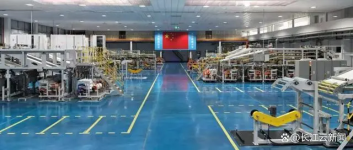
On November 23, 2024, China's first civil aviation tire production line was fully completed and put into production in Guangxi.
rf10e16r.png
Yes, this is China's first civil aviation tire production line.
 
Last edited:
Adding to that.

- System design and manufacturing exists.
- Software capabilities exists
- electronic board design and manufacturing exists
- harnesses, wires and fiber optic capabilities exists
- Electro-optic capabilities exists
- Limited chip design capabilities exist


Support needed/need to be sourced:

- semiconductors (chips, electro-optic FPA cores, etc)

@Michael
Yes , they exist but in an outdated form .
 
There is a strong argument for building indigenous capability rather than buying everything off the shelf. Putting strategic considerations aside how much cheaper would it be to produce and maintain your own equipment as opposed buying from others and relying on them for lifetime support/ upgrades etc? Also potential for export earnings? In terms of can they do it, they started with the Mushak, then K8, then JF-17 all with considerable foreign help and all successful projects. So with assistance from friends like China, what makes u say they can’t take the next logical step?

In principle everything you say is correct. Building indigenous capability should be the way forward. However, that should be practical too. We have to asses if building 4.5+ gen medium weight aircraft from scratch & totally new platform is going to be practically possible or not. I think he was referring to using JF-17 existing platform. This is very much achievable and I think PFX is basically not a medium weight aircraft but its using the same base platform as JF-17. So IMO, even indigenization & modernization of this platform is a good step and very much doable. One thing which I am not really sure about your statement is mentioning China "friend" and their help. Basically this whole exercise is to gain more independence. The PAF officers in IDEAS specially mentioned that we will have our own control on its radars, EW, and other equipment. I think China won't be helping Pakistan as a "friend" but only as a customer. There's a reason why we don't see PL-15e with JF-17s. I think whole PFX thing is to have ability to use own radars and own missiles. IMO, it will still be a 4.5+ gen fighter but same weight category as Jeffs.
 
This entire project annoys the shit out of me. Sure, it can lead to major tech development for future fighter development, but something about it feels completely off.
 

Users who are viewing this thread

Back
Top