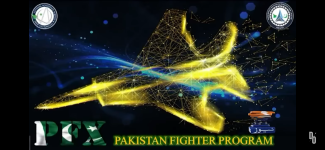
JF-17 PFX program

It will confuse you as they demonstrated non-existant design of PFX. It looks like 5th generation fighter but as the officer mentioned, it will be 4.5gen so a slight upgrade to JF-17
Hi,

As the Korean 5th gen is actually a 4.5++gen---.

Not all canted twin tails are 5th gen's---.

I believe it would be more of a battlefield situational awareness display and warning without any human input---.

One must watch one of the videos of the Gripen Ng---very thought provoking---.
 
Hi,

If someone has the video of the air force officer in the ideas 2024---it will bring more claity to what the upgrades will be.
Hi,

Here is the video---worth watching

To view this content we will need your consent to set third party cookies.
For more detailed information, see our cookies page.
 
My understanding is that Pakistan used China’s defence industry to build Pakistan-first Aircraft. China never showed intentions to induct JF-17 and their Air Force refused any chance of inducting JF-17 in the Chinese flag 20 years ago. I mean Pakistan built JF-17 with Chinese help similar to how iPhone is produced in China.

our relationship with China in the late 90s and early 2000s was unbelievably close so the terms and conditions are almost non-existent. Pakistan can technically take this project to any direction and try to indigenise or involve another partner without any consent of the Chinese government/air force.

We are partners indeed and China makes profit from the export version of JF-17 but it is primarily a for-Pakistan Aircraft with the help of Chinese defence industries.
I don't know whether your view is personal or general in Pakistan. But this view is far from the truth.
Let us first review the history of JF-17.

Phase 1
1986. Pakistan puts forward the SABRE II program and invites bids. In the end, only GRUMMAN was deeply involved in the program and presented the actual proposal.
1988. Pakistan and GRUMMAN failed to agree on a design, and for other reasons, Pakistan terminated the SABRE II program, and GRUMMAN used its existing R&D results to market to China. The United States and China launched the SUPER 7 program.
1989. Due to the “Tiananmen Incident”, the US terminated all US-China cooperation programs, and the SUPER 7 program was terminated.

Phase 2
1991. Dissolution of the Soviet Union. China cooperates with Mikoyan, and CAC seeks to restart the SUPER 7 program on its own.
1992. China seeks cooperation from Pakistan. But Pakistan's actual willingness is not high. Both sides signed a memorandum of cooperation, but no formal contract was signed.
1993. China and Russia signed a cooperation agreement on RD-93 engines. After that, China officially restarts the SUPER 7 program.
1995. China and Pakistan signed a memorandum of understanding for cooperation in the development of new fighter jets, but still no formal contract was signed. The two sides disagreed on some technical details and could not reach an agreement. (At this time, Pakistan did not trust China's technical capabilities and wanted to use a lot of Western equipment and weapons)

Phase 3
1998. India and Pakistan conduct nuclear tests successively. Both sides are subject to international sanctions. Pakistan's access to Western equipment and weapons is cut off.
1999. Kargil War breaks out between India and Pakistan, and a month after the war begins, Pakistan quickly reaches an agreement with China. Formal contracts were signed. The fighter jet was named FC-1. The ratio between China and Pakistan is 50:50.
2003. 01 prototype fighters left the factory on May 21st and completed its maiden flight on August 25th.
2004. FC-1 was officially named. Chinese name “FC-1 枭龙”, Pakistani name “JF-17 Thunder”.
2006. The heavily modified prototype 04 completed its maiden flight.
2007. The first JF-17s were delivered to PAF.
In 2008, PAC officially began assembly of the JF-17, marking the end of the initial development of the JF-17.

What happens after that is simple and public. I will not rehash it.

Combining this information feeds into a couple of questions.
1, The JF-17 program, a collaborative effort between China and Pakistan, is not at all the same concept as the Chinese production of the iPhone.
APPLE has full ownership of the iPhone, it is completely independent and autonomous in finding any suitable partner to manufacture it, and it can also be completely independent and autonomous in building its own factory completely anywhere.
The JF-17 program is jointly owned by China and Pakistan, it does not fully belong to Pakistan. Neither party has the right to do anything over the objection of the other. Based on the reality, China has no objection to Pakistan looking for other alternative subsystems and even supports Pakistan's efforts to localize the production of the JF-17. But this does not mean that China is giving up the other half of the ownership of the JF-17 program.
2, In China's original plan, PLAAF will buy this fighter. However, because Pakistan's technical requirements for this fighter are completely different from PLAAF's, and because Pakistan's constant hesitation has led to a very slow progress of the project's preliminary work, PLAAF finally decided to give up on purchasing this fighter. ------ The J-10 had completed its maiden flight in 1998, a year before Pakistan officially signed the contract.
 
Last edited:
I don't know whether your view is personal or general in Pakistan. But this view is far from the truth.
Let us first review the history of JF-17.

Phase 1
1986. Pakistan puts forward the SABRE II program and invites bids. In the end, only GRUMMAN was deeply involved in the program and presented the actual proposal.
1988. Pakistan and GRUMMAN failed to agree on a design, and for other reasons, Pakistan terminated the SABRE II program, and GRUMMAN used its existing R&D results to market to China. The United States and China launched the SUPER 7 program.
1989. Due to the “Tiananmen Incident”, the US terminated all US-China cooperation programs, and the SUPER 7 program was terminated.

Phase 2
1991. Dissolution of the Soviet Union. China cooperates with Mikoyan, and CAC seeks to restart the SUPER 7 program on its own.
1992. China seeks cooperation from Pakistan. But Pakistan's actual willingness is not high. Both sides signed a memorandum of cooperation, but no formal contract was signed.
1993. China and Russia signed a cooperation agreement on RD-93 engines. After that, China officially restarts the SUPER 7 program.
1995. China and Pakistan signed a memorandum of understanding for cooperation in the development of new fighter jets, but still no formal contract was signed. The two sides disagreed on some technical details and could not reach an agreement. (At this time, Pakistan did not trust China's technical capabilities and wanted to use a lot of Western equipment and weapons)

Phase 3
1998. India and Pakistan conduct nuclear tests successively. Both sides are subject to international sanctions. Pakistan's access to Western equipment and weapons is cut off.
1999. Kargil War breaks out between India and Pakistan, and a month after the war begins, Pakistan quickly reaches an agreement with China. Formal contracts were signed. The fighter jet was named FC-1. The ratio between China and Pakistan is 50:50.
2003. 01 prototype fighters left the factory on May 21st and completed its maiden flight on August 25th.
2004. FC-1 was officially named. Chinese name “FC-1 枭龙”, Pakistani name “JF-17 Thunder”.
2006. The heavily modified prototype 04 completed its maiden flight.
2007. The first JF-17s were delivered to PAF.
In 2008, PAC officially began assembly of the JF-17, marking the end of the initial development of the JF-17.

What happens after that is simple and public. I will not rehash it.

Combining this information feeds into a couple of questions.
1, The JF-17 program, a collaborative effort between China and Pakistan, is not at all the same concept as the Chinese production of the iPhone.
2, In China's original plan, PLAAF will buy this fighter. However, because Pakistan's technical requireHi,

Hi,

This is what it looked like to me---PLAAF re-adjusted the minimum size threshold of the aircaft to the size of J`-10 due to the change in aircrcaft size in the western airforces---the F-35---The eurofighter---The Rafale---.
 
Hi,

This is what it looked like to me---PLAAF re-adjusted the minimum size threshold of the aircaft to the size of J`-10 due to the change in aircrcaft size in the western airforces---the F-35---The eurofighter---The Rafale---.
You are completely wrong on this one.

China did want to equip PLAAF when they restarted the SUPER 7 program. at that time, China, at that time, had absolutely nothing enough (economic/technical/political).
China in the 1990s was suffering from international sanctions and its own extreme poverty, and at the same time, it was very volatile domestically.
When China bought Su-27 from Russia, China emptied its entire treasury and still did not have enough money to pay for it. China and Russia reached an agreement to pay 30% in cash and 70% in goods(livelihood goods). This included 10,000 dog-skin coats. In order to make this 10,000 dog-skin coats (it takes 17 dogs to sew one dog-skin coat), we had to massively hunt dogs throughout the country ......
You can imagine how we could still think the way you say when the country was already so poor.

This kind of thinking came years later, after China started to get rich. It has nothing to do with PLAAF's decision not to buy JF-17s.
 
Last edited:
You can imagine how we could still think the way you say when the country was already so poor.

This kind of thinking came years later, after China started to get rich. It has nothing to do with PLAAF's decision not to buy JF-17s.
Hi,

I will agree with your comments---when money comes in---priorities change---power positioning changes---which brings a change in the equipment needed---.

It is just the norm with the society.

Just like the swedish air force---Paf is also extremely utilitarian and looking at the functionality of the vehicle---operational cost---bang for the buck---.

Many a nation go for the Look See---our brothers in Egypt---. But they got stung with the Rafale deal---.

Same with our brothers the Turks---got stung with the F35 deal---now the eurofighter deal is there---.

Don't know what conditions the germans would add to it---.

It don't look good---. Turks have an extremely difficult time cutting the european umbilical cord---.
 
Last edited:
Take a step back guys remove the paitriotic stance

How realistic is it that Pakistan could build a successor to Jf17 with its current tech level resources and aero eco system.

It takes 15 years and 3 billion dollars to develop three or four prototypes

Then the engines radars Ew suites weapons artificial intelligence angle stealth or semi stealth technology

Even the Europeans won't develope their own now .

Just look at the snails pace Tejas has taken and they have been sending satalites into orbit for decades and export software worth 150 billion dollars a year..

But if they pull.of it....wow

The question centers on: what type of fighter will the PFX be?

1. Is it a light fighter?
The JF-17 B3 is already the pinnacle of light fighters. There is no other light fighter in the world that can match it. The only way to upgrade it is to evolve it to a 5th generation fighter. However, its airframe limitations are too great, resulting in it not being able to meet the standards of a 5th generation fighter.
In the plans of military technology powerhouses, the future light fighters will be fully shifted to UCAVs. with the application of AI in the field of military science and technology, UCAVs will completely surpass the light fighters.
Well, upgrading the JF-17 to a light 5th generation fighter obviously makes little sense.

2. is it a medium fighter?
This would conflict with the real interests of AVIC, whose main products, the J-10CE and the J-35, are both medium-sized fighters. Why should it go all out to help Pakistan develop a medium fighter to grab its market?
Even after Pakistan goes through some negotiations, eventually AVIC may accede to Pakistan's request. AVIC to execute the entire design, AVIC to directly supply all key components, and AVIC to provide technology transfer for the production of some components. The PAC integrates other technologies and performs the final production. ...... But they will surely attach a particularly important condition ------PFX is for PAF use only and export is prohibited. (Referring to the rest of the world copying the F-16)
This means that PAF will have to fully share all the investment in PFX. With Pakistan's economic strength, it is obvious that the PFX will not be produced in large numbers. After the high investment costs are spread out, the unit price of the PFX will be a figure that far exceeds that of the J-10CE/J-35.
Well, what is its purpose and significance?


If I had to explain what PFX is, I would simplify things like this:

What it looks like to me is that PFX is actually not one but three blocks of the JF-17:

  • JF-17 Block-4 (JF17P):A 4.5 generation jet, an indigenized JF-17 Block 3 with some improvements.
    • Further development of Block 3 with some systems improvements.
    • Increased indigenization/localization/Make in Pakistan components.
    • Integration of more weapon systems, both locally made and foreign-imported from friendly countries.
    • May include an upgrade program for Block 1 and 2.

  • JF-17 Block-5 (JF17 Alpha):A 4.5+ generation jet, similar to the transition from Gripen C/D to Gripen E/F (But not proper medium weight).
    • Further development with a better engine and some structural changes with slight enlargement, without significantly altering the overall design parameters.
    • Increased indigenization/localization/Make in Pakistan components.
    • Integration of more weapon systems, both locally made and foreign-imported from friendly countries.

  • JF-17 Block-6 (JF17 PFX or PFX):A 4.5++ (or 5 minus) generation semi-stealth jet, similar to a lightweight, single-engine KFX Block-1.
    • Further development with some stealth design and features.
    • Likely to be a purely Pakistani fighter, not joint fighter, nor 100% locally made. (although with the assistance of China, Turkey, and other friendly countries).

Regarding Timelines consider around 4 year (+/- 1 year) for each block.


P.S.: Please note that this is just my understanding of what PFX is. I do not have any insider information.
 
Last edited:
If I had to explain what PFX is, I would simplify things like this:

What it looks like to me is that PFX is actually not one but three blocks of the JF-17:

  • JF-17 Block-4 (JF17P):A 4.5 generation jet, an indigenized JF-17 Block 3 with some improvements.
    • Further development of Block 3 with some systems improvements.
    • Increased indigenization/localization/Make in Pakistan components.
    • Integration of more weapon systems, both locally made and foreign-imported from friendly countries.
    • May include an upgrade program for Block 1 and 2.

  • JF-17 Block-5 (JF17 Alpha):A 4.5+ generation jet, similar to the transition from Gripen C/D to Gripen E/F (But not proper medium weight).
    • Further development with a better engine and some structural changes with slight enlargement, without significantly altering the overall design parameters.
    • Increased indigenization/localization/Make in Pakistan components.
    • Integration of more weapon systems, both locally made and foreign-imported from friendly countries.

  • JF-17 Block-6 (JF17 PFX or PFX):A 4.5++ (or 5 minus) generation jet, similar to a lightweight, single-engine KFX Block-1.
    • Further development with some stealth design and features.
    • Likely to be a purely Pakistani fighter, not joint fighter, nor 100% locally made. (although with the assistance of China, Turkey, and other friendly countries).


P.S.: Please note that this is just my understanding of what PFX is. I do not have any insider information.
i will go with block 4 and 5 combined and that is called PFX. My personal opinion. may be add one more HP and IRST like that on J10 CP.

P.S.: Please note that this is just my understanding of what PFX is. I do not have any insider information.
 
If I had to explain what PFX is, I would simplify things like this:

What it looks like to me is that PFX is actually not one but three blocks of the JF-17:

  • JF-17 Block-4 (JF17P):A 4.5 generation jet, an indigenized JF-17 Block 3 with some improvements.
    • Further development of Block 3 with some systems improvements.
    • Increased indigenization/localization/Make in Pakistan components.
    • Integration of more weapon systems, both locally made and foreign-imported from friendly countries.
    • May include an upgrade program for Block 1 and 2.

  • JF-17 Block-5 (JF17 Alpha):A 4.5+ generation jet, similar to the transition from Gripen C/D to Gripen E/F (But not proper medium weight).
    • Further development with a better engine and some structural changes with slight enlargement, without significantly altering the overall design parameters.
    • Increased indigenization/localization/Make in Pakistan components.
    • Integration of more weapon systems, both locally made and foreign-imported from friendly countries.

  • JF-17 Block-6 (JF17 PFX or PFX):A 4.5++ (or 5 minus) generation semi-stealth jet, similar to a lightweight, single-engine KFX Block-1.
    • Further development with some stealth design and features.
    • Likely to be a purely Pakistani fighter, not joint fighter, nor 100% locally made. (although with the assistance of China, Turkey, and other friendly countries).

Regarding Timelines consider around 4 year (+/- 1 year) for each block.


P.S.: Please note that this is just my understanding of what PFX is. I do not have any insider information.
My point is.
The “JF-17 PFX program” is a product of a political struggle. It's pointless to analyze any of its technical indicators right now.

Whatever Pakistan does with the JF-17 PFX program, it will change the existing political landscape in Pakistan.
 
IMO PFX will be similar to LCA MK2
A more powerful engine.
Better Range
Better Payload
More HP
Better Sensors.
Airframe will be modified but not redesigned..
But can they can do it without chinese OEM ?
 
IMO PFX will be similar to LCA MK2
A more powerful engine.
Better Range
Better Payload
More HP
Better Sensors.
Airframe will be modified but not redesigned..
But can they can do it without chinese OEM ?


as such it cannot be like the Tejas Mk.2 which differs almost in every aspect by being redesigned (larger, heavier, delta-canard vs simple delta configuration)!
 
Again, We may not know what the defence organizations are hiding in their facilities but we can extrapolate from what is available outside.

We have 1 PFLOPs (peak) supercomputer in NUST so it’s safe to assume that NESCOM has something better and now NASTP is also planning to have its own.
nastp has a supercomputer already operational and they are building a second one for PFX at nastp Kamra
 
as such it cannot be like the Tejas Mk.2 which differs almost in every aspect by being redesigned (larger, heavier, delta-canard vs simple delta configuration)!
Airframe design is for PAC to decide. How much change they want to so.
 
Airframe design is for PAC to decide. How much change they want to so.
They have given some hints at what they seek, a redesign, which I hope they go for, considering the JF-17 has reached the end of what can be done with the design.

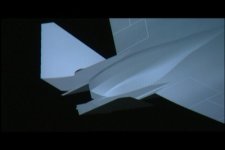
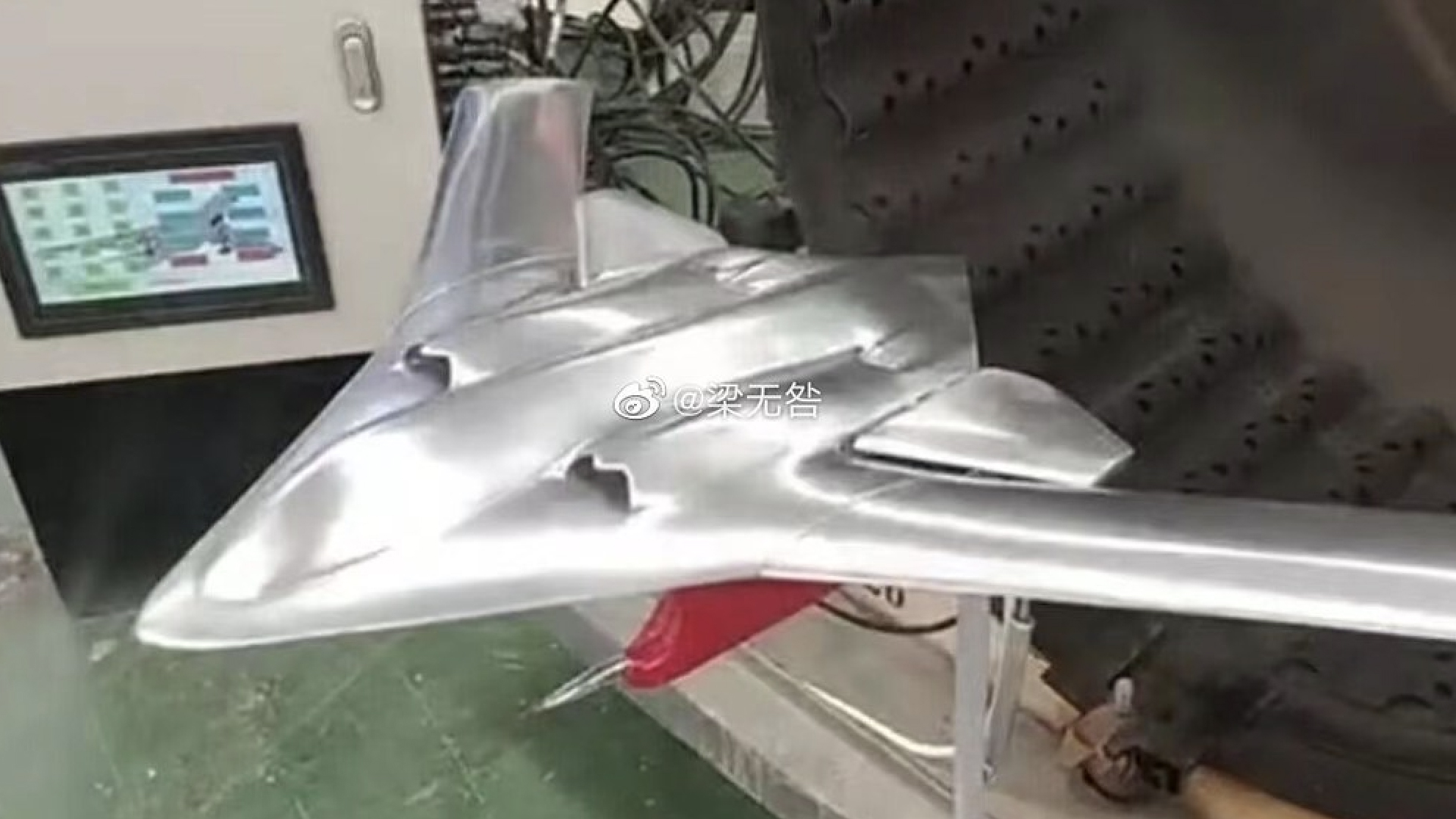
I don’t know the name of the wing shape, but the W shape (split/wedge ailerons/flaps ?) in the wings is something seen in the PFX video. Also the stabilizer looks to be two and canted.

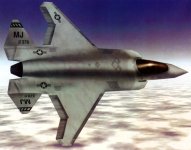
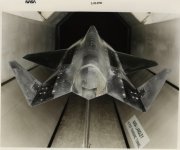
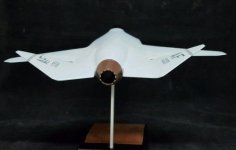
The PFX should study the McDonnell Douglass JAST designs particularly “JAST 6” design. A 30 year old design, but now probably very economical to make, if done in volume.

The original design was for a 156 kn F-119 engine, so if the PAF wants to scale up as @MastanKhan has always advocated this is the way to go. But I disagree with Mastan Khan, and say if the PAF needs a fighter in that weight class, buy more of the capable J-35A. We need a JF-17 replacement that fills a 4 BVR and 2 WVR role, but can also carry adequate internal A2G munitions in an air strike configuration.

If the PAF wants to stay in the JF-17 size, then stay with a WS-19 at 116 kn.

If you are going to scale down but still have a design that allows the plane to carry 4 PL-15 and 2 PL-10 INTERNALLY, that is possible, but I don’t want to share it on the open forum. Hint the main internal weapons bay is a 2 over 2 configuration for the PL-15 which would make a large enough to carry some standoff and strategic weapons internally. The WVR missiles are in a unique INTERNAL position.

Change the intake to the Mach 1.8 DSI from the J-35A, and perhaps change the exhaust to a YF-23 style one to reduce the IR signature.

If the PAF is really ambitious, go for a “Pelikan tail” along with the YF-23 exhaust. That would give TVC level maneuverability but much lighter.

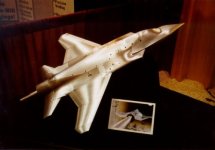
Look at the wing shape and the tail shape. Even the intake is a standard intake; the design is inspired by the JAST IMHO
IMG_6562.png
1733315533839.jpeg

Skip the first 15 seconds, not relevant to the JAST design I’m discussing. From 0:15-1:35
To view this content we will need your consent to set third party cookies.
For more detailed information, see our cookies page.


1733315480370.jpeg

A wind tunnel tested design
1733316582761.jpeg

The exhaust modification is not theoretical, it was tested at NASA’s Langley Windtunnel
1733318154068.jpeg

Just to show how nearly horizontal the tail is, and how low the RCS, see the following picture. Even if the design doesn’t eventually have an internal bay(s), it will still be lower signature then any non-5th gen manned platform out there, and could easily make a decent loyal wingman.
1733318247527.jpeg

It may seem the tail work will be a lot, and delay the project, but if you consider the years of work done on Chinese bomber projects, specifically the H-20 and its tail, a lot could be applied to this project.

H-20_MODEL_AVIC.jpg
 
Last edited:

Users who are viewing this thread

Pakistan Defence Latest

Country Watch Latest

Latest Posts

Back
Top