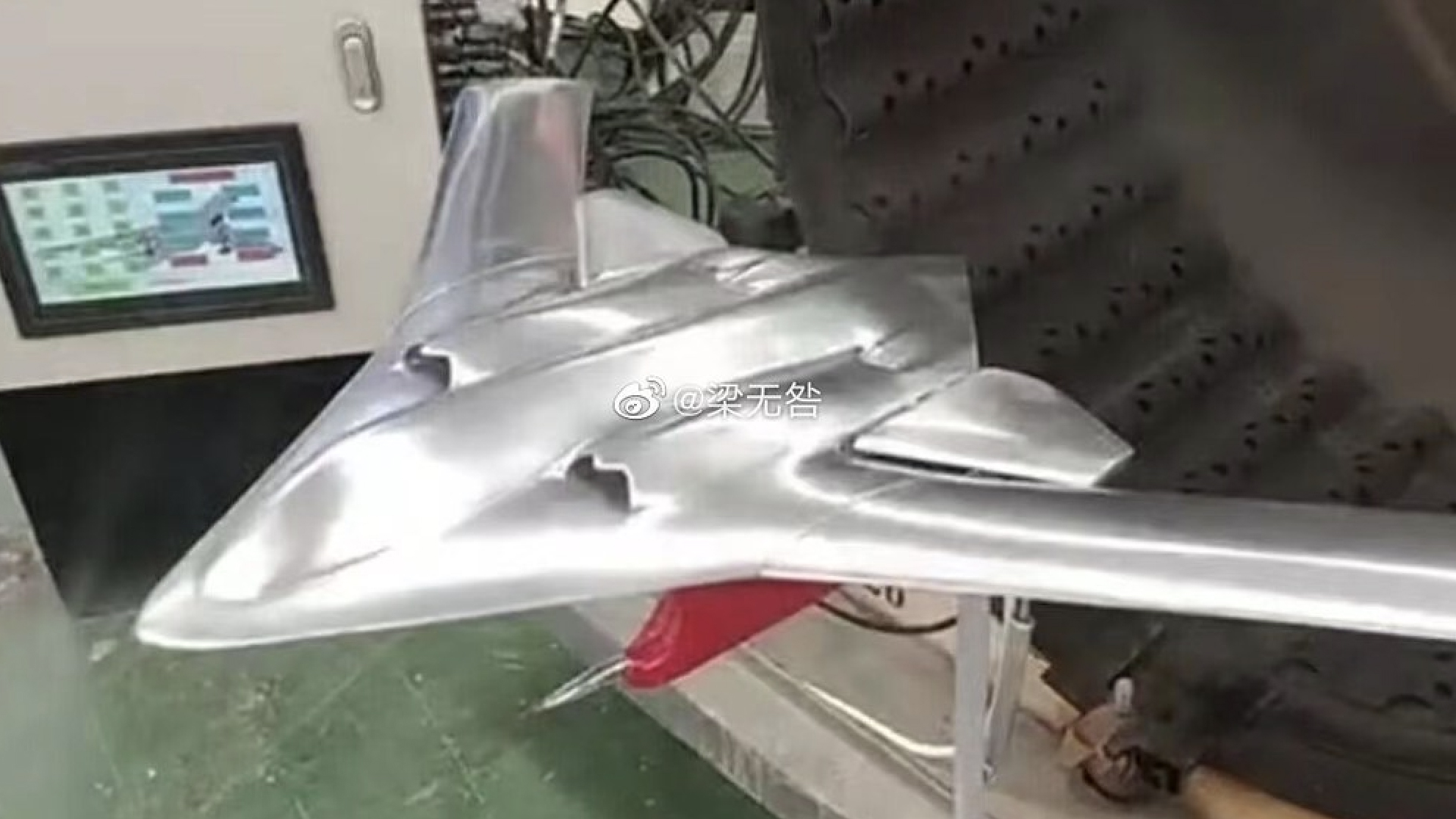
They have given some hints at what they seek, a redesign, which I hope they go for, considering the JF-17 has reached the end of what can be done with the design.
I don’t know the name of the wing shape, but the W shape (split/wedge ailerons/flaps ?) in the wings is something
seen in the PFX video. Also the stabilizer looks to be two and canted.
The PFX should study the McDonnell Douglass JAST designs particularly “JAST 6” design. A 30 year old design, but now probably very economical to make, if done in volume.
The original design was for a 156 kn F-119 engine, so if the PAF wants to scale up as
@MastanKhan has always advocated this is the way to go. But I disagree with Mastan Khan, and say if the PAF needs a fighter in that weight class, buy more of the capable J-35A. We need a JF-17 replacement that fills a 4 BVR and 2 WVR role, but can also carry adequate internal A2G munitions in an air strike configuration.
If the PAF wants to stay in the JF-17 size, then stay with a WS-19 at 116 kn.
If you are going to scale down but still have a design that allows the plane to carry 4 PL-15 and 2 PL-10
INTERNALLY,
that is possible, but I don’t want to share it on the open forum. Hint the main internal weapons bay is a 2 over 2 configuration for the PL-15 which would make a large enough to carry some standoff and strategic weapons internally. The WVR missiles are in a unique INTERNAL position.
Change the intake to the Mach 1.8 DSI from the J-35A, and perhaps change the exhaust to a YF-23 style one to reduce the IR signature.
If the PAF is really ambitious, go for a “Pelikan tail” along with the YF-23 exhaust. That would give TVC level maneuverability but much lighter.
Look at the wing shape and the tail shape. Even the intake is a standard intake; the design is inspired by the JAST IMHO
View attachment 86322
View attachment 86326
Skip the first 15 seconds, not relevant to the JAST design I’m discussing. From 0:15-1:35
View attachment 86325
A wind tunnel tested design
View attachment 86337
The exhaust modification is not theoretical, it was tested at NASA’s Langley Windtunnel
View attachment 86346
Just to show how nearly horizontal the tail is, and how low the RCS, see the following picture. Even if the design doesn’t eventually have an internal bay(s), it will still be lower signature then any non-5th gen manned platform out there, and could easily make a decent loyal wingman.
View attachment 86348
It may seem the tail work will be a lot, and delay the project, but if you consider the years of work done on Chinese bomber projects, specifically the H-20 and its tail, a lot could be applied to this project.