Indian Politics and Internal News

1733790359473.png

About Scholarship​

India has been a long standing development partner of Nepal and the partnership with Nepal emerges from deep bonds of friendship between the two countries. India's human resource and capacity building programs in Nepal through scholarship schemes has a long history spanning over decades with extensive covering of students from class VI to PhD in a wide spectrum of courses/streams ranging from Engineering, Medicine, Agriculture, Pharmacology, Food Technology, Computer Application, Business Administration, Music & Fine Arts etc. It flows from India's focus on Neighbourhood First' policy and India's aim to create mutually beneficial cooperation. :coffee:

To contribute in the human resource development and nation building of Nepal, around 1500 scholarships/seats are provided every year to Nepalese Nationals by the Government of India. Since 2006 alone, India's scholarship programs in Nepal has benefitted more than 27,000 students. It not only funds students studying in India, but also covers students who are studying in schools/colleges in Nepal. (y)

The Mahatma Gandhi Scholarship Scheme (MGSS) funds students of class XI and Class XII to pursue their education in Nepal, whereas the Golden Jubilee Scholarship Scheme (GJSS) funds undergraduate students to pursue professional courses such as MBBS/BDS, B.E./B.Tech and other three years courses in Nepal.

Army Public School (APS) Scholarship scheme for the students of Class VI, VII, VIII, IX & XI, enables students of Nepal to study in the academies of APS in Pithorgarh, Dhaula Khan and Noida in India. The

prominent ICCR scholarship schemes- the Atal Bihari Vajpayee General Scholarship Scheme (ABVGSS) and the Silver Jubilee Scholarship Scheme (SJSS) provide the opportunity to Nepali Nationals to pursue Under Graduate, Post Graduate and PhD Courses in prominent and prestigious universities/institutes of India. AYUSH scholarship scheme is for Nepali students who are interested in pursuing traditional medicines in India, and the popular COMPEX scholarship scheme is for students to pursue undergraduate courses in Engineering, Pharmacy, Agriculture, Food Technology and Nursing in India. Nepali Nationals may pursue Masters in Engineering in India under the Homi Jahangir Baba Scholarship Scheme and Masters in Agriculture under the Nepal Aid Fund scholarship scheme. :)

The cultural and geographical proximity and special bonding between the people of India and Nepal has made India the second home of students from Nepal and the scholarship schemes are a very strong medium for Nepali citizens to fulfill their aspirations by pursuing education in India's prestigious universities/colleges. :coffee:

 
Pakistan should also be on this Newly Industrialized Country list as well.

We 252 million Pakistanis need to get our act together and fix our country.
 
Interesting Facts about India

India never invaded any country in her last 100000 years of history.

When many cultures were only nomadic forest dwellers over 5000 years ago, Indians established Harappan culture in Sindhu Valley (Indus Valley Civilization)

The name 'India' is derived from the River Indus, the valleys around which were the home of the early settlers. The Aryan worshippers referred to the river Indus as the Sindhu.


The Persian invaders converted it into Hindu. The name 'Hindustan' combines Sindhu and Hindu and thus refers to the land of the Hindus.

Chess was invented in India.

Algebra, Trigonometry and Calculus are studies, which originated in India.

The 'Place Value System' and the 'Decimal System' were developed in India in 100 B.C.

The World's First Granite Temple is the Brihadeswara Temple at Tanjavur, Tamil Nadu. The shikhara of the temple is made from a single 80-tonne piece of granite. This magnificent temple was built in just five years, (between 1004 AD and 1009 AD) during the reign of Rajaraja Chola.


India is the largest democracy in the world, the 7th largest Country in the world, and one of the most ancient civilizations.

The game of Snakes & Ladders was created by the 13th century poet saint Gyandev. It was originally called 'Mokshapat'. The ladders in the game represented virtues and the snakes indicated vices. The game was played with cowrie shells and dices. In time, the game underwent several modifications, but its meaning remained the same, i.e. good deeds take people to heaven and evil to a cycle of re-births.

The world's highest cricket ground is in Chail, Himachal Pradesh. Built in 1893 after leveling a hilltop, this cricket pitch is 2444 meters above sea level.

The world's first university was established in Takshila in 700 BC. More than 10,500 students from all over the world studied more than 60 subjects. The University of Nalanda built in the 4th century was one of the greatest achievements of ancient India in the field of education.

Ayurveda is the earliest school of medicine known to mankind. The Father of Medicine, Charaka, consolidated Ayurveda 2500 years ago.

India was one of the richest countries till the time of British rule in the early 17th Century. Christopher Columbus, attracted by India's wealth, had come looking for a sea route to India when he discovered America by mistake.

The Art of Navigation & Navigating was born in the river Sindh over 6000 years ago. The very word Navigation is derived from the Sanskrit word 'NAVGATIH'.
The word navy is also derived from the Sanskrit word 'Nou'.

Bhaskaracharya rightly calculated the time taken by the earth to orbit the Sun hundreds of years before the astronomer Smart. According to his calculation, the time taken by the Earth to orbit the Sun was 365.258756484 days.

The value of "pi" was first calculated by the Indian Mathematician Budhayana, and he explained the concept of what is known as the Pythagorean Theorem. He discovered this in the 6th century, long before the European mathematicians.

Algebra, Trigonometry and Calculus also originated in India.Quadratic Equations were used by Sridharacharya in the 11th century.
The largest numbers the Greeks and the Romans used were 106 whereas Hindus used numbers as big as 10*53 (i.e. 10 to the power of 53) with specific names as early as 5000 B.C.during the Vedic period.Even today, the largest used number is Terra: 10*12(10 to the power of 12).

Until 1896, India was the only source of diamonds in the world
(Source: Gemological Institute of America).

The Baily Bridge is the highest bridge in the world. It is located in the Ladakh valley between the Dras and Suru rivers in the Himalayan mountains. It was built by the Indian Army in August 1982.

Sushruta is regarded as the Father of Surgery. Over2600 years ago Sushrata & his team conducted complicated surgeries like cataract, artificial limbs, cesareans, fractures, urinary stones, plastic surgery and brain surgeries.

Usage of anaesthesia was well known in ancient Indian medicine. Detailed knowledge of anatomy, embryology, digestion, metabolism,physiology, etiology, genetics and immunity is also found in many ancient Indian texts.


India exports software to 90 countries.

The four religions born in India - Hinduism, Buddhism, Jainism, and Sikhism, are followed by 25% of the world's population.

Jainism and Buddhism were founded in India in 600 B.C. and 500 B.C. respectively.

Islam is India's and the world's second largest religion.

There are 300,000 active mosques in India, more than in any other country, including the Muslim world.

The oldest European church and synagogue in India are in the city of Cochin. They were built in 1503 and 1568 respectively.

Jews and Christians have lived continuously in India since 200 B.C. and 52 A.D. respectively

The largest religious building in the world is Angkor Wat, a Hindu Temple in Cambodia built at the end of the 11th century.

The Vishnu Temple in the city of Tirupathi built in the 10th century, is the world's largest religious pilgrimage destination. Larger than either Rome or Mecca, an average of 30,000 visitors donate $6 million (US) to the temple everyday.


Sikhism originated in the Holy city of Amritsar in Punjab. Famous for housing the Golden Temple, the city was founded in 1577.
Varanasi, also known as Benaras, was called "the Ancient City" when Lord Buddha visited it in 500 B.C., and is the oldest, continuously inhabited city in the world today.

India provides safety for more than 300,000 refugees originally from Sri Lanka, Tibet, Bhutan, Afghanistan and Bangladesh, who escaped to flee religious and political persecution.

His Holiness, the Dalai Lama, the exiled spiritual leader of Tibetan Buddhists, runs his government in exile from Dharmashala in northern India.

Martial Arts were first created in India, and later spread to Asia by Buddhist missionaries.

Yoga has its origins in India and has existed for over 5,000 years.

Interesting Facts about India - My India, My Pride - Know India: National Portal of India

Quadratic Equations were used by Sridharacharya in the 11th century. :coffee:

Sridharacharya​


Quadratic equations were used by Sridharacharya in the 11th century.

Sridharacharya is referred ot by Bhaskara II as a distinguished mathematician and is quoted by the latter in a number of places. He work under the title Patiganita and the other a smaller tract called Trisatika, both of which have been edited, and of which a number of manuscripts also exist. His algebra is no longer extant, but is known from Bhaskara's references. The same arithmetical topics as are discussed by Brahmagupta, Mahavira and Bhaskara II are treated in the Trisatika. For multiplication, he uses a new term Pratyutpanna (re-produced) and discusses the kapata-sandhi (door-junction, Gelosia) method which became very popular among later Hindu writers and was transmitted to the West through Arab works.

We know from Bhaskara that Sridharacharya was the discoverer of a method of solving quadratic equations in which the two sides require to be multiplied by four times the cofficient of x**2. An application of this method is also preserved in his arithmetic. Sridhara's contemporary Sripati is well known for his arithmetic Ganita-tilaka commented upon by Simhatilaka Suri in the thirteenth Century. ☕

The largest numbers the Greeks and the Romans used were 106 where as Hindus used numbers as big as 10**53(10 to the power of 53) with specific names as early as 5000 BCE during the Vedic period. Even today, the largest used number is Tera 10**12(10 to the power of12).


.
=>

TIL : that the formula for solving quadratic equations was formulated by an indian mathematician sridhar acharya in 8ce ( year isnt too sure)​

https://www.reddit.com/r/india/comments/5ky5qh/til_that_the_formula_for_solving_quadratic/?rdt=39711
https://www.reddit.com/r/india/?f=flair_name:"Non-Political"
.
=>

Algebra, trigonometry and calculus came from India. Quadratic equations were by Sridharacharya in the 11th century. The largest numbers the Greeks and the Romans used were 106 whereas Hindus used numbers as big as 10**53(10 to the power of 53) with specific names as early as 5000 BCE during the Vedic period. Even today, the largest used number is Tera 10**12(10 to the power of 12).

To view this content we will need your consent to set third party cookies.
For more detailed information, see our cookies page.


.
=> At what grade is the quadratic formula first taught at your country?

B tech in Computer Science Engineering, Indian Institute of Technology, Gandhinagar (IITGN) (Expected 2027)Author has 222 answers and 9.3M answer views1y
main-qimg-75511de2fa11329523d41bfca8fbaced

In India, the Sridharacharya Formula (a.k.a. quadratic formula) is usually introduced to students in their 8th or 9th grade. This corresponds to middle school or early high school level education for students around 13 to 15 years old.

The quadratic formula is an important concept in the algebra portion of the mathematics curriculum. However, it's worth noting that educational practices can vary from one state or board to another within India, so the specific grade level might vary slightly depending on the curriculum followed by the school.
 
LOL @Title, it is stupid.

How can a country of 1.42 billion people which is India have a smaller economy than Japan when Japan has a population of 125 million people?

Analysis: India will naturally have a larger economy than Japan due to its sheer population.
No matter how I look at it, the Philippines seems to be deindustrializing rather than moving toward industrialization. Despite having the second-largest population in Southeast Asia, they consume significantly less electricity than Thailand, Malaysia, Indonesia, and Vietnam. That alone speaks volumes about their level of industrial activity. Their economy is overwhelmingly service-based, with services accounting for over 60% of their GDP. For perspective, South Korea's services sector made up just 39% of its GDP in 1988 and 58% by 2010, with the latter during a period when their economic situation was far better than what Filipinos are facing today. And let's be honest, you can't industrialize without a capable, highly educated workforce, which is an area where the Philippines lags behind other Southeast Asian countries.


here we have GDP on PPP as below. India is listed at $16.0+ on 3rd place....
also, GDP on PPP has many 'undocumented' parts, the ratio we must include in case of a 'developing' economy. as we dont document those ratios of GDP while estimating GDP of a developing economy :coffee:

=> i would say, living standard of Japanese or German would be compared to 31% Middle class of India which is estimated near $20,000+ on PPP, as per the reference as below. the remaining nearly 69% people of India, mostly based in Agriculture, would have per capita income nearly $5,000 on PPP, which is close to Agriculture countries like Nepal-Myanmar etc....
India's GDP on PPP per capita is measured above $11,112 as below:-

Nepal and Myanmar are listed with LDC countries.
Nepal and Myanmar are listed with LDC countries. here i find people of India-Nepal-Myanmar based on Agriculture have more peaceful life than those who are based on Manufacturing and Services in India.... :)
.

=> The middle class is the fastest-growing major segment of the Indian population in both percentage and absolute terms, rising at 6.3 percent per year between 1995 and 2021. It now represents 31 percent of the population and is expected to be 38 percent by 2031
 
Last edited:
its an Art to fight with hands, along with with few arms on hands also. whatever i know :coffee:
Please don't reproduce material from web-sites, blogs, Facebook pages and Twitter accounts that you cannot substantiate. Those may or may not be correct, but they each need to be fact-checked, otherwise posts based on those amount to spamming.
 
we call "Jai Hind" for the nation since school of my age, mine was during 80s and 90s.... :)

here, the "Indian Ocean" and "Hind Mahasagar" in Hindi language we discuss for the Hind land of Asia and similarly in English name, its "Indian subcontinent land",

i hope i would have cleared the difference between what we study since school upto now.....

further, the India's Hindi name is 'Hindustan'-'Bharat' both are in Hindi language. have you heard "Jai India"? its too poor to be called..... we even throw 'Jai Bharat' to rubbish bin....
only "Jai Hind" is what only we use for the nation.. :)

Britain had rule mainly starting from 1900 century which was similar to US-west stay in Afghanistan....... President Rule of US-west couldn't get taxes from whole Afghan during their stay, little bit Tax collection was seen on Kabul Area only..... similar to British stayed India, India or Afghanistan also didn't pay taxes, mostly, to Western Rule.....

Historian seriously doubt the term "colony" used for India. the British Tax Collection, starting from somehow since 1900 to upto 1947, was rarely covering whole India :coffee:

a news during troubled rule of Britain as below ........
.

=> it was observed that Congress was seen more powerful during British stay on India. the Congress which was led as president by both My Gandhi and Mr SC Bose both...... :)
Your facts and your interpretation are both wrong.
 
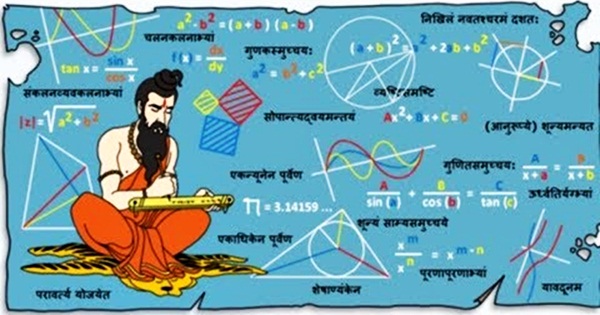
about the topic, from post#1, an ancient story of Modern Math is as below:- :coffee:
.

=>
Algebra, Trigonometry and Calculus are studies, which is originated in India.

Please don't reproduce material from web-sites, blogs, Facebook pages and Twitter accounts that you cannot substantiate. Those may or may not be correct, but they each need to be fact-checked, otherwise posts based on those amount to spamming.
 
further, as per the topic, the one is as below :coffee:
.

=>
The 'Place Value System' and the 'Decimal System' were developed in India in 100 B.C.

.

=> https://www.britannica.com/science/Indian-mathematics
.
=>

The Indian Decimal Place Value System​

Please don't reproduce material from web-sites, blogs, Facebook pages and Twitter accounts that you cannot substantiate. Those may or may not be correct, but they each need to be fact-checked, otherwise posts based on those amount to spamming.
 
Not indus river ......Columbus era folks called Americans Indians. I read India wasn't called by that name until the 18th century

??

indiana ....
You are wrong.

The name India was in use from the 4th century BC, by Greek subjects of the Persian Achaemenid Empire, whose two richest provinces (in terms of revenue yield) were located in the Indus Valley.
 
The Art of Navigation & Navigating was born in the river Sindh over 6000 years ago. The very word Navigation is derived from the Sanskrit word 'NAVGATIH'. The word navy is also derived from the Sanskrit word 'Nou'. :coffee:

The art of Navigation was born in the river Sindhu 6000 years ago. The very word Navigation is derived from the Sanskrit word ‘Navgatih’. The word navy is also derived from Sanskrit ‘Nou’.

In those days India had colonies, in Cambodia (Kambuja in Sanskrit) in Java, (Chavakam or Yava dwipa) in Sumatra, in Borneo, Socotra (Sukhadhara) and even in Japan. Indian traders had established settlements in Southern China, in the Malayan Peninsula, in Arabia, in Egypt, in Persia, etc., Through the Persians and Arabs, India had cultivated trade relations with the Roman Empire. ☕

Sanskrit and Pali literature has innumerable references to the maritime activity of Indians in ancient times. There is also one treatise in Sanskrit, named Yukti Kalpa Taru which has been compiled by a person called Bhoja Narapati. (The Yukti Kalpa Taru (YKT) had been translated and published by Prof. Aufrecht in his ‘Catalogue of Sanskrit Manu scripts.

A panel found at Mohenjodaro, depicting a sailing craft. Vessels were of many types Their construction is vividly described in the Yukti Kalpa Taru an ancient Indian text on Ship-building. This treatise gives a technocratic exposition on the technique of shipbuilding. It sets forth minute details about the various types of ships, their sizes, the materials from which they were built. The Yukti Kalpa Taru sums up in a condensed form all the available information

The Yukti Kalpa Taru gives sufficient information and date to prove that in ancient times, Indian shipbuilders had a good knowledge of the materials which were used in building ships. Apart from describing the qualities of the different types of wood and their suitability in shipbuilding, the Yukti Kalpa Taru also gives an elaborate classification of ships based on their size.

The primary division is into 2 classes viz. Samanya (ordinary) and Vishesha (Special). The ordinary type for sea voyages. Ships that undertook sea voyages were classified into, Dirgha type of ships which had a long and narrow hull and the Unnata type of ships which had a higher hull. The treatise also gives elaborate directions for decorating and furnishing the ships with a view to making them comfortable for passengers. Also mentioned are details about the internal seating and accommodation to be provided on the ships. Three classes of ships are distinguished according to their length and the position of cabins. The ships having cabins extending from one end of the deck to the other are called Sarvamandira vessels.

These ships are recommended for the transport of royal treasure and horses. The next are the Madhyamarnandira vessels which have cabins only in the middle part of their deck. these vessels are recommended for pleasure trips. And finally there is a category of Agramandira vessels, these ships were used mainly in warfare.

To view this content we will need your consent to set third party cookies.
For more detailed information, see our cookies page.

Please don't reproduce material from web-sites, blogs, Facebook pages and Twitter accounts that you cannot substantiate. Those may or may not be correct, but they each need to be fact-checked, otherwise posts based on those amount to spamming.
 
Yeah ,I have seen things like this unfurl couple of times !

A so called slum areas in delhi was to be developed in 2016 and the most righteous political party in existence was in charge of the de-slumification of Delhi ! 🤣

So all the slum people were provided with a 2BHK FLAT ! with all the standard amenities that DDA was providing at that time (clean water, proper sanitation,and basically everything you can expect in a government funded society)

And after a few days the newspapers and all digital media went crazy at the condition of the flats 😂 , (all the usual stuff)
Only 2 rooms provided for a family of 6 , people with old family members were not considered for the ground floor flats , there were no lifts in the flats 😂 ( can you belive it!,they want lifts in 2 story high flats!)
Main road not wide enough, no parking spaces for cars ( yes slum dwellers owned cars)

And after the allotment they made a huge mess that even AAP had to cancel its plans for development

THAT SLUM EXISTS EVEN TODAY !!!

I am damn sure the same thing is going to happen in every slum redevelopment,even if
Adani gives each family a decent flat !
The will not part with their ownership of the slum! They will file court cases and go to the human rights division

Adani has taken the charge of the redevelopment but nobody can handle these guys and sadly but surely Adani's project is bound to fail!


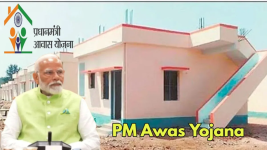
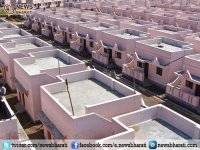
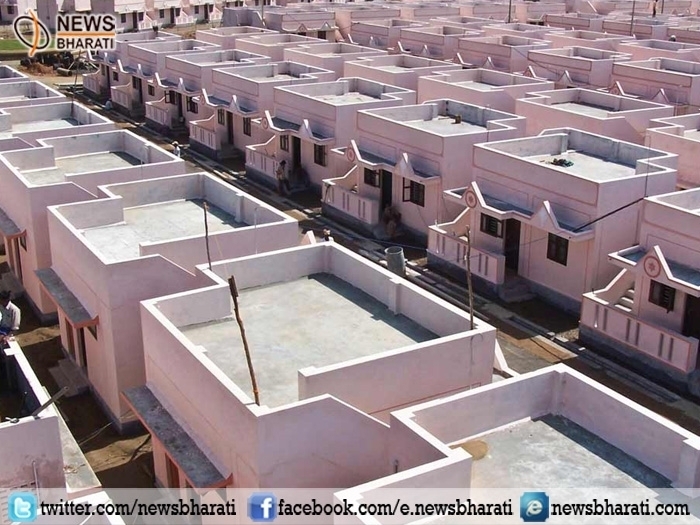
here is a picture of the same 'PMAY-G' for houses for rural areas. i guess, these small houses would be 2 room house :coffee:

=>

1733956996103.png


.
=>
1733957030562.png
 
The Centre has approved 708 proposals for construction of 3.61 lakh houses under Pradhan Mantri Awas Yojana – Urban (PMAY-U) on 8 June 2021. :coffee:

1733957152371.png

 
Yeah ,I have seen things like this unfurl couple of times !

A so called slum areas in delhi was to be developed in 2016 and the most righteous political party in existence was in charge of the de-slumification of Delhi ! 🤣

So all the slum people were provided with a 2BHK FLAT ! with all the standard amenities that DDA was providing at that time (clean water, proper sanitation,and basically everything you can expect in a government funded society)

And after a few days the newspapers and all digital media went crazy at the condition of the flats 😂 , (all the usual stuff)
Only 2 rooms provided for a family of 6 , people with old family members were not considered for the ground floor flats , there were no lifts in the flats 😂 ( can you belive it!,they want lifts in 2 story high flats!)
Main road not wide enough, no parking spaces for cars ( yes slum dwellers owned cars)

And after the allotment they made a huge mess that even AAP had to cancel its plans for development

THAT SLUM EXISTS EVEN TODAY !!!

I am damn sure the same thing is going to happen in every slum redevelopment,even if
Adani gives each family a decent flat !
The will not part with their ownership of the slum! They will file court cases and go to the human rights division

Adani has taken the charge of the redevelopment but nobody can handle these guys and sadly but surely Adani's project is bound to fail!


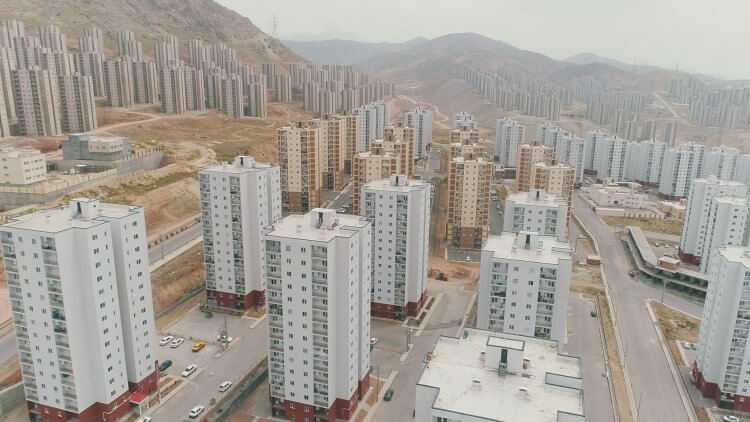
here is a picture for "PMAY URBAN" section for cities, on the Indian government website :coffee:


View attachment 88016


.
=> View attachment 88020
 

Users who are viewing this thread

Pakistan Defence Latest

Country Watch Latest

Latest Posts

Back
Top