India To Sign 10-Year Deal With Iran To Manage Chabahar Port

Joined
May 5, 2024
Messages
2,711
Reaction score
3,335
Reputation
133.6
Country of Origin
Country of Residence
India To Sign 10-Year Deal With Iran To Manage Chabahar Port: Report
New Delhi:

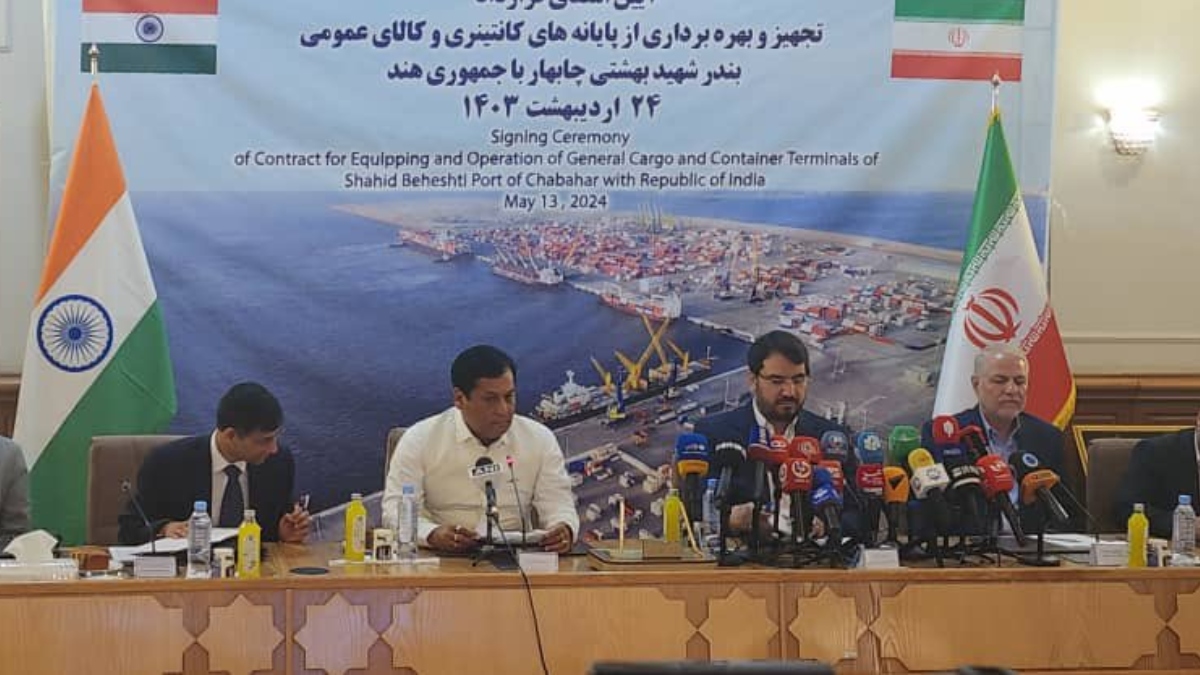
India is likely to sign an agreement with Iran on Monday to manage the southeastern Iranian port of Chabahar for the next 10 years, the Economic Times reported.

India Shipping Minister Sarbananda Sonowal is likely to travel to Iran to sign the agreement, the report said, citing unidentified sources.

The Indian government did not immediately respond to a request for comment.
 
To view this content we will need your consent to set third party cookies.
For more detailed information, see our cookies page.
 

India developing Chabahar Port holds ‘great value’ to landlocked Central Asian states: PM Modi​

1733988288399.png
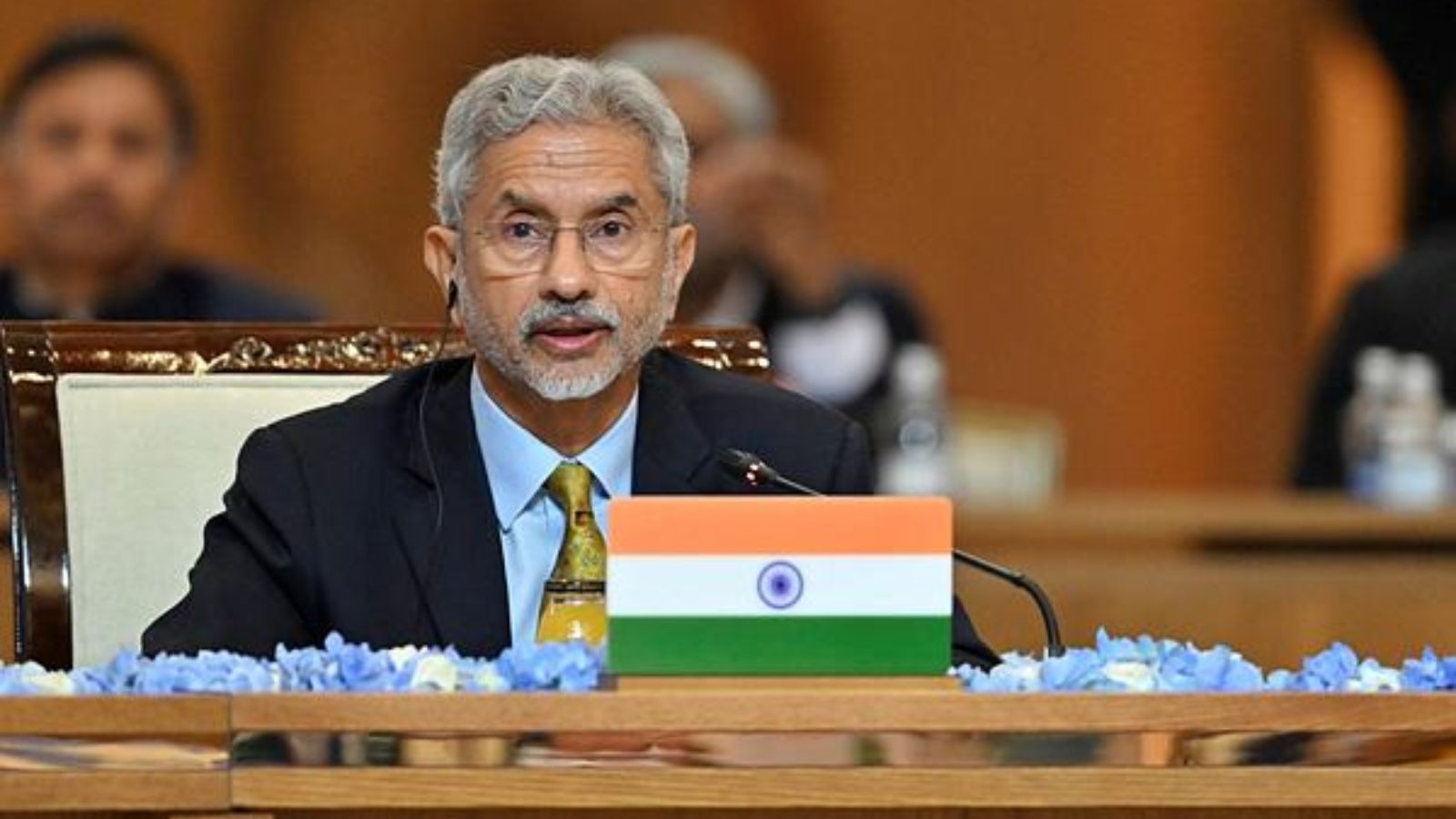
External Affairs Minister Dr S Jaishankar delivering India's statement at the Summit of SCO Council of Heads of States on behalf of PM Modi, in Astana (PTI) :coffee:

The progress made by India in developing Iran’s Chabahar Port not only holds “great value” to landlocked Central Asian states but also “de-risks” commerce between India and Eurasia, Prime Minister Narendra Modi said on Thursday.

External Affairs Minister S Jaishankar, who is in Astana to attend the SCO Summit, delivered Modi’s remarks at the extended format meeting of the Shanghai Cooperation Organisation (SCO) Council of Heads of State here in the Kazakh capital.

He also said, “While standing resolute on challenges, it is equally important to actively and collaboratively explore avenues of progress. The current global debate is focused on creating new connectivity linkages that would better serve a rebalanced world.” “If this is to gather serious momentum, it requires the joint efforts of many. It must also be respectful of the sovereignty and territorial integrity of states and be built on the foundation of non-discriminatory trade and transit rights to neighbours.” “For the SCO extended family, we flag the progress made on Chabahar port recently through a long-term agreement between India and Iran. This not only holds great value to landlocked Central Asian states but also de-risks commerce between India and Eurasia,” he said.

The Chabahar port on the Gulf of Oman – which India proposed to develop way back in 2003 – will provide Indian goods with a gateway to reach landlocked Afghanistan and Central Asia using a road and rail project called the International North-South Transport Corridor, bypassing Pakistan. :coffee:

US sanctions on Iran over its suspected nuclear programme had slowed the development of the port.

In May, India signed a 10-year contract to operate the strategic Iranian port of Chabahar which will help it expand trade with Central Asia.

Chabahar port was last year used by India to send 20,000 tonnes of wheat aid to Afghanistan. In 2021, the same was used to supply environmentally friendly pesticides to Iran. ☕

This is the first time India will take over the management of an overseas port that will also have a multiplier effect on trade among India, Iran and Afghanistan as efforts continue to directly tap the potential in Central Asia, bypassing neighbouring Pakistan. ☕

India has been developing a part of the Chabahar Port and discussions on the development of the port date back to 2003 during Iranian President Muhammad Khatami’s visit to India.

Chabahar is an oceanic port. By leveraging Chabahar Port, India aims to bypass Pakistan and establish direct access to Afghanistan and beyond, into Central Asia. Kandla port in Gujarat is the closest to the Chabahar port at 550 nautical miles while the distance between Chabahar and Mumbai is 786 nautical miles. ☕


Does India risk US sanctions over Iran’s Chabahar Port deal?​


@Persian Gulf

how you people see the news of Al Aljazeera about news of US's sanction?

its funny to see US in current state, India-Iran will never compromise their strategic interests related to Chabahar- Central Asia trade line :coffee:

.
=>

Can the US sanction India over the deal?​

The US has imposed limited sanctions on India’s science establishment twice in the past — in 1974 and 1998 — after New Delhi carried out nuclear tests. :coffee:

But since the end of the Cold War, India and the US have strengthened relations significantly, and today count each other as among the closest of strategic partners. Even though India officially does not recognise any sanctions imposed on nations unless they have been approved by the United Nations, it has played along, for the most part, with US-led sanctions against Iran.

Until a few years ago, India counted Iran among its top oil suppliers. However, since 2018, when then-US President Donald Trump pulled out of the Iran nuclear deal and reimposed tough sanctions on Tehran, India has voided buying any Iranian oil.

Yet, back in 2018, New Delhi successfully lobbied Washington to secure specific exemptions to the sanctions related to Chabahar because of the promise that the transit route could help Afghanistan, a key security interest for the US at the time. An under-construction railway link connecting the Chabahar Port to Afghanistan was also exempt from the sanctions. ☕

But India’s friendship with Iran now, when Tehran’s backing of Palestinian armed group Hamas in Gaza has invited even more US sanctions, puts New Delhi in a tight spot. Afghanistan has also ceased to be a key interest for the US since it pulled out of the country in 2021, some analysts point out. :coffee:

Still, experts do not anticipate sweeping sanctions against India.

“Sanctioning the Indian economy on such a minor issue is highly unlikely,” said Gulshan Sachdeva of New Delhi’s Jawaharlal Nehru University. “In the worst case scenario only entities involved in the Chabahar Port deal may come under some sanctions,” he told Al Jazeera. ☕

What would US sanctions on India mean?​

India is one of the world’s fastest-growing economies. But any US sanctions on the country will likely be contained and will not affect global trade, analysts say.

US sanctions on Iran have already hit India hard before. The Chabahar Port exemptions under Trump did not extend to infrastructure initiatives that would have allowed India to connect up with Central Asian nations located further inland, for instance, hampering India’s ambitions. India’s decision to avoid buying Iranian oil to avoid the risk of US sanctions has also left it more vulnerable to price pressures from other suppliers. :coffee:

But if the US does try to play tough over Chabahar, some analysts believe that India will push back harder than it has in the past.

“Chabahar is more important, and New Delhi is willing to work to keep it alive for the long run,” said analyst Taneja.

If India pushes ahead despite a real threat of US sanctions, that would be a signal to Washington, said Sarang Shidore, director of the Global South Program at the Quincy Institute for Responsible Statecraft, a Washington-based think tank.

“Global South states will continue to pursue their own interests despite Washington’s preferences to make them align with its strategic objectives,” he said.

“Washington ought to re-evaluate its policies that force choices on the Global South that can alienate them and limit US opportunities in this vast, largely unaligned space.”

 
Last edited:

India and Iran Move Forward on Long-Delayed Chabahar Port Project

Developments with the Chabahar port could turn the trade corridor into a global hub by 2030, if the project can overcome financial hurdles, risks from sanctions, and security threats.
1733990195983.png
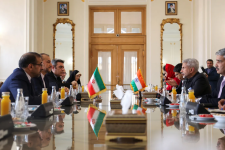
Late Iranian Foreign Minister Hossein Amir-Abdollahian meets with Indian Foreign Minister S. Jaishankar, in Tehran, Iran, January 15. (Majid Asgaripour/WANA via REUTERS)

On May 13, India signed a 10-year agreement with Iran to develop and operate the Shahid Beheshti terminal of Iran’s strategic Chabahar port. The new agreement follows a previously promised Indian investment in 2016 of a potential $500 million. It comes after multiple failures to fully implement a previous deal concluded in May 2016 to develop two terminals and five berths at Chabahar port to transport goods and gas from Central Asia to India and handle other international cargo.

Indian Prime Minister Narendra Modi traveled to Iran in 2016 to conclude the original Chabahar Agreement, also signing an international transport and transit corridor deal Tehran drafted to expand port infrastructure. But U.S.-led sanctions on Tehran forced New Delhi to backtrack on its previous commitments to develop the port. India eventually managed to negotiate an agreement with the United States to allow Indian investments in the port. Burdened by its banking and financial challenges, however, Iran delayed talks on a final package deal that was to include the initial release of $235 million by India for the Chabahar port project.

In 2018, Washington agreed to issue sanctions exemptions to enable India to use Chabahar to trade with land-locked Afghanistan for humanitarian purposes. But progress in developing Chabahar continued to be delayed by sanctions, despite regular negotiations between India and Iran, as well as warnings from Iran that it might seek Chinese investments. Iran insisted that India should sign on to a new deal, mindful that only 30% of the port capacity was being utilized. But Iran lacked the required infrastructure to connect the port to its existing – but old – network of railway and road transportation systems, and it faced occasional security threats from terrorist groups around the port. ☕

By March 2023, Tehran called on India to use Chabahar port for mutually beneficial trade, including Indian imports of Iranian oil, which New Delhi suspended after the United States declined to extend sanctions waivers. But slow progress in deliverables by Iran and unresolved disagreements over amendments to a long-term deal delayed the Chabahar project.

The latest agreement in May, signed by Indian Ports Global Ltd. and Iran’s Port and Maritime Organization, came after Modi met with the late Iranian President Ebrahim Raisi on the sidelines of a BRICS summit in South Africa in August 2023. The long-term deal is narrowly focused on expanding the Shahid Beheshti terminal, with a $120 million investment from Indian Ports Global and a credit window of $250 million, thereby enabling New Delhi to avoid financially overcommitting to the project. Following the signing of the agreement, the United States suggested India could face sanctions for business deals with Iran.

India might be buying time with Iran to gauge how fast the Chabahar port project advances with this initial investment. Located in southeastern Iran on the shores of the Sea of Oman alongside the Shahid Kalantari Port terminal, the Shahid Beheshti terminal operates within the Chabahar Free Trade-Industrial Zone, intended to incentivize cargo ships to dock and unload goods at Chabahar. But despite Iranian efforts to attract commerce, the trade zone faces serious competition from Dubai’s internationally recognized Jebel Ali port and free zone.

Still, the Chabahar port’s location in deep Gulf waters is likely to attract high volumes of trade to feed into the International North-South Transport Corridor, a vast network of ship, rail, and road routes for moving cargo between India, Iran, Azerbaijan, Russia, Central Asia, and Europe. Chabahar is also just over 100 miles away from Pakistan’s Gwadar Sea Port, the terminus of the China-Pakistan Economic Corridor, which has drawn $50 billion in Chinese investments but has had mixed success due to sluggish business resulting from mounting economic, political, and security challenges in Pakistan, including relative instability in the area surrounding the port. Therefore, India has its eyes set on using Chabahar to gain a competitive trade advantage over its rivals, Pakistan and China.

Tehran also has plans to connect Chabahar to a vast national railway system for faster links to the International North-South Transport Corridor and the Kyrgyzstan-Tajikistan-Afghanistan-Iran trade corridor.(y) But Iran’s incredibly expensive, multiphased railway project, which also includes maritime infrastructure development, has already faced delays since construction started in 2020. The Kyrgyzstan-Tajikistan-Afghanistan-Iran trade corridor project, implemented by the Economic Cooperation Organization, also needs action plans in cooperation with international organizations to come to fruition.

Additionally, Armenian authorities are offering to transfer Indian goods through the proposed Iran-Armenia-Georgia-Black Sea corridor. This would make Chabahar a vital trade hub that could support trade by sea, rail, and road along a 4,470-mile corridor. This plan, first conceived by Russia in 2000, would potentially include trade with Russia, India, Iran, Turkey, Azerbaijan, Belarus, Bulgaria, Armenia, Ukraine, Oman, and several Central Asian republics. If completed, the corridor would also connect to the Trans-Caspian International Transport Route, which connects China to the European Union.

Meanwhile, India’s trade with Russia soared to nearly $50 billion in 2022-23, which, along with Iranian projects to link Chabahar to its railway system, points to grander Asian ambitions to seek alternative regional and international trade routes, especially given the need to bypass war-torn Ukraine for the time being. Some Iranian reports even overoptimistically suggest that if these plans are realized, Chabahar could potentially rival the Suez Canal in attracting global trade. :coffee:

If U.S. sanctions and regional conflicts do not disrupt the project, a regionwide corridor with Chabahar at the center could offer alternative international trade routes on India’s doorstep, with Russia and Iran on board. The Chabahar corridor could also reduce transportation time by 40%, especially for goods heading to Europe, and cost less than transfers via the conflict-ridden Red Sea and the commercially overcrowded Suez Canal, enabling the potential flourishing of a $5 trillion economy for India through the Iranian port. (y)

These developments could turn the Chabahar trade corridor, including the Shahid Beheshti Port terminal, which accounted for only 2.5% of all port activity in Iran less than two years ago, into a global hub by 2030, creating flexible production chains, enhancing regional integration, introducing variety in products across Asia, and enabling India to reach a higher export potential as one of the largest economies in Asia.

This could also encourage the Gulf Arab states already trading in the billions with India, including the United Arab Emirates and Saudi Arabia, to explore the Chabahar corridor, mindful of the quick transit routes it provides to the rest of Asia. While U.S.-led sanctions on Iran could delay some of these plans, joint memberships in the BRICS grouping and the Shanghai Cooperation Organization could encourage Iran and its Arab neighbors to explore new trade routes with Asian powers such as India, Russia, and China.

India is mindful of this vast potential, and Iran is working to secure a $1 billion investment from India to develop Chabahar. It is uncertain if a larger Indian investment is forthcoming, and Iranian officials stress the need to use local contractors to develop the port’s infrastructure, which causes friction with New Delhi over the division of tasks and funding for them. By some estimates, Iran will need almost $9 billion more in investments to develop its southern Gulf shores to levels required to attract international trade.

Mindful of the potential risk of U.S. sanctions hindering the port project once again, both India and Iran expect to face challenges if they are to build Chabahar to its fullest potential. Not surprisingly, Iranian policy experts are voicing concern about the limited funds that India has allocated for Chabahar, claiming that Iran will develop the port with or without India – without offering details about how Tehran could find cash to fund this massive project. Tehran, meanwhile, has few alternatives to circumvent the sanctions regime. The bigger question for Iran is how far India, whose authorities once referred to Chabahar as a gateway to golden opportunities, will go to resist U.S. sanctions to advance the project. If past is prologue, India is likely to proceed with significant caution in implementing this ambitious deal, to avoid sanctions problems with the United States.

 
Last edited:
To view this content we will need your consent to set third party cookies.
For more detailed information, see our cookies page.
 
Not just good economics but strategic asset port for spying and observing in the region
India increasing footprint in Persian gulf
 
Not just good economics but strategic asset port for spying and observing in the region
India increasing footprint in Persian gulf


I think the timing of the statement is interesting

Iran may be tempted to cut a deal with trump
 
Not just good economics but strategic asset port for spying and observing in the region
India increasing footprint in Persian gulf
I think the timing of the statement is interesting

Iran may be tempted to cut a deal with trump

With reference to sanction threat by US, post#3, i would say, India may even shoot down USA for Chabahar port. This much strategic importance it has for India-Iran-Central Asia 🙂
India will do everything for maintaining presence in Chabahar port....
 
With reference to sanction threat by US, post#3, i would say, India may even shoot down USA for Chabahar port. This much strategic importance it has for India-Iran-Central Asia 🙂
India will do everything for maintaining presence in Chabahar port....


Interesting next 6 months, will trump support Iran attack or deal
 
To view this content we will need your consent to set third party cookies.
For more detailed information, see our cookies page.


Chabahar is leaving Gwadar in the dust.
 

Does India risk US sanctions over Iran’s Chabahar Port deal?​


@Persian Gulf

how you people see the news of Al Aljazeera about news of US's sanction?

its funny to see US in current state, India-Iran will never compromise their strategic interests related to Chabahar- Central Asia trade line :coffee:

.
=>

Can the US sanction India over the deal?​

The US has imposed limited sanctions on India’s science establishment twice in the past — in 1974 and 1998 — after New Delhi carried out nuclear tests. :coffee:

But since the end of the Cold War, India and the US have strengthened relations significantly, and today count each other as among the closest of strategic partners. Even though India officially does not recognise any sanctions imposed on nations unless they have been approved by the United Nations, it has played along, for the most part, with US-led sanctions against Iran.

Until a few years ago, India counted Iran among its top oil suppliers. However, since 2018, when then-US President Donald Trump pulled out of the Iran nuclear deal and reimposed tough sanctions on Tehran, India has voided buying any Iranian oil.

Yet, back in 2018, New Delhi successfully lobbied Washington to secure specific exemptions to the sanctions related to Chabahar because of the promise that the transit route could help Afghanistan, a key security interest for the US at the time. An under-construction railway link connecting the Chabahar Port to Afghanistan was also exempt from the sanctions. ☕

But India’s friendship with Iran now, when Tehran’s backing of Palestinian armed group Hamas in Gaza has invited even more US sanctions, puts New Delhi in a tight spot. Afghanistan has also ceased to be a key interest for the US since it pulled out of the country in 2021, some analysts point out. :coffee:

Still, experts do not anticipate sweeping sanctions against India.

“Sanctioning the Indian economy on such a minor issue is highly unlikely,” said Gulshan Sachdeva of New Delhi’s Jawaharlal Nehru University. “In the worst case scenario only entities involved in the Chabahar Port deal may come under some sanctions,” he told Al Jazeera. ☕

What would US sanctions on India mean?​

India is one of the world’s fastest-growing economies. But any US sanctions on the country will likely be contained and will not affect global trade, analysts say.

US sanctions on Iran have already hit India hard before. The Chabahar Port exemptions under Trump did not extend to infrastructure initiatives that would have allowed India to connect up with Central Asian nations located further inland, for instance, hampering India’s ambitions. India’s decision to avoid buying Iranian oil to avoid the risk of US sanctions has also left it more vulnerable to price pressures from other suppliers. :coffee:

But if the US does try to play tough over Chabahar, some analysts believe that India will push back harder than it has in the past.

“Chabahar is more important, and New Delhi is willing to work to keep it alive for the long run,” said analyst Taneja.

If India pushes ahead despite a real threat of US sanctions, that would be a signal to Washington, said Sarang Shidore, director of the Global South Program at the Quincy Institute for Responsible Statecraft, a Washington-based think tank.

“Global South states will continue to pursue their own interests despite Washington’s preferences to make them align with its strategic objectives,” he said.

“Washington ought to re-evaluate its policies that force choices on the Global South that can alienate them and limit US opportunities in this vast, largely unaligned space.”


@muhammed45
@Muji.Iqbal
@Persian Gulf

with reference to the above article of post#3, about "India risk US sanctions over Iran’s Chabahar Port deal?", we have report that India may even "shoot down" USA, if needed, but India will go for Chabahar Port further development :)

USA is risking that India may even shoot down USA, if needed, but India will go for Chabahar project..... this much strategic interests the India-Iran-Central Asia share with our this port :coffee:
 

Users who are viewing this thread

Pakistan Defence Latest

Back
Top