ST1976
Trusted Member

BRICS Expansion, the G20, and the Future of World Order
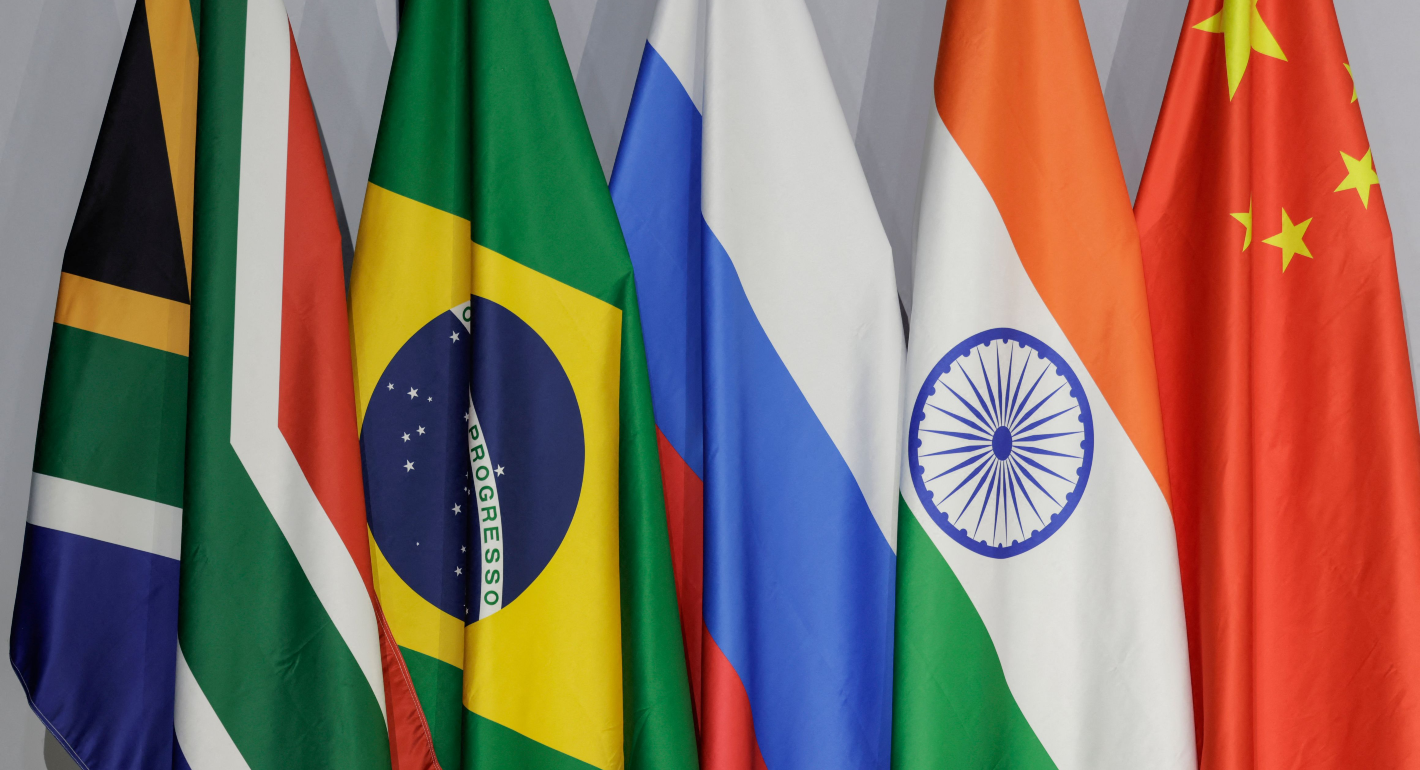
With the addition of new members in BRICS+, the group of emerging powers will be more globally representative—but also face more internal divisions.This month, Russian President Vladimir Putin will host the first-ever summit of BRICS+ from October 22 to 24 in the Tatarstan city of Kazan. There, the founding members of BRICS—Brazil, Russia, India, China, and South Africa—will formally welcome into their fold five new members: Egypt, Ethiopia, Iran, Saudi Arabia, and the United Arab Emirates (UAE). Putin has also invited more than two dozen other countries that have applied for or are considering membership in the expanding club.
 The gathering is meant to send an unmistakable signal: Despite the West’s best efforts to isolate it, Russia has many friends around the world.
To some in the West, the emergence of BRICS+ suggests something even more ominous—a world that is fragmenting into competing blocs, thanks to intensifying geopolitical rivalry between East and West and growing mutual alienation between North and South. According to this reading, Beijing and Moscow are intent on exploiting some countries’ resentment of the United States and its wealthy world allies to consolidate an anti-Western counterweight to the venerable Group of 7 (G7), a process that is likely to paralyze global cooperation within other multilateral venues. Of particular concern is the future of the Group of 20 (G20). Even before BRICS expansion, it had become a microcosm of growing global rifts. A further hardening of these divisions would undercut the G20’s fundamental raison d'être: namely, to help bridge gulfs between—and leverage the capabilities of—important countries that are not inherently or necessarily like-minded.
These risks are real, but they should be kept in perspective. No doubt, BRICS expansion evinces a growing global dissatisfaction with and a determination to challenge the structural advantages that advanced market democracies continue to enjoy in a global order that was in many respects made by the West, for the West. Reducing those exorbitant privileges, including by creating alternative, parallel institutions, is the fundamental purpose of BRICS+. And yet the very heterogeneity of the expanding coalition—and the desire of important middle powers to retain diplomatic flexibility within the G20 and other multilateral venues—will likely forestall the emergence of rigid blocs reminiscent of the Cold War.
Rather than a frontal assault on the existing global order, the ultimate impact of BRICS+ is likely to be more measured and incremental. It will provide a diverse set of emerging and middle powers with a vehicle to advance their (sometimes) overlapping interests, and a platform to tinker—or “bricoler,” as the French would say—with the rules and institutions of the multilateral system. The United States and its Western partners can increase the prospects for such a benign scenario by avoiding alarmism and confrontation, while taking tangible steps to address emerging powers’ legitimate complaints and advance their reasonable aspirations.

BRICS, G7, and G20: Competing Minilateral Clubs
The rise of BRICS (and now BRICS+) reflects a shared belief among important emerging players that the Western-dominated, rules-based international order—and particularly the system of global economic governance—is both stacked against their interests and fundamentally outdated. It is ironic, in this light, that the acronym itself was coined by a Goldman Sachs banker, Jim O’Neill. In 2001, he famously speculated that Brazil, Russia, India, and China (which he christened the “BRIC” countries) were poised to drive global economic growth in the next decade. Thanks in part to a commodity supercycle, that prediction proved prescient. Between 2000 and 2011, the group’s share of global output expanded from 8 to 19 percent.In June 2009, the four BRIC countries moved to turn their Wall Street moniker into something more tangible, convening their first leaders’ summit in the Russian city of Yekaterinburg. Coming on the heels of the global financial crisis, which had begun in the United States and pummeled other Western nations, the summit was heavy with symbolism, suggesting the dawn of a new economic order driven by emerging economies. The following year, the group invited South Africa to join, becoming “BRICS.”
From the outset, BRICS was conceived as a geopolitical and geoeconomic counterweight to the West, which had for decades sought to manage the world economy through its own minilateral club. Those Western efforts had begun in 1975, in the aftermath of the Arab oil embargo and global economic turbulence, when the leaders of the United States, Japan, West Germany, the United Kingdom, France, and Italy gathered at Chateau de Rambouillet, France. With the addition of Canada in 1976, the G7 was born as a standing forum for macroeconomic coordination, meeting in annual summits. (In 1977, representatives of the European Economic Community began participating in the group’s work, a role now played by the European Union.) In 1997, the G7 opened its doors one last time, admitting Russia in an effort to stabilize the reformist government of its president Boris Yeltsin. This expansion to the G8 became a fateful step, given Russia’s subsequent authoritarian turn. Over the decades, the G7/G8 also enlarged its agenda. Although it remained dominated by finance ministers and central bank governors, the forum took up a broader suite of issues, from weapons of mass destruction to debt relief, global health security, and climate change.
The global financial crisis of 2007–2008 proved a significant moment for the G8, no less than for BRICS. Unlike prior crises in Latin American in the 1980s and Asia in the late 1990s, this one started on Wall Street, the epicenter of global capitalism, and it could not be resolved in a Western boardroom. Saving the world economy required mobilizing the financial firepower and concerted action of all major economies, not least China. The U.S. administration of George W. Bush bowed to this reality in November 2008, convening the first leader-level summit of the G20 (which was, until then, an obscure coalition of finance ministers and central bankers, created in 1999). Many observers interpreted the G20’s elevation as a watershed for global governance, heralding a new era in which the world’s most important established and emerging economies would jointly manage the world economy. Encompassing two-thirds of the world’s population and more than 80 percent of its trade and GDP, the new body claimed an economic heft and representativeness that the G8 simply could not match.
The G20 performed admirably during the crisis, injecting unprecedented liquidity to stimulate global demand, revitalizing the International Monetary Fund and World Bank, and creating the Financial Stability Board as a new pillar of the Bretton Woods system. While the rescue effort was imperfect, it stabilized the world economy. At the G20’s third summit in Pittsburgh in September 2009, the assembled world leaders decreed it to be the “premier forum for our international economic cooperation.”
At the time, many predicted that the G8 would quickly fade into obscurity. That did not transpire, for several reasons. First, while the G20 proved a competent crisis manager, it struggled to transition to a enduring steering committee for the world economy, thanks to its size and heterogeneity. Second, frustrating the governments of emerging economies, the G20’s rise did not fundamentally alter underlying structural inequities of global economic governance, notably the dollar’s role as the main reserve currency and Western dominance of international financial institutions. Third, rising geopolitical tensions pitting China and Russia against the West increasingly complicated concerted G20 action. Finally, Russia’s 2014 invasion of Crimea and support for secessionists in Eastern Ukraine led Western nations to suspend Russia from the G8, where it had never truly belonged. (In January 2017, Moscow announced it would permanently leave the body.) Russia’s ejection revived the fortunes and strategic importance of the G7 as a close-knit coalition of like-minded, advanced market democracies committed to the international rule of law. (Indeed, some in Washington advocate expanding the G7 further to include two more influential democracies, Australia and South Korea, as well as the EU itself, to create a Democracies 10—or D10.)
The BRICS Record to Date
As the fortunes of the G7, G8, and the G20 have waxed and waned over the past decade and a half, the BRICS coalition has deepened its efforts to challenge Western hegemony by pressing for global governance reform, creating parallel minilateral institutions to compete with established ones, contesting the role of the dollar, and seeking to reduce U.S. leverage over the sinews of the world economy. The success of these efforts has been mixed, and BRICS has scored heavier on symbolism than substance. In 2015, the bloc established two new multilateral institutions, the New Development Bank (NDB) and the Contingent Reserve Arrangement (CRA), to compete with the World Bank and International Monetary Fund, respectively. Neither has made a big splash. The NDB, which also includes several non-BRICS countries as shareholders, remains undercapitalized, having disbursed over the past decade only a third of the funds the World Bank committed globally in 2021 alone. And contrary to the BRICS group’s egalitarian rhetoric, the NDB has a weighted voting formula not unlike the Bretton Woods institutions. The CRA, meanwhile, is essentially a self-insurance arrangement to address potential short-term balance of payments pressures: Shareholders contribute capital to the CRA and in exchange can secure modest resources when facing liquidity crises.The bloc has been less successful in its aspirations to create a global reserve currency that would reduce global dependence on and perhaps ultimately replace the U.S. dollar. During last year’s summit, BRICS members committed to study the feasibility of creating a common currency, but these de-dollarization efforts face “serious headwinds,” given the dollar’s entrenched role in cross-border transactions, currency exchange, commodities markets, and debt denomination; the lack of financial infrastructure to facilitate non-dollar-denominated transactions among BRICS central banks; and continued restrictions on the convertibility of China’s currency, the renminbi. Accordingly, the BRICS countries have focused on mechanisms to facilitate trade and investment in local currencies, as well as to diversify their currency reserves.
The BRICS nations have taken some steps to reduce the ability of the United States and its allies to weaponize global interdependence, including Washington’s control of chokepoints for international financial infrastructures. China, Russia, India, and Brazil, for instance, have all created alternative settlement platforms to the Society for Worldwide Interbank Financial Telecommunication (SWIFT) payment system. In other areas, however, BRICS aspirations to rewire the infrastructure of globalization have failed to live up to the hype. A (literal) case in point was the group’s pledge, at its 2012 summit, to create a new global network of undersea cables linking its telecommunications (while hindering U.S. and Western spying efforts). It never came to pass.
Like the G7 and G20, the BRICS group has launched an expanding array of initiatives and partnerships across multiple issue areas, from energy to health to sustainable development. The result is an impressive and increasingly dense transnational latticework of networked minilateralism, with a heavy focus on South-South cooperation. At the same time, the political, strategic, and economic heterogeneity of the BRICS coalition, and geopolitical rivalries within the group itself, have diluted its coherence and constrained its diplomatic impact.
To begin with the obvious political differences, BRICS comprises three boisterous if imperfect democracies alongside the world’s two leading authoritarian (and increasingly totalitarian) powers. Whatever shared frustrations BRICS may express about the inequities of the contemporary global order, these differences in regime type and political culture are not easily papered over, whether the topic is human rights or geopolitics. BRICS countries also differ in their strategic orientations. While Brazil, India, and South Africa have resisted U.S. pressure to support Ukraine against Russian aggression (and, in the case of Brazil and South Africa, have strenuously critiqued U.S. policy about the war in Gaza), they have rejected with equal fervor any notion of siding with Beijing and Moscow against the West, seeking instead to maximize their diplomatic freedom of action without burning any bridges. That is especially true of India, which regards BRICS as just one important vehicle among many others in advancing its multialignment strategy. Finally, the five countries occupy very different economic positions. China is by far the dominant player in this grouping, responsible for nearly 70 percent of the coalition’s total GDP, resulting in a hub-and-spoke arrangement in which the other four countries’ bilateral ties with China predominate. Their income levels also vary significantly. India’s per capita GDP ($2,389), for example, is less than a fifth of China’s ($12,720) and a sixth of Russia’s ($15,345).
Complicating matters, China and India, which each have 1.4 billion inhabitants, are engaged in fierce geopolitical rivalry in Asia—and, increasingly, globally. The two are locked in a territorial standoff in the Himalayas, maneuvering for strategic advantage in the Indian Ocean, and bickering over which is best positioned to serve as a natural leader of the Global South. India is also a member of the Quad, a strategic partnership with the United States, Japan, and Australia, whose primary if unstated purpose is to prevent Chinese hegemony in the Indo-Pacific. Scratch the surface, and geopolitical fissures emerge across the BRICS more generally. Consider the perennial topic of UN Security Council reform. While all five nations are on record as supporting enlargement, they diverge wildly on the details. China and Russia continue to resist any expansion of the council’s permanent membership—the precise status to which India, Brazil, and South Africa all aspire.
As might be expected, BRICS leaders prefer to gloss over these fundamental differences. Such was the case at the September 2023 summit in Durban, where South African President Cyril Ramaphosa gamely sought to square the circle between diversity and unity. “BRICS is an equal partnership of countries that have differing views but a shared vision for a better world,” he declared. In fact, the proceedings in Durban exposed BRICS to be a highly unequal arrangement in which China often calls the shots. In the run-up to the summit, officials from Brazil, India, and South Africa all expressed caution on the pace and scope of BRICS enlargement, including the invitation the group had extended to anti-Western Iran. In the end, Chinese President Xi Jinping steamrolled their opposition, imposing his own vision of expansion over the wishes of his partners and the much-ballyhooed BRICS commitment to consensus-based decisionmaking. Episodes like this suggest there is far less mortar in the BRICS than advertised.
BRICS+ and the Implications of Expansion
The 2023 decision by the BRICS coalition to open its doors to five new members has raised anxieties in the West that global fragmentation is accelerating and could get worse, especially as another three dozen countries are purportedly waiting in the wings. Such fears are understandable, but they should not be overblown, in part because BRICS expansion will only increase the coalition’s heterogeneity—and potential cacophony. On its face, BRICS+ is a formidable economic bloc, comprising half of the world’s population, 40 percent of its trade, and 40 percent of crude oil production and exports. The coalition can use this leverage not only to demand a more equitable international order but also to act on those ambitions, for instance by establishing a parallel energy trading system, deepening commercial links among members, creating an alternative system of development finance, reducing dollar dependence in foreign exchange transactions, and deepening technology cooperation in fields from AI to outer space. Expect BRICS+ to seek opportunities in each area.At the same time, the body’s increasing diversity may make it even harder for BRICS+ to formulate, adopt, and pursue unified policy positions, including within the framework of the G20. To date, BRICS has been more effective at signaling what it is against—namely, continued Western domination of the architecture of global governance—than what it stands for. Developing a coherent, positive agenda for reforming world order and advancing international cooperation is likely to become even harder as the coalition adds more countries with very different political institutions, economic models, cultural systems, and national interests. The initial composition of BRICS+ will also complicate its aspirations to speak for the Global South, further blunting its impact on global order.
Comparing Minilateral Groups
A recurrent theme of BRICS summits and communiqués is the group’s purported role as the voice of the Global Majority—that is, the large proportion of the world’s population that inhabits the postcolonial world and whose countries have historically lacked agency and voice in global decisionmaking. This is a theme that the Kremlin has repeatedly emphasized during Russia’s 2024 BRICS presidency.This claim should be viewed with skepticism. At the end of the day, individual BRICS+ governments will represent their own national communities and pursue their own sovereign interests in international forums. These preferences may or may not align with those of low- and middle-income countries that participate in the Group of 77 (G77) and the Non-Aligned Movement (NAM), which boast 134 and 120 members, respectively. The initial BRICS+ expansion includes one lower-income country (Ethiopia) and two lower-middle-income countries (Egypt and Iran), but it also includes two wealthy nations (Saudi Arabia and the UAE). Both Saudi Arabia and the UAE, as well as Iran and Russia, are also major producers and exporters of oil and gas, whereas the vast majority of nations in the Global South (as well as China and India) are net importers, a fact likely to place them at odds over the clean energy transition, among other topics. When it comes to representing the needs and interests of the world’s poorest and least-powerful nations, there is no substitute for the UN General Assembly, where all of those countries have an equal vote.
More generally, the five original BRICS nations—with the partial exception of South Africa—differ from the vast majority of developing nations in enjoying or aspiring to major power status. China boasts the world’s largest economy, Russia is a nuclear superpower, India is the world’s the most populous country, and Brazil is a regional hegemon with global aspirations. All are significant geopolitical as well as economic actors and are competing for influence and markets across the Global South, including in Latin America, Africa, the Middle East, and Asia. Such intra-BRICS rivalries will only increase with the admission of the geopolitical and ideological rivals Saudi Arabia and Iran, which—notwithstanding China’s efforts to foster their rapprochement—remain bitter foes. (See table 1 for a comparison of memberships of BRICS+, the G20, the G7, the G77, and the Organisation of Economic Co-operation and Development.)
How might an additional expansion of BRICS+ affect its role and functioning? According to Putin, thirty-four countries have expressed an interest to join the club, “in one form or another.” Some two dozen countries have reportedly applied for membership, among them Algeria, Azerbaijan, Bahrain, Bangladesh, Belarus, Bolivia, Cuba, Kazakhstan, Myanmar, Nigeria, Pakistan, Senegal, Thailand, Venezuela, and Vietnam. More may be waiting in the wings, like Indonesia, which applied and then withdrew its application a decade ago. The most recent applicant is Türkiye, a member of NATO—albeit one that seeks to keep its options open. The group, in other words, seems destined to expand.
While there can be strength in numbers, as the saying goes, there are also vulnerabilities. The potential admission of dozens of diverse countries will inevitably complicate consensus-building and decisionmaking, reproducing dysfunction—and duplicating many of the functions—of encompassing multilateral groupings like the NAM or the G77. This risk is magnified by the failure of the original BRICS members to clarify their strategy toward expansion. The bloc has not specified any criteria for admission, nor has it required new entrants to adhere to any core principles or common program. In the absence of a detailed, positive agenda for global institutional reform to guide collective action, BRICS+ risks further diluting its already minimal coherence and seeing itself riven by internal enmities (India and Pakistan come to mind) or succumbing to factional rivalries. Rather than a coherent body with bonds of solidarity, an ever-expanding BRICS could produce bric-a-brac—a collection of miscellaneous objects of uncertain value. In the immediate term, China will continue to dominate the bloc, reinforcing the existing hub-and-spoke arrangement.
Impact on the G20
Among the biggest uncertainties is what impact the BRICS+ will have on the role and functioning of the G20, which will hold its own summit in Rio de Janeiro on November 18–19 under this year’s chair, Brazil. Since the G20’s elevation to the leader level in 2008, one of its ostensible comparative advantages has been that it provide a setting for flexible coalitions of consensus to emerge that transcend rigid blocs. That is, it provides a possible framework for members to build bridges and advance cooperation on shared interests, regardless of differences of regime type or tensions over other matters. Realizing this potential, however, depends on the willingness of G20 member states to compartmentalize and cooperate on certain shared challenges while continuing to compete, often fiercely, in other domains. Striking this balance has become increasingly difficult in recent years, as evinced by the acrimonious G20 diplomacy during and after the coronavirus pandemic and, more recently, in response to fallout from Russia’s invasion of Ukraine and the war in Gaza. Rather than a platform for collective action, the forum has too often become a setting for East-West and North-South recriminations.The expansion of BRICS certainly has the potential to exacerbate these dynamics, by splitting the G20 into opposed G7 and BRICS+ factions. Since 2000, the G7’s share of global GDP, as measured by purchasing power parity, has declined from 43 to 30 percent, while that of the five original BRICS countries has increased from just over 21 percent to nearly 35. When nominal dollar figures are used, the G7 continues to hold a significant edge, 43 to 27.7 percent, but the gap is shrinking. Presuming that Türkiye joins Saudi Arabia in BRICS membership, BRICS+ will, like the G7, boast seven members in the G20—with the possibility that Indonesia could someday join them.
The pivotal question is whether the BRICS+ members of the G20 will seek (or be able) to translate this heft into unified economic and geopolitical positions within the latter body. One could imagine them treating BRICS+ as a prenegotiation forum in which to reach common (and potentially rigid) stances that they then import to the G20—reinforcing the temptation of the G7 to do likewise. Although plausible, this scenario seems unlikely. Putting aside China and Russia, the four current BRICS+ members of the G20—India, Brazil, South Africa, and Saudi Arabia—have a fundamental interest in keeping their strategic options and alignments open. Membership in both clubs allows them to play an inside and an outside game—to rally a counterhegemonic coalition in BRICS+, while adopting a more pragmatic, mixed strategy within the G20, in which they can press for global governance reform but also build bridges across East-West and North-South divides.
Nations, like people, are intersectional. Emerging powers have multiple, overlapping identities that influence their orientations, and they are capable of playing more than one game, as well as code-switching, in different settings. Consider Brazil, a dynamic if fragile democracy. Under the leadership of President Luiz Inácio Lula da Silva, it expresses solidarity with the Global Majority, rails against the inequities of the Bretton Woods institutions, and insists that it should not need to choose between East and West. At the same time, it cultivates friendly relations with the United States and is an accession candidate to the Organisation of Economic Co-operation and Development, the club of wealthy market democracies. Like Brazil, India, Saudi Arabia, and South Africa each have complicated identities and preferences of their own—and the same is true of other G20 nations that are not (yet) members of BRICS+, including Argentina, Indonesia, Mexico, South Korea, and Türkiye.
Middle powers have a critical role to play in ensuring that the G20 remains a setting in which international cooperation is possible, notwithstanding deepening East-West divides. This year marks the third of four consecutive years in which a country from the Global South—Brazil, succeeding Indonesia and India and preceding South Africa—holds the rotating chair of the G20. All four countries seek to advance developing world priorities and global governance reform through constructive and inclusive multilateral diplomacy, and they have no interest in encouraging any further global fragmentation or getting caught in the cross fire of geopolitical competition. This genuine commitment to dialogue provides an opening for Western countries— including the United States, which will once again chair the G20 process in 2026.
Conclusion
The rise of BRICS+ brings to mind an oft-cited quotation from Antonio Gramsci: “The old world is dying, and the new world struggles to be born.” What that future world looks like depends in part on the choices that policymakers make today. For the U.S. and other Western governments, BRICS+ is a reminder of the dangers of ignoring the legitimate demands of countries and peoples around the world for greater agency, influence, and power in the structures of global governance that shape their fate. Dismissing or resisting these pressures, rather than engaging and, where appropriate, accommodating them, will only harden global divisions, embolden authoritarians, and provide openings for malicious actors. (It is worth remembering, in this regard, the remainder of Gramsci’s quotation: “Now is the time of monsters.”)A more farsighted Western response would be to treat the creation of BRICS+ as a spur and an opportunity to engage important emerging powers—including countries like Brazil, India, Indonesia, South Africa, and Vietnam, which have no desire to be vassals to China—to build a more inclusive global order. Such a strategy, accompanied by a willingness to make tangible policy shifts, share the privileges of power, and provide real material benefits, would begin to defang sweeping critiques of the existing order and increase the stakes of rising powers in a common, reformed system that remains anchored in the UN Charter and international law. President Joe Biden’s administration has a new, forward-leaning position on UN Security Council reform that is one step in this direction, but it is not nearly enough. To dissuade emerging and middle powers in the Global South from stampeding to alternative BRICS+ institutions, or even casting their lot with China and Russia, the West must demonstrate to these countries that it welcomes (rather than seeks to block) the emergence of a more multipolar world, that it will not press them to make unrealistic choices about their strategic alignment, and that it is willing to negotiate openly on the rules of the road that will govern the future world order.
BRICS Expansion, the G20, and the Future of World Order
With the addition of new members in BRICS+, the group of emerging powers will be more globally representative—but also face more internal divisions.