Afghanistan: General News and Discussion

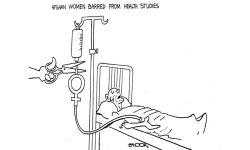
Hello Mrs Khan, I am Mr Khan. I'll be your midwife for today.

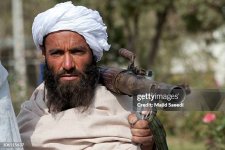
herat-afghanistan-surrendering-taliban-militants-stand-with-their-weapons-as-they-are.jpg
 
What are Afghan women supposed to do? Grow vegetables inside their dwellings?
 
...
Javed Akhtar(Brilliant individual) ...
I'll leave this here as my exhortation to Afghan women (and men), in the inimitable words of the incomparable Javed Akhtar:

To view this content we will need your consent to set third party cookies.
For more detailed information, see our cookies page.


To view this content we will need your consent to set third party cookies.
For more detailed information, see our cookies page.
 

Despair grips Afghan women healthcare students facing ban


AFP
December 9, 2024

For Saja, studying nursing at a healthcare institute in Kabul was her last lifeline to make something of herself after women were banned from universities in Afghanistan two years ago.

But the Taliban government has crushed this ambition by ordering, according to multiple sources, the exclusion of Afghan women from medical training, sparking panic across institutions.

When she heard the news, Saja, who had been at university before women were barred, said it felt like “reliving the same nightmare”.

“This was my last hope to do something, to become something,” said Saja, not her real name. “Everything has been taken away from us for the crime of being a girl.”

The authorities have made no official comment or confirmation, nor have they responded to the numerous condemnations and calls to reverse a decision that further blocks women’s access to education.

Since their return to power in 2021, the Taliban government has imposed reams of restrictions on women, making Afghanistan the only country in the world to ban girls from education after primary school.

Multiple directors and employees of health training centres have told AFP they were informed in recent days of the order, issued by the Taliban supreme leader and passed down verbally by the health ministry, to expel women students until further notice.

Institutes across the country — which many women had turned to after the university ban — were given a few days to just over a week to organise final exams. But without a clear announcement or document clarifying the rules, confusion reigns in the institutions.

Some told AFP they would operate as normal until they received written orders, others closed immediately or scrambled to hold exams before shuttering. Still others refused to comment, saying they’d been warned not to speak to the media.

“Everyone is confused, and no one is sharing what is really happening,” said Saja, who was in her first year at a private institute. “We have been given two or three exams each day … even though we already finished our exams a few months back,” said the 22-year-old, adding they had to pay fees to sit the exams.

“We received a lot of concerned messages from students and teachers wanting to know what is going on and asking ‘Is there any hope?’” said the director of a Kabul private institute with 1,100 students, of which 700 were women.

35,000 women students​

“No one is happy,” he told AFP from his office steps away from women’s classrooms, where the last lesson on the board advised how to manage stress and depression in patients.

According to a source within the health ministry, 35,000 women are currently students in some 10 public and more than 150 private institutes offering two-year diplomas in subjects such as nursing, midwifery, dentistry and laboratory work.

The Norwegian Afghanistan Committee (NAC) non-governmental organisation, which trains 588 women in institutes managed in collaboration with the health ministry, was verbally informed classes were “temporarily suspended”.

This has to be taken “equally seriously as a written document”, said NAC country director Terje Magnusson Watterdal, adding that “there are a lot of people high up within the current government that are quite opposed to this decision”.

He hopes, at the minimum, public institutes will be reopened to women. International organisations such as the United Nations, which has said Afghan women are victims of a “gender apartheid”, have already warned of devastating consequences of the plan, in a country where maternal and infant mortality are among the highest in the world.

‘The same nightmare’​

Midwifery students in particular are passionate about their studies, according to Magnusson Watterdal.

“So many of these young women have been motivated to become a midwife because they have lost a mother or an aunt or a sister in childbirth,” he said. “It’s not just a profession that you choose, it’s a vocation. So, of course, there’s great desperation” among students and staff.

Small protests have been held in various parts of the country, according to sources and images circulated on social media.

Assal, another student also using a pseudonym, received an expedited diploma last week, but still has little hope of finding a job in a country where unemployment is widespread and opportunities for women are increasingly limited.

“I wanted to practise medicine and study further,” the 20-year-old told AFP. “They had already taken everything from us. Next thing we won’t even be allowed to breathe. “
 

Taliban’s legitimacy hinges on respect for human rights in Afghanistan​


The Frontier Post

UNAMA.jpg

KABUL: The United Nations reported Tuesday that women and girls are bearing the brunt of a persistent “dangerous erosion” of human rights in Afghanistan, attributing the crisis to an “intentional failure” of the country’s radical Taliban leaders.

“With authority comes responsibility,” said Roza Otunbayeva, the head of the U.N. Assistance Mission in Afghanistan, or UNAMA, referencing the August 2021 return of the formerly insurgent Taliban to power. “The claim of the de facto authorities to be legitimate representatives of the Afghan people within the United Nations must be accompanied by genuine efforts to uphold and advance our shared norms and values,” she stated.

The UNAMA statement, released in connection with International Human Rights Day, asserted that the human rights record of the Taliban had been particularly marked by their “systematic discrimination” against Afghan women and girls.

The Taliban government, which is not yet formally recognized by any country, has barred Afghan women from almost all aspects of every day and public life. Girls are banned from receiving education beyond the sixth grade, and most workplaces are not allowed to employ female staff except for a few sectors, such as health, police, and immigration. Women cannot undertake road or air trips unless accompanied by a male guardian.

The restrictions stem from dozens of decrees the reclusive Taliban supreme leader, Hibatullah Akhundzada, has issued over the last three years based on his strict interpretation of Islamic law, known as Sharia.

Tuesday’s statement reminded the Taliban that Afghanistan endorsed the Universal Declaration of Human Rights, adopted by the U.N. General Assembly, on December 10, 1948.

“If Afghans, in particular women and girls, continue to be denied their rights, this constitutes a clear and intentional failure to protect and be responsible for the well-being of all who live in Afghanistan,” said Fiona Frazer, the country representative of the U.N. High Commissioner for Human Rights.

Taliban leaders have ignored repeated U.N.-led international calls for them to reverse their sweeping curbs on women, saying their governance is in line with Sharia.

The U.N. has repeatedly declined requests from the de facto Afghan authorities to represent the country due to their restrictions on women.

Earlier this month, Afghan public health ministry authorities abruptly ordered medical institutions to stop enrolling female students nationwide, citing a new edict released by Akhundzada. The move has effectively closed one of the last available avenues for girls to seek higher education.

The edict has drawn a global backlash and calls for its immediate reversal amid warnings it would leave millions of women without female nurses and midwives in a country where the Taliban have barred male doctors from treating female patients.

The U.N. has warned the latest ban would exacerbate a deepening humanitarian crisis and health challenges facing poverty-stricken Afghanistan, reeling from years of war and natural disasters.

Courtesy: VOA news
 

Despair grips Afghan women health care students facing ban​


The Frontier Post

images-2024-12-10T082152.349.jpeg

KABUL (AFP): For Saja, studying nursing at a health care institute in Kabul was her last lifeline to make something of herself after women were banned from universities in Afghanistan two years ago.

But the Taliban government has crushed this ambition by ordering, according to multiple sources, the exclusion of Afghan women from medical training, sparking panic across institutions.

When she heard the news, Saja, who had been at university before women were barred, said it felt like “reliving the same nightmare.”

“This was my last hope to do something, to become something,” said Saja, not her real name.

“Everything has been taken away from us for the crime of being a girl.”

The authorities have made no official comment or confirmation, nor have they responded to the numerous condemnations and calls to reverse a decision that further blocks women’s access to education.

Since their 2021 return to power, the Taliban government has imposed reams of restrictions on women, making Afghanistan the only country to ban girls from education after primary school.

Directors and employees of health training centers have told AFP they were informed in recent days of the order, issued by the Taliban supreme leader and passed down verbally by the health ministry, to expel women students until further notice.

Institutes across the country — which many women had turned to after the university ban — were given a few days to organize final exams.

But without an explicit announcement or document clarifying the rules, confusion reigns.

Some institutions told AFP they would operate as normal until they received written orders, while others closed immediately or scrambled to hold exams before shuttering.

“Everyone is confused, and no one is sharing what is really happening,” said Saja, who was in her first year at a private institute.

“We have been given two or three exams each day… even though we already finished our exams a few months back,” said the 22-year-old, adding they had to pay fees to sit the exams.

“We received a lot of concerned messages from students and teachers wanting to know what is going on and asking ‘is there any hope?’” said the director of a Kabul private institute with 1,100 students, of which 700 were women.

“No one is happy,” he told AFP from his office steps away from women’s classrooms, where the last lesson on the board advised how to manage stress and depression in patients.

According to a source within the health ministry, 35,000 women are currently students in some 10 public and more than 150 private institutes offering two-year diplomas in subjects including nursing, midwifery, dentistry and laboratory work.

The Norwegian Afghanistan Committee (NAC) non-governmental organization, which trains 588 women in institutes managed in collaboration with the health ministry, was verbally informed classes were “temporarily suspended.”

This has to be taken “equally seriously as a written document,” said NAC country director Terje Magnusson Watterdal, adding that “there are a lot of people high up within the current government that are quite opposed to this decision.”

He hopes, at the minimum, public institutes will reopen to women.

International organizations like the United Nations, which has said Afghan women are victims of a “gender apartheid,” have already warned of devastating consequences of the plan, in a country where maternal and infant mortality are among the world’s highest.

If implemented, the reported new ban “will undoubtedly lead to unnecessary suffering, illness, and possibly deaths of Afghan women and children, now and in future generations, which could amount to femicide,” UN experts warned Monday.

Midwifery students are especially passionate about their studies, according to Magnusson Watterdal.

“So many of these young women have been motivated to become a midwife because they have lost a mother or an aunt or a sister in childbirth,” he said.

“It’s not just a profession that you choose, it’s a vocation. So, of course, there’s great desperation” among students and staff.

Small protests have been held in parts of Afghanistan, according to sources and images circulated on social media.

Assal, another student using a pseudonym, received an expedited diploma last week, but has little hope of finding a job in a country where unemployment is widespread and opportunities for women are increasingly limited.

“I wanted to practice medicine and study further,” the 20-year-old told AFP.

“They had already taken everything from us. Next thing we won’t even be allowed to breathe.”
 

Women’s medical training ban threatens Afghan health sector


AFP
December 14, 2024

KABUL: From her private hospital in Afghanistan’s capital, doctor Najmussama Shefajo predicts a rise in maternal mortality rates “within three or four years”, following the latest restrictions on women’s education.

The Taliban’s supreme leader is reportedly behind a ban on women studying midwifery and nursing at training institutes across the country, already among the worst in the world for deaths in childbirth.

“We may not see the impact very quickly, but after three to four years we will see the maternal mortality rate go up and up,” said Shefajo.

“People will for sure have more babies at home. But what about complications? What about operations? Many procedures cannot be done at home.”

Since the Taliban government banned women from universities two years ago, Shefajo has been giving on-the-job medical training, including in midwifery and nursing.

But she said she doesn’t have the capacity or facilities to take on every woman keen to learn in her hospital, despite no shortage of volunteers.

“Midwifery and nursing are like two wings of the doctors; if the bird doesn’t have wings, it cannot fly,” she added, ducking behind curtains to treat patients.

Already Afghanistan is facing a “desperate shortage of trained healthcare workers, especially women”, according to the UN children’s agency Unicef.

No official notice has been issued by the Taliban government, but health ministry sources and managers of training institutes said this month that they had been told to block women from classes.

Restricting medical training is the latest action against women’s education since the Taliban swept to power in 2021, imposing rules the United Nations has called “gender apartheid”.

“In a country where women and children depend on female health professionals for culturally sensitive care, cutting the pipeline of future health providers would put lives at risk,” Unicef’s executive director Catherine Russell said in a statement.

Training institutes had ensured women would continue to learn healthcare skills, such as midwifery and nursing, or laboratory work, pharmacy and dentistry.

The ban would impact about 35,000 women studying at medical training centres, according to a figure from a health ministry source.

“We are concerned about the effects on the already fragile healthcare system,” said Achille Despres, spokesperson for the International Committee of the Red Crescent in Afghanistan, where the organisation offers health services and training.

International NGO Doctors Without Borders (MSF), which runs some of its busiest maternity hospitals in Afghanistan, also warned of the consequences of the ban, given that the nation’s “medical needs … are huge”.

“There is no healthcare system without educated female health practitioners,” country representative Mickael Le Paih said in a statement.

Afghanistan and MSF already face a dearth of obstetrician-gynaecologists in a country with high fertility rates where women often have children from a young age, Le Paih said.

Published in Dawn, December 14th, 2024
 

Investment in Afghanistan’s pharmaceutical sector reaches $300 million: Union​


byThe Frontier Post
Drugs-810x486.png


KABUL (Ariana News): Officials from the Union of Pharmaceutical Factories report that since the re-establishment of the Islamic Emirate, investment in Afghanistan’s pharmaceutical sector has surged to $300 million.

Ahmad Saeed Shams, the union’s head, highlighted that 980 different medicines are now produced domestically, with this number steadily increasing.

Shams further stated that Afghanistan has achieved self-sufficiency in 15 key medicines. However, some union members have urged the government to foster further growth in the pharmaceutical industry, emphasizing the need for measures to curb market monopolies and promote medicine production and export.

“Afghanistan should aim for complete self-sufficiency in pharmaceuticals and begin exporting to other countries,” said Kamaluddin Kakar, a union member.
 

Female artisans struggle with handicraft sales in winter​


The Frontier Post

afg-3-2-810x544.jpg

BAMYAN (TOLOnews): Several female artisans in Bamyan express concerns about the decline in the market for their handicrafts during the autumn and winter seasons.

Nargis Rasouli, one of these women, has been supporting her 10-member family for seven years by selling handicrafts.

She said that in the cold season, due to a drop in tourists, it becomes difficult to cover the family’s expenses.

“Our sales depend on the seasons of the year. In winter, because fewer tourists visit Bamyan’s attractions, the sales of handicrafts also decrease,” said Nargis Rasouli. Other female artisans in Bamyan are calling on the interim government officials to facilitate proper marketing and organize local and national exhibitions to create suitable sales opportunities for their local products.

“Our sales are good in the spring, and many customers come to buy handicrafts, but in the winter, sales decline due to the lack of tourists,” said Fatima Rezai, another artisan.

“In the handicrafts sector, many women are the breadwinners of their families. The government and international organizations should create marketing opportunities for women’s handicrafts to help them grow their businesses,” said Sadia Zaki, a women’s rights expert.
 
To view this content we will need your consent to set third party cookies.
For more detailed information, see our cookies page.
 
OIC should get involved to teach the Afghan Taliban what true Islam is.

Which one of the OIC countries follow said true Islam?

Let Saudi Arabia teach the Afghan Taliban on how to govern Afghanistan and educate them on Islam.

Do you follow the Islam that the Saudis teach?


Democracy is as alien to Islam as Trinity is alien to Islam.

In a democracy = Vox Populi Vox Dei / voice of the people is the voice of God

In Islam = God is sovereign over all things

48:32

But if you receive wahis on who gets to lead or what economic policy should be enforced, please let us know.

And which part allow Muslim lady to go out without companionship?

Which part does not? Which part allows you to go out without companionship?

And I agree with you

I believe in education, remaining stupid isn't a option

BUT the cold hearted reality of the world we live in suggests that female empowerment and education leads to a demographic crisis, marriage crisis, family crisis and birth rate crisis

Now the caveat your using is "Muslim country" but which country is really Muslim?
Where can we implement all this without the corrosive and toxic feminist LGBT crap of the west which our liberals embrace as life itself

The Taliban path may be extreme, but I feel they will protect their society from these influences far far better then we will

I had to discard half a dozen posts and calm myself down. You are mistaking correlation with causation in all of your arguments. Before I get worked up again, I will suggest that you educate yourself on the matter, and take my leave. Under every metric ever recorded, an educated woman results in a better marriage, better parenthood, better family, and better society.

PS: Surely, we must preserve the Afghan societal values.


So let me make a counter, I TRUST ISLAM has got this right
And maintaining the conservatism of women, protecting them from free mixing and society creates honourable women and mothers and wives and will maintain the marriage, relationship system to safeguard society


Women deserve education but it needs to be controlled and the islamic value system maintained at all costs, or you will all be regretting it

And the pièce de résistance; creating religious edicts to support own agenda.
 
Last edited:

Users who are viewing this thread

Pakistan Defence Latest

Latest Posts

Back
Top