Afghanistan: General News and Discussion

Zeenat is one of thousands of Afghan women who were abruptly forced out of the workforce, many of whom had served as the primary earners for their families.

The economic impact has been devastating, particularly for female-led households. Najla, another resident of Farah, echoed Zeenat’s frustration.

“For two years, I’ve been unemployed and battling severe economic hardship,” she said. “Despite being young, educated, and capable, we’re confined to our homes. We have no choice but to endure this suffering.”

The ban, coupled with restrictions on education for women and girls, has drawn widespread international condemnation and amplified fears of a worsening humanitarian crisis in Afghanistan.

The United States has been among the most vocal critics of the Taliban’s policies. Secretary of State Antony Blinken recently called on the Taliban to reverse all decrees limiting women’s rights, expressing grave concern over the continued marginalization of women and girls.

Rina Amiri, the US special envoy for Afghan women, girls, and human rights, warned that barring women from work and education could plunge Afghanistan further into darkness. “The exclusion of women undermines the country’s prospects for recovery and progress,” Amiri said.
 
For many Afghan women, the Taliban’s restrictions represent more than economic hardship; they symbolize a betrayal of the hard-won progress achieved in the two decades before the Taliban’s return to power. Women who invested years in education and professional growth now find themselves sidelined, with little hope for change under the current regime.
 
To view this content we will need your consent to set third party cookies.
For more detailed information, see our cookies page.
 
To view this content we will need your consent to set third party cookies.
For more detailed information, see our cookies page.
 
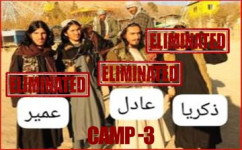
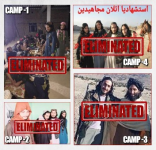
Terrorist's Eliminated in strikes on TTP Training Camps in Bermal, Afghanistan.

1735076381967.png

1735076400425.png
 
four key locations of the Fitna al-Kharijites in Paktika province were targeted.

‼️ According to ground sources, explosions are continuing continuously, which is evidence that a large amount of explosives was present there. These terrorist camps were known for manufacturing suicide materials.

‼️ The most important target among them is Sher Zaman alias Mukhlis Yar, who used to train suicide bombers.

‼️ The second commander is Abu Hamza, who used to lure innocent Pakistani and Afghan children into terrorism.

‼️ The third includes the camp of Akhtar Muhammad alias Khalil and the fourth includes the center of media expert Shoaib Iqbal from which Fitna al-Khawarij's Omar Media was run.

These attacks were carried out with great skill, targeting only the hideouts of terrorists. While making the selection, terrorists hiding in mosques and religious schools were spared as much as possible.

Many Khawarij were killed in the attacks, while four to five important centers were destroyed.
 

Pakistan’s Special Representative called on Afghan Foreign Minister​


The Frontier Post

Pakistans-Special-Representative-called-on-Afghan-Foreign-Minister-696x342-1.jpg


KABUL: Pakistan’s Special Representative for Afghanistan, Ambassador Mohammad Sadiq, called on Afghan foreign minister Mawlawi Amir Khan Muttaqi on Tuesday in Kabul.

According to the statement issued, Pakistan’s Special Representative for Afghanistan, Ambassador Mohammad Sadiq, and his delegation were warmly received by senior Interim Afghan Government (IAG) officials in Kabul.

“In the meeting, bilateral relations between Afghanistan and Pakistan, raising the level of diplomatic relations, trade, transit and public affairs were discussed”, the statement added.

Amir Khan Muttaqi said that the Afghan government is committed to positive relations with Pakistan, urging the better use of common grounds in the political, economic, trade and transit sectors.

Afghan foreign minister stressed that trade and transit exchange between Afghanistan Pakistan can be further promoted when coordination on the government level increases, movement of citizens facilitated and efforts are made to resolve existing problems.

Sadiq Khan conveyed the congratulatory messages and good wishes of foreign minister Ishaq Dar to the Afghan foreign minister, emphasizing the positive relations between both countries.

He said that the security in Afghanistan is in the interest of Pakistan as well as the region, underscoring the purpose of the visit is to strengthen relations in the political, economic, trade and transit sectors.

Ambassador Mohammad Sadiq vowed to look forward to meaningful meetings with the Interim Afghan ministers to enhance mutually beneficial cooperation in various fields and advance the fraternal ties between Pakistan and Afghanistan.

Notably, Pakistani security forces are regularly thwarting infiltration attempts at the Pak-Afghan border as Islamabad repeatedly called on the Afghan authorities to take action against the terrorist elements having hideouts in Afghanistan and risking not only Pakistan’s peace but also the whole region.
 
To view this content we will need your consent to set third party cookies.
For more detailed information, see our cookies page.
 

Kabir: Doha agreement does not define nature of our system​


byThe Frontier Post

a-15.jpg


KABUL (TOLONews): Deputy Prime Minister for Political Affairs Mawlawi Abdul Kabir said the caretaker government is working within the framework of Islamic principles to expand relations with the world.

Speaking at a graduation ceremony in Paktia province, Mawlawi Abdul Kabir stressed that the Islamic Emirate brings a message of peace and unity, but warned that if any party resorts to violence, they will face a serious response.

He stressed that with the establishment of the Islamic system, there is no justification for war in Afghanistan, and Afghans will always defend their religious and national values without hesitation.

He clarified that the Doha Agreement was not about the United States dictating governance to the Islamic Emirate but was solely about the timeline for the withdrawal of US forces from Afghanistan.
 
To view this content we will need your consent to set third party cookies.
For more detailed information, see our cookies page.
 

Taliban leader bans windows overlooking women’s areas​


The Frontier Post

AA-6-810x456.jpg


KABUL (AFP): The Taliban’s supreme leader has issued an order banning the construction of windows in residential buildings that overlook areas used by Afghan women and saying that existing ones should be blocked.

According to a statement released late Saturday by the Taliban government spokesman, new buildings should not have windows through which it is possible to see “the courtyard, kitchen, neighbour’s well and other places usually used by women”.

“Seeing women working in kitchens, in courtyards or collecting water from wells can lead to obscene acts,” according to the decree posted by government spokesman Zabihullah Mujahid on social media platform X.
 

Female artists in Herat protest closure of art workshops​


The Frontier Post

Untitled-design-2025-01-03T185709.732-1024x576-1-810x456.jpg


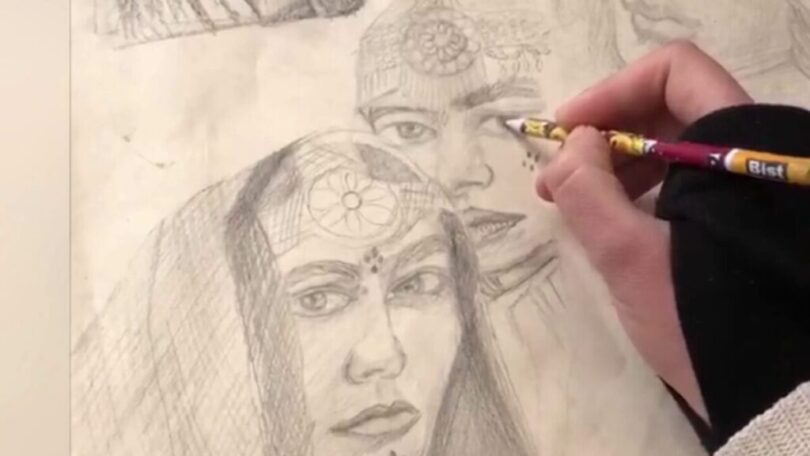
HERAT (Amu tv): Female artists in Herat expressed outrage after the Taliban shut down their painting workshops, a move that comes amid ongoing restrictions on women’s education and artistic expression.

Students from the Faculty of Arts at Herat University said they established small painting workshops following the Taliban’s closure of universities for women. However, these workshops were also forcibly closed after what the students described as repeated “interventions, humiliation, and insults” by Taliban authorities.

“The Taliban have not left us alone even after shutting down the doors of the Faculty of Arts,” said Khatira Samangani, a second-year student when the ban was implemented. “They threatened us in horrific ways, constantly visiting our gallery and warning us not to draw or paint human faces. We can’t even hold the smallest exhibition.”

Some students, determined to continue their craft, turned to private training centers to enhance their skills. But they said these centers, too, have been shut down by the Taliban.

“I was in my second year when the university was closed,” said Saida Mohammadi, another art student. “I had dreamed of opening my own art gallery. I attended training courses and continued learning, but the Taliban closed those courses as well.”

Herat, historically a hub of artistic achievement, is regarded as the birthplace of Persian miniature painting. During the Timurid dynasty in the 15th century, the city was home to a grand art library that attracted artists from across the region.

Under the Taliban’s strict interpretation of Islamic law, however, the painting of living beings, including animals and birds, is prohibited. The Taliban’s Ministry for the Promotion of Virtue and the Prevention of Vice has enforced these restrictions, which many fear threaten the rich artistic heritage of Herat and the aspirations of its young artists.

Despite the challenges, some female artists continue to paint at home, refusing to abandon their passion.
 
To view this content we will need your consent to set third party cookies.
For more detailed information, see our cookies page.
 

Users who are viewing this thread

Pakistan Defence Latest

Latest Posts

Back
Top