TF-X / KAAN / Hürjet Turkish Fighter & Trainer Aircrafts News & Discussions

When people talk about Turkeys ability to make military jet engines, and then try to compare that with China's journey, it is a flawed comparison to make imho, as Turkey already has acquired the material science to build the single crystal blades, aswell as the associated jet engine components.

These problems were solved with deep TOT it got being part of NATO, through the building of General Electric F110-GE-100 engines, which were built under license by TAI Engines at Eskisehir as well as F110-GE-129 engines at TEI (Turkish Engine Industries). Turkey has alot of engine manufacturing infrastructure at world class levels already. Lets not forget this.

What Turkey is trying to solve is not a material science, or manufacturing issue, it is intellectual property ownership issue.

The issue of the intellectual property of a new engine design is one that Turkey can own and sell itself without restrictions. Turkey is designing a new engine for KAAN, for which it will use existing material science and infrastructure that turkey already has. Therefore Turkeys engine development will be faster and less risky than Chinas, as China had to solve the material science, manufacturing aswell as the engine design at the same time, hence the 20year journey. Turkey has builts a series of engine engines of various sizes, and the next step is a KAAN class engine.

I think for that reason they will be far more successful in their attempt.

The Indians are now attempting to replicate Turkeys journey in building world class infrastucture through as much TOT as it is allowed by GE/USA, with end to end assembly pipleline in India. They can then substitute with an Indian designed engine once they can get their core jet engine R&D and design capabilities resolved. India tried the Chinese approach and have failed at it, so they are doing a reset in their approach and are copying Turkeys approach.
 
Last edited:
MoU signed with SPAIN for HURJET , i hope we can sign the actual contract too
 
When people talk about Turkeys ability to make military jet engines, and then try to compare that with China's journey, it is a flawed comparison to make imho, as Turkey already has acquired the material science to build the single crystal blades, aswell as the associated jet engine components.

These problems were solved with deep TOT it got being part of NATO, through the building of General Electric F110-GE-100 engines, which were built under license by TAI Engines at Eskisehir as well as F110-GE-129 engines at TEI (Turkish Engine Industries). Turkey has alot of engine manufacturing infrastructure at world class levels already. Lets not forget this.

What Turkey is trying to solve is not a material science, or manufacturing issue, it is intellectual property ownership issue.

The issue of the intellectual property of a new engine design is one that Turkey can own and sell itself without restrictions. Turkey is designing a new engine for KAAN, for which it will use existing material science and infrastructure that turkey already has. Therefore Turkeys engine development will be faster and less risky than Chinas, as China had to solve the material science, manufacturing aswell as the engine design at the same time, hence the 20year journey. Turkey has builts a series of engine engines of various sizes, and the next step is a KAAN class engine.

I think for that reason they will be far more successful in their attempt.

The Indians are now attempting to replicate Turkeys journey in building world class infrastucture through as much TOT as it is allowed by GE/USA, with end to end assembly pipleline in India. They can then substitute with an Indian designed engine once they can get their core jet engine R&D and design capabilities resolved. India tried the Chinese approach and have failed at it, so they are doing a reset in their approach and are copying Turkeys approach.
China has been making Russians engines under licenses for decades

But building your own is a totally different story
 
When people talk about Turkeys ability to make military jet engines, and then try to compare that with China's journey, it is a flawed comparison to make imho, as Turkey already has acquired the material science to build the single crystal blades, aswell as the associated jet engine components.

These problems were solved with deep TOT it got being part of NATO, through the building of General Electric F110-GE-100 engines, which were built under license by TAI Engines at Eskisehir as well as F110-GE-129 engines at TEI (Turkish Engine Industries). Turkey has alot of engine manufacturing infrastructure at world class levels already. Lets not forget this.

What Turkey is trying to solve is not a material science, or manufacturing issue, it is intellectual property ownership issue.

The issue of the intellectual property of a new engine design is one that Turkey can own and sell itself without restrictions. Turkey is designing a new engine for KAAN, for which it will use existing material science and infrastructure that turkey already has. Therefore Turkeys engine development will be faster and less risky than Chinas, as China had to solve the material science, manufacturing aswell as the engine design at the same time, hence the 20year journey. Turkey has builts a series of engine engines of various sizes, and the next step is a KAAN class engine.

I think for that reason they will be far more successful in their attempt.

The Indians are now attempting to replicate Turkeys journey in building world class infrastucture through as much TOT as it is allowed by GE/USA, with end to end assembly pipleline in India. They can then substitute with an Indian designed engine once they can get their core jet engine R&D and design capabilities resolved. India tried the Chinese approach and have failed at it, so they are doing a reset in their approach and are copying Turkeys approach.


Yes and no.

Turkey may have access to better material science now but it does not have China’s experience in jet engines. That still counts for a lot and will add years to development.

Turkey when it started the KAAN engine project had not even developed a turbojet, let alone a turbofan engine.

Not saying that Turkey cannot eventually do it but the timelines speculated by some here(2028 for first integration into KAAN) are wildly optimistic.

Those license built GE engines would have zero tech transfer of either the crystal turbine blades or the high pressure engine core. These are the hard bits of the engine.

GE was forced to send SNECMA the complete high pressure core as “black box” as the US refused to transfer the tech to France.
 
Why deniers? No one denies anything and everyone acknowledges the progress so far without envy, only the expectations for the next leap, to realise an engine of this class and performance without problems by 2028 are not realistic and all counterarguments are simply ridiculous.

Therefore, once again, it is not resentment, not denial, but simply a sense of reality.
 
Why deniers? No one denies anything and everyone acknowledges the progress so far without envy, only the expectations for the next leap, to realise an engine of this class and performance without problems by 2028 are not realistic and all counterarguments are simply ridiculous.

Therefore, once again, it is not resentment, not denial, but simply a sense of reality.
Well , the calender for the engine is pretty tight no doubt but the guys insist of it so i have to tell what they say. from metallurgical aspects there is no obstacle seen but a reliable overall design is the challenge.
 
I think it was mainly political. the aircraft was meant as a ground test unit but was made flight-worthy after a lot of changes. it became more expensive but it had some positive effects on the program, too. Mainly, the validation of the flight software and flight-related avionics, maturity of the supply chain, some fixes on the software(like aggressive elevator movements at take off) and overall moral boost. Clearing out the first flight must have given more confidence to the engineers.

but the airframe cannot be pushed much and therefore we haven't seen much activity from it. it will fly at least once more but after that we have no indication to assume it will continue flying. The second and third prototypes are in assembly and will fly next year. Those will be the real birds.
+1
One of the most precisely correct post on this thread.


Flight control software is updated in stages, very painstakingly using an approach called gain. It requires hundreds of flights to even explore a quarter of the test points across the envelope.

Just having 2 flights in the entire year means that the FBW FCS has hardly been updated or tested at all.

This was clearly a political thing, they wanted to get it up in the air as per the political directive. Otherwise if there is a heavily modified P1 that is supposed to represent the more production ready KAAN, then they should have simply waited for it to be ready and then carried out it's test flights.
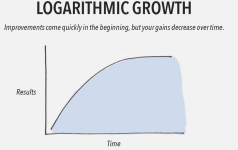
It was a political thing yes, but LOTs of valuable flight data was gathered. I'm sure that you can imagine that the utility of the first data is huge and decreases as more and more data is gathered - like a log curve
1734706124324.png
Yes, most of the envelope remains unexplored but the data that was gathered in the complete absence of data was extremely valuable.


This is plainly wrong. You're just making stuff up.
Agreed.

OK , Do you think that fbw codes written from scratch for KAAN?
YES!
 
In the meantime, US has full control of the KAAN programme as it is the sole supplier of the engine.

When it was being developed, Ismael Demir mentioned that Turkey had reached out and got agreements for a possible alternative, should there be a potential embargo of the GE F110 engines. People speculated it was either the Al-41/Al-51 from Russia or a WS-10C/WS-15 from China. This reengining would obviously take some time if the need ever arose, but the rest of the plane development will be finished with the GE F110s that Turkey has already acquired for future prototypes.
 
Any news if this engine is being tested on the T129?

Not yet, it needs to finished certification for the Gokbey and be in mass production before there is a military variant that is developed.
 
Guys ... you cannot compare a turboshaft on that power-output-level with a high-performance engine like the one aimed for Kaan!

I really do not understand why you guys always think "a bit working internationally on this and that engine", some own research and investment and getting help from others could solve issues on a lever, other nations with much more experience are still facing!°? And you guys dream that not only all goes fine in a much shorter timespan, but also that it surpasses everything comparable!

The TF10000 is the milestone for the TF35000, if they can get the TF1000 ready, then Turkey will have acquired all the basic toolsets for Turbofan development. Turkey is receiving help from Ukraine on this, and there may be Rolls Royce involvement, we will have to see.
 
When people talk about Turkeys ability to make military jet engines, and then try to compare that with China's journey, it is a flawed comparison to make imho, as Turkey already has acquired the material science to build the single crystal blades, aswell as the associated jet engine components.

These problems were solved with deep TOT it got being part of NATO, through the building of General Electric F110-GE-100 engines, which were built under license by TAI Engines at Eskisehir as well as F110-GE-129 engines at TEI (Turkish Engine Industries). Turkey has alot of engine manufacturing infrastructure at world class levels already. Lets not forget this.

What Turkey is trying to solve is not a material science, or manufacturing issue, it is intellectual property ownership issue.

The issue of the intellectual property of a new engine design is one that Turkey can own and sell itself without restrictions. Turkey is designing a new engine for KAAN, for which it will use existing material science and infrastructure that turkey already has. Therefore Turkeys engine development will be faster and less risky than Chinas, as China had to solve the material science, manufacturing aswell as the engine design at the same time, hence the 20year journey. Turkey has builts a series of engine engines of various sizes, and the next step is a KAAN class engine.

I think for that reason they will be far more successful in their attempt.

The Indians are now attempting to replicate Turkeys journey in building world class infrastucture through as much TOT as it is allowed by GE/USA, with end to end assembly pipleline in India. They can then substitute with an Indian designed engine once they can get their core jet engine R&D and design capabilities resolved. India tried the Chinese approach and have failed at it, so they are doing a reset in their approach and are copying Turkeys approach.

People always use the China example, the Turkish scenario is more akin to Japan than it is to China. China started from Scratch. Turkey and Japan started as part of the supply chain for western products as well as local production and tech transfer. Japan built IHI Corporation XF9 which is similar to the WS-15 project for China. Turkey is aiming to do the same.
 

Users who are viewing this thread

Back
Top