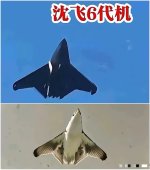
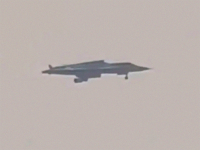
 http://t.cn/A6uccDYR
for REF
This analytical article provides a detailed interpretation of the design philosophy and combat capabilities of China's Chengdu sixth-generation aircraft (J-XX), integrating the history of aviation technology development and future air combat trends. It offers many insightful perspectives. Below is a summary of the article's content and further reflections:
1. Definition of Sixth-Generation Aircraft and J-XX's Design Philosophy
The article emphasizes that the core of J-XX's design lies in its high-altitude and high-speed flight capabilities, which are considered key features of sixth-generation aircraft. Compared to fifth-generation aircraft (such as the F-22 and F-35), J-XX's high-altitude and high-speed performance grants it overwhelming advantages in air combat, particularly in beyond-visual-range (BVR) engagements.
The author argues that J-XX's design returns to the "fundamental truth" of aviation technology: whoever flies higher and faster gains the upper hand in air combat. This philosophy was validated during the Cold War in the high-end fighter confrontations between the U.S. and the Soviet Union, and the emergence of J-XX marks the return of this concept.
2. Innovations in the Propulsion System
J-XX adopts a triple-engine system, with two WS-15 turbofan engines and a third engine likely optimized for high-altitude flight, such as a turbojet or ramjet engine. This hybrid propulsion system enables J-XX to achieve supersonic cruising speeds of Mach 2-3 at altitudes of 20,000 to 25,000 meters, with a range exceeding 2,000 kilometers, far surpassing the F-22.
The article also mentions that J-XX's air intake design resembles the F-22's Caret inlet rather than the J-20's DSI inlet, indicating that J-XX prioritizes high-speed flight performance.
3. Application of Thrust Vectoring Control (TVC)
J-XX is almost certain to be equipped with thrust vectoring control (TVC). However, the author notes that the primary role of TVC is not to achieve super maneuverability at low altitudes but to maintain high-G maneuverability during high-altitude and high-speed flight. In the thin air at high altitudes, traditional control surfaces lose effectiveness, while TVC provides reliable maneuverability.
Additionally, TVC can assist J-XX in evading enemy missile attacks in BVR combat, as the hit rate of existing BVR missiles against high-altitude and high-speed targets is relatively low.
4. Tailless Design and Stealth Capabilities
J-XX features a tailless design, which not only enhances stealth but also reduces drag during high-altitude and high-speed flight. Combined with advanced flight control technology and TVC, J-XX can maintain super maneuverability at altitudes of 5,000 to 10,000 meters.
The article stresses that while stealth is important, high-altitude and high-speed flight capabilities are the core advantages of J-XX.
5. Tactical Advantages in Beyond-Visual-Range Combat
During high-altitude and high-speed flight, J-XX can launch long-range air-to-air missiles (such as the PL-15) and utilize its advanced radar system for target tracking and guidance. The thin air at high altitudes significantly increases the missile's range and terminal speed, allowing J-XX to strike enemy aircraft before they enter their attack range.
The author paints a tactical scenario: J-XX approaches a U.S. military formation over the Pacific at high altitude and speed, launches missiles outside the engagement range of F-35s and F-22s, and then swiftly disengages. This tactic would place existing U.S. fourth- and fifth-generation aircraft at a disadvantage against J-XX.
6. Impact on Future Air Combat
The article argues that the emergence of J-XX will fundamentally change the rules of air combat, particularly in the Pacific region. J-XX's high-altitude and high-speed performance, coupled with its long-range strike capabilities, will make it difficult for existing U.S. aircraft to counter, significantly undermining U.S. military superiority in the region.
The author also mentions that J-XX may possess the ability to command drones for remote operations, further enhancing its combat flexibility and strike range.
7. Personal Reflections and Conclusion
In conclusion, the author expresses anticipation for the development of China's sixth-generation aircraft, believing that J-XX represents another leap forward in air combat technology. High-altitude and high-speed flight capabilities will become the core of future air combat, and J-XX embodies this philosophy perfectly.
The author also reminds readers not to be distracted by "minor details" such as subsonic super maneuverability, as true air superiority lies in the leap in flight performance, and J-XX is the embodiment of this principle.
Further Reflections:
- Technical Feasibility: While the article provides a detailed analysis of J-XX's design and performance, actual technical implementation faces numerous challenges, particularly in the propulsion system and flight control technology. The complexity and reliability of the triple-engine system, as well as thermal management during high-altitude and high-speed flight, are critical issues to address.
- Tactical Application: J-XX's high-altitude and high-speed performance theoretically offers significant advantages, but practical combat must consider enemy air defense systems, electronic warfare capabilities, and coordinated operations. How J-XX integrates with other platforms (such as drones and AWACS) will be key to maximizing its effectiveness.
- International Response: The emergence of J-XX will undoubtedly attract widespread international attention, especially from the U.S. and its allies. Whether the U.S. accelerates the development of its sixth-generation aircraft (NGAD) and how it responds to the strategic challenges posed by J-XX will be focal points of international military competition in the coming years.
In summary, J-XX's design philosophy and combat capabilities demonstrate China's ambitions in aviation technology, but its practical application and tactical effectiveness will require further validation in real combat scenarios.