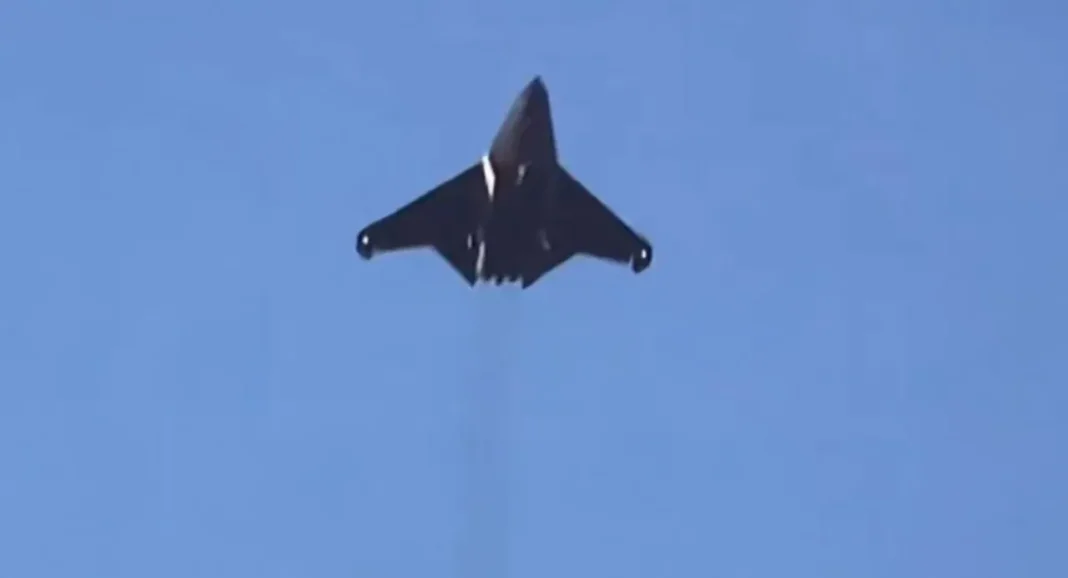
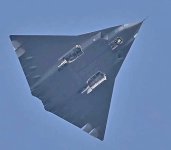
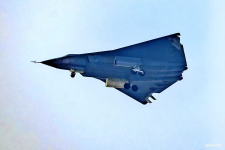
China could dominate the sky with two flying sixth-generation fighter jets as the US struggles to design one

How did it make sense? F-35 pre-dated J-35 development for at least a decade. F-35 went into production before J-35 even have a prototype.......
and now these planes predate any evidence of NGAD prototype - should NGAD have similarities with either it could be copying. Not sure what you mean by "How did it make sense?"

Many things that distinguish 6th gen may not be visible on video, especially for a testing version.

Which 5th gen fighter has a "tailless design..."? I don't believe the Chinese have claimed the J-36 is a "stealth bomber". If they did I would agree it doesn't look like a stealth bomber.
 
Many things that distinguish 6th gen may not be visible on video, especially for a testing version.
The WZ-9 being released as a stealth detector may not be coincidence. The j-36 is a huge fighter which could reduce maneuverability. However, due to its size, j-36 may be able to carry more bvr aams effectively reducing it's maneuverability disadvantages. Coupled with data linking with wz-9 and more advanced sensors it could eat F-22s for breakfast - putting it above fifth gen. However these things are not visible in the video.

@j_hungary
 
Easy....

Because China has already have 2 5th generation fighter : J-20 and J-35 (which they classify as 4th gen fighters).

Therefore J-36 and J-50 should be the next generation after the 5th generation aka : 6th gen.

Because :

1. It is illogical for China to have 4 different kind of 5th gen fighter.

2. China is at the forefront for the technology needed for 6th gen fighter, such as: AI, advanced sensors, advanced data fusion, direct weapon (laser), metamaterial, quantum technology.

Look at the reactions of these cheerleaders and you can tell how confident they are.
 
and now these planes predate any evidence of NGAD prototype - should NGAD have similarities with either it could be copying. Not sure what you mean by "How did it make sense?"

Many things that distinguish 6th gen may not be visible on video, especially for a testing version.

Which 5th gen fighter has a "tailless design..."? I don't believe the Chinese have claimed the J-36 is a "stealth bomber". If they did I would agree it doesn't look like a stealth bomber.
the major issue here is, we don't know if what we saw in that video is 6th gen.....And then we don't even know what US NGAD looks like

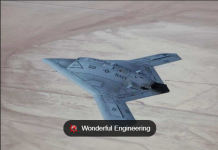
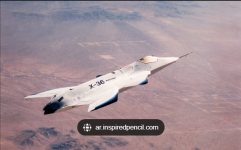
On the other hand, as my brother and some aircraft engineer pointed out, the smaller example looks a lot like RQ-180 and or X-36 itself.

1736410085339.png

RQ-180

1736410125148.png

X-36

And finally whether or not which fighter aircraft have tailless design is not the point here, because that existed long before even fifth gen aircraft, if NGAD is actually a tailless boomless design, that alone cannot be said as "similar to Chinese design" because that design is not new.
 
The WZ-9 being released as a stealth detector may not be coincidence. The j-36 is a huge fighter which could reduce maneuverability. However, due to its size, j-36 may be able to carry more bvr aams effectively reducing it's maneuverability disadvantages. Coupled with data linking with wz-9 and more advanced sensors it could eat F-22s for breakfast - putting it above fifth gen. However these things are not visible in the video.

@j_hungary
Well, look at it this way, if I imagine a war plan completely in my head, that will go exactly how I wanted to go.

That's why I don't like to speculate anything.
 
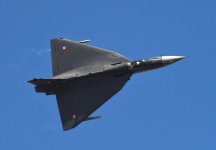
We used to call the Tejas the flying samosa....it now has staunch competition.

One looks good, whilst the other not so good.7L2SDLQVUFMHZPKF6GND6UPMDA.jpg
taken-without-permission-https-www-960057565_c48ed5.jpg

One is filled with exotic & secret fillings and spices, whilst the other is mostly aloo mataar.

Members can decide which is which.
 

Is the J-50, China's second next-generation fighter, destined for PLA aircraft carriers?

AboutFabrice Wolf
8TH JANUARY 2025

Shenyang J-50

The appearance of a new-generation Chinese fighter on the country's social networks on December 26 had already had the effect of a bomb in the sphere of aeronautical experts and the Chinese army.

Very imposing, the new aircraft from the aircraft manufacturer Chengdu, which is today designated J-36 by the numbering observed on its fuselage, ticks many boxes of the sixth generation of combat aircraft, currently under development in Europe and the United States, in particular with increased electric power thanks to an engine composed of three turbojets.

If the appearance of the J-36 was a surprise, that of a second prototype, probably developed by the second Chinese fighter jet manufacturer, Shenyang, on the same day, left most of these experts speechless. Indeed, not only was the aircraft unknown, but it also seems to display many attributes of this new generation.

Less documented and iconographed than the J-36, this new prototype, currently called the "J-50" by the press, has been the subject of far fewer articles from the specialized press and comments from experts. One of them, however, has just put forward a most interesting hypothesis.

In fact, according to the specialist commentator Du Wenlong, recognized in China, the new Shenyang aircraft would not be intended for the Chinese air force, but for the naval air force, and could represent the next heavy fighter embarked on board Chinese aircraft carriers.


The J-50, China's second new-generation fighter, observed on December 26, 2024​

As mentioned in the introduction, the small number of photos and videos published (in the main illustration) on the subject of this new generation Chinese fighter necessarily limits the understanding of this new weapon system.

image

one of the pictures of the J-36

At best, we know that the aircraft is more compact than the J-36, but larger than the J-16 or J-20 currently in service. Unlike the J-36, it has only two turbojets, and a semi-delta wing similar to that chosen, for example, for the Tempest of the British GCAP program.

Unlike the latter, however, the J-50 lacks a vertical tail, which tends to increase its multi-aspect stealth and speed, at the cost of reduced maneuverability.

According to some estimates circulating on social networks, the aircraft would have a length and wingspan of around 22 m, and a maximum mass of 35 to 40 tonnes, compared to 21 m/13 m and 37 tonnes for the J-20.

It would apparently have two large weapons bays, designed to carry long munitions, such as the new PL-17 long-range air-to-air missiles, or air-to-ground or air-to-surface munitions. On the other hand, its twin-engine configuration would give it neither the electrical power nor the speed of the J-36, and its smaller dimensions require a smaller quantity of fuel to be carried, and therefore a smaller range.

Chinese military expert says J-50 would be intended to operate from PLA aircraft carriers​

Why, then, is China simultaneously developing two aircraft that appear to fall into the sixth-generation fighter classification, with such different performance characteristics?

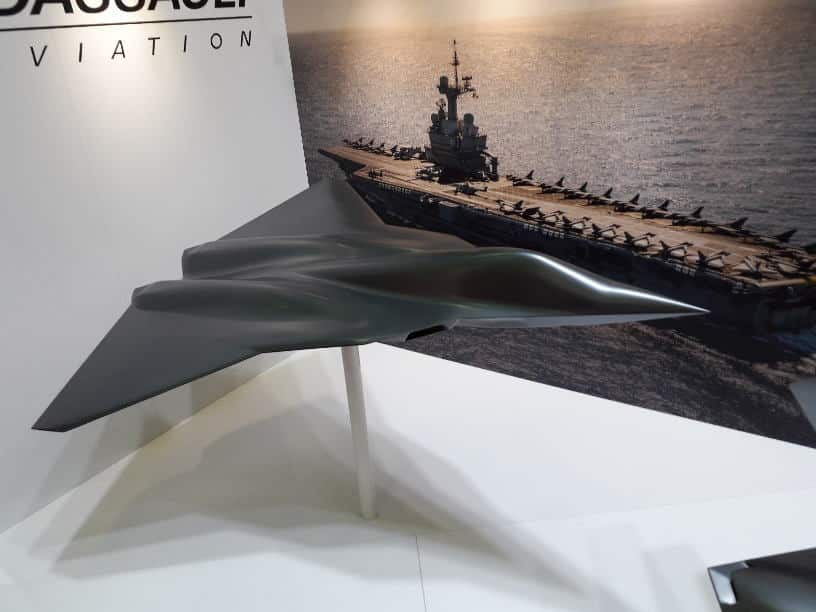
Scaf model


One of the first models of Dassault Aviation concerning the SCAF program. At that time, the aircraft manufacturer favored the configuration without vertical tail.

 
We used to call the Tejas the flying samosa....it now has staunch competition.

One looks good, whilst the other not so good.View attachment 94042
View attachment 94043

One is filled with exotic & secret fillings and spices, whilst the other is mostly aloo mataar.

Members can decide which is which.

Tejas look more similar to US NGAD, almost identical

7l2sdlqvufmhzpkf6gnd6upmda-jpg.94042

hq720.jpg
 
F-22 Raptor has the credibility of a toilet paper. When Chinese technology surpasses US one day he will have no choice to admit that China has won the Tech Race and shut his trap for once.
Don't be so hopeful. The guy exhibits the characteristic, bravado mentality of a typical, egotistical Indian mindset that I've witnessed online and offline for 35+ years. I would not be surprised if he's an Indian.
 
Well, look at it this way, if I imagine a war plan completely in my head, that will go exactly how I wanted to go.

That's why I don't like to speculate anything.
If I was a war planner or even a soldier I would agree. But at the same time I would not underestimate my opponent while overestimating myself:
NGAD is more advanced than anything China can put in the air.
Considering this is an open forum I don't mind speculation as long as you can provide your reasoning, this promotes healthy debate.
the major issue here is, we don't know if what we saw in that video is 6th gen.....And then we don't even know what US NGAD looks like
How do you define sixth gen?
While it's true we don't know what NGAD looks like I recall seeing concept art from LM on the ideal stealth fighter being tailless and rhomboidal. As we move up in generations and improve stealth we will converge on the ideal shape - likewise NGAD will share these features.
On the other hand, as my brother and some aircraft engineer pointed out, the smaller example looks a lot like RQ-180 and or X-36 itself.
Neither of these are 5th gen fighters. There is no example of a 5th gen fighter without vertical stabilization.
 
If I was a war planner or even a soldier I would agree. But at the same time I would not underestimate my opponent while overestimating myself:

This is not whether or not I would underestimate my opponent. But I can't plan on things that I cannot see. And right now I don't see any of that being true.

One part of planning is to estimate your opponent strength, but that does not mean we need to blindly believe whatever.....

How do you define sixth gen?
While it's true we don't know what NGAD looks like I recall seeing concept art from LM on the ideal stealth fighter being tailless and rhomboidal. As we move up in generations and improve stealth we will converge on the ideal shape - likewise NGAD will share these features.

I don't think being tailless is one of the 6th gen requirements. 6th Gen is all about material science and network fighting capability......Tailless design only help with lower drag, it neither help with stealth nor network centric warfare. It does help with speed and maneuverability...


Neither of these are 5th gen fighters. There is no example of a 5th gen fighter without vertical stabilization.

again, this is not an issue here, just because there is no tailless 5th gen fighter does not mean tailless design is something new. Just because I start using them in fighter aircraft does not make it my design.........

On the other hand, as I said we don't know what the US NGAD is like, and we don't know if this is indeed Chinese 6th gen design. The US could have that concept pre-dated the Chinese 6th gen development, even if that is a true 6th gen
 
This is not whether or not I would underestimate my opponent. But I can't plan on things that I cannot see. And right now I don't see any of that being true.

One part of planning is to estimate your opponent strength, but that does not mean we need to blindly believe whatever.....
As far as planning goes I follow Mike Tyson's philosophy on planning but on this forum I am ok with speculating but the speculations should have some justification. This isn't "blindly" believing "whatever" there is something and claiming this is something you cannot see is blindly believing.

I don't think being tailless is one of the 6th gen requirements. 6th Gen is all about material science and network fighting capability......Tailless design only help with lower drag, it neither help with stealth nor network centric warfare. It does help with speed and maneuverability...
Not according to the Lockheed concept of super stealthy fighters - tailless is a component. Going by your definition of 6th gen no one can prove or disprove these new planes are 6th gen as we can't gauge their material nor network fighting capability from a video.

again, this is not an issue here, just because there is no tailless 5th gen fighter does not mean tailless design is something new. Just because I start using them in fighter aircraft does not make it my design.........
It makes it their design if coupled with stealth. Stealth + tailless is different from tailless.
BTW I did not claim that being tailless makes this plane a 6th gen.
On the other hand, as I said we don't know what the US NGAD is like, and we don't know if this is indeed Chinese 6th gen design. The US could have that concept pre-dated the Chinese 6th gen development, even if that is a true 6th gen
You are willing to give the benefit of the doubt to a plane whose prototype you have not seen based on a possible "concept [that could] pre-date" the Chinese visible prototype? Is this different from blindly believing whatever?
 
As far as planning goes I follow Mike Tyson's philosophy on planning but on this forum I am ok with speculating but the speculations should have some justification. This isn't "blindly" believing "whatever" there is something and claiming this is something you cannot see is blindly believing.

Well, this is something you cannot see. As I said, all we saw is a tailless plane flying with possible thrust vectoring with a crappy engine.

It will take a lot more than that for me or anyone to believe this is a 6th gen design. Again, can it be? Sure, but I would need more context.

Not according to the Lockheed concept of super stealthy fighters - tailless is a component. Going by your definition of 6th gen no one can prove or disprove these new planes are 6th gen as we can't gauge their material nor network fighting capability from a video.

First of all, 6th gen is not all about Stealth. NGAD lay out a couple of design concept, the use of long-range multi-band radar, adaptive engine for higher power output (so you can use DEW), fuel consumption, different flight envelope. optional unmanned platform.

Second of all, tailless does not really give out that much edge in term of stealth, yes, you have less surface area to deflect radar beam, but it really wasn't that much, especially you are going to need canard to stabilise the aircraft (Otherwise you are just going to turn in circle as the vortex of your wing take effect and you do not have a tail to stabilise it. What you cut in the back is compensated by expanding the flight surface.


It makes it their design if coupled with stealth. Stealth + tailless is different from tailless.
BTW I did not claim that being tailless makes this plane a 6th gen.

Huh?? That's just not how this work.........Plus, drone like RQ-180 and MQ-28 are tailless + stealth.......

You are willing to give the benefit of the doubt to a plane whose prototype you have not seen based on a possible "concept [that could] pre-date" the Chinese visible prototype? Is this different from blindly believing whatever?

If the sole requirement for 6th gen aircraft is tailless and thrust vectoring, then you "may" have a point. But the issue here is, first of all, it wasn't really that well define. What US may want in their 6th gen platform may be and more likely to be different than what the Chinese want. For example, China may think variable cycle engine is not important and they may leave out that, while the US put the XA-103 into work (US already had variable cycle engine in the form of XA-101)

Problem is, if this is true, let's for the argument sake. Then if you can call it China influence the US NGAD with its tailless design, then can I argue China also influeced by the US X-36 and RQ-180 for them to go with the tailless design to begin with??
 
crappy engine.
Gave me a chuckle - you saw the crappiness of the engine?
First of all, 6th gen is not all about Stealth.
Agreed.

NGAD lay out a couple of design concept, the use of long-range multi-band radar, adaptive engine for higher power output (so you can use DEW), fuel consumption, different flight envelope. optional unmanned platform.
None of these things would be visible on a random cellphone video - same would most likely go for a NGAD video of similar quality. Otherwise agreed. Considering most of these features would not be visible on video asking for visual proof is a silly catch-22. Hence we speculate.

Second of all, tailless does not really give out that much edge in term of stealth, yes, you have less surface area to deflect radar beam, but it really wasn't that much, especially you are going to need canard to stabilise the aircraft (Otherwise you are just going to turn in circle as the vortex of your wing take effect and you do not have a tail to stabilise it. What you cut in the back is compensated by expanding the flight surface.
But you acknowledge tailless does give an edge in stealth no mater how small. I don't see any canards on J-36. It uses these tail fins for maneuverability:
1736465926639.png
Expanding surface area doesn't necessarily reduce stealth especially if that new surface area is in the same (mathematical) plane as the rest of the plane, unlike canards.
If the sole requirement for 6th gen aircraft is tailless and thrust vectoring, then you "may" have a point. But the issue here is, first of all, it wasn't really that well define. What US may want in their 6th gen platform may be and more likely to be different than what the Chinese want. For example, China may think variable cycle engine is not important and they may leave out that, while the US put the XA-103 into work (US already had variable cycle engine in the form of XA-101)
More or less agreed. That's why I think discussing about what does and does not qualify as 6th gen is mere semantics and should be ignored. A more productive discussion is why you think it is or it is not 6th gen.

Problem is, if this is true, let's for the argument sake. Then if you can call it China influence the US NGAD with its tailless design, then can I argue China also influeced by the US X-36 and RQ-180 for them to go with the tailless design to begin with??
We don't give the same luxury when saying China copied F-35 or "copying" any of the other planes. Now the shoe is on the other foot.
 

Users who are viewing this thread

Pakistan Defence Latest

Back
Top