Chinese Society and Infrastructure

Status
Not open for further replies.
All of them are very young people, old people will freeze to death in this severe cold

微信图片_20240124031219.jpg微信图片_20240124031225.jpg微信图片_20240124031228.jpg微信图片_20240124031232.jpg
 
They can huddle together to get some warmth.

Sure, but a properly designed facility appropriate to the rush of visitors would make more sense. After all, it is a pretty important museum.
 
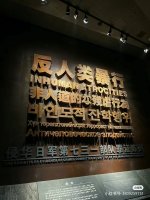
Girl passes out in the freezing cold waiting to visit the museum of 731 Japanese war crimes in Harbin in NE China

Habrin is known as the "ice city" in China, the temperature during the day in winter is usually below -20 degrees celsius. and so many visitors wait to visit the museum of 731 Japanese war crimes in the outskirts of Harbin, many have to wait in the lone queues in the freezing cold for up to one hour to get in.
This young girl passed out during her long wait in the snow

To view this content we will need your consent to set third party cookies.
For more detailed information, see our cookies page.

The girl recovered soon afterwards, she just suffered from hypoglycemia, ( low blood sugar) . Maybe she didn't eat breakfast and the weather is just too cold.
 
Chinese hospital no human contact delivery system

To view this content we will need your consent to set third party cookies.
For more detailed information, see our cookies page.
 

Ancient Fujian-style shipbuilding techniques gain global recognition

By Wang Jing (People's Daily Online) 14:04, January 22, 2024

To view this content we will need your consent to set third party cookies.
For more detailed information, see our cookies page.


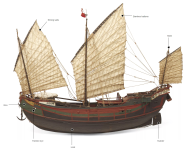
Fuchuan, or Fujian-style ships, are ocean-going wooden boats built in southeast China's Fujian province. They feature a deep keel and wide upper structure, making them ideal for long-distance voyages.

Quanzhou, the starting point of the Maritime Silk Road, was a hub of maritime trade and shipbuilding during the Song (960-1279) and Yuan (1271-1368) dynasties, establishing itself as the nation's foremost shipbuilding center.

Fujian-style ships were the primary choice for Chinese merchants navigating the Maritime Silk Road to destinations including Northeast Asia, Southeast Asia, the Indian Ocean, the Arabian Peninsula, and East Africa.

"The keel is the most crucial component of Fujian-style ships, known for its robustness and thickness. It enables the vessels to withstand winds and waves," said Lin Peizong, an 11th-generation inheritor of the watertight compartment technique in making Fujian-style ships.

Watertight compartments are a key feature in the construction of Fujian-style ships. By using compartment boards, the ship's interior is divided into sealed chambers, reinforcing the hull and safeguarding against leaks.

"Even in modern times, the watertight compartment technique is still employed in Chinese vessels such as submarines and aircraft carriers," according to Lin.

In 2010, the watertight-bulkhead technology used in Chinese junks was inscribed on UNESCO's List of Intangible Cultural Heritage in Need of Urgent Safeguarding.

(Web editor: Zhang Wenjie, Du Mingming
 

5G, drones offer a speedy new path for blood delivery in Shenzhen, south China​

To view this content we will need your consent to set third party cookies.
For more detailed information, see our cookies page.
 
Chinese ship building in ancient times reached its zenith in Northern Song dynasty (around 1000 AD). Chinese technologies went to the West probably due to Mongol invasion of Europe (or other routes, like merchants). But those technologies were the key to the West development of their own ship building, which led to the era of colonialism in Africa, America and Asia.
So China was more or less indirectly responsible for colonialism.
 
Many innovative technology are found in this humble Ancient Fu Chuan (Chinese Junk).

Quote from New World Encyclopedia.
Junks incorporated numerous technical advances in sail plan and hull designs that were later adopted in Western shipbuilding.
  • The sails were rigged so that they could direct wind into each other, allowing the junks to sail into the wind and to travel in heavy winds and rough seas.
  • Unlike the sails of a traditional square rigged ship, the sails of a junk can be moved inward, toward the long axis of the ship, allowing the junk to sail into the wind.
  • The sails can also be easily reefed and adjusted for fullness, to accommodate various wind strengths.
  • Multiple compartments were built in the hull, accessed by separate hatches and ladders, and similar in structure to the interior of a bamboo stem. These could be made watertight to slow flooding, but the front compartments often had “limber holes” that allowed water to enter and leave the compartment, helping to ballast the ship in rough waters.
  • Junks employed stern-mounted rudders centuries before their adoption in the West, though the rudder, origin, form and construction was completely different.
  • Around the thirteenth to the fifteenth centuries, many junks incorporated "fenestrated rudders" (rudders with holes in them), to lessen the force needed to direct the steering of the rudder. Leeboards and centerboards, used to stabilize the junk and to improve its capability to sail upwind, were adopted by Portuguese and Dutch ships around 1570.

1706204272403.png
 
Last edited:
c3c622f6-1fcf-4ba8-8ce6-dcafd02abc27_b415ef76.jpg

Ma Donghan (left) and Ma Dongxin, who were top students at Tsinghua University. Photo: Guangming Online

Tsinghua University’s ‘star’ twin scientists return to China from the US, Canada
  • The sisters, whose study schedule turned them into social media stars, are teaching at major universities after completing their postdoctoral research
  • Ma Donghan and Ma Dongxin each made important contributions in their respective fields while in North America

Ling Xinin Ohio
Published: 9:00pm, 25 Jan, 2024

The return to China of Tsinghua University’s “star” twin scientists at the end of their postdoctoral research in North America was celebrated on Chinese social media after it was announced last week on the alma mater’s website.

The sisters Ma Donghan and Ma Dongxin, who were born in Dalian in 1989, were top students at Tsinghua when they shot to fame after their study schedule was published online. Commenters were amazed at their daily 6am-1am routine.

The twins each received special scholarships from Tsinghua University in 2012, an honour awarded to the best five undergraduates each year. They remained at Tsinghua and earned their PhDs before heading overseas.

Elder sister Ma Donghan, who continued her studies at Purdue University in the US, has joined Dalian University of Technology in Liaoning province, northeastern China as a professor. Her research focuses on super-resolution microscopy.

Ma Dongxin, whose expertise is in novel, high-performance LED lights, has returned to Tsinghua in Beijing as an assistant professor and teacher. She completed her postdoctoral research at the University of Toronto in Canada.

Both women have made important contributions, with each of them responsible for developments that have advanced scientific understanding and led to improvements in their respective fields.

During her postgraduate study in West Lafayette, Indiana, Donghan solved the problem of inaccurate modelling, which had plagued the technology since the invention of single-molecule positioning microscopy.

Super-resolution microscopes can find and track individual molecules, helping scientists to study cells in more detail than any regular microscope can achieve.

Donghan has published a dozen papers in high-profile journals, including Nature Methods, Nature Communications, ACS Sensors and the Science Citation Index.

Dongxin’s research interests include improving the performance of light-emitting diodes (LEDs) by looking into the limitations of perovskite, the mineral widely used as a building block for LED and photovoltaic applications.

By developing a new class of organic additives to fabricate perovskite films, Dongxin helped to develop record-performance LEDs, according to the MIT Technology Review’s selection committee for its Innovators Under 35 prize in 2022.

Dongxin’s perovskite film – developed in Toronto – set a world record for the efficiency and longevity of perovskite LEDs, thanks to the more uniform and efficient layering of the material. The lights she designed were brighter, more efficient and lasted longer.

“My research abroad went smoothly, but I didn’t feel like I belonged. I was looking forward to coming back to China immediately after completing my studies,” Dongxin said, according to the Tsinghua website.

“Now as a teacher, I feel greater responsibilities, and I’m learning to better understand the courses and guide my students to tackle the most challenging scientific questions,” she said.
 
Xinjiang Urumqi City Subway

To view this content we will need your consent to set third party cookies.
For more detailed information, see our cookies page.
 
Status
Not open for further replies.

Users who are viewing this thread

Pakistan Defence Latest

Country Watch Latest

Latest Posts

Back
Top