AMCA News and Discussion

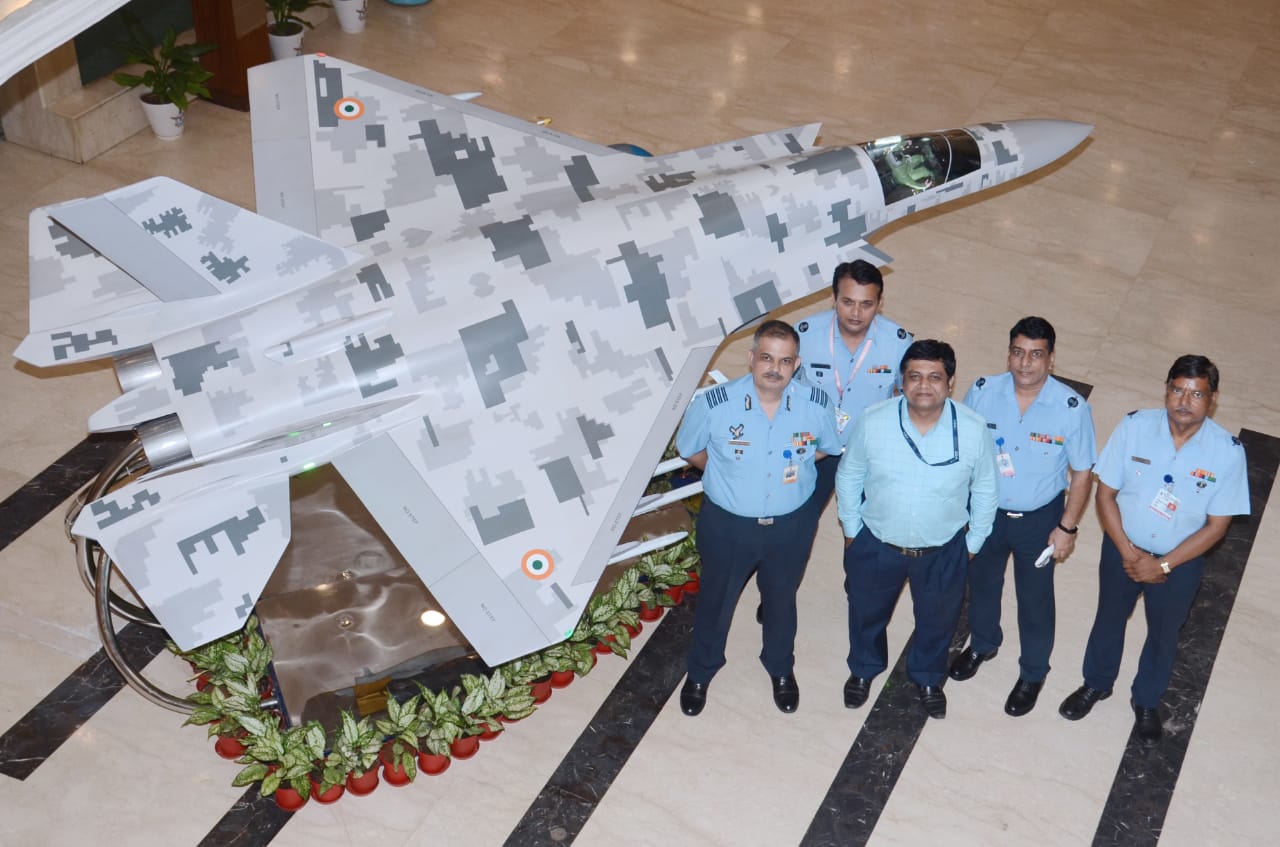
I have a suspicion that this was the earlier AMCA full scale model that was built for RCS measurement at the Open Range (ORANGE) facility. It is not actually fully accurate when compared to the last known AMCA design which is even seen on the DRDO brochure.

GjaeiF_a8AAdel_
The mockup looked like a small aircraft. The dimensions and weight on this brochure confirms it.

Why is this such a small aircraft? I do not get why India made LCA so small too. Making things small makes most things about the design compromised - especially range and payload. For a country as large as India with ambitions to combat China and possibly project power over the Indian Ocean, one would think that the ASR would be for a bigger aircraft. What is the ASR?
 
Indian young engineers and talents dragged by this long lasting program, whereas a Chinese young fella could have joined with jf17 and then J10,J20 even J36, it all happened in around two decades, the experiences from projects are the real goldmine.
 
Why is this such a small aircraft? I do not get why India made LCA so small too.
I have often wondered about this. Perhaps this obsession with small comes from a national mindset that is structured by scanty resources, by the iconic development of a small car that brought in a transportation revolution, by the Gnat that occupies a large part of our mindset, and, of course, by the immediate task of designing a modern MiG 21, that almost automatically defined the size.

It is a mystery, all said and done.
 
=
I have often wondered about this. Perhaps this obsession with small comes from a national mindset that is structured by scanty resources, by the iconic development of a small car that brought in a transportation revolution, by the Gnat that occupies a large part of our mindset, and, of course, by the immediate task of designing a modern MiG 21, that almost automatically defined the size.

It is a mystery, all said and done.
I was going to mention Gnat but you beat me to it.
 
I have often wondered about this. Perhaps this obsession with small comes from a national mindset that is structured by scanty resources, by the iconic development of a small car that brought in a transportation revolution, by the Gnat that occupies a large part of our mindset, and, of course, by the immediate task of designing a modern MiG 21, that almost automatically defined the size.

It is a mystery, all said and done.
All this criticism is only reserved for AMCA? KF-21’s MTOW is all same.
 
To view this content we will need your consent to set third party cookies.
For more detailed information, see our cookies page.


For forging titanium bulkheads.
 
I have often wondered about this. Perhaps this obsession with small comes from a national mindset that is structured by scanty resources, by the iconic development of a small car that brought in a transportation revolution, by the Gnat that occupies a large part of our mindset, and, of course, by the immediate task of designing a modern MiG 21, that almost automatically defined the size.

It is a mystery, all said and done.
I’d assume the LCA was conceived in the 80s, when the economy was much smaller and growth was limited, so the designers had to keep the jet smaller to keep costs down. Considering how many jets the LCA was meant to replace, nearly all the Migs, cost seems the overwhelming likely reason.

At the time, the only opponent was Pakistan, so the expectation was a short ranged dog fighter, a domestic equivalent to the Mirage 2000, which the IAF must have been very impressed by but didn’t want to pay the high price the French were charging. It seems the same reason India wants to be TEDBF and the Rafale.
 
Last edited:
I’d assume the LCA was conceived in the 80s, when the economy was much smaller and growth was limited, so the designers had to keep the jet smaller to keep costs down. Considering how many jets the LCA was meant to replace, nearly all the Migs, cost seems the overwhelming likely cost.
Cost has nothing to do with size, but manufacturing processes and at what scale you are producing decide the price.

A DEF can be as cheaper as a SEF, even for lifetime cost.


F/A-18 SH is much more cheaper than Tejas Mk1A.

PS : Most of export sales happen at inflated prices.
 
I have often wondered about this. Perhaps this obsession with small comes from a national mindset that is structured by scanty resources, by the iconic development of a small car that brought in a transportation revolution, by the Gnat that occupies a large part of our mindset, and, of course, by the immediate task of designing a modern MiG 21, that almost automatically defined the size.

It is a mystery, all said and done.
I believe its two basic things both stemming from the same place.

1. Risk avoidance. No one in India want to risk anything and that means more of the same forever. Not to mention, extreme reluctance to upgrade. I believe someone in CDS office is listening to "I am the very model of the modern major general" in a loop.

2. Purely defensive posture. Again a corollary of Risk avoidance. Why have planes with longer legs if they only need to defend the airspace?
 
The mockup looked like a small aircraft. The dimensions and weight on this brochure confirms it.

Why is this such a small aircraft? I do not get why India made LCA so small too. Making things small makes most things about the design compromised - especially range and payload. For a country as large as India with ambitions to combat China and possibly project power over the Indian Ocean, one would think that the ASR would be for a bigger aircraft. What is the ASR?

Apparently it was an "engineering mockup", most likely built to test RCS at the ORANGE facility. But the moment I saw it, I knew that this was an older design and not the final one; The model itself isn't built particularly well either.

Fact is there isn't the marketing budget to build a full-scale mockup just for Aero India. It costs a few crores to build and isn't really needed since India isn't scouting for partners to join the AMCA program, at least not yet.

The actual AMCA dimensions are more in the KF-21 category. Fairly large.

The most accurate model is this one. It is the final frozen design.

GjFmOidXIAAOO7S


Regarding the LCA design being small. I agree, it should've been at least 1m longer. But from what I've read elsewhere, when the LCA design was being done during the Project Definition Phase (PDP) in 1989 or thereabouts, the requirement was to be able to use Hardened Shelters and Sheds designed to house the hundreds of MiG-21s in the IAF at it's forward air bases.
 
I’d assume the LCA was conceived in the 80s, when the economy was much smaller and growth was limited, so the designers had to keep the jet smaller to keep costs down. Considering how many jets the LCA was meant to replace, nearly all the Migs, cost seems the overwhelming likely reason.

At the time, the only opponent was Pakistan, so the expectation was a short ranged dog fighter, a domestic equivalent to the Mirage 2000, which the IAF must have been very impressed by but didn’t want to pay the high price the French were charging. It seems the same reason India wants to be TEDBF and the Rafale.

I'm not sure that cost was why it was kept that small. I mean adding a 1m plug to the fuselage to allow for more fuel to be carried wouldn't add that much cost to it.

But they did want to keep weight down as much as possible. The larger the fighter, the higher the weight and then the problem would be that the engine thrust wouldn't have been sufficient. The initial empty weight target was ridiculous (somewhere near 5500 kgs empty as I recall). As it stands now, it's 6700 kgs or so. Even with such massive use of composites. An experienced team would've known that a 9G fighter with 4000 kg payload is not possible with a 5500 kg empty weight airframe. Anyway, they learnt as they went along.

I know one design aspect that was dropped due to weight and complexity- that was the canards. The feeling was that it added much more complexity to the FBW, added weight due to the new surfaces and it's actuators and could be done away with while still retaining a very high level of static instability. But that couldn't have been possible for a much larger fighter. WHICH IS WHY, the Tejas Mk2 needs canards. The CG has changed due to the 1.5 m longer fuselage and if canards were not added, it would become a lot less maneuverable.

But yes, it was meant to replace MiG-21s and hence the requirements were set up accordingly. The MiG-21's average sortie duration was 35 mins or so. Max it went up to 45 mins with fuel tanks and if one didn't use Afterburner.

So the thinking in the 1980s when the LCA was conceived was to design a MiG-21 replacement. The requirements were therefore set accordingly, but with flying performance benchmarked to the Mirage-2000 in some aspects and MiG-29 in others.

IAF wanted a more realistic set of technologies to be used whereas DRDO, HAL and ADA wanted to use the program to develop technologies where India had been lagging behind the West (especially) since 3 decades of not having designed anything since HF-24 Marut.
 
Last edited:

Users who are viewing this thread

Country Watch Latest

Latest Posts

Back
Top