AMCA News and Discussion

Hold a minute - TEDBF resembles little to AMCA based on AI25 models or did I mix things up?
There was a proposal to Navy to join AMCA initially, if am not wrong. However they refused, which lead to TEDBF design.

I think that's what he is talking about.
 
To view this content we will need your consent to set third party cookies.
For more detailed information, see our cookies page.


The model shown at Aero India was apparently the latest model for AMCA. It was made of aerospace-grade materials and is being used to validate various stuff.
@Deino @Joe Shearer @Oscar @Nilgiri
 
To view this content we will need your consent to set third party cookies.
For more detailed information, see our cookies page.


The model shown at Aero India was apparently the latest model for AMCA. It was made of aerospace-grade materials and is being used to validate various stuff.
@Deino @Joe Shearer @Oscar @Nilgiri

That perhaps makes sense and explains its “poor” workmanship visual. Its basically parts thrown together to see how they will stand up along with systems inside. Doesn’t have to fly - just has to take tests after tests.
 
That perhaps makes sense and explains its “poor” workmanship visual. Its basically parts thrown together to see how they will stand up along with systems inside. Doesn’t have to fly - just has to take tests after tests.
If they wanted this AMCA model to fly, they could have made it happen using existing engines and flight control systems. The model is already 65% of an actual fighter jet. Turkey did the same with the KAAN they made a structure intended for ground tests fly to make a political statement. The general public might cheer at the sight of the aircraft in the air, but for those who understand avionics, its not an achievement.
 
If they wanted this AMCA model to fly, they could have made it happen using existing engines and flight control systems. The model is already 65% of an actual fighter jet. Turkey did the same with the KAAN they made a structure intended for ground tests fly to make a political statement. The general public might cheer at the sight of the aircraft in the air, but for those who understand avionics, its not an achievement.

I think the Iron bird was deployed only last year. HAL process is verification of Iron bird before first flight. So FBW will be capable of full envelope in the first flight itself while the 'go ahead' to increase envelope will be given using actual flight data.
 
If they wanted this AMCA model to fly, they could have made it happen using existing engines and flight control systems. The model is already 65% of an actual fighter jet. Turkey did the same with the KAAN they made a structure intended for ground tests fly to make a political statement. The general public might cheer at the sight of the aircraft in the air, but for those who understand avionics, its not an achievement.
Our PSUs are quite risk-averse and will not fly a less-proven design until every simulation has been verified. They have more of a waterfall approach while Turkey and South Korea are following a more agile approach. If any of our prototypes fails due to any faults, the entire project are in danger of being scrapped, hence the PSUs often take a good amount of time on the drawing board.
 
Our PSUs are quite risk-averse and will not fly a less-proven design until every simulation has been verified. They have more of a waterfall approach while Turkey and South Korea are following a more agile approach. If any of our prototypes fails due to any faults, the entire project are in danger of being scrapped, hence the PSUs often take a good amount of time on the drawing board.
I think it should be made to fly even before the prototype stage because making a political statement is also important. Good PR is not a waste of resources, in my opinion.
 
Our PSUs are quite risk-averse and will not fly a less-proven design until every simulation has been verified. They have more of a waterfall approach while Turkey and South Korea are following a more agile approach. If any of our prototypes fails due to any faults, the entire project are in danger of being scrapped, hence the PSUs often take a good amount of time on the drawing board.

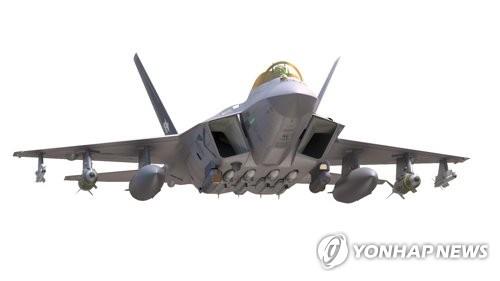
Do you think KF21 program only has 6 prototypes ? In total there are 2 static test prototype and 6 flying prototypes, so there are 8 prototypes being built

Now how many static AMCA prototype intended to be built for development program ?
 
Do you think KF21 program only has 6 prototypes ? In total there are 2 static test prototype and 6 flying prototypes, so there are 8 prototypes being built

Now how many static AMCA prototype intended to be built for development program ?

Unlike Turkish Kaan Program, KFX/IFX program completed CDR design first in late 2019 before going to make the prototype starting in 2020

The development procedures follow best practice in plane development
1739783086523.png


All News 11:49 October 07, 2019
SHARE LIKE SAVE PRINT
FONT SIZE

SEOUL, Oct. 7 (Yonhap) -- Indonesia is in arrears on its payment obligations for a joint project with South Korea to develop a next-generation fighter jet, citing financial problems, data by the arms procurement agency showed Monday.

Indonesia is a partner for South Korea's so-called KF-X project to develop a homegrown fighter aircraft in an effort to procure combat aircraft for its own air force and boost its aerospace industry. The country agreed to shoulder 20 percent of the development cost of the 8.8 trillion-won (US$7.36 billion) project.

But the Southeast Asian country failed to pay 301 billion won it was supposed to pay as of end-September, according to the data by the Defense Acquisition Program Administration (DAPA). So far, it has paid 272.2 billion won.

"Following the Indonesian president's request in 2018 for talks on the payment, South Korea set up a pan-government consultative body and has been holding working-level discussions with Jakarta," DAPA said, noting that the two sides have met four times so far this year.

"Despite such a delay in payment, the Indonesian side has continued to send its researchers to South Korea to take part in the development process," Rep. Kim Joong-ro of the minor opposition Bareunmirae Party said during a parliamentary audit into the administration, voicing concern about technology leaks.

As of July, 114 Indonesian engineers were sent to South Korea to work with Korea Aerospace Industries Co. (KAI), the country's sole aircraft manufacturer, to design and make a prototype of the fighter, according to a DAPA official.

Last month, DAPA confirmed that the design for the combat jet met all military requirements, allowing the project to go on to the next phase of constructing a prototype.

The prototype will be ready in the first half of 2021, and the agency is eyeing 2026 for the completion of development, which began in 2016, according to DAPA.

 
Do you think KF21 program only has 6 prototypes ? In total there are 2 static test prototype and 6 flying prototypes, so there are 8 prototypes being built

Now how many static AMCA prototype intended to be built for development program ?
I don't think any static prototype is planned at all. All prototypes will be built for flying. This is where the design and development philosophy is different for AMCA and other 5th-generation programs.
 
I don't think any static prototype is planned at all. All prototypes will be built for flying. This is where the design and development philosophy is different for AMCA and other 5th-generation programs.

Even small plane program which is much more simple like N219 developed by Indonesian Aerospace has 1 or 2 static test prototype. But they only have 2 flying prototypes.

More complex plane needs more flying prototypes. N250 that is also developed by Indonesian aerospace since early 1990 has 4 flying prototypes before the program is shutdown as IMF demand it if Indonesian gov want to get loan from IMF in 1997- 1998. During 1997 monetary crisis, the crisis basically slashed half of our GDP during that period.
 
Then how did he end up working for Lockheed Martin ?
This is definitely not true. The fault lies not in the intake; that comment by @Faceless is really a skewed assessment. A detailed analysis can hardly be offered in the columns of an on-site defence-oriented forum, and belongs to an history of scientific and technical development in India. However, very briefly, starting with the acceptance that most of the public sector other than ISRO has failed, or not lived up to expectations, we can look at the reasons for this in detail.
  • The first handicap is the culture that these newly graduated engineers come into. Judging by my own experience in a semi-public sector undertaking,
    • the chief executive rules supreme, and imposes social and interactive barriers that completely de-humanise the staff;
    • this is inherited in hierarchic fashion, in a slavish imitation of the caste system, by every level below him (no females at the CEO level, as women are not really seen as complete human beings), and every level swaggers around on the heads and bodies of subordinate levels, even as it kisses the feet of the level immediately higher.
    • Incompetent staff, if they exist, and specifically referring to intermediate management levels, are protected; some by god-fathers outside the organisation, within the bureaucracy, or, in the case of the organisation that gave me most personal insight, within the ranks of the public sector partner in the enterprise.
    • Junior staff, and new entrants most of all, are treated as commodities; recent remarks by an imbecile Narayan Murthy, who inadvertently gave away the big secret behind Indian IT firms earnings from international business, or the publicity-seeking moron S. N. Subrahmanyam battening off the blood of his subordinates at L&T, completely give the secrets away. Fortunately for them, no insider has emerged to parse their statement and explain to the country at large why their point of view is formed by the imperative need to make money by exploiting long hours, to defend unrealistic execution targets set.
      • What Infosys and L&T are doing is replicated as in carbon copies by manufacturing units in the public sector. The seniors give totally unrealistic projections based on their sense of what is to find most favour among the bureaucracy that weighs down the public sector, operating remotely from New Delhi, or among their brainless masters, politicians in ministerial authority.
    • Systematic training almost does not exist. When it was sought to set up a team of Ada specialists, to take up the challenge of hard real-time work, the board, constituted of British and Indian members, smiled wearily, thinking that in six months time, they would be fed yet another sob story about why things had not been done, and targets had not been achieved. When more than a hundred youngsters had gone through training and initial deployment, and were churning out code, those same members went around with a look of baffled disbelief on their faces. Again, to repeat, training is not organic or fundamental; training is taken up to keep trainers and the head of training busy, and is not linked to the corporate technical objectives.
Just like this, there are deep tentacles inside these companies, extended by the managing bureaucracy in New Delhi. Repeating their magnificent efforts to sabotage the efforts of their subordinate public sector companies would take many volumes to depict.

The third of four millstones around the typical public sector company's neck is the political bosses. Earlier, they were ignorant but went by the advice of their permanent civil servants. The present lot are imbeciles who are beyond redemption; the best of the lot was Parrikar. A bigot but not entirely an irrational bigot; during his tenure, there was some slight room for hope. That hope has entirely vanished now.
 
There was a proposal to Navy to join AMCA initially, if am not wrong. However they refused, which lead to TEDBF design.

I think that's what he is talking about.

They didn't refuse. ADA studied the possibility of adapting the AMCA to a naval design, like it did for the LCA Navy. AMCA Navy wasn't considered feasible and the Project Director for TEDBF stated it was due to pressure recovery issues for serpentine ducts that go around the IWB.
 
I think the Iron bird was deployed only last year. HAL process is verification of Iron bird before first flight. So FBW will be capable of full envelope in the first flight itself while the 'go ahead' to increase envelope will be given using actual flight data.

It is called 'gains' in FBW terms. They keep adding 'gains' to the FBW as it progresses through flight tests and test points on the flying envelope are covered.

There are fixed gains for fighters that are in the initial stages and where the designers don't yet have too much confidence in the aero data, which needs to be slowly and carefully validated with the data that is gathered during the flight tests.
 

Users who are viewing this thread

Pakistan Defence Latest

Country Watch Latest

Back
Top