Chinese Should Be the Official Language of the World

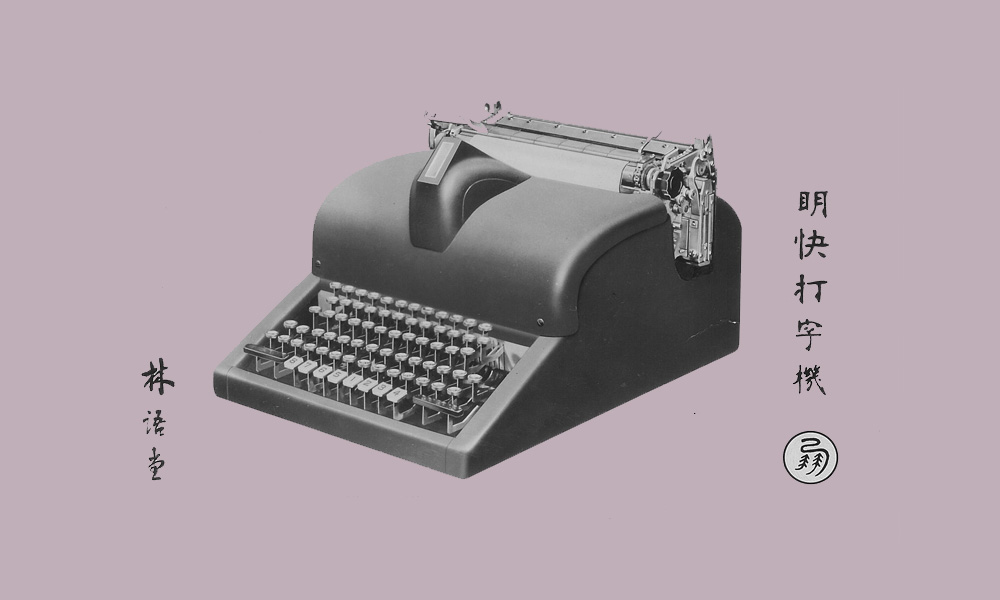
Incidentally, does any Chinese member here @Beijingwalker or @ety know of widely adapted Chinese typewriter before electronic or digital typewriter came out? Like mechanical typewriters? In english speaking countries typewriters became really popular really fast and everyone including people at home used to have one for preparing letters and manuscripts.

Before computer based word processing how was manuscript writing (like a PhD thesis or similar) done in China?

Does anyone have a first hand experience on that?
China invented movable type printing.
 
Only very basic. Not sufficient to print books in large numbers. That required the Gutenberg press.
Movable printing is easier on Western alphabets texts.
 
Movable printing is easier on Western alphabets texts.

Strokes are harder to print than alphabet letters. Strokes require moving up, down, left, right. Alphabet letters only require moving right.

Strokes is obsolete in the face of alphabet letters.
 
Strokes are harder to print than alphabet letters. Strokes require moving up, down, left, right. Alphabet letters only require moving right.

Strokes is obsolete in the face of alphabet letters.
I think Chinese made movable characters instead of strokes in the Song dynasty. But, there are tens of thousands in total, and thousands of common everyday used characters.
 
I think Chinese made movable characters instead of strokes in the Song dynasty. But, there are tens of thousands in total, and thousands of common everyday used characters.

There are only a small number of strokes to write every Chinese character there is. But it's not easy to print strokes. It requires moving up, down, left, right.
 
  • Like
Reactions: ety
China invented movable type printing.
Typewriter requires quite a bit more than just movable type printing. The reason I asked was because typing in Chinese without electronic storage of information will be pretty hard. You will have to express one of the 3000 often used characters somehow with combination of keys. If you use 2 key sequence to identify one charecter, you will have to have 60 keys to identify all the 3000 characters since typewriter can only remember only very little with each keypress in a mechanical typewriter.
Basically, each key will have to act as a modifer for second key press which will do the actual typing. Hard to say the least.
 
Last edited:
Typewriter requires quite a bit more than just movable type printing. The reason I asked was because typing in Chinese without electronic storage of information will be pretty hard. You will have to express one of the 3000 often used characters somehow with combination of keys. If you use 2 key sequence to identify one charecter, you will have to have 60 keys to identify all the 3000 characters since typewriter can only remember only very little with each keypress in a mechanical typewriter.

You only need keys for a small number of strokes. About 10 to 20 strokes to print any Chinese character you can think of. It requires precision to print the strokes which requires different directions and different lengths and angles. It's much harder than printing English which only requires printing 26 letters in a single direction.
 
You only need keys for a small number of strokes. About 10 to 20 strokes to print any Chinese character you can think of. It requires precision to print the strokes which requires different directions and different lengths and angles. It's much harder than printing English which only requires printing 26 letters in a single direction.
I am not really sure... mechanical printing of individual strokes at a time will not print all the charecters because strokes are not present at the same place.


MingKwai may have looked like a conventional typewriter, yet its behavior would have quickly confounded anyone who sat down to try it out. Upon depressing one of the machine’s 72 keys, the machine’s internal gears would move, and yet nothing would appear on the paper’s surface — not right away, at least. Depressing a second key, the gears would move again, yet still without any output on the page. With this second keystroke, however, something curious would happen: Eight Chinese characters would appear, not on the printed paper, but in a special viewfinder built into the machine’s chassis. Only with the depression of a third key — specifically one of the machine’s eight number keys — would a Chinese graph finally be imprinted on the page.

As I was suspecting... in mechanical typewriter, it would require multiple keystrokes to select a character to print.

It will use gears as a mechanical memory of sorts. Without electronic circuits it would have been REALLY hard.
 
It's not because it's historical reason, it is how the word being write. It takes one stroke to write this
View attachment 102165

One stroke for this

View attachment 102167
That's why the word knife in Chinese is 2 strokes. In Chinese, you don't go look up a word in order, it's like a library catalogue with stroke, you find your radical first, and then look up the words according to how many stroke
I did not learn Chinese as much but I did learn Japanese. Using a Kanji dictionary has been one of the most bewildering aspect of language learning. You first "predict" the radical (I know it comes naturally to people used to it because looking at Kanji you can likely tell what is the meaning it is closest to) then you count strokes (because you can literally see the stroke order in which the Kanji would have been written) and then you find your Kanji.

Later they introduced SKIP method which indexes the Kanji with their structure as left-right, up-down, enclosing, unique and stroke counts in both parts for a 3 number SKIP code to actually look up the Kanji.

Given Kanji are essentially Chinese characters stolen by Japanese each time they invaded China (j/k), I think Chinese use similar techniques.

That being said, strokes and stroke orders ARE indeed historical in nature, when Chinese was written using Brush. It was standardised with stroke rules but still those rules are more like guidelines and have exceptions to them.
 
Given Kanji are essentially Chinese characters stolen by Japanese each time they invaded China (j/k), I think Chinese use similar techniques.
Actually Japanese learned to use Chinese characters or Kanji by sending large number of students to China to study Chinese culture, language and government in the Chinese Tang dynasty.
 
Actually Japanese learned to use Chinese characters or Kanji by sending large number of students to China to study Chinese culture, language and government in the Chinese Tang dynasty.
I was joking, thats why i put (j/k). I do know that Japanese Kanji was learnt from China by Japanese visitors to China.
 
Strokes are harder to print than alphabet letters. Strokes require moving up, down, left, right. Alphabet letters only require moving right.

Strokes is obsolete in the face of alphabet letters.
You're wrong. There are only 760 core Chinese characters, or 88% of the Chinese language. There are 3,000 commonly used Chinese characters, or 99.7% of the Chinese language. For movable type printing, you only need to prepare some characters, no need to use strokes.
 

Users who are viewing this thread

  • Back
    Top