Indian Politics and Internal News


Asif Iqbal

The election of Narendra Modi for a third term has been portrayed by his proponents, allies and admirers as nothing short of spectacular, with some flatterers even drawing comparisons to Jawaharlal Nehru, claiming that Modi's electoral success, global recognition and policy initiatives make him more 'virile' as a leader.

However, this facade fails to hold and crumbles when electoral irregularities come to the fore; personal recognition takes precedence over national governance achievements; and hastily implemented policies - such as the Goods and Services Tax (GST) and demonetisation - have led to economic disruptions. Moreover, developmental priorities have disproportionately favoured major corporations, particularly conglomerates like the Adani and Ambani groups, rather than benefiting the broader economy or addressing grassroots economic concerns.

The rhetoric of 'Shining India' is now overshadowed by increasing authoritarianism, majoritarian politics, upending of democratic institutions and selective development in sectors that are seen as a way and means to grapple more power and attain illegal gratification in the name of party funds. While the likes of Mr Subrahmanyam Jaishankar who portray nuances for India to be recognised as global power, India though is struggling with the image of 'shining' owing to internal strife and discord, political discontentment, media repression, 'flourishing' economic disparities and a staggering intolerance for any voice of dissent. Critics like Sumanta Banerjee feel quite justified when they refer to India's transformation under Modi's clout, as Stinking India.

Renowned political scientist Barbara F Walter in her seminal book, How Civil Wars Start and How to Stop Them, highlights the degrading democracy index of India, with all and due thanks to Modi's Hindutva philosophy, leading to human rights violations and curbs on religious liberties of minorities.

She specifically mentions curbs on the freedom of media, weaponisation of religious sentiments and state persecution of dissidents whereby the so-called democracy index of 8 (on a scale of 1 to 10; 10 being the highest for any functioning and perfectly democratic state) claimed by Indian intelligentsia, has slid to 6, and claims that "India is a cautionary tale.

Even longstanding democracies are not immune to backsliding. When leaders exploit ethnic or religious divisions to consolidate power, they risk triggering the very violence they claim to prevent." Ashok Swain is not far off the mark when he says that India under Modi is becoming a "de facto one-party state". Well, welcome to the 'New India'.

Vinayak Damodar Savarkar - often referred as Veer Sarkar and the architect of Hindutva philosophy - was moved by Hitler's racial theories and viewed Christian and Muslims as second-class citizens, and wanted militarisation of Hindus. In a speech in 1940, he emphasised the same, "Nazism proved undeniably the savior of Germany ... It would be a folly to oppose its beneficent aspects." The RSS acknowledges Savarkar as one of the key ideological architects of Hindutva and exerts significant influence over the ruling BJP, helping to mainstream Hindutva as a political force.

On a recent trip to Marseilles, France on 11 February 2025, Modi highlighted the city's significance in India's freedom struggle, referencing freedom fighter Veer Savarkar's attempted escape there in 1910 and expressed gratitude to the French activists of that era who opposed Savarkar's extradition to British authorities.

Interestingly, Arun Shourie, a senior member of BJP and author of The New Icon: Savarkar and The Facts, which busts myths built around the founder of the Hindu Mahasabha and a once-accused in the case of the assassination of Mahatma Gandhi, has dismissed the story of Savarkar's escape as pure invention.

Apart from implementing its fascist policies through the Modi government, RSS is rewriting history books to focus on Hindu glory and downplay Mughal and British rule. Modi, being a ultra right-wing populist leader, has made an aura that projects him as the strongman of India, self-made (chaiwala) and uses Hindutva philosophy that synchs with the Hindu majority. Where he signifies his support for the poor through his programmes, PM Awas Yojana (housing for the poor) and Jan Dhan Yojana (bank accounts for the poor), he also wields his authority to carry out crackdown on journalists, opposition leaders and critics alike using state machinery like Enforcement Directorate (ED) and anti-corruption laws, with centralised control over courts, media and election commission, while promoting anti-Muslim rhetoric whenever there is criticism on his economic or other policies. The divide has only deepened with the abolition of Article 370 in Kashmir, the Citizenship Amendment Act, and the construction of the Ram Temple in Ayodhya.

Despite unsettling socio-economic inequalities and the never-ending scourge of poverty, India remains obsessed with China and keeps the mantra of tackling China to appease the US. Defence analysts and experts like Praveen Sawhney have been quite vocal in criticism regarding India's attempts to counterbalance China and term it as strategically flawed militarily and politically, considering military and economic disparity, and is equivalent to give up India's strategic autonomy and diplomatically unpragmatic. The border skirmishes with China have only resulted in embarrassment.

India's ranking on the Press Freedom Index has steadily declined, with Reporters Without Borders placing it at 150 out of 180 countries in 2023. Journalists critical of the government have faced harassment, arrests, and even violence, and have raised doubts over free speech. Media-persons remain fearful to be on the wrong side of BJP, and sedition laws (Section 124A of the Indian Penal Code) and Unlawful Activities Prevention Act (UAPA) have been effectively employed to silence dissent, may it be within BJP. Ashok Swain believes, "In Modi's India, truth is an inconvenience that must be crushed."

The human rights violations are quite landmark and discriminatory laws, Citizenship Amendment Act (CAA) and the proposed National Register of Citizens (NRC), have been implemented while ignoring the secular principles. Dalits and Adivasis continue to face violence and social exclusion, with limited access to education, employment and justice. There is a long list of arbitrary detentions, torture and extrajudicial killings by law enforcement agencies, with over 6,000 mass graves and unmarked graves in Kashmir. A similar saga of human rights violations continues unabated in Nagaland and Manipur.

It has been a long journey from shining to stinking, and the myth of 'Shining India' has been shattered, where the anomalies and stench of misdoings of a populist leader have backfired because they have alienated the rural and economically marginalised people, not to mention the ultimate Hindutva ideology of an autocrat. Despite Modi's transformation of 'Shining India' into 'Sabka Saath, Sabka Vikas', the reality of repression, majoritarianism and social unrest presents altogether a different narrative.
 
Shining India was discarded in 2004 itself, but Asifbhai is still singing the same tune.

Regards


Asif Iqbal

The election of Narendra Modi for a third term has been portrayed by his proponents, allies and admirers as nothing short of spectacular, with some flatterers even drawing comparisons to Jawaharlal Nehru, claiming that Modi's electoral success, global recognition and policy initiatives make him more 'virile' as a leader.

However, this facade fails to hold and crumbles when electoral irregularities come to the fore; personal recognition takes precedence over national governance achievements; and hastily implemented policies - such as the Goods and Services Tax (GST) and demonetisation - have led to economic disruptions. Moreover, developmental priorities have disproportionately favoured major corporations, particularly conglomerates like the Adani and Ambani groups, rather than benefiting the broader economy or addressing grassroots economic concerns.

The rhetoric of 'Shining India' is now overshadowed by increasing authoritarianism, majoritarian politics, upending of democratic institutions and selective development in sectors that are seen as a way and means to grapple more power and attain illegal gratification in the name of party funds. While the likes of Mr Subrahmanyam Jaishankar who portray nuances for India to be recognised as global power, India though is struggling with the image of 'shining' owing to internal strife and discord, political discontentment, media repression, 'flourishing' economic disparities and a staggering intolerance for any voice of dissent. Critics like Sumanta Banerjee feel quite justified when they refer to India's transformation under Modi's clout, as Stinking India.

Renowned political scientist Barbara F Walter in her seminal book, How Civil Wars Start and How to Stop Them, highlights the degrading democracy index of India, with all and due thanks to Modi's Hindutva philosophy, leading to human rights violations and curbs on religious liberties of minorities.

She specifically mentions curbs on the freedom of media, weaponisation of religious sentiments and state persecution of dissidents whereby the so-called democracy index of 8 (on a scale of 1 to 10; 10 being the highest for any functioning and perfectly democratic state) claimed by Indian intelligentsia, has slid to 6, and claims that "India is a cautionary tale.

Even longstanding democracies are not immune to backsliding. When leaders exploit ethnic or religious divisions to consolidate power, they risk triggering the very violence they claim to prevent." Ashok Swain is not far off the mark when he says that India under Modi is becoming a "de facto one-party state". Well, welcome to the 'New India'.

Vinayak Damodar Savarkar - often referred as Veer Sarkar and the architect of Hindutva philosophy - was moved by Hitler's racial theories and viewed Christian and Muslims as second-class citizens, and wanted militarisation of Hindus. In a speech in 1940, he emphasised the same, "Nazism proved undeniably the savior of Germany ... It would be a folly to oppose its beneficent aspects." The RSS acknowledges Savarkar as one of the key ideological architects of Hindutva and exerts significant influence over the ruling BJP, helping to mainstream Hindutva as a political force.

On a recent trip to Marseilles, France on 11 February 2025, Modi highlighted the city's significance in India's freedom struggle, referencing freedom fighter Veer Savarkar's attempted escape there in 1910 and expressed gratitude to the French activists of that era who opposed Savarkar's extradition to British authorities.

Interestingly, Arun Shourie, a senior member of BJP and author of The New Icon: Savarkar and The Facts, which busts myths built around the founder of the Hindu Mahasabha and a once-accused in the case of the assassination of Mahatma Gandhi, has dismissed the story of Savarkar's escape as pure invention.

Apart from implementing its fascist policies through the Modi government, RSS is rewriting history books to focus on Hindu glory and downplay Mughal and British rule. Modi, being a ultra right-wing populist leader, has made an aura that projects him as the strongman of India, self-made (chaiwala) and uses Hindutva philosophy that synchs with the Hindu majority. Where he signifies his support for the poor through his programmes, PM Awas Yojana (housing for the poor) and Jan Dhan Yojana (bank accounts for the poor), he also wields his authority to carry out crackdown on journalists, opposition leaders and critics alike using state machinery like Enforcement Directorate (ED) and anti-corruption laws, with centralised control over courts, media and election commission, while promoting anti-Muslim rhetoric whenever there is criticism on his economic or other policies. The divide has only deepened with the abolition of Article 370 in Kashmir, the Citizenship Amendment Act, and the construction of the Ram Temple in Ayodhya.

Despite unsettling socio-economic inequalities and the never-ending scourge of poverty, India remains obsessed with China and keeps the mantra of tackling China to appease the US. Defence analysts and experts like Praveen Sawhney have been quite vocal in criticism regarding India's attempts to counterbalance China and term it as strategically flawed militarily and politically, considering military and economic disparity, and is equivalent to give up India's strategic autonomy and diplomatically unpragmatic. The border skirmishes with China have only resulted in embarrassment.

India's ranking on the Press Freedom Index has steadily declined, with Reporters Without Borders placing it at 150 out of 180 countries in 2023. Journalists critical of the government have faced harassment, arrests, and even violence, and have raised doubts over free speech. Media-persons remain fearful to be on the wrong side of BJP, and sedition laws (Section 124A of the Indian Penal Code) and Unlawful Activities Prevention Act (UAPA) have been effectively employed to silence dissent, may it be within BJP. Ashok Swain believes, "In Modi's India, truth is an inconvenience that must be crushed."

The human rights violations are quite landmark and discriminatory laws, Citizenship Amendment Act (CAA) and the proposed National Register of Citizens (NRC), have been implemented while ignoring the secular principles. Dalits and Adivasis continue to face violence and social exclusion, with limited access to education, employment and justice. There is a long list of arbitrary detentions, torture and extrajudicial killings by law enforcement agencies, with over 6,000 mass graves and unmarked graves in Kashmir. A similar saga of human rights violations continues unabated in Nagaland and Manipur.

It has been a long journey from shining to stinking, and the myth of 'Shining India' has been shattered, where the anomalies and stench of misdoings of a populist leader have backfired because they have alienated the rural and economically marginalised people, not to mention the ultimate Hindutva ideology of an autocrat. Despite Modi's transformation of 'Shining India' into 'Sabka Saath, Sabka Vikas', the reality of repression, majoritarianism and social unrest presents altogether a different narrative.
Jesus Christ! LOL! Thats some weapons grade cope.
If India is "Stinking", this gentleman author of the article is not even in the game.
 
Looks like Pakistani journalists hold India to a much higher standard than their own institutions. They criticize India as if they genuinely care about improving things here, yet conveniently ignore the glaring issues back home. They talk about press freedom in India, but their own media remains silent when it comes to generals in Pakistan. People get kidnapped, killed, and the army operates against its own civilians, yet there’s hardly any noise about it.

Recently, an Indian court granted bail to individuals linked to a terror module associated with al-Qaida in the Indian Subcontinent because of a delay in filing the charge sheet. This shows that, while our institutions aren't perfect, they still act as an effective counterbalance in our system. And let's not forget, we the people are satisfied with our government and have voted it into power for a third time, unlike the unelected generals who hold Pakistan hostage.
 
Looks like Pakistani journalists hold India to a much higher standard than their own institutions. They criticize India as if they genuinely care about improving things here, yet conveniently ignore the glaring issues back home. They talk about press freedom in India, but their own media remains silent when it comes to generals in Pakistan. People get kidnapped, killed, and the army operates against its own civilians, yet there’s hardly any noise about it.

Recently, an Indian court granted bail to individuals linked to a terror module associated with al-Qaida in the Indian Subcontinent because of a delay in filing the charge sheet. This shows that, while our institutions aren't perfect, they still act as an effective counterbalance in our system. And let's not forget, we the people are satisfied with our government and have voted it into power for a third time, unlike the unelected generals who hold Pakistan hostage.
It is interesting that we rarely ever see "Pakistan bad, horrible, fail economy, terror, taliban, military.. etc etc"

in op-eds like this one.

That stuff has mostly moved to twitter, or Arnab's nightly shout-fest.
 
or it not just india but a south asian problem ?


Indian teenager alleges rape over five years by nearly 60 schoolmates, neighbors, relatives and strangers​

By Esha Mitra and Lex Harvey, CNN
7 minute read
Published 11:51 PM EST, Sat February 22, 2025


Editor’s Note: This article contains details that readers may find distressing.

New DelhiCNN —
Five years ago, a 13-year-old girl, the daughter of poor wage laborers from one of India’s most marginalized communities, was allegedly sexually abused by one of her neighbors in the village where she lived.

Her alleged abuser filmed it and police are investigating whether he used the images to blackmail and manipulate the girl into being raped and sexually abused by dozens of other men and boys over the next five years.


Police say the allegations only came to light after the girl, now 18, spoke to a counselor visiting her college in Kerala state and detailed the years of horrific abuse.


A total of 58 men and boys have been arrested and accused of the sexual assault, rape and gang rape of the girl. Another two men wanted in connection with the case have fled the country, Kerala Police Deputy Inspector General Ajeetha Begum told CNN.

Among the accused are her schoolmates, her relatives, her neighbors – men from all corners of her life, ranging from minors to men in their mid-40s, according to case documents reviewed by CNN and interviews with local police.

Charges have not yet been filed and the 58 men remain in detention. None of the accused has spoken publicly about the allegations. Under Indian rape laws, the girl has not been identified.

Violence against women is rampant in India due to entrenched sexism and patriarchy, despite laws being amended to include more severe punishments for abusers.

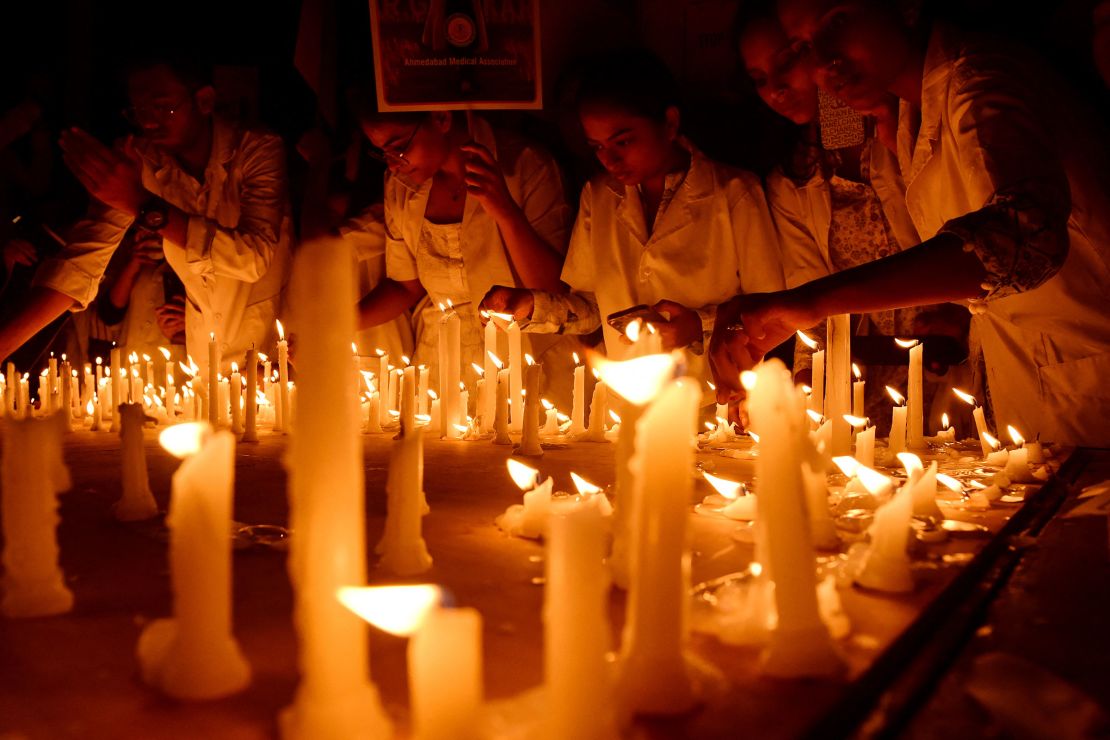
In August the rape and murder of a trainee medic in the eastern city of Kolkata sparked a nationwide doctors’ strike that brought tens of thousands into the streets to demand change.


Medical professionals light candles during a demonstration in Ahmedabad, India, held on August 17, 2024, amid a nationwide strike by doctors to condemn the rape and murder of a young medic from Kolkata.

Medical professionals light candles during a demonstration in Ahmedabad, India, held
 
NEW DELHI: Battered by a string of electoral losses, the Congress plans to set up a central election management department to revive the party’s wilting political fortunes. This initiative is one of the key goals outlined in the Udaipur Declaration, adopted by the Congress Working Committee (CWC) during a three-day Nav Sankalp Shivir in May 2022. The new election management cell aims to implement much-needed reforms in the party’s electoral strategies.


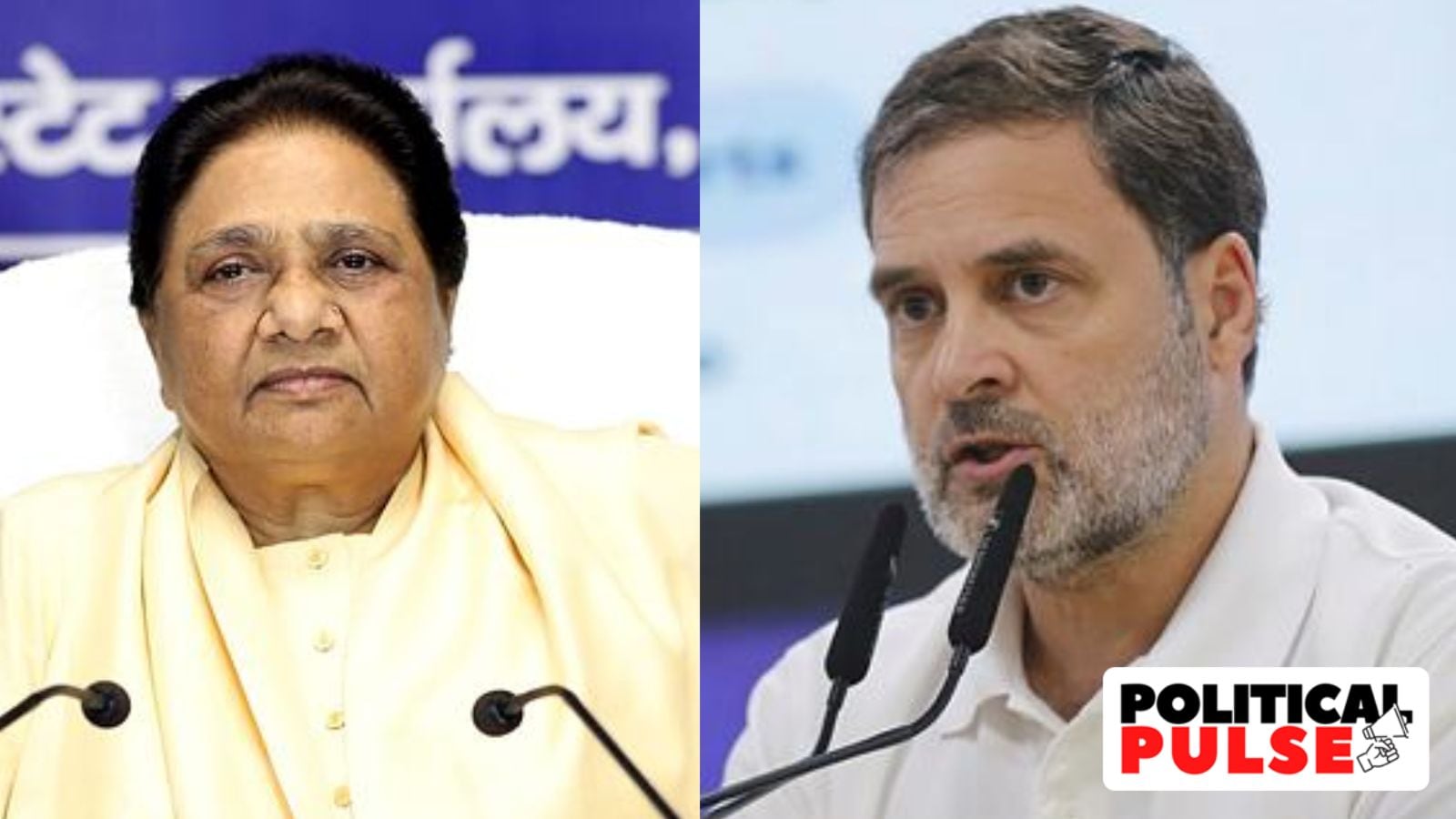
Congress leader sends a message to Dalits regarding BSP’s weakened position, also to ally SP as it flexes muscle.​


IT’S not the first time Congress leader Rahul Gandhi has taken a dig at BSP chief Mayawati, either by way of suggestion that his party was ready for an alliance with her or by way of hinting that she was unwilling to mount a fight against the BJP.


More than a desire to get the BSP on board the INDIA bloc, Gandhi’s message seems to be directed at the Dalits and its ally Samajwadi Party (SP).

 
To view this content we will need your consent to set third party cookies.
For more detailed information, see our cookies page.
 
To view this content we will need your consent to set third party cookies.
For more detailed information, see our cookies page.
 
Low intensity shiz man... jungle commies and a demoralized Kashmir mujh.
 
An Excellent poster on Original PDF had said as quoted below. He was spot on.

Quoting Count Dracula:

Doing nothing while making qaum perceive you as invincible is an deed in itself. Not to mention creating business/revenue models, pocketing most of it while making qaum sing paens about you. Thats almost impossible to achieve. So yeah isi is no1 spy agency.

A member of this forum who works for ISI, would agree.

Don't you agree, @313Ghazi?
 
This is a true story of both countries—they blame each other for all the security issues but never look at the real problems.
 

The fight for water in Bangalore: Is India's Silicon Valley drying up? | DW Documentary​

To view this content we will need your consent to set third party cookies.
For more detailed information, see our cookies page.


Feb 27, 2025
In Bangalore, the ‘Silicon Valley of India’, drinking water is becoming scarce.
The consequences of climate change - with its long periods of drought - are hitting the high-tech metropolis in the state of Karnataka hard. How did it come to this?Bangalore has been a symbol of resilience for centuries.
But today, the metropolis in the south of India is facing a major crisis: Water shortage. The city of 13 million people rose to international glory as the new Silicon Valley. But these accomplishments are fading.
Decades of growth and the increasing scarcity of natural resources are part of the problem. So are urban sprawl, complacent local politicians and an overall lack of vision. Can this international hub still be saved?
What are the local, national and international responses to this global water shortage problem? Beijing, Mexico City, Barcelona, Melbourne and Cape Town... A total of 10 megacities are in danger of experiencing day zero, when they will no longer have drinking water during increasingly frequent periods of drought.
With global warming, the resilience of cities is undergoing a "stress test”. How will it end?
 

Users who are viewing this thread

Country Watch Latest

Latest Posts

Back
Top