Covid-19 News and Discussions

Status
Not open for further replies.

Is the COVID pandemic really over?​


A symbolic end to the COVID pandemic​


When Did the Pandemic Start and End?​

COVID-19 Pandemic Timeline​

Updated February 2025
In 2020, life changed across the globe.

COVID-19 is an infectious disease caused by a virus called SARS-CoV-2. Though initially discovered in Wuhan, China, in late 2019, COVID-19 entered the conversation in the U.S. in January 2020. At that time, the Centers for Disease Control and Prevention (CDC) alerted the nation of the outbreak abroad.

Later in January 2020, the first U.S. case of COVID-19 was reported in the state of Washington.

The outbreak escalated quickly from there. For a while, experts didn't know how the virus behaved. They didn't know how it spread or how quickly. They didn't know how much of a threat it was to public health. COVID-19 tests were still in development and were not readily available to the public.

By March 2020, the World Health Organization (WHO) declared COVID-19 a global health emergency. They named the virus "severe acute respiratory syndrome coronavirus 2" or "SARS-CoV-2."

In March 2020, the WHO officially declared the COVID-19 outbreak a pandemic.

In May 2023, the WHO and former U.S. President Joe Biden declared an end to the pandemic. Here’s what happened along the way.
 

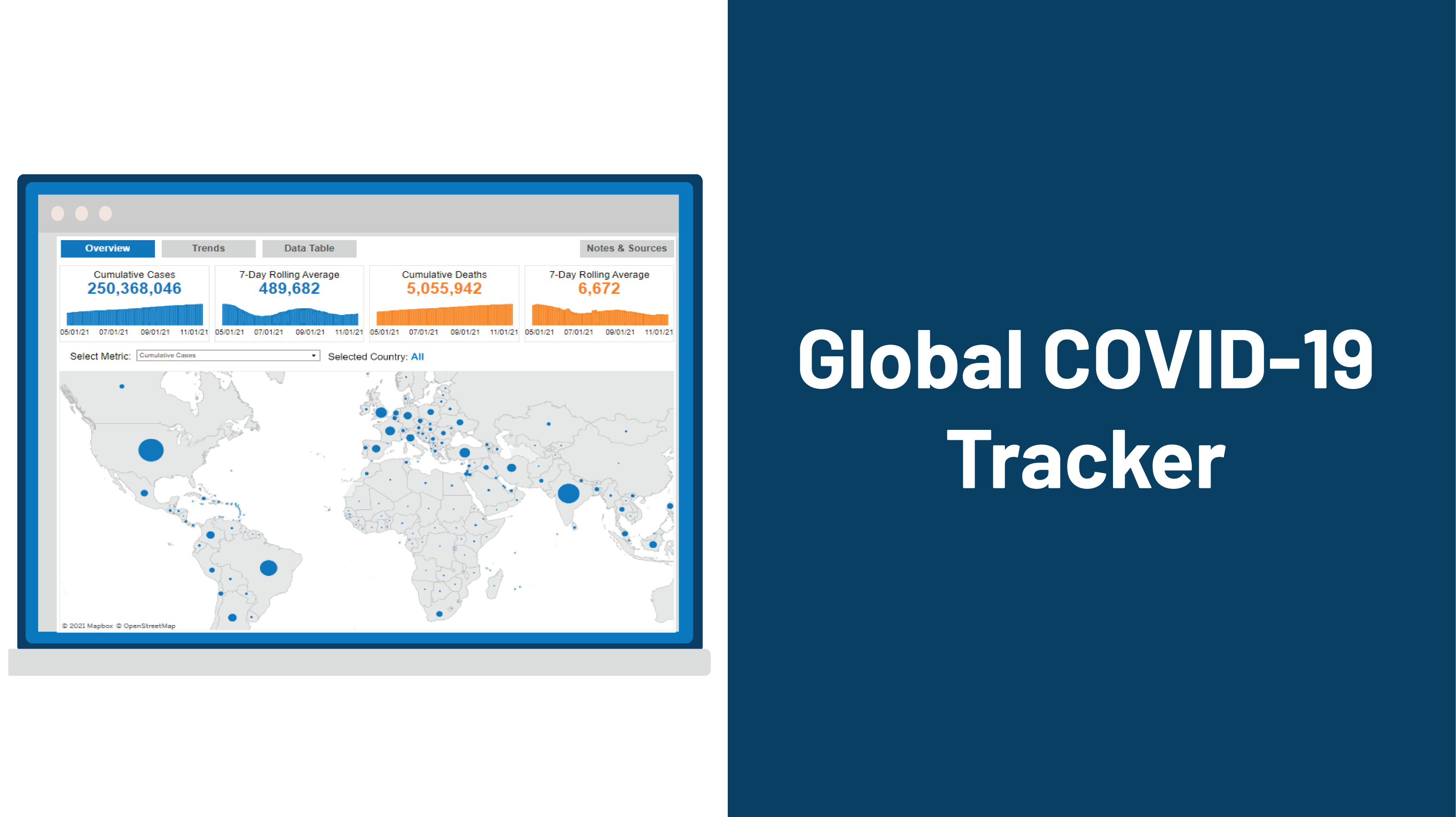
Global COVID-19 Tracker​


Published: Feb 24, 2025

This tracker provides the cumulative number of confirmed COVID-19 cases and deaths, as well as the rate of daily COVID-19 cases and deaths by country, income, region, and globally. It will be updated weekly, as new data are released.

As of March 7, 2023, all data on COVID-19 cases and deaths are drawn from the World Health Organization’s (WHO) Coronavirus (COVID-19) Dashboard. Prior to March 7, 2023, this tracker relied on data provided by the Johns Hopkins University (JHU) Coronavirus Resource Center’s COVID-19 Map, which ended on March 10, 2023. Please see the Methods tab for more detailed information on data sources and notes.

To prevent slow load times, the tracker only contains data from the last 200 days. However, the full data set can be downloaded from our GitHub page. While the tracker provides the most recent data available, there is a two-week lag in the data reporting.


Assessment of the COVID-19 Supply Chain System – NOW AVAILABLE​


In September 2020, the World Health Organization, with the advice of the CSCS Task Force, commissioned an assessment of the Covid-19 Supply Chain System (CSCS) focused on three main areas: strategy, implementation and moving forward. Incorporating key-stakeholder interviews, a desk review, input from over 100 survey respondents, and a quantitative data review, findings were then pressure-tested with a Joint Steering Group and several stakeholders. The resulting analysis is now available and provides lessons learned and recommendations for the future.


Coronavirus disease (COVID-19)​

  • Overview
  • Prevention
  • Symptoms
Coronavirus disease (COVID-19) is an infectious disease caused by the SARS-CoV-2 virus.

Most people infected with the virus will experience mild to moderate respiratory illness and recover without requiring special treatment. However, some will become seriously ill and require medical attention. Older people and those with underlying medical conditions like cardiovascular disease, diabetes, chronic respiratory disease, or cancer are more likely to develop serious illness. Anyone can get sick with COVID-19 and become seriously ill or die at any age.

The best way to prevent and slow down transmission is to be well informed about the disease and how the virus spreads. Protect yourself and others from infection by staying at least 1 metre apart from others, wearing a properly fitted mask, and washing your hands or using an alcohol-based rub frequently. Get vaccinated when it’s your turn and follow local guidance.

The virus can spread from an infected person’s mouth or nose in small liquid particles when they cough, sneeze, speak, sing or breathe. These particles range from larger respiratory droplets to smaller aerosols. It is important to practice respiratory etiquette, for example by coughing into a flexed elbow, and to stay home and self-isolate until you recover if you feel unwell.
 

Both Walgreens And Wastewater Data Show Some Bad Trends In Some States​


Status
Not open for further replies.

Users who are viewing this thread

Back
Top