Mehdipersian
Trusted Member

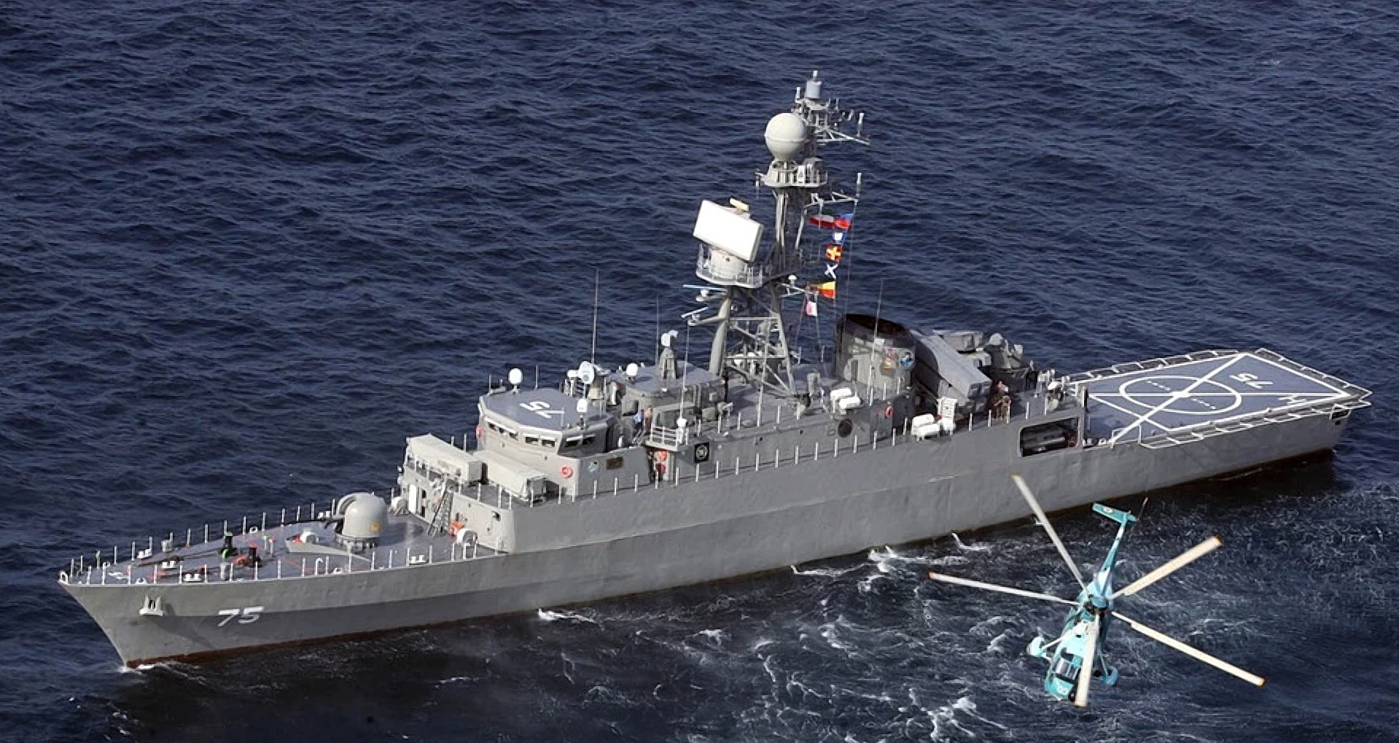
Taftan, the last Mowj class ship has VLS defensive missiles and is a better design than the previous Mowjs.


Follow along with the video below to see how to install our site as a web app on your home screen.
Note: This feature may not be available in some browsers.

Thumps up for you having faith in the IRGC!I never wait for IRIN, IRIAF or other branches of army. But i bet on IRGC with full confidence. Replace moudge with Shahid suleymani class
 Though I don't think Moudge class and the Soleimani serve the same purpose. But you're right concerning the Moudge class. It's reaching its operational limit in comparison to the adversaries. Henceforth the development of a heavier class that's in the works
It is true. A 1.500 tons warship have its limit. And the better proof it is the Sahand "incident". Her height high weight was determinant to her capzicing and sinking.Thumps up for you having faith in the IRGC!


forum had problem with tor on mobile phonesThumps up for you having faith in the IRGC!

IRGC's navy ships have radars installed on them. I don't know what you guys are waiting for, but it can shoot down aerial targets ans ships within range.forum had problem with tor on mobile phones
this "I never wait for IRIN, IRIAF or other branches of army. But i bet on IRGC with full confidence." was @muhammed45
this "Replace moudge with Shahid suleymani class" was my respond to him
Forum software mix our post together
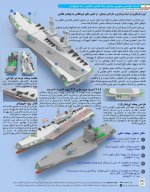
The need to rethink the idea of converting a civilian ship into a military aircraft carrier The idea of a conceptual design of converting a container ship into a naval carrier The main mission of the deployed combatants - aircraft carriers is to conduct air defense operations and to counter attacking cruise missiles. This is not the case when comparing the deck area of the two current designs with conventional jet aircraft and the definition of the user should be very far from reality. Therefore, the extensive use of missiles is one of the requirements of the missions of such a ship, based on the choice of numerical priority between aircraft or helicopters. 3 to 5 Jas 1234 jet aircraft, complete model or 00% of the aircraft carrier It must be able to provide at least three squadrons of combat aircraft, and its air firepower must be such that it can take off at any time. Therefore, always on board or in the process of preparing, one third is in preparation and the other third is in the lift of the ship for the previous mission and in the process of repairs or preparation. Their design should be such that the missile equipment, especially those that can carry at least one combat vehicle, has a defensive aspect and during the re-combat, the dimensions of the completed aircraft are quickly consumed and replaced. For example, it should be carried in such a way that when one side of the lift is open, the sea surface (the situation of the management through the bed) helps to provide a space below the decks of the floating supply ships with jet engine repairs, The water should be more than 100 meters wide, and the crew should be able to use it to receive reinforcements at sea or in the sea. Special weapons should be used. The main ammunition should be a long-range anti-ship cruise missile with a range of more than 200 kilometers. The high-altitude artillery system should be close to the naval base. Three anti-ship launchers - Kowsar 33 launchers, 7 kilometers away from the Kurham launcher. One detachable launcher with a range of up to 200 kilometers. Detachable launcher with 7 long-range Sayyad surface-to-air missiles with a fire exit from the side of the hull. 5. The design and concept of the proposed design are based on the MSAT (Mass) data. The limited knowledge of this collection, using publicly available information, is general and imprecise. The Be Ms A INSTITUTE is a new addition to the military ship conversion design with the aim of enabling the development and creation of ideas for drone-carrying ships by the Mamen think tank. The main question that this design answers is; The crew quarters were removed and the engine air intakes and exhausts were rerouted to a new location below deck. This method increased the length of the landing strip by several meters, moved the bridge and crew quarters away from the potential path of landing aircraft, and protected by a separate blast path against jet exhaust pressure, explosions of deck equipment, and other unforeseen events. Drones have a limited capacity to carry and deliver a limited volume of fire, and even when deployed in large numbers, they are unable to provide a desired level of explosive power to the number and area of hard or protected targets. Therefore, the carrier ship must be able to fire a large volume of missile firepower independently of the landing craft, and the air has a paralyzing + supporting role.A Russian user found this on the net. Not knowing the language, I hope someone can point out what it says.
At the moment I'm just guessing by looking at the pictures.
I think it is an idea of what the next step of these ships made from merchant ships might look like.
I note that the all-deck version with command overlays on one side has the same dimensions as the Bagheri (C-110-4), so I think that the idea of the author of this article is to still use a merchant ship already in use and to carry out even more radical transformation work on it.
But only a translation of what is written can give the right indications.
View attachment 107099
Google translateThe need to rethink the idea of converting a civilian ship into a military aircraft carrier The idea of a conceptual design of converting a container ship into a naval carrier The main mission of the deployed combatants - aircraft carriers is to conduct air defense operations and to counter attacking cruise missiles. This is not the case when comparing the deck area of the two current designs with conventional jet aircraft and the definition of the user should be very far from reality. Therefore, the extensive use of missiles is one of the requirements of the missions of such a ship, based on the choice of numerical priority between aircraft or helicopters. 3 to 5 Jas 1234 jet aircraft, complete model or 00% of the aircraft carrier It must be able to provide at least three squadrons of combat aircraft, and its air firepower must be such that it can take off at any time. Therefore, always on board or in the process of preparing, one third is in preparation and the other third is in the lift of the ship for the previous mission and in the process of repairs or preparation. Their design should be such that the missile equipment, especially those that can carry at least one combat vehicle, has a defensive aspect and during the re-combat, the dimensions of the completed aircraft are quickly consumed and replaced. For example, it should be carried in such a way that when one side of the lift is open, the sea surface (the situation of the management through the bed) helps to provide a space below the decks of the floating supply ships with jet engine repairs, The water should be more than 100 meters wide, and the crew should be able to use it to receive reinforcements at sea or in the sea. Special weapons should be used. The main ammunition should be a long-range anti-ship cruise missile with a range of more than 200 kilometers. The high-altitude artillery system should be close to the naval base. Three anti-ship launchers - Kowsar 33 launchers, 7 kilometers away from the Kurham launcher. One detachable launcher with a range of up to 200 kilometers. Detachable launcher with 7 long-range Sayyad surface-to-air missiles with a fire exit from the side of the hull. 5. The design and concept of the proposed design are based on the MSAT (Mass) data. The limited knowledge of this collection, using publicly available information, is general and imprecise. The Be Ms A INSTITUTE is a new addition to the military ship conversion design with the aim of enabling the development and creation of ideas for drone-carrying ships by the Mamen think tank. The main question that this design answers is; The crew quarters were removed and the engine air intakes and exhausts were rerouted to a new location below deck. This method increased the length of the landing strip by several meters, moved the bridge and crew quarters away from the potential path of landing aircraft, and protected by a separate blast path against jet exhaust pressure, explosions of deck equipment, and other unforeseen events. Drones have a limited capacity to carry and deliver a limited volume of fire, and even when deployed in large numbers, they are unable to provide a desired level of explosive power to the number and area of hard or protected targets. Therefore, the carrier ship must be able to fire a large volume of missile firepower independently of the landing craft, and the air has a paralyzing + supporting role.
A Russian user found this on the net. Not knowing the language, I hope someone can point out what it says.
At the moment I'm just guessing by looking at the pictures.
I think it is an idea of what the next step of these ships made from merchant ships might look like.
I note that the all-deck version with command overlays on one side has the same dimensions as the Bagheri (C-110-4), so I think that the idea of the author of this article is to still use a merchant ship already in use and to carry out even more radical transformation work on it.
But only a translation of what is written can give the right indications.
View attachment 107099
DeepSeek translation**The Necessity of Rethinking in Conceptual Design and Transformation of Civilian Ships into Military Carriers**
**Conceptual Design Idea: Converting a Container Ship into a Carrier for Drones/Helicopters**
*Military Studies and Analysis Institute (MSAT)*
---
### Core Mission of Deployed Combatants (e.g., Aircraft Carriers):
The primary mission of aircraft carriers is to conduct air defense operations and counter incoming cruise missiles. However, current designs, which rely on conventional jet-based systems, are far from practical operational requirements. To address this, the extensive use of missiles and helicopters (as priority-based choices) is essential for the defensive missions of such vessels.
### Key Design Requirements:
1. **Air Combat Readiness**:
- The carrier must support at least **3–5 combat-ready jets** (e.g., fully operational models like the 1234-series).
- Maintain **24/7 airborne combat capability**, with one-third of aircraft always mission-ready, one-third undergoing preparation, and one-third undergoing maintenance or post-mission servicing.
2. **Modular Design**:
- Missile systems, especially those with defensive roles, must be **rapidly replaceable** during combat.
- Modular compartments should allow for quick rearmament and accommodate missiles such as:
- Long-range anti-ship cruise missiles (range: **1,000+ km**).
- Close-in weapon systems (CIWS) for short-range defense.
- Anti-aircraft missiles (e.g., **Sayyad-series long-range missiles**).
3. **Deck and Below-Deck Layout**:
- Elevators and equipment must be positioned to allow simultaneous operation of floating platforms and logistics/repair ships.
- Jet engine maintenance bays should enable underwater access for repairs.
- Storage for rigid-hull inflatable boats (RHIBs) for special operations, crew rescue, or maritime weapon deployment.
4. **Survivability Enhancements**:
- Relocate crew quarters and command bridges away from potential jet blast or deck explosion zones.
- Install blast-resistant corridors to mitigate damage from exhaust or accidental detonations.
### Challenges with Drone-Centric Designs:
While drones offer flexibility, their limited firepower and inability to penetrate hardened or densely defended targets make them insufficient for high-intensity combat. Thus, the carrier must independently deploy **high-volume missile firepower** to achieve mission-critical destructive and supportive roles.
### Design Innovations by Mamthink Think Tank:
This conceptual design reimagines civilian-to-military conversion by:
- Eliminating traditional crew accommodations and redesigning air intake/exhaust pathways below the flight deck.
- Extending the runway to **200+ meters**, improving safety by distancing command centers from landing hazards.
### Conclusion:
The proposed modular, missile-heavy platform bridges the gap between theoretical designs and real-world operational needs, ensuring survivability, rapid rearmament, and unmatched firepower in contested environments.
---
*Developed by the MSAT Institute to explore innovative naval transformation concepts.*
---
**Note**: The text has been edited for clarity and consistency, with technical terms and numerical values preserved as per the original Persian context.
Very nice piece. Thanks for posting.**The Necessity of Rethinking in Conceptual Design and Transformation of Civilian Ships into Military Carriers**
**Conceptual Design Idea: Converting a Container Ship into a Carrier for Drones/Helicopters**
*Military Studies and Analysis Institute (MSAT)*
---
### Core Mission of Deployed Combatants (e.g., Aircraft Carriers):
The primary mission of aircraft carriers is to conduct air defense operations and counter incoming cruise missiles. However, current designs, which rely on conventional jet-based systems, are far from practical operational requirements. To address this, the extensive use of missiles and helicopters (as priority-based choices) is essential for the defensive missions of such vessels.
### Key Design Requirements:
1. **Air Combat Readiness**:
- The carrier must support at least **3–5 combat-ready jets** (e.g., fully operational models like the 1234-series).
- Maintain **24/7 airborne combat capability**, with one-third of aircraft always mission-ready, one-third undergoing preparation, and one-third undergoing maintenance or post-mission servicing.
2. **Modular Design**:
- Missile systems, especially those with defensive roles, must be **rapidly replaceable** during combat.
- Modular compartments should allow for quick rearmament and accommodate missiles such as:
- Long-range anti-ship cruise missiles (range: **1,000+ km**).
- Close-in weapon systems (CIWS) for short-range defense.
- Anti-aircraft missiles (e.g., **Sayyad-series long-range missiles**).
3. **Deck and Below-Deck Layout**:
- Elevators and equipment must be positioned to allow simultaneous operation of floating platforms and logistics/repair ships.
- Jet engine maintenance bays should enable underwater access for repairs.
- Storage for rigid-hull inflatable boats (RHIBs) for special operations, crew rescue, or maritime weapon deployment.
4. **Survivability Enhancements**:
- Relocate crew quarters and command bridges away from potential jet blast or deck explosion zones.
- Install blast-resistant corridors to mitigate damage from exhaust or accidental detonations.
### Challenges with Drone-Centric Designs:
While drones offer flexibility, their limited firepower and inability to penetrate hardened or densely defended targets make them insufficient for high-intensity combat. Thus, the carrier must independently deploy **high-volume missile firepower** to achieve mission-critical destructive and supportive roles.
### Design Innovations by Mamthink Think Tank:
This conceptual design reimagines civilian-to-military conversion by:
- Eliminating traditional crew accommodations and redesigning air intake/exhaust pathways below the flight deck.
- Extending the runway to **200+ meters**, improving safety by distancing command centers from landing hazards.
### Conclusion:
The proposed modular, missile-heavy platform bridges the gap between theoretical designs and real-world operational needs, ensuring survivability, rapid rearmament, and unmatched firepower in contested environments.
---
*Developed by the MSAT Institute to explore innovative naval transformation concepts.*
---
**Note**: The text has been edited for clarity and consistency, with technical terms and numerical values preserved as per the original Persian context.
Is this true ? Alvand > Mowj in terms of weapon suite ?