China hits back at Canada with fresh agriculture tariffs

US Treasury Secretary says situation with China is unsustainable, source says​

April 22, 2025 at 01:26 pm EDT

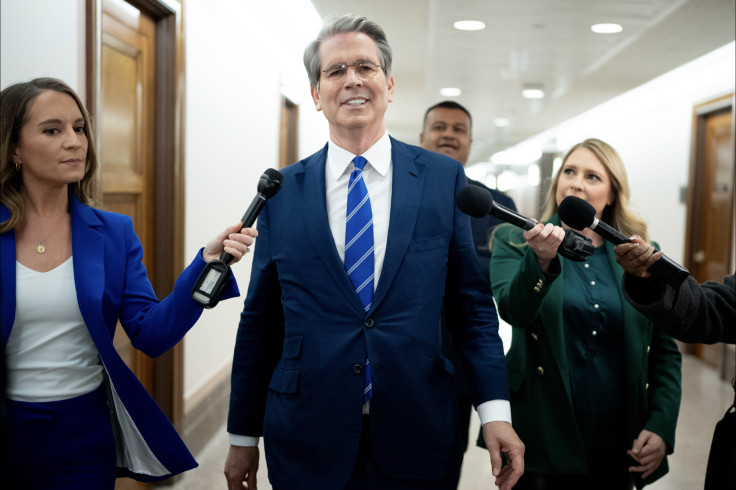
Trump’s Billionaire Treasury Nominee Says Federal Minimum Wage Should Remain


Treasury Secretary Scott Bessent ANDREW HARNIK/GETTY IMAGES

NEW YORK (Reuters) -U.S. Treasury Secretary Scott Bessent on Tuesday said that the tariff standoff with China is unsustainable and that he expects the situation to de-escalate, a source familiar said.

He also added that negotiations haven't started but that a deal is possible, the source added.

Bessent said this at a closed door event hosted by JPMorgan Chase in Washington.


Seeing his face.

This man is full of sins.
 
China needs to buy stuff from others. Otherwise it is not a market

China is the largest market in the world.

The largest trading partner to almost all countries in the world.

Economically, the most important.
 
China needs to buy stuff from others. Otherwise it is not a market
US imports $3.3 trillion, EU $2.2 trllion, and China $2.6 trillion, more than EU. But again, US can just print money to buy goods from others, China cant do that, China cant spend more than its means.
 
Last edited:
US imports $3.3 trillion, EU $2.2 trllion, and China $2.6 trillion, more than EU. But again, US can just print money to buy goods from others, China cant do that, China cant spend more than its means.

China does not buy enough compared to what it sells. China has to set a ratio - maybe purchase 90 cents or 95 cents for every dollar they sell
 
China needs to buy stuff from others. Otherwise it is not a market

I am sure China will be more than happy to buy American high tech but the US doesn't want to sell it. China can get beef and soybeans from anywhere in the world.

You can't dictate what your customer can buy and then complain that they are not buying enough of your junk.
 
  • Like
Reactions: ety
I am sure China will be more than happy to buy American high tech but the US doesn't want to sell it. China can get beef and soybeans from anywhere in the world.

You can't dictate what your customer can buy and then complain that they are not buying enough of your junk.

Then you get the current situation
 
China does not buy enough compared to what it sells. China has to set a ratio - maybe purchase 90 cents or 95 cents for every dollar they sell
Lol, US doesn't want to sell high tech products such as many chips to China, then complain China doesn't buy enough US products. China can only buy so much soybeans, corns and beef from US. China will be buying more from developing countries esp BRI countries.
 
Lol, US doesn't want to sell high tech products such as many chips to China, then complain China doesn't buy enough US products. China can only buy so much soybeans, corns and beef from US. China will be buying more from developing countries esp BRI countries.
Well what is happening is going to happen
 

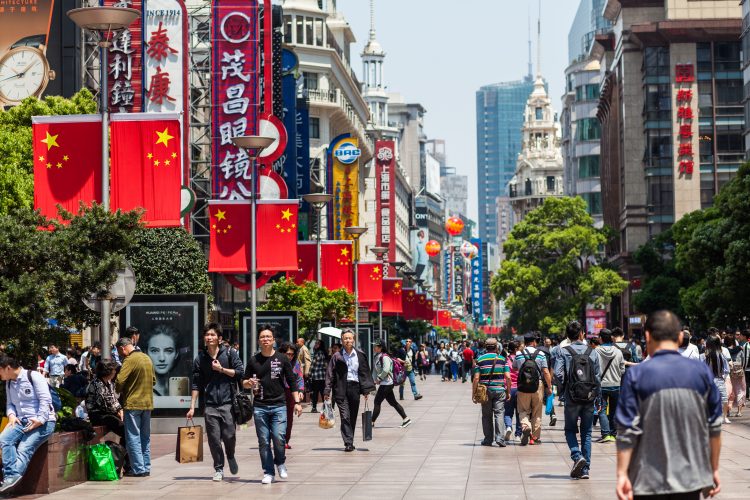
China’s trade grows in April despite US tariffs​

1741927807_shutterstock_1740586154-750x500.jpg

Chinese trade flows showed resilience in April despite high United States tariffs.

April 23 2025

Ports processed 6.3 million containers in the week ending April 20, 2025.

This reflects a 10% increase compared to the same period last year, according to data from China’s Ministry of Transport.

A temporary delay in additional US tariffs and exemptions on electronics such as smartphones and computers may have contributed to the steady trade activity.

These exemptions cover goods valued at over US$100 billion from China, as reported by Gerard DiPippo of the Rand China Research Center.
 

'Now is our time': Despite tariffs, China's Silicon Valley is ready to make its mark on the world​

Despite the economic pressures, innovation in Hangzhou is rapid, with tech start-ups like DeepSeek taking on Western competitors. There is a "turbocharged confidence" within China which is making the rest of the world take notice.
Helen-Ann Smith
Asia correspondent
Wednesday 23 April 2025 03:58, UK

The city of Hangzhou is one of the most historic and beautiful in China.

But this ancient place now has the most modern of reputations, as China's 'Silicon Valley'.

A vibrant hub for entrepreneurs and high-tech start-ups, Hangzhou is home to headline-grabbing success stories like Alibaba and breakthrough AI firm, DeepSeek.

In the context of escalating competition with America, the world is increasingly paying attention.

Those who are part of the tech scene here brim with enthusiasm.

Over coffee, in an ultra-modern city complex, they describe how exciting this moment feels, not just for their businesses, but for China too.

"We have the talents, we have the environment, and we have the full supply chain, even though we have a challenging environment," says Grace Zheng, who has worked at the AI glasses creator Looktech since its inception.

"It's our time."

The others laugh and nod. "I agree with it," says Jia Dou, whose company Wuli Coffee, creates high-tech, automated commercial coffee machines. "And I think it's our time to show and battle with other foreign countries."


Grace Zheng works for Looktech, a company which manufactures AI glasses Stills from Helen-Ann Smith VT about city of Hangzhou, in Zhejiang province, dubbed “China’s Silicon Valley”

Image:Grace Zheng is enthusiastic about the future for China

And is that a battle China could now win, I ask? "Of course," comes the answer.

They tell stories of how estate agents in Hangzhou dedicated hours of their time for free to find the perfect laboratory space, and how the local government showered them in grants and incentives; so hungry is this city for tech success.

"Hangzhou says we'll provide the sunshine and the water, you go ahead and grow," explains Zhang Jie.

She is the convenor of this group. An entrepreneur herself and the founder of a thriving 'incubator' for start-ups, she has invested in and mentored all the others around the table.

She is passionate, energetic and has a second-to-none understanding of what makes Hangzhou and China's tech scene so successful.

"In China, we have more than 10 million university and college students graduating. Then we're talking about at least five to six million engineers with college education background," she says.

"So with such a large group of young and intelligent people with a good environment, a favourable environment for entrepreneurship, I'm sure there will be even greater companies coming in the future."

Indeed, a combination of light-touch local regulation, (unusual in China more broadly), coupled with one of the most business-oriented and free-thinking universities in the country, Zhejiang University, is viewed by many as the secret sauce in Hangzhou.

Zhang says she has had more young people approach her with business ideas in the last quarter than at any other time before, and she is full of optimism about the current wave.

"They are already companies [in China that will] probably be greater than Apple, right?" She laughs.

And she may well be right.

But there is one name in particular, born and bred in Hangzhou, that has captured the world's attention in recent months.

When DeepSeek unveiled its latest open-source AI model earlier this year, it stunned the world, claiming to be as good as western competitors for a fraction of the price.

Many are now talking about the 'DeepSeek moment', a moment that turbocharged confidence within China and made the rest of the world sit up and take notice.

Indeed, successes like this are being lauded by China's leaders. In February, tech bosses, including DeepSeek's founder Liang Wenfeng, were invited to a symposium with Xi Jinping and his top team.

Photo ops and handshakes with the president, an abrupt change from the crackdown they faced just a few years ago. In fact, tech is now being positioned as a key pillar in China's future economy, repeatedly highlighted in official communications.

But what is seen as inspiring innovation in China is viewed by the United States as a threat.

Donald Trump is moving to ramp up restrictions, including more export controls on chips being sold to China.

Businesses in Hangzhou are of course aware of the trade war unfolding around them, many who export to America will take a significant hit, but most think they can cope.

Dr Song Ning is one of them. He proudly shows us his factory, which is integrated with the lab work and R&D side of his business.

His company, Diagens, uses AI to massively speed up medical diagnostics, cutting the time taken to run a chromosomal screening from 30 days to 4. He is also working on a chatbot called WiseDiag which has more advanced medical understanding and can be used by patients.

While they are actively seeking business in over 35 foreign countries, for now, the pursuit of American customers is on pause.

"Competition is a good thing... it makes us all stronger," he says.

"I do not think by limiting the scientific and technological progress of China or other countries, Trump will be able to achieve his goal, I think it is a false premise.

"Information is so developed now, each country has very smart people, it will only force us to have more tech innovation."

While individuals remain defiant, the trade war will still leave a big hole in China's economy. Tech firms, however advanced, can't yet fill that gap.

But the innovation here is rapid, and there is no doubt, it will leave its mark on the world.
 
The city of Hangzhou is one of the most historic and beautiful in China.

But this ancient place now has the most modern of reputations, as China's 'Silicon Valley'.
This is becoming rather absurd, dozens of Chinese cities all claim that they are "silicon Valleys"
 
The beginning of the second rise of China.
 
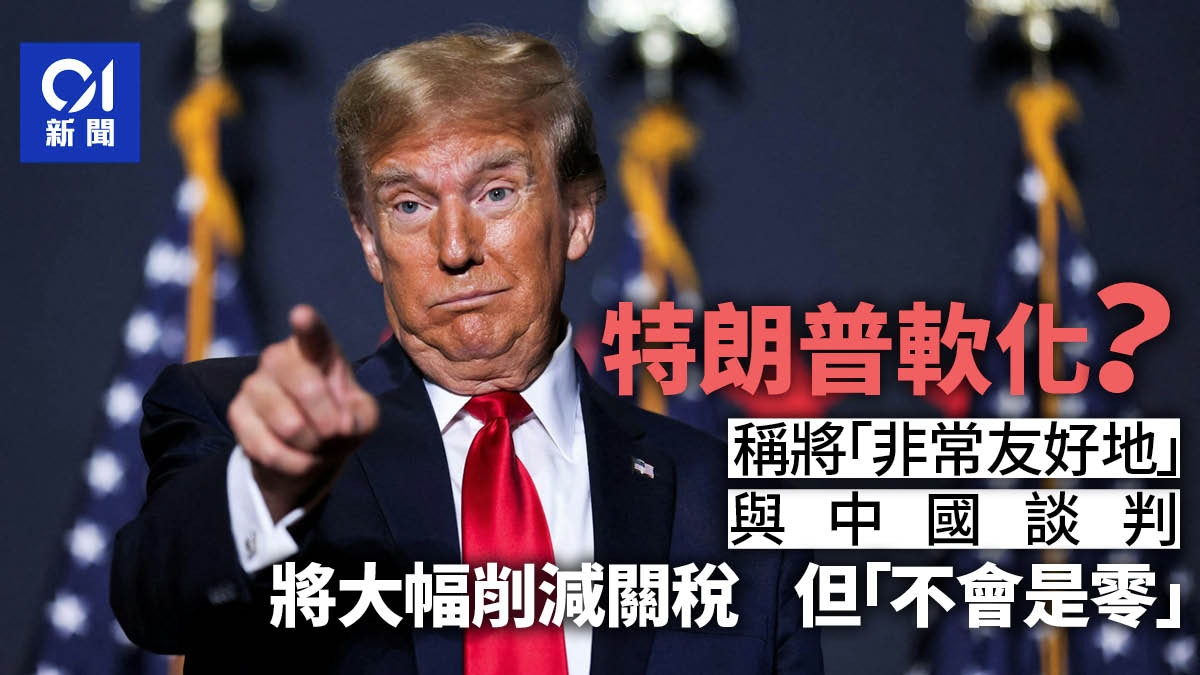
Trump softens? Tariffs on China will be significantly reduced, but "not to zero"


1745385844510.jpeg

U.S. President Donald Trump said on April 22 that he would conduct trade negotiations with China in a very friendly manner. If the two sides reach an agreement, U.S. tariffs on Chinese imports will be reduced substantially, but not to zero.

According to Reuters and US media reports, Trump made it clear in an interview at the White House on the 22nd that the United States will not take a tough stance against China in order to reach an agreement, and that US officials will not mention issues related to the COVID-19 pandemic during the negotiations.

Trump said that the United States will negotiate with China in a very friendly manner and believes that the other side will adopt the same attitude. If an agreement is reached with China and the United States on trade and tariffs, U.S. tariffs on China will be significantly reduced. They will not be as high as or close to 145%, but they will not fall to 0%.


President Donald Trump signs an executive order in the Oval Office of the White House in Washington, U.S., April 17, 2025. (Reuters)

President Donald Trump signs an executive order in the Oval Office of the White House in Washington, U.S., April 17, 2025. (Reuters)

Trump stressed that China must reach an agreement with the United States. If the former is not willing to negotiate, the United States will formulate the terms of the agreement on its own. However, he reiterated that he firmly believed that the China-US trade negotiations would go smoothly and reach a final agreement.


Users who are viewing this thread

Pakistan Defence Latest

Back
Top