Navigation
Install the app
How to install the app on iOS
Follow along with the video below to see how to install our site as a web app on your home screen.
Note: This feature may not be available in some browsers.
More options
Style variation
You are using an out of date browser. It may not display this or other websites correctly.
You should upgrade or use an alternative browser.
You should upgrade or use an alternative browser.
Evidence : IAF Rafale Jet Shot Down
- Thread starter CombatCorner
- Start date
More options
Who Replied?

LeGenD
THINK TANK: CONSULTANT
The Indian Air Force has shortcomings in the EW and ISR domains. They are putting too much emphasis on a 4+ gen jet fighter to provide breakthrough in clashes, living in the 1960s.
The Indian Air Force (IAF) faces significant challenges due to shortages in fighter aircraft, force multipliers, and key operational assets, impacting its ability to meet long-term strategic goals. One of the most pressing concerns is the shortfall in fighter squadrons. While the induction of advanced platforms such as the Rafale has boosted capability, the slow pace of procurement and delays in indigenous programmes like the Tejas Mark 2 and the Advanced Medium Combat Aircraft (AMCA) have created capability gaps. The IAF also faces shortages in critical force multipliers such as Airborne Early Warning and Control (AEW&C) systems, aerial refuelling tankers, and drones essential for extending the operational reach and maintaining air superiority in prolonged conflicts. Additionally, the service faces numerous other challenges. Progress remains slow despite efforts to address these issues through the ‘Make in India’ initiative and increased defence budgets. Bridging these gaps requires accelerated procurement and streamlined production of indigenous platforms.
The Indian Air Force (IAF) also faces growing challenges due to the rapid modernisation and expansion of both the Pakistan Air Force (PAF) and the People’s Liberation Army Air Force (PLAAF), which are enhancing their capabilities through advanced platforms and strategic cooperation. With significant support from China, the PAF has made notable progress in fleet modernisation by inducting advanced fighter jets such as the JF-17 Thunder Block III, equipped with AESA radars and beyond-visual-range (BVR) missiles. The PAF’s procurement of Chinese J-10C fighters, featuring advanced avionics and electronic warfare capabilities, has further narrowed the technological gap with the IAF. Pakistan’s focus on enhancing its air defence network, integrating long-range surface-to-air missile systems (SAMs), and investing in unmanned combat aerial vehicles (UCAVs) pose asymmetric threats to India’s air dominance. Meanwhile, the PLAAF presents an even greater challenge with its rapid expansion and technological advancements. China’s deployment of fifth-generation stealth fighters such as the J-20 and an extensive fleet of modern aircraft like the J-16 and H-6K bombers enhances its capability for long-range strikes and air superiority missions. It has even flown the sixth generation prototypes. The PLAAF’s focus on network-centric warfare, integrating artificial intelligence, electronic warfare, and space-based assets, gives it a strategic edge. Furthermore, China’s expanding airbases in Tibet and Xinjiang, with enhanced infrastructure and support systems, allow for sustained air operations along the Indian border. The combined threat from the PAF and PLAAF places immense pressure on the IAF to modernise its fleet rapidly, enhance its force multipliers, and enhance its operational readiness
Link
True Indians experts admitted the obvious months before the recent showdown.
The jet fighter is but a part of the equation. The Air Force should be well-equipped in the EW and ISR domains to be an effective fighting force when up against a near-peer or a peer adversary. Situational awareness is important to have a clear view of the battlespace and there is also the need for the capability to jam and/or disrupt communications and affect sensor systems of the jet fighters of the opposing side to create a window of opportunity for potential intercepts and kills.
The Indian Air Force (IAF) faces significant challenges due to shortages in fighter aircraft, force multipliers, and key operational assets, impacting its ability to meet long-term strategic goals. One of the most pressing concerns is the shortfall in fighter squadrons. While the induction of advanced platforms such as the Rafale has boosted capability, the slow pace of procurement and delays in indigenous programmes like the Tejas Mark 2 and the Advanced Medium Combat Aircraft (AMCA) have created capability gaps. The IAF also faces shortages in critical force multipliers such as Airborne Early Warning and Control (AEW&C) systems, aerial refuelling tankers, and drones essential for extending the operational reach and maintaining air superiority in prolonged conflicts. Additionally, the service faces numerous other challenges. Progress remains slow despite efforts to address these issues through the ‘Make in India’ initiative and increased defence budgets. Bridging these gaps requires accelerated procurement and streamlined production of indigenous platforms.
The Indian Air Force (IAF) also faces growing challenges due to the rapid modernisation and expansion of both the Pakistan Air Force (PAF) and the People’s Liberation Army Air Force (PLAAF), which are enhancing their capabilities through advanced platforms and strategic cooperation. With significant support from China, the PAF has made notable progress in fleet modernisation by inducting advanced fighter jets such as the JF-17 Thunder Block III, equipped with AESA radars and beyond-visual-range (BVR) missiles. The PAF’s procurement of Chinese J-10C fighters, featuring advanced avionics and electronic warfare capabilities, has further narrowed the technological gap with the IAF. Pakistan’s focus on enhancing its air defence network, integrating long-range surface-to-air missile systems (SAMs), and investing in unmanned combat aerial vehicles (UCAVs) pose asymmetric threats to India’s air dominance. Meanwhile, the PLAAF presents an even greater challenge with its rapid expansion and technological advancements. China’s deployment of fifth-generation stealth fighters such as the J-20 and an extensive fleet of modern aircraft like the J-16 and H-6K bombers enhances its capability for long-range strikes and air superiority missions. It has even flown the sixth generation prototypes. The PLAAF’s focus on network-centric warfare, integrating artificial intelligence, electronic warfare, and space-based assets, gives it a strategic edge. Furthermore, China’s expanding airbases in Tibet and Xinjiang, with enhanced infrastructure and support systems, allow for sustained air operations along the Indian border. The combined threat from the PAF and PLAAF places immense pressure on the IAF to modernise its fleet rapidly, enhance its force multipliers, and enhance its operational readiness
Link
True Indians experts admitted the obvious months before the recent showdown.
The jet fighter is but a part of the equation. The Air Force should be well-equipped in the EW and ISR domains to be an effective fighting force when up against a near-peer or a peer adversary. Situational awareness is important to have a clear view of the battlespace and there is also the need for the capability to jam and/or disrupt communications and affect sensor systems of the jet fighters of the opposing side to create a window of opportunity for potential intercepts and kills.
Last edited:

Oscar
Moderator

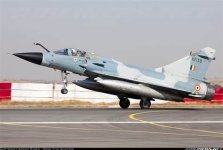
Oh no - first the loose screws caused the aircraft to fail and now there was a new paint scheme?What i am saying that..BS001 image is fake. Obviously the aircraft did not repaint itself, after being struck by a missile?

CombatCorner
Registered Member



muhammad.mehdi88
Registered Member

Let’s address the elephant in the room: when a nation crashes 23 fighter jets in 5 years, loses helicopters to routine sorties, and spends decades developing indigenous systems only to bench them for imports, maybe—just maybe—the problem isn’t just the gadgets. It’s the ecosystem around them.
Consider this: The same Israeli drones that faltered in Indian hands dominated in Azerbaijan. Why? Because Baku integrated them with Turkish intel, NATO-trained operators, and a doctrine built for asymmetric warfare. Meanwhile, India’s drone fleet often operates like a luxury car with a learner’s permit driver—fancy hardware, zero roadmap.
And let’s not romanticize foreign tech. France’s Rafales dodged Libyan air defenses because they flew under NATO’s jamming umbrella, not because of some Gallic magic. Russia’s S-400s shred Ukrainian jets because they’re layered with EW, drones, and boots-on-ground intel. India deploys the same systems in isolation, then acts shocked when they underperform.
As for indigenous projects: The Tejas fighter, 35 years in the making, still can’t carry a full payload. The Arjun tank? Outranks by Soviet-era T-90s because it couldn’t handle Rajasthan’s sand. This isn’t a failure of engineering talent—it’s a failure of procurement labyrinths, political meddling, and training that treats simulators as optional.
Yes, the IAF crashes planes. Yes, the army shelves homegrown gear. But to blame Dassault, Rafael, or Thales is to miss the forest for the trees. Greece operates Rafales flawlessly. Azerbaijan turns Israeli drones into game-changers. Turkey’s Bayraktars reshaped modern combat. The common thread? They adapt tools to their needs; they don’t just buy them and pray.
India’s military isn’t “subpar”—it’s shackled by a culture that conflates spending with strategy, imports with capability, and announcements with achievement. Fix the institutions, and the gadgets will follow. Until then, no amount of foreign tech will compensate for homegrown dysfunction.
Consider this: The same Israeli drones that faltered in Indian hands dominated in Azerbaijan. Why? Because Baku integrated them with Turkish intel, NATO-trained operators, and a doctrine built for asymmetric warfare. Meanwhile, India’s drone fleet often operates like a luxury car with a learner’s permit driver—fancy hardware, zero roadmap.
And let’s not romanticize foreign tech. France’s Rafales dodged Libyan air defenses because they flew under NATO’s jamming umbrella, not because of some Gallic magic. Russia’s S-400s shred Ukrainian jets because they’re layered with EW, drones, and boots-on-ground intel. India deploys the same systems in isolation, then acts shocked when they underperform.
As for indigenous projects: The Tejas fighter, 35 years in the making, still can’t carry a full payload. The Arjun tank? Outranks by Soviet-era T-90s because it couldn’t handle Rajasthan’s sand. This isn’t a failure of engineering talent—it’s a failure of procurement labyrinths, political meddling, and training that treats simulators as optional.
Yes, the IAF crashes planes. Yes, the army shelves homegrown gear. But to blame Dassault, Rafael, or Thales is to miss the forest for the trees. Greece operates Rafales flawlessly. Azerbaijan turns Israeli drones into game-changers. Turkey’s Bayraktars reshaped modern combat. The common thread? They adapt tools to their needs; they don’t just buy them and pray.
India’s military isn’t “subpar”—it’s shackled by a culture that conflates spending with strategy, imports with capability, and announcements with achievement. Fix the institutions, and the gadgets will follow. Until then, no amount of foreign tech will compensate for homegrown dysfunction.
Have you ever wondered,that it's not the "gadgets",but the ones who use them that fail?
Has it passed from your mind that they've crashed almost every single aircraft and helicopter in their inventory and their indigenous projects were either fails or mediocre at best?
Take a moment to think that maybe it's not the French with Dassault and Thales nor the Israelis with IAI and Rafael who are not to blame,but a nation with subpar engineering and training?
Why did Israeli drones work pretty good when Azeris used them? Why were Rafale or Mirage 2000s not seen or shot down by Turkish and GNA AA in Libya? Why did the Russian S-400s shoot down Ukrainian aircraft and the Indians couldn't or wouldn't take down a Pakistani fighter or AWACS?
LeGenD
THINK TANK: CONSULTANT
Good observations. These observations are important.Let’s address the elephant in the room: when a nation crashes 23 fighter jets in 5 years, loses helicopters to routine sorties, and spends decades developing indigenous systems only to bench them for imports, maybe—just maybe—the problem isn’t just the gadgets. It’s the ecosystem around them.
Consider this: The same Israeli drones that faltered in Indian hands dominated in Azerbaijan. Why? Because Baku integrated them with Turkish intel, NATO-trained operators, and a doctrine built for asymmetric warfare. Meanwhile, India’s drone fleet often operates like a luxury car with a learner’s permit driver—fancy hardware, zero roadmap.
And let’s not romanticize foreign tech. France’s Rafales dodged Libyan air defenses because they flew under NATO’s jamming umbrella, not because of some Gallic magic. Russia’s S-400s shred Ukrainian jets because they’re layered with EW, drones, and boots-on-ground intel. India deploys the same systems in isolation, then acts shocked when they underperform.
As for indigenous projects: The Tejas fighter, 35 years in the making, still can’t carry a full payload. The Arjun tank? Outranks by Soviet-era T-90s because it couldn’t handle Rajasthan’s sand. This isn’t a failure of engineering talent—it’s a failure of procurement labyrinths, political meddling, and training that treats simulators as optional.
Yes, the IAF crashes planes. Yes, the army shelves homegrown gear. But to blame Dassault, Rafael, or Thales is to miss the forest for the trees. Greece operates Rafales flawlessly. Azerbaijan turns Israeli drones into game-changers. Turkey’s Bayraktars reshaped modern combat. The common thread? They adapt tools to their needs; they don’t just buy them and pray.
India’s military isn’t “subpar”—it’s shackled by a culture that conflates spending with strategy, imports with capability, and announcements with achievement. Fix the institutions, and the gadgets will follow. Until then, no amount of foreign tech will compensate for homegrown dysfunction.

bengalcdn
Registered Member


Latest breaking news from Reuters
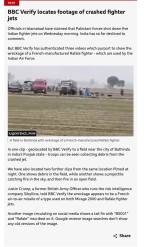
It will be hard for modi and his RSS minions to deny it now.
It will be hard for modi and his RSS minions to deny it now.

Foinikas
Elite Member

No,I was talking about the LNA-GNA war a few years ago. Not the 2011 Libya war. I meant Watiya and other operations.And let’s not romanticize foreign tech. France’s Rafales dodged Libyan air defenses because they flew under NATO’s jamming umbrella, not because of some Gallic magic.
Foinikas
Elite Member
You're coming to my words,it's not just the engineering. It's the whole nation,the mindset and training. Because we also see such fails in their shipbuilding and naval projects.As for indigenous projects: The Tejas fighter, 35 years in the making, still can’t carry a full payload. The Arjun tank? Outranks by Soviet-era T-90s because it couldn’t handle Rajasthan’s sand. This isn’t a failure of engineering talent—it’s a failure of procurement labyrinths, political meddling, and training that treats simulators as optional.
Foinikas
Elite Member
Then you agree with my post?Yes, the IAF crashes planes. Yes, the army shelves homegrown gear. But to blame Dassault, Rafael, or Thales is to miss the forest for the trees. Greece operates Rafales flawlessly. Azerbaijan turns Israeli drones into game-changers. Turkey’s Bayraktars reshaped modern combat. The common thread? They adapt tools to their needs; they don’t just buy them and pray.
India’s military isn’t “subpar”—it’s shackled by a culture that conflates spending with strategy, imports with capability, and announcements with achievement. Fix the institutions, and the gadgets will follow. Until then, no amount of foreign tech will compensate for homegrown dysfunction.
muhammad.mehdi88
Registered Member
hell ya .... obviouslyThen you agree with my post?
r3alist
Elite Member
You're coming to my words,it's not just the engineering. It's the whole nation,the mindset and training. Because we also see such fails in their shipbuilding and naval projects.
Average iq man
And attitudes to human development
And relations and duty to environment and each other
That's development
Look at this $hit, well to do tourists
Users who are viewing this thread
Total: 8 (members: 0, guests: 8)
Pakistan Defence Latest
-
 Pak Ship Collides With Indian Navy Unit, Delhi Summons Islamabad's Envoy (15 Viewers)
- Latest: Solomon2
-
-

-
-
Country Watch Latest

Latest Posts
-
-
Pak Ship Collides With Indian Navy Unit, Delhi Summons Islamabad's Envoy (15 Viewers)
- Latest: Solomon2
-

-
-
