Global militaries to study India-Pakistan fighter jet battle

Of course. That is exactly why one must always avoid boasting about one's true capabilities and let the other side crow about how much better they are - until push comes to shove.

We MUST repair, build and expand our economy, because "the sinews of war are infinite money". That is where our biggest weakness remains.
You guys need to develop and rebulld. You punched above your weight in this game.
 
Wow what anhonour for PAF.....unbelievable.....We will teach the world how to fly and shoot.....

Of course nothing would have happened with out simply outstanding J10 and PL 15.......
 
I totally agree, those foundations were laid at the formation stage, at this mature stage you absorb, adopt and share, meaning to teach as well as learn. Our partnerships seem to provide us avenues to different kinds of thinking, and we don't generally suffer from arrogance.

Indians seem to be especially afflicted by the arrogance virus. The few videos I've seen of other forces who trained with the Indians, they seem to mention a strong stench of arrogance in dealing with the Indians. Arrogance is a big hinderance when you're trying to learn and adopt, ultimately the other side usually gives up.
But, there's plenty in the air and we can never rest on our laurels.

Far less then the economy, we need political stability and constitutional order. Everything else will fall into place. It's nigh impossible to have stable economic growth, especially for long periods, without political stability and constitutional order.

Nigeria, South Korea, Indonesia and Turkiye learnt their lessons, they're all large countries. Yet, their militaries understood you cannot run modern large nations in the old ways, ours will learn soon enough, it's the only way. Especially since Pakistan is projected to have a population of half a billion people. That my friend is a giant, which requires a constitutional order to function properly.


Great post, with one addition, if I may: we should do everything to feed and grow their arrogance, while keeping ourselves rooted in good foundations solidly and build further upon them. :D
 

Why Did the J-10C Dominate the Rafale?


Chinese jets used by Pakistan to shoot down India’s Western-made aircraft set off alarm bells in defense sector​

Story by Brady Knox, Washington Examiner
May 8 2025

Chinese jets used by Pakistan to shoot down India’s Western-made aircraft set off alarm bells in defense sector

Chinese jets used by Pakistan to shoot down India’s Western-made aircraft set off alarm bells in defense sector

A surprise victory by Pakistani Chinese-made jet fighters in an air battle with Western-made Indian aircraft has triggered alarm in the global defense industry.

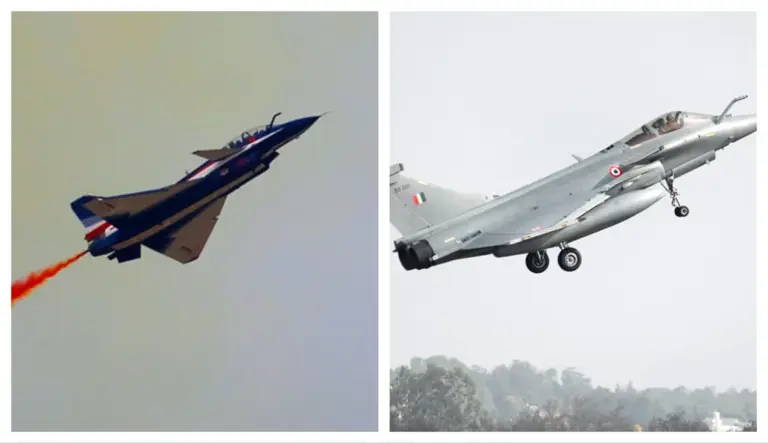
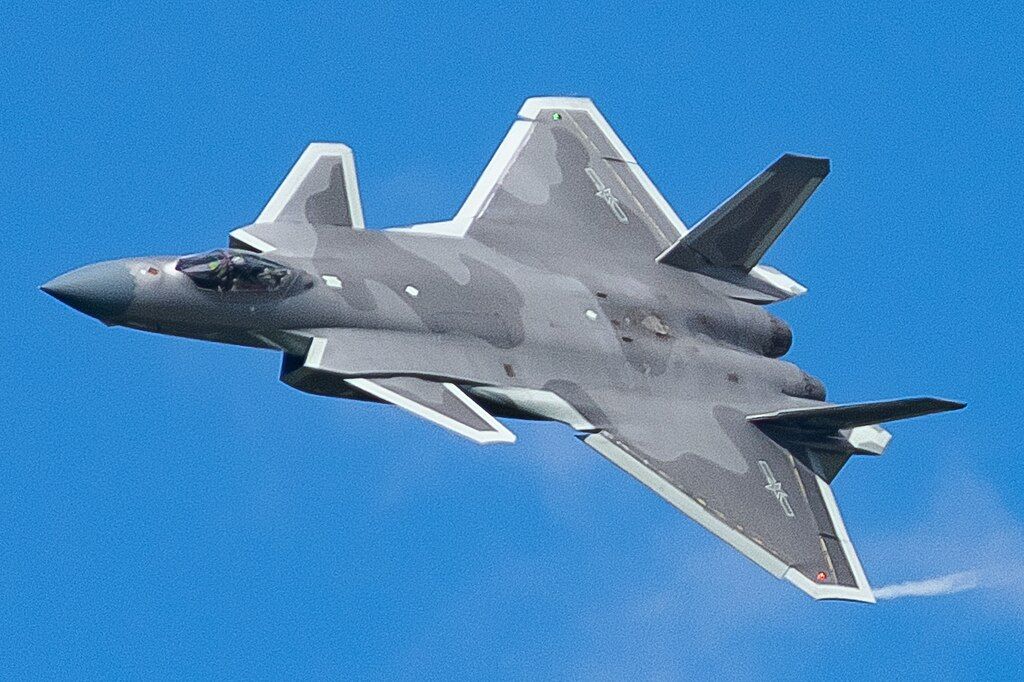
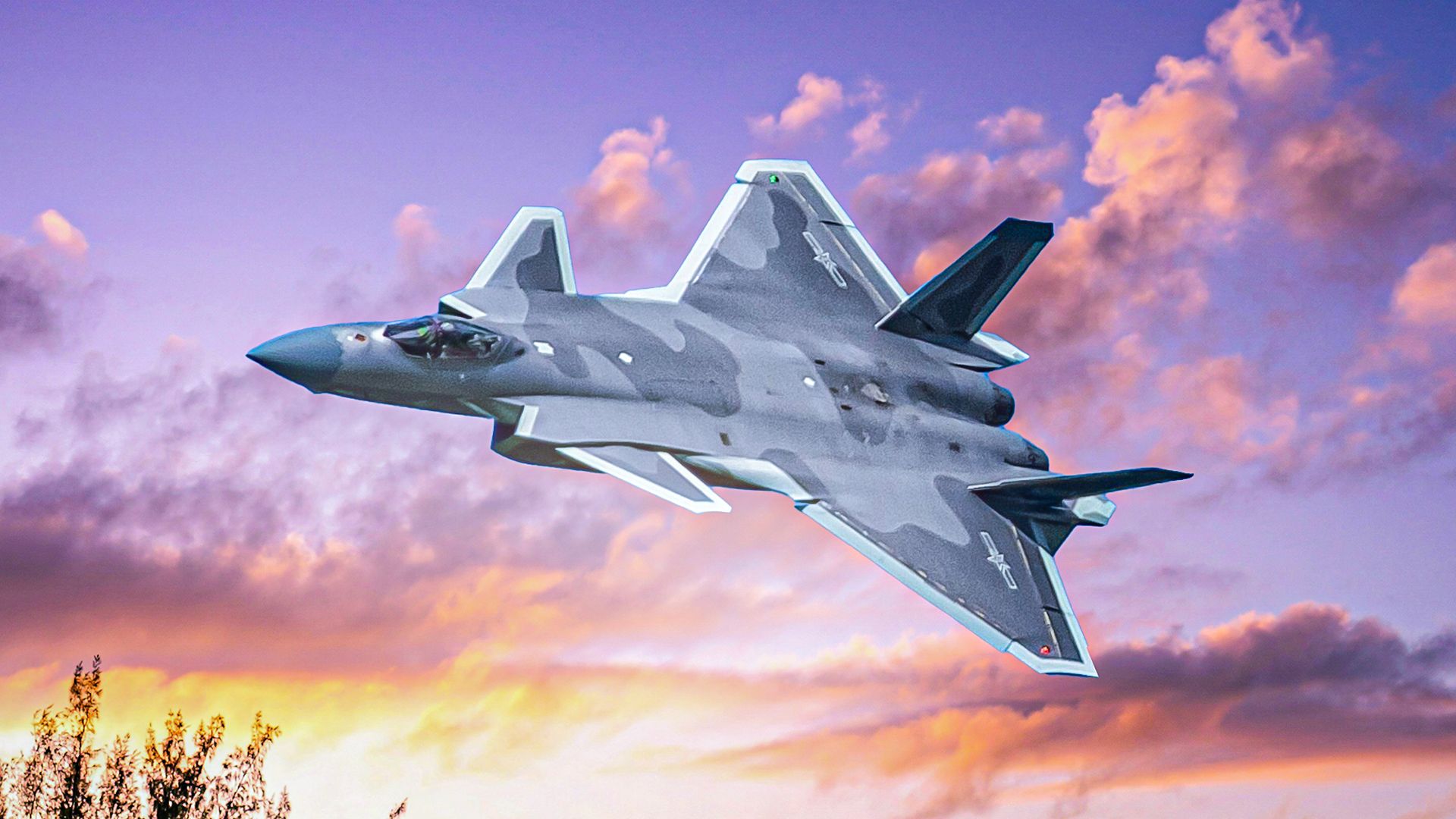
The opening of hostilities on Wednesday morning between India and Pakistan saw one of the largest air battles in modern history, with Pakistan emerging the victor. U.S. officials told Reuters that Chinese-made Pakistani J-10 aircraft shot down French-made Indian Rafale jets with Chinese PL-15 air-to-air missiles. The incident is the first time a Rafale has been shot down and the first time a J-10 has downed another aircraft.

Though the J-10 was introduced in 2004, China's lack of direct foreign engagements means it has never seen a combat deployment prior to Wednesday. The fact that its first combat deployment witnessed its triumph over its western equivalent is likely to serve as a major boost to the Chinese defense industry.

The J-10 and Rafale are considered Generation 4.5 fighters, equivalent to the U.S. F-16 and F/A-18.

Islamabad was quick to boast of its victory.

"Not Just Defence — It’s Dominance in the Skies! Pakistan Shatters the Rafale’s Streak of Invincibility with Unmatched Precision and Readiness, Becoming the First Ever Force to Shoot Down Rafale Jet Since Its Combat Debut in 2001. A Historic Blow to the Indian Air Force," the Government of Pakistan X account said.

The shock of the victory over the Chinese hardware over its western counterpart was quickly reflected in the stock market, with the Eurasian Times reporting that stocks for the J-10C producer, Avic Chengdu Aircraft Co. Ltd., shot up by 36% in two sessions, while the stock of the Rafale producer, Dassault Aviation, fell 1.64-5%.

"Air warfare communities in China, the U.S. and a number of European countries will be extremely interested to try and get as much ground truth as they can on tactics, techniques, procedures, what kit was used, what worked and what didn't," Douglas Barrie, senior fellow for military aerospace at the International Institute for Strategic Studies, told Reuters.

Of equal focus to the jets were the missiles they were carrying. Analysts speculate that each side used its most advanced missiles, with the Pakistanis using the Chinese PL-15 air-to-air missile and the Indians using the European Meteor air-to-air missile. The PL-15 appears to have emerged at the top of the engagement, downing at least three fighters, compared to no Pakistani fighters downed.

Pakistan's Foreign Minister claimed that its fighters only targeted Indian jets that fired first, limiting the number of Indian aircraft downed.

“This is why only five jets were taken down. Had the directive been different, nearly 10-12 jets would have been struck,” he alleged.

The engagement is a wake-up call for the Western defense industry, which has long been unsure about the viability of Chinese weapons.

"You have arguably China's most capable weapon against the West's most capable weapon, if indeed it was being carried; we don't know that," Barrie said.

A Western industry expert told the outlet that the engagement showed the capabilities of the PL-15 "may be greater than was thought."

"The PL-15 is a big problem. It is something that the U.S. military pays a lot of attention to," a defense industry executive added to Reuters.

Debris showcased by Indian officials and shared on social media appears to confirm that at least one of the shoot-downs was done by a PL-15. Another intact PL-15 was recovered and showed off by Indian authorities.

Scant confirmed details remain regarding the Wednesday engagement, but one senior Pakistani security source told CNN that the dogfight was the “largest and longest in recent aviation history,” involving roughly 125 aircraft over an hour period. Opposing aircraft fired missiles at targets sometimes over 100 miles away.

Part of the reason for the long distance was the unwillingness of either aircraft to cross over the border, with a smaller dogfight between the powers in 2019 causing the downing of one Indian Air Force pilot in Pakistan, who was then paraded on TV. The source said that both sides were afraid of a similar humiliation.

The engagement was the first since India and Pakistan upgraded their air fleets; the last flare-up in hostilities in February 2019 featured engagements between older Pakistani F-16s and JF-17s and older Indian Mirage 2000s and MiG-21s. Though Pakistan has also modernized its F-16s since, the aircraft didn't take part in Wednesday's engagement.

The victory of the J-10 is likely to boost China's defense industry across the globe. The Eurasian Times reported that Uzbekistan is currently deciding between purchasing the J-10 and Rafale to modernize its air force. Egypt is allegedly interested in the J-10 as well.

Chinese social media users mocked the Indians over their loss, with one group posting a video to social media showing people dressed up as Indians bemoaning their loss of the aircraft.

Wars between allied countries are often used as a testing ground for opposing defense industries. During the Cold War, the U.S. and Soviet defense industries used Israel and its Arab opponents as testing grounds to view their weapons' performance before a hypothetical hot conflict.

The same pattern appears to be repeated in India-Pakistan, with the United States and China eager to view how Chinese weapons would perform in a possible war over Taiwan.


Chinese jets used by Pakistan to shoot down India’s Western-made aircraft set off alarm bells in defense sector​

Story by Brady Knox, Washington Examiner
May 8 2025

Chinese jets used by Pakistan to shoot down India’s Western-made aircraft set off alarm bells in defense sector

Chinese jets used by Pakistan to shoot down India’s Western-made aircraft set off alarm bells in defense sector

A surprise victory by Pakistani Chinese-made jet fighters in an air battle with Western-made Indian aircraft has triggered alarm in the global defense industry.

The opening of hostilities on Wednesday morning between India and Pakistan saw one of the largest air battles in modern history, with Pakistan emerging the victor. U.S. officials told Reuters that Chinese-made Pakistani J-10 aircraft shot down French-made Indian Rafale jets with Chinese PL-15 air-to-air missiles. The incident is the first time a Rafale has been shot down and the first time a J-10 has downed another aircraft.

Though the J-10 was introduced in 2004, China's lack of direct foreign engagements means it has never seen a combat deployment prior to Wednesday. The fact that its first combat deployment witnessed its triumph over its western equivalent is likely to serve as a major boost to the Chinese defense industry.

The J-10 and Rafale are considered Generation 4.5 fighters, equivalent to the U.S. F-16 and F/A-18.

Islamabad was quick to boast of its victory.

"Not Just Defence — It’s Dominance in the Skies! Pakistan Shatters the Rafale’s Streak of Invincibility with Unmatched Precision and Readiness, Becoming the First Ever Force to Shoot Down Rafale Jet Since Its Combat Debut in 2001. A Historic Blow to the Indian Air Force," the Government of Pakistan X account said.

The shock of the victory over the Chinese hardware over its western counterpart was quickly reflected in the stock market, with the Eurasian Times reporting that stocks for the J-10C producer, Avic Chengdu Aircraft Co. Ltd., shot up by 36% in two sessions, while the stock of the Rafale producer, Dassault Aviation, fell 1.64-5%.

"Air warfare communities in China, the U.S. and a number of European countries will be extremely interested to try and get as much ground truth as they can on tactics, techniques, procedures, what kit was used, what worked and what didn't," Douglas Barrie, senior fellow for military aerospace at the International Institute for Strategic Studies, told Reuters.

Of equal focus to the jets were the missiles they were carrying. Analysts speculate that each side used its most advanced missiles, with the Pakistanis using the Chinese PL-15 air-to-air missile and the Indians using the European Meteor air-to-air missile. The PL-15 appears to have emerged at the top of the engagement, downing at least three fighters, compared to no Pakistani fighters downed.

Pakistan's Foreign Minister claimed that its fighters only targeted Indian jets that fired first, limiting the number of Indian aircraft downed.

“This is why only five jets were taken down. Had the directive been different, nearly 10-12 jets would have been struck,” he alleged.

The engagement is a wake-up call for the Western defense industry, which has long been unsure about the viability of Chinese weapons.

"You have arguably China's most capable weapon against the West's most capable weapon, if indeed it was being carried; we don't know that," Barrie said.

A Western industry expert told the outlet that the engagement showed the capabilities of the PL-15 "may be greater than was thought."

"The PL-15 is a big problem. It is something that the U.S. military pays a lot of attention to," a defense industry executive added to Reuters.

Debris showcased by Indian officials and shared on social media appears to confirm that at least one of the shoot-downs was done by a PL-15. Another intact PL-15 was recovered and showed off by Indian authorities.

Scant confirmed details remain regarding the Wednesday engagement, but one senior Pakistani security source told CNN that the dogfight was the “largest and longest in recent aviation history,” involving roughly 125 aircraft over an hour period. Opposing aircraft fired missiles at targets sometimes over 100 miles away.

Part of the reason for the long distance was the unwillingness of either aircraft to cross over the border, with a smaller dogfight between the powers in 2019 causing the downing of one Indian Air Force pilot in Pakistan, who was then paraded on TV. The source said that both sides were afraid of a similar humiliation.

The engagement was the first since India and Pakistan upgraded their air fleets; the last flare-up in hostilities in February 2019 featured engagements between older Pakistani F-16s and JF-17s and older Indian Mirage 2000s and MiG-21s. Though Pakistan has also modernized its F-16s since, the aircraft didn't take part in Wednesday's engagement.

The victory of the J-10 is likely to boost China's defense industry across the globe. The Eurasian Times reported that Uzbekistan is currently deciding between purchasing the J-10 and Rafale to modernize its air force. Egypt is allegedly interested in the J-10 as well.

Chinese social media users mocked the Indians over their loss, with one group posting a video to social media showing people dressed up as Indians bemoaning their loss of the aircraft.

Wars between allied countries are often used as a testing ground for opposing defense industries. During the Cold War, the U.S. and Soviet defense industries used Israel and its Arab opponents as testing grounds to view their weapons' performance before a hypothetical hot conflict.

The same pattern appears to be repeated in India-Pakistan, with the United States and China eager to view how Chinese weapons would perform in a possible war over Taiwan.

LOl, the one who are being scared the most in this conflict turned out to be the west, they for decades claimed that Chinese weapons had no "real combat experience".
 
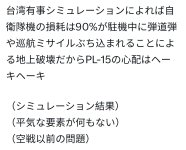
The Japanese are quite interesting, they say that various offensive missiles have a greater impact on the fighter jets at the airport, leaving the PL15 with mobile deployed fighter jets. I have been reading articles from Japanese military bloggers who explicitly assume that the deployment of various Tai Wan wars and Japan's participation in the war will inevitably be centered around the US Japan alliance. Repairing underground hangars throughout Japan Screenshot_20250509_125511_X.jpgScreenshot_20250509_125957_X.jpg
 

China’s J-10C Dominates: Rafale Shot Down, Global Power Shifts Begin​

To view this content we will need your consent to set third party cookies.
For more detailed information, see our cookies page.
 
If India can not handle couples of J-10, good luck with dealing with a massive combined force of J-10, J-11, J-16, J-20 and J-35, with J-36 and J-50 waiting in the wings.
 
I really don´t understand why so much hurra´s as if war is something to cheer.
as if there is not enough wars in the world.
this war will further wreck Pakistian economy and tarnish India´s image.
China´s role is very dubious in this conflict, same in Russia/Ukraine or civil war in Burma.
the US does not care of this war at all. so the rest of the world. War of others people is boring.
This air kill if confirmed is a good story, but there is little impact.
 
hobbymaster happens to have the very same “BS 001” Rafale model, in case someone here wants to keep a trophy :ROFLMAO:

1746768997129.png
 

How Many Fighter Jets Does China Produce Annually? Concerns arise about China surpassing the US Air Force in fighter jet production​

artboard-16_9-68.jpg


By Aaron Spray

Published Aug 7, 2024
  • China produces around 240 J-10, J-16, and J-20 fighter jets annually, plus J-11s and J-15.
  • Recent advancements show an increase in Chinese jet production, with a focus on new engines.
  • Concerns arise about China surpassing the US Air Force in fighter jet production.
How many fighter jets does China produce? Estimating Chinese production numbers is not as easy as in the West (where the manufacturers disclose their production numbers). The number of aircraft produced by the Chinese Air Force (properly the People's Liberation Army Air Force or PLAAF) can only be estimated. The numbers below do not include the JF-17 Thunder jointly produced with Pakistan.

For many years, the Chinese fighter jet industry was somewhat a laggard. Chinese Cold War fighter jets were mostly Soviet jets produced under license. China continued to produce the ancient Chengdu J-7 (a copy of the Soviet MiG-21 Fishbed) as late as 2013 (although for export).

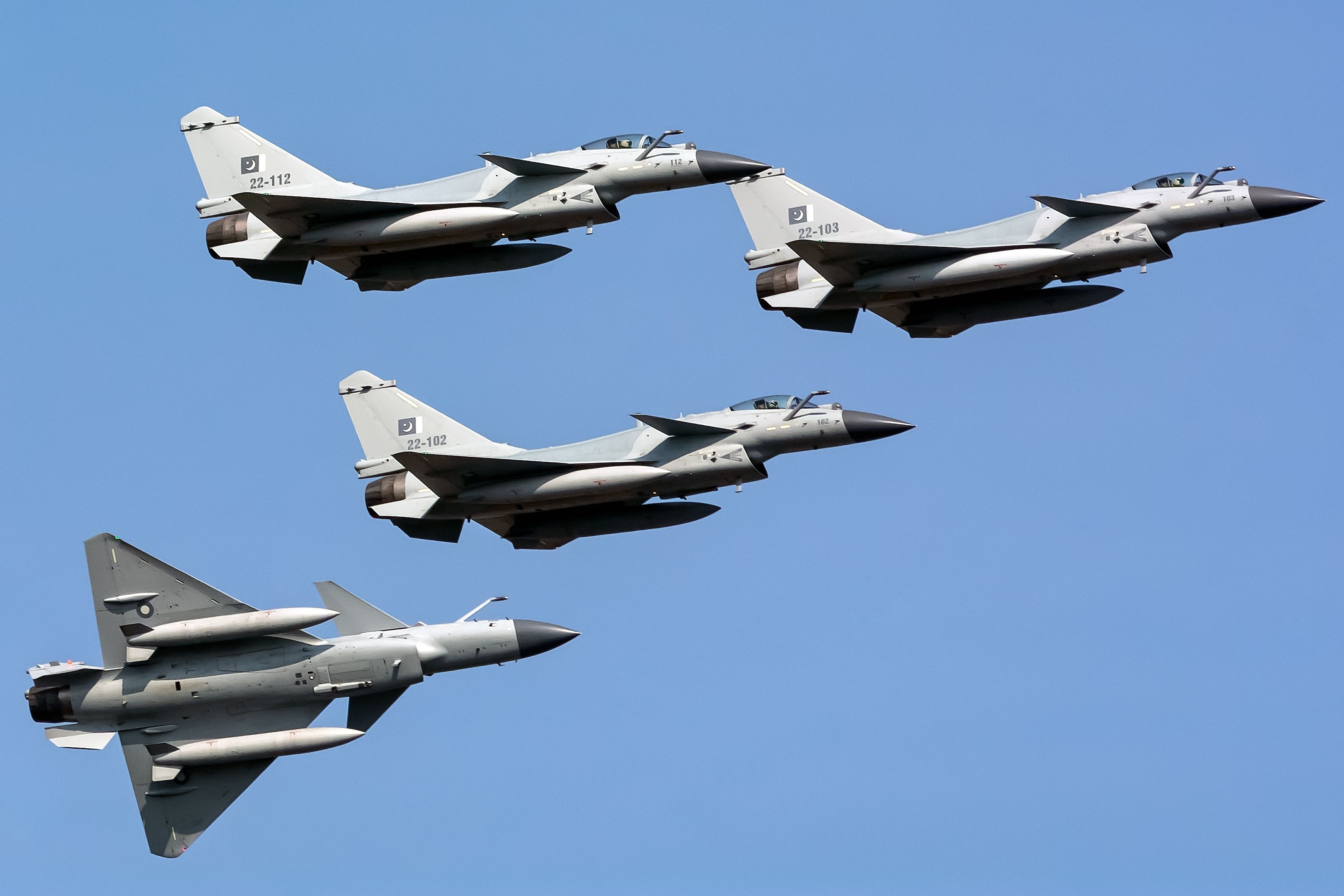
shutterstock_2343879933 - Newly inducted frontline fighter jets by Pakistan Air Force. Formation of Chengdu j-10C fighter jets performing on Pakistan Day Parade.


Photo: rehan waheed | Shutterstock

Today, many of China's fighter jets are old Soviet jets or licensed copies. Much of the Chinese Air Force's inventory is based on the Soviet/Russian Su-27 Flanker. Other legacy aircraft in Chinese inventory are Soviet copies. For example, the Shenyang J-11 and J-16 are licensed copies of the Su-27 Flanker. China also purchased Russian Su-27 Flankers, Su-35s, and Su-30s (both modern variants of the Su-27) in large numbers.

搜狗截图20240808201227.png


But this is now changing dramatically. In recent years, China has developed the J-10 Dragon and the fifth-generation J-20 Mighty Dragon. Importantly, throughout the Cold War and into the 2000s, China could not develop and produce its own advanced fighter jet engines. But this appears to be changing.

J-20_at_CCAS2022_(20220827103424) (One yesterday with overcast and two today with sunny day)


Photo: N509FZ | Wikimedia Commons
China is finally developing and fielding its own jet engines as it continues to break away from dependence on Russia in the sector. It can now produce the WS-10 and WS-15 series engines as credible and reliable engines for its J-10C and J-20 aircraft.

According to reporting by Air and Space Forces Magazine, China produces roughly more than 100 J-20 Mighty Dragons (NATO reporting name Fagin) a year (these are China's vaunted 5th-generation fighter jets). Rick Joe, writing for the Diplomat, offers considerable analysis on the new WS-10 and WS-15 engine series.

Joe also delves into the J-20 production numbers. He stated previous expectations for J-20 production in 2023 "may approach 100 aircraft a year by the end of 2023 and comfortably meet 100 per year in 2024." However, writing in August 2023 and using retrospective estimates, he suggested 70 J-20s were delivered in 2022, and it is unknown if this rate would be expanded further and if 70 or 100 would be produced in 2023. However, he did note the apparent expansion at the factory and that 100 per year was credible.

搜狗截图20240808201415.png


For comparison, the US is producing around 135 F-35s a year (expected to be stable at around 156 airframes annually). However, around 60 to 70 of those F-35s are for export to allies and partners. Additionally, while the F-35 and J-20 are typically labeled fifth-generation fighters, they are not the same, and the F-35 is considered significantly more capable.

China also produces around 40 Chengdu J-10C Vigorous Dragons (NATO reporting name Firebird) annually. The J-10 is sometimes compared to a low-end F-15EX. Topping off the Chinese fighter jet production list are more than 100 Shenyang J-16 Hidden Dragons (NATO reporting name Flanker-N). It should also be noted that these are current production numbers, and China may ramp up production.

It should also be noted that China is developing the multirole Shenyang FC-31 fifth-generation fighter. China also produces Shenyang J-15 and Shenyang J-11s based on the Soviet Su-27 Flanker (these are used in the navy). It is unclear how many of these are being produced.

Chinese fighter jet production is now impressive, which has led to fears that it will overtake the US Air Force to become the largest in the world. Navy Admiral John C. Aquilino stated before the Senate Armed Services Committee in March 2024, "The world's largest Navy (China by number of hulls), soon to be the world's largest Air Force. The magnitude, scope, and scale of this security challenge cannot be understated; all would be challenged."

That said, China has a way to go to replace its many dated aircraft, and the US will have far more combat aircraft if the Navy and Marines are added to the tally.

The combined Chinese Air Force and Navy are believed to have around 3,150 aircraft (excluding trainers and drones). By comparison, the US Air Force has around 4,000 aircraft, excluding trainers and drones. The Navy and Marines have a combined inventory of around 3,300 jets, raising the figure to over 8,000 jets for the US.

 
This air kill if confirmed is a good story, but there is little impact.
little impact for us who are only getting confirmation to something we already knew
little impact for those who has been living in denial and will always be living in denial

but Im sure it will be impactful for some
 

Users who are viewing this thread

Pakistan Defence Latest

Back
Top