It’s clear that many from Pakistan are busy glorifying the PAF. But let’s be real—**in any modern India-Pakistan conflict, the role of the air force will be limited.
Even israeli fired missiles on iran from the safe distance - this is what going to be happened in next wars - old method of using gone a long back. Now a days, crossing the borders and planning to for deep strikes - probability of success has dramatically very down. It's will be kind of suicide missions.
The current structure of the PAF is decent when it comes to defending its own skies—with support systems geared toward protection. But when it comes to **offensive capability**, it doesn’t hold up. The support infrastructure they rely on isn’t designed to operate beyond borders. That’s a big limitation. They don't have solutions against the same systems if talk about india.
Future wars won’t be about dogfights.
They’ll be about **standoff weapons, layered defenses, and who can strike with precision while staying protected.**
The side that defends better, absorbs the least damage, and maintains operational capability will have upper hands
You say the Pakistan Air Force (PAF) has limitations when it comes to striking inside India—that’s true to some extent. But let’s be honest: no modern air force today is built for deep, cross-border strikes in the traditional sense. Today’s warfare is all about standoff weapons, cyber attacks, and precision strikes drones . Pakistan hasn’t yet use ful spectrum of the drones Pakistaní drone can fire very beyond visual missiles. not old-school dogfights.
But let me ask: the five Indian jets that were shot down—was that some kind of drama? Shooting down five aircraft isn’t a joke—it was a humiliating blow to you, and the whole world saw it.
You mentioned Israel firing missiles at Iran from a safe distance. Well, does Pakistan not have missiles? In fact, Pakistan used a very low-grade missile during a warning strike, and even then, it rattled your entire defense setup.
Let’s talk about defense systems—PAF is not just about fighter jets. It operates as part of a complete defense network, including ground-based air defense systems, radar coverage, and command support structures.
And regarding missile capability—Pakistan has long-range missiles like Shaheen and Ghori that can easily reach your second-tier cities and strategic sites. You should remember when Pakistan established a buffer zone of nearly 300 kilometers inside your border—that wasn’t fiction.
Also, no one talks about the cyber attack on your power grid, which exposed serious flaws in your infrastructure. It was so severe that your Prime Minister had to directly reach out to President Trump. That, too, was a form of modern warfare—and you were caught unprepared.
Let’s face it—you suffered a serious defeat, both militarily and strategically. A wise and honorable adversary accepts their losses—there’s dignity in acknowledging defeat. If you had accepted it with grace, the world might have respected you more.
But today, the world saw that in every domain—air, cyber, and strategic depth—India was pushed back. That’s the reality.
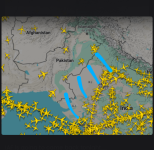
In short, let me tell you — Pakistan has been engaged in knowledge-based wars, using its intelligence through artificial means. It’s like a video game. If you’re still stuck in the mindset of the war on terrorism, that’s outdated. Welcome to the New World Order and the new systems of warfare — powered by artificial intelligence.
Long live Pakistan