JF-17 PFX program

If we see in retrospective way, PFX is indeed the outcome of that mistake. Not realizing the limitation and not working on acquiring missing technical and industrial prowess. Even the entire NASTP is the outcome of that, IMHO. PAF had realized during the last decade that self-sufficiency is the only way forward but couldn't realized that it's not a readymade available thing, one has to earn it through solid planning, financial support, and political backing. NASTP got all these and that's why I see good things emerging out of those places including sub-systems for PFX and beyond. PAF must continue working on PFX regardless of failures and time. Goal here is not just building an aircraft but building an aerospace eco-system.
I hope so, and I want to remain optimistic about it. Definitely feels like an improvement from the Project Azm days.

But culturally we have an issue with severely underestimating the complexity of building high-end products, and rushing things while ignoring critical fundamentals. We tend to lack discipline and competency because of a laid back attitude.

I hope this new set-up builds on the strong fundamentals in a competent manner so it can eventually build-up to the final goal of high-end manned fighters actually of highly quality.

This means, a strong ecosystem that creates high quality human resources (STEM base), working on advanced materials and precision machinery, and modern manufacturing methods. It would mean getting the private sector involved by reducing red tape and making internal culture at government owned workshops more conductive. Our boomer gernail culture hates this stuff, they operate more like a strict military camp.
 
I hope so, and I want to remain optimistic about it. Definitely feels like an improvement from the Project Azm days.

But culturally we have an issue with severely underestimating the complexity of building high-end products, and rushing things while ignoring critical fundamentals. We tend to lack discipline and competency because of a laid back attitude.

I hope this new set-up builds on the strong fundamentals in a competent manner so it can eventually build-up to the final goal of high-end manned fighters actually of highly quality.

This means, a strong ecosystem that creates high quality human resources (STEM base), working on advanced materials and precision machinery, and modern manufacturing methods. It would mean getting the private sector involved by reducing red tape and making internal culture at government owned workshops more conductive. Our boomer gernail culture hates this stuff, they operate more like a strict military camp.
Notwithstanding these deep rooted glaring challenges, I believe one has to start from somewhere. Survival is one of most potent human instinct. If PAF's top brass can assess the statements of Netanyahu about Pakistani and Iranian nuclear programs, I think they will push ahead. Apart from whatever you mentioned, there are other issues as well like taking political ownership of such initiatives. It means whenever there will be a need, funds will be make available to push R&D forward and PAF will not be left alone. Private Sector is already becoming part of efforts but the scale is very limited. Heavy investments are required. Even India is struggling to find private partners for AMCA project. Pakistan has few companies working on UAVs but that will not be sufficient here. Unfortunately, there is no large scale engineering companies in civilian sector with requisite skillset in Pakistan. NASTP is a good initiative to lure in private sector but how it can transform potential into actual investments is yet to be seen.
 
IMO JF-17 production will continue with iterative upgrades. I don't expect any significant changes to the airframe. Rather, the PAF will keep upgrading the electronics, especially as they get more and more power-efficient (e.g., GaN) and use the JF-17s as nodes for deploying LRAAMs and SOWs.

If there's one major change they will need to do, however, it'd be to adapt the JF-17 for motorway operations so that the PAF could mount a proper dispersal operations doctrine. It will need that now more than ever as India would use the BrahMos at very large scale and intensity to destroy the MOBs and FOBs.

If there's an appetite for a totally new fighter platform, then the PAF should focus on a jet-powered UCAV. I've mentioned this a bunch of times over a couple of years, but start with a 2-3-ton loyal wingman or CCA platform designed for expendability (i.e., make it cheap, but capable enough to deploy 2 SOWs or 2 LRAAMs). Develop and build the engine, composites, steel, and so on in Pakistan, and manufacture 1,000+ units.

To get to 1,000+ units you don't need to expand PAC or NASTP -- rope in the private sector. Give them a solid long-term production commitment (100 units a year for 10 years), and they'll invest in setting up net-new capacity. Cut red tape and do better and marketing, and they can profit from net-new exports.
In addition and maybe even as a pre-step to a UCAV, they can start with something like this:


Think of scaling up a target drone or KaGeM V3-type loitering munition. Its job would be to serve as a decoy, jammer, or small cruise missile. It'd accompany your crewed jets and UCAVs.

If we break it out, it'd be:

Step 1 - a 200-300 kg decoy-munition drone
Step 2 - a 2-3 ton UCAV with A2A/A2G capability
Step 3 - a 5+ ton autonomous fighter UCAV

This is what AZM or PFX should be if the goal was to build a fighter ecosystem from the ground up.

It's much more doable to do drones alone than to develop a crewed NGFA -- the latter should, as a rule, always be a consortium (so as to get some industry work in the picture).

@JamD @arslank01
 
In addition and maybe even as a pre-step to a UCAV, they can start with something like this:


Think of scaling up a target drone or KaGeM V3-type loitering munition. Its job would be to serve as a decoy, jammer, or small cruise missile. It'd accompany your crewed jets and UCAVs.

If we break it out, it'd be:

Step 1 - a 200-300 kg decoy-munition drone
Step 2 - a 2-3 ton UCAV with A2A/A2G capability
Step 3 - a 5+ ton autonomous fighter UCAV

This is what AZM or PFX should be if the goal was to build a fighter ecosystem from the ground up.

It's much more doable to do drones alone than to develop a crewed NGFA -- the latter should, as a rule, always be a consortium (so as to get some industry work in the picture).

@JamD @arslank01
really and truly, if PAC stops producing JF-17s, they will just build kizelelma's at PAC and call it a day
 
If the recent air battle is anything to go by, they key thing that stands out is developing a dense networked kill chain. What I mean by that is the long standing convention of fighters using their onboard radars to guide long range BVR missiles to their targets is becoming increasingly outdated. The centre of gravity has shifted to long range AWACs and command aircraft that can provide data-linked course guidance to long range BVR missiles, and fighters effectively become missile trucks to position themselves to launch the missiles. If that is the case, why do we need so many manned fighters? These could be replaced with UCAVS that are essentially networked missiles trucks that can passively engage enemy fighters and position themselves in favourable firing positions to launch BVR missiles.
 
really and truly, if PAC stops producing JF-17s, they will just build kizelelma's at PAC and call it a day
Not necessarily a bad idea if it means diverting all available internal talent towards autonomous ops. So, a bigger investment on the software side, which may be more tenable for Pakistan than recreating the entire industrial side, at least in the foreseeable future.
 
Not necessarily a bad idea if it means diverting all available internal talent towards autonomous ops. So, a bigger investment on the software side, which may be more tenable for Pakistan than recreating the entire industrial side, at least in the foreseeable future.
but this assumes an optimistic outcome- as per our last depressing convo, im doubtful lol
 
Not necessarily a bad idea if it means diverting all available internal talent towards autonomous ops. So, a bigger investment on the software side, which may be more tenable for Pakistan than recreating the entire industrial side, at least in the foreseeable future.
1748369477666.jpeg
We first need to do a study to decide what kind of UCAV is appropriate for Pakistan's doctrine, which of course needs to be modified for the inclusion of these UCAVs, so I see how this is cyclic.

Regardless, we need to define what we want this (or this mix of) UCAV(s) to do. Then we need to do 3 or 4 different sizes of UCAVs and see what gives us the same effect for the lowest risk and lowest dollar amount. We should also weigh the impact on the development of the local industry.

Keeping all of this in my, my gut feel is that Kizilelma is too big and expensive of a system to fit well into Pakistan's needs. Obviously, we'd need to do the above study to be sure but I strongly suspect that that is what that study will discover.
 
Last edited:
View attachment 124131
We first need to do a study to decide what kind of UCAV is appropriate for Pakistan's doctrine, which of course needs to be modified for the inclusion of these UCAVs, so I see how this is cyclic.

Regardless, we need to define what we want this (or this mix of) UCAV(s) to do. Then we need to do 3 or 4 different sizes of UCAVs and see what gives us the same effect for the lowest risk and lowest dollar amount. We should also weigh the impact on the development of the local industry.

Keeping all of this in my, my gut feel is that Kizilelma is too big and expensive of a system to fit well into Pakistan's needs. Obviously, we'd need to do the above study to be sure but I strongly suspect that that is what that study will discover.
@Quwa @arslank01

What's the probability that NASTP can enter into a joint development agreement with Baykar for a kind of purpose designed UCAV specifically around the PAF's desired need, and also have ownership of the IP, complete technology transfer and full manufacturing inside Pakistan, if it commits to a certain amount of units.

So not a Kizilelma exactly, but a new kind of JF-17 type program but heavily leaning towards developing local Pakistani capacity, down to machinery, human resource, tech, etc.

Is it worth considering and attractive to the AF?
 
View attachment 124131
We first need to do a study to decide what kind of UCAV is appropriate for Pakistan's doctrine, which of course needs to be modified for the inclusion of these UCAVs, so I see how this is cyclic.

Regardless, we need to define what we want this (or this mix of) UCAV(s) to do. Then we need to do 3 or 4 different sizes of UCAVs and see what gives us the same effect for the lowest risk and lowest dollar amount. We should also weigh the impact on the development of the local industry.

Keeping all of this in my, my gut feel is that Kizilelma is too big and expensive of a system to fit well into Pakistan's needs. Obviously, we'd need to do the above study to be sure but I strongly suspect that that is what that study will discover.
ive got a great idea. 1748371481565.png

😁
 
View attachment 124131
We first need to do a study to decide what kind of UCAV is appropriate for Pakistan's doctrine, which of course needs to be modified for the inclusion of these UCAVs, so I see how this is cyclic.

Regardless, we need to define what we want this (or this mix of) UCAV(s) to do. Then we need to do 3 or 4 different sizes of UCAVs and see what gives us the same effect for the lowest risk and lowest dollar amount. We should also weigh the impact on the development of the local industry.

Keeping all of this in my, my gut feel is that Kizilelma is too big and expensive of a system to fit well into Pakistan's needs. Obviously, we'd need to do the above study to be sure but I strongly suspect that that is what that study will discover.
IMO... Something like CATS Warrior is doable.

It's not a low-hanging fruit by any stretch, but the basic ingredients are all there if we invest in building them up.

 
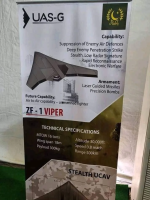
According to this leaflet here, it has no mention of the JF-17. It seems like a new aircraft. TBH, it might not even be anything beyond the drawing board right now so nothing really concrete.

View attachment 123957
McDonnell Douglas did a lot of R&D in this regard. See their JAST design. An export approved WS-15 would make this deal viable as the PFX.
 
it seems PFX is going to be a fighter similar to KF21

Pakistan appears to be pursuing two distinct fighter jet programs, one focused on a single engine platform and the other on a twin engine design. The J-35A, offered by China, is expected to serve as a stopgap solution until Pakistan’s indigenous PFX fighter jet is ready for production.

Meanwhile, Pakistan continues the JF-17 Block 3 production to strengthen its own fleet and fulfill export commitments to countries like Azerbaijan, Iraq, Bangladesh, and Sudan. Alongside this, Pakistan is actively collaborating with China and Turkey to finalize the design of its next-generation fighters.

The single-engine fighter program is anticipated to be an upgraded version of the JF-17 Block 3, featuring a modified airframe and enhanced capabilities. On the other hand, the twin-engine fighter program is likely to be closely linked to Turkey’s TAI Kaan project, which aims to develop a 5th-generation stealth fighter.

Pakistan’s shift toward twin-engine fighters marks a significant departure from its traditional reliance on single-engine platforms, reflecting its ambition to enhance combat survivability, operational range, and payload capacity. If successfully developed, these programs could reshape Pakistan’s aerial capabilities and strategic posture in the region.
 

Users who are viewing this thread

Back
Top