Secrets of the October War: Saudi pilots on the cusp of a strategic mission

In an atmosphere of war that leaves nothing but its effects, decisions are made behind closed doors at a speed no less than the speed of planes flying over the sea. When the fighting raged in October 1973, it was not only the field arenas that measured the balance of power; secret choices, those made away from the media stage, weighed heavily in the making of the impact.
Within this framework, a risk-taking Saudi military initiative emerged: equipping a limited air force to launch a strike with economic and logistical impact against vital facilities on the other side - a decision that combines a political message with a desire for tactical influence.
Between the Line of Fire and the Supply Lines: The Saudi Strategic Role in 1973
The Kingdom's entry into the October 1973 War was not merely a symbolic stance or a passing political solidarity; rather, it was an effective presence at both the military and diplomatic levels. Saudi units participated directly in the fighting on the Syrian front, engaging in confrontations alongside the Syrian army, while other forces were stationed in Jordan to secure the front and support the allies, making the Kingdom's military role tangible and real on the battlefield.
In the political-economic field, Riyadh led one of the most important battles of the unconventional war: the decision to ban oil exports to the United States and countries supporting Israel. This historic move was not just economic pressure, but rather constituted a direct clash with Washington, and established that the Kingdom was capable of using its strategic tools to change the balance of power outside the battlefield.
Thus, the Saudi role in the October War crystallized on two parallel fronts: the battle front through the participation of forces in Syria and Jordan, and the political and economic front through the oil weapon, In a message, that stressed that Riyadh is an active part of the war equation, not just a supporter on the sidelines.
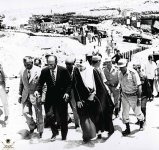 Economic attack: How Saudi Arabia prepared its fighters to strike oil facilities in Eilat
In a moment that seemed to be taken from a tight military scene, an unconventional option was put on the table for the Kingdom to turn the skies into an economic weapon, through an air strike targeting the enemy's vital oil and refining sites. The decision was not random; rather, it was a message that translated the desire to make the war more expensive, and reminded the opponent that the equation of conflict is not limited to the field front alone.
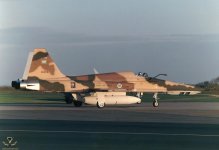
A specific offensive force of ten F-5s was formed, piloted by an elite group of experienced pilots, including Prince Bandar bin Sultan, within the assigned formation. The ammunition division was carefully calculated, with half the force equipped with high-explosive bombs, while the other half was equipped with incendiary bombs. The goal was not merely physical destruction, but rather a dual effect: igniting the oil infrastructure and disrupting the Israeli enemy's refining and supply capabilities.
The preparations were not limited to equipping the fighters, but included a complete support system (precise maintenance, re-supply, fuel filling, and equipping suspension points). The command also prepared a rigorous training program, which was launched from Dhahran Air Base in the Eastern Province, where the pilots practiced low-flying with real simulation at an altitude not exceeding 30 feet above sea level. Briefing conferences were held daily to distribute roles and coordinate work between pilots and ground teams, bringing the scene closer to a fully prepared operations room, waiting for the moment of take-off.
But the moment of implementation did not come in the hours a few hours before take-off, and a clear presidential threat was received from Washington to Cairo stating that the continuation of military operations would be met with direct American intervention. This warning linked the military continuation to immediate and deterrent diplomatic and political consequences, so the Saudi leadership decided to cancel the mission shortly before it began. The cancellation was not the result of a technical defect as much as it was a strategic calculation of the potential damage in the face of an international force Embodying the reality that even the best field plans may be decided by political decision in the international command room before the first shot decides them..
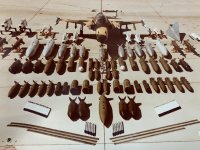 Why oil facilities in Eilat? Clear strategic motives
The selection of targets for the oil and refining facilities category stems from a combination of practical and political strategic motives:
• Disabling refining centers reduces the opponent's ability to supply mechanisms and operations logistically, weakening combat capability in the medium term.
• A direct economic impact on the state structure and exerts internal pressure that may affect political decision-making.
• Creating a symbolic and media shock that indicates that the war goes beyond traditional methods, and that the cost of continuing will rise.
• From a tactical perspective, targeting specific facilities addresses the intention to create media-monitorable disruption without additional ground lines of engagement.
These considerations made oil facilities a target with more than one material dimension; it was as much a target for the economic and political message as it was a tactical target.
In brief:
The Saudi role in the October 1973 War emerged as more profound and complex than simply the decision to ban oil or move some aircraft in the sky. The Kingdom embodied an integrated ability to influence the course of the war across multiple dimensions: political, economic, and military. On the field front, its units were directly involved in protecting the Allies and strengthening defense lines, and on the diplomatic and economic levels, it used its strategic tools to send difficult-to-ignore messages to the major powers.
In the end, the Kingdom's presence was not just a side contribution or a symbolic position, but rather a presence that imposed respect and redrawn the balance of power in the region. Saudi Arabia's message in October 1973 was clear: a state that masters the arts of power does not stop at the borders of battle, but extends to control the game from behind the scenes, combining the shot, political decision, and economic pressure into one equation that is difficult to ignore.
Source
The Prince's Book



 400 armored vehicles


