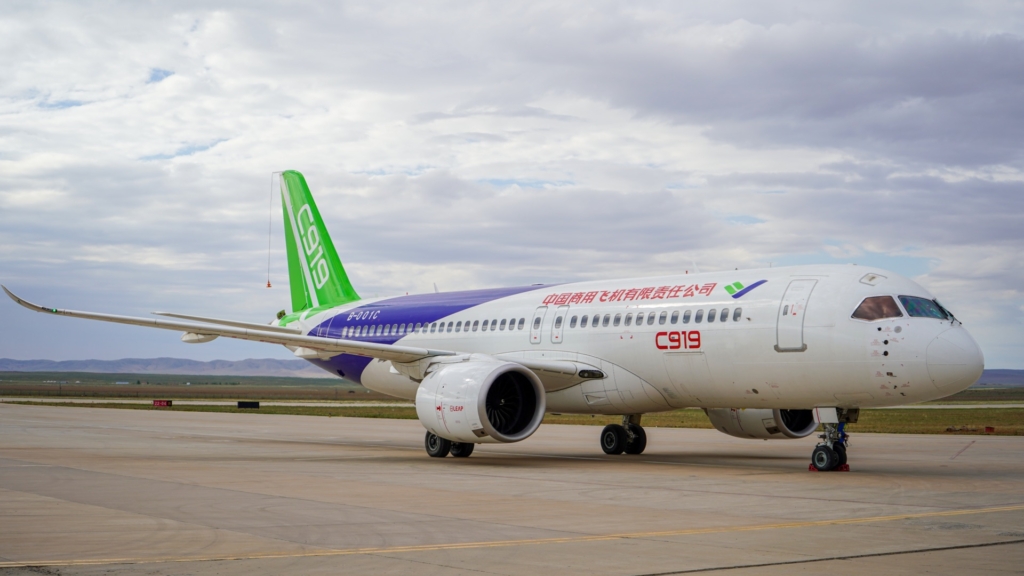
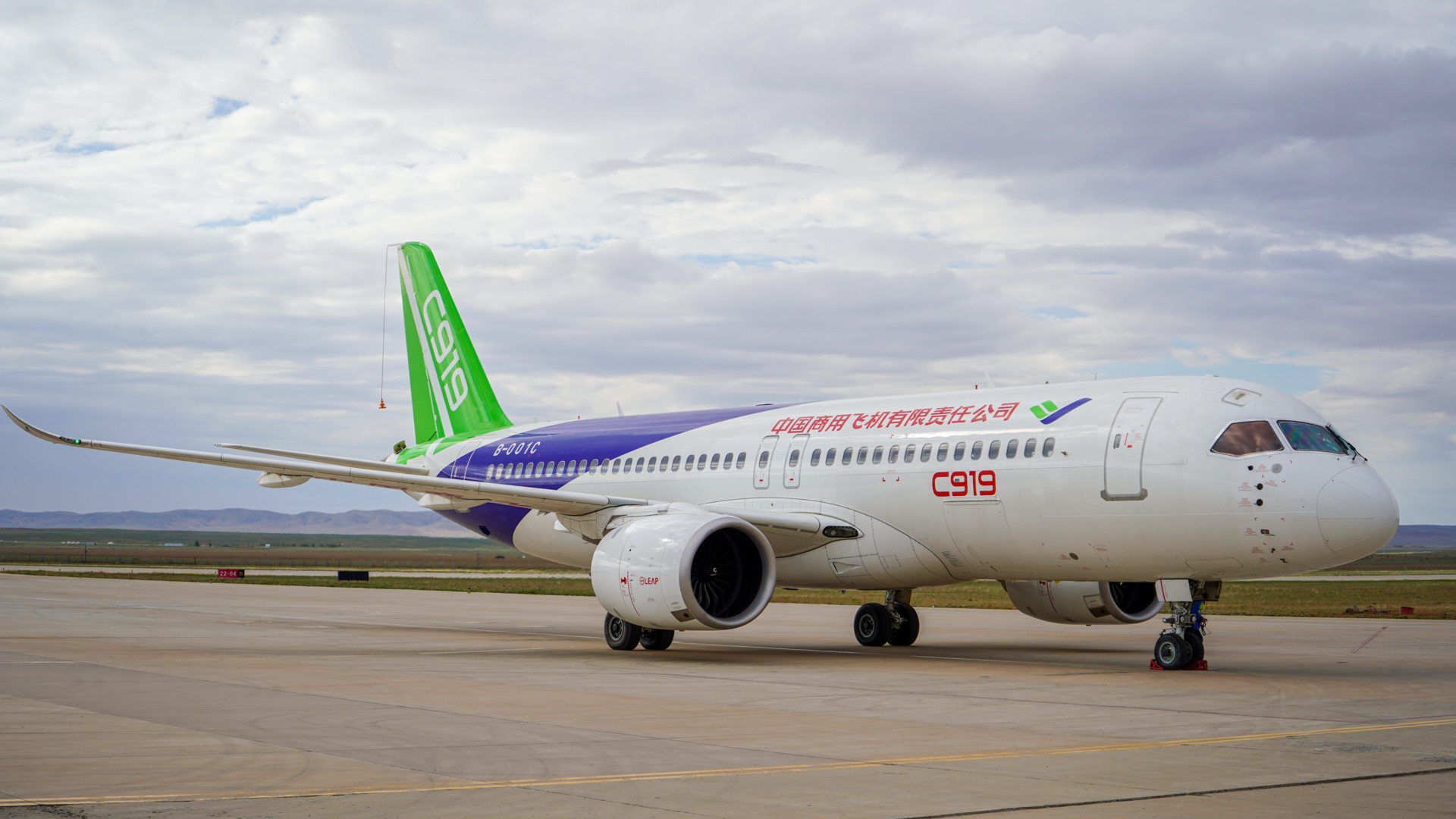
Chinese-made aircraft C919 marks two years of commercial operations, exceeds 2 million passengers

No, you have not. If other countries do not want to buy the C919 because that would restrict their engagement in the US market, that DOES NOT qualify as somehow the US government prevented them from buying the C919. Market forces, look it up.

Do you not understand how pressure and market manipulation work?

Holy shit, you have to be next level naive to believe that the decisions of the biggest and most powerful economy and military in the world don't have global ramifications.

Also, bad example. That's for domestic flights and its nothing more than rumors. Even if it was confirmed, doesn't change what I'm saying.
 
Do you not understand how pressure and market manipulation work?
Better than you do considering I am in semicon.

Is it true that Air Karachi is considering the C919? If true, then holy shid is right, you just destroyed your own argument. :LOL:

 
Better than you do considering I am in semicon.

Is it true that Air Karachi is considering the C919? If true, then holy shid is right, you just destroyed your own argument. :LOL:
Not even close.

You literally ignored my comment where I address this very thing.

Domestic flights are not the same as international flights, and most countries don't need domestic jets due to their relatively small size.

Besides, it's nothing more than an unconfirmed rumor.

You are continuing to show your ignorance.

Bro, I respect you when it comes to military matters and technical data when it comes to airplanes, but leave geopolitics alone, it's not your strong suit.
 
...but leave geopolitics alone, it's not your strong suit.
As if that is your 'strong suit'. Stop flattering yourself. The bottom line is that you got no case, pal. We do not hear your argument about the C919 from China, do we? Why not? Because the Chinese knows your argument is pure bunkum.
 
As if that is your 'strong suit'. Stop flattering yourself. The bottom line is that you got no case, pal. We do not hear your argument about the C919 from China, do we? Why not? Because the Chinese knows your argument is pure bunkum.
It isn't my strong suit, but its stronger than yours.

I made my case, you however have not.

As for the argument coming from China, it's because they're busy with fulfilling orders domestically first. They have a huge backlog, and don't care as of this moment.
 
Looks like you do not know how to research despite given clues. The issue is that each country has their own safety standards and if the C919 or Porsche 959 failed to meet those US standards, they do not get to enter, even if they met their respective country's safety standards.

The bottom line is still the same, that there is nothing preventing any country from buying the C919 and fly it in their own airspace. Just do not complain if the US does not allow because of our safety standards.

I can simplify this debate. Couldn't stop myself from jumping in, emotions going raw here :ROFLMAO:

Every major country or region, has engineering and safety standards. In order for C-919 or anything else, like a new Airbus-X or Embraer-X, to be allowed to operate in the US airspace, the aircraft, it's systems and safety equipment and procedures need to be designed per certain specifications. Namely there are 3. I won't name 1 as it's not really public knowledge. The two others are ANSI and ISO based. European union has their own.

You also may want to note, since other neighboring countries in North America, don't have the advance engineering base like the US, so they borrow the same standards like the US has built. So C-919 might see issues in Canada and other countries too. If it doesn't meet the standards. It may be until these issues are resolved as the design base is similar.
 
It isn't my strong suit, but its stronger than yours.
That is odd considering I have military experience which always tie in with geopolitical issues. So what is your experience in geopolitics that you said made you more 'informed' than I?

As for the argument coming from China, it's because they're busy with fulfilling orders domestically first. They have a huge backlog, and don't care as of this moment.
Nothing wrong with that especially when the Xi-PC ordered Chinese airlines to fly the C919.
 
That is odd considering I have military experience which always tie in with geopolitical issues. So what is your experience in geopolitics that you said made you more 'informed' than I?
Military experience doesn't always tie in with geopolitics.

Also, it's the fact that I'm politically active, have family that are politically active, and I have literally taken college courses to better my understanding of the world.
Nothing wrong with that especially when the Xi-PC ordered Chinese airlines to fly the C919.
Missing the point.
 
I think this thread has gone as far as it can go and now is in the stage of people simply copy pasting their old posts :D
 
This signals the end of this debate.
It does, because if you can't except that there is no such thing as an absolute, then there's no point in arguing further.
 
Thread has reached its conclusion with participants now copy pasting their old responses.
 

China’s COMAC C919 edges closer to Europe as EASA begins flight evaluations

European safety officials have carried out test flights of China’s C919 in Shanghai, a technical milestone that underscores both COMAC’s ambitions and the slow, methodical reality of Western aircraft certification.

Jay Menon
January 19, 2026

COMAC-C919-chinese-narrowbody-aircraft-1024x576.jpeg


European aviation regulators have begun flight evaluations of China’s COMAC C919 narrowbody jet in Shanghai, marking a quiet but significant step in the aircraft’s long and uncertain path towards Western safety certification.

The development was first reported by China’s Global Times and subsequently confirmed by Reuters, which quoted the European Union Aviation Safety Agency (EASA) as saying it had conducted test flights as part of its ongoing “validation activities” for the aircraft.

According to sources familiar with the programme, two EASA test pilots carried out verification flights on a C919 operating from Shanghai Pudong International Airport in November, close to the aircraft’s final assembly line.

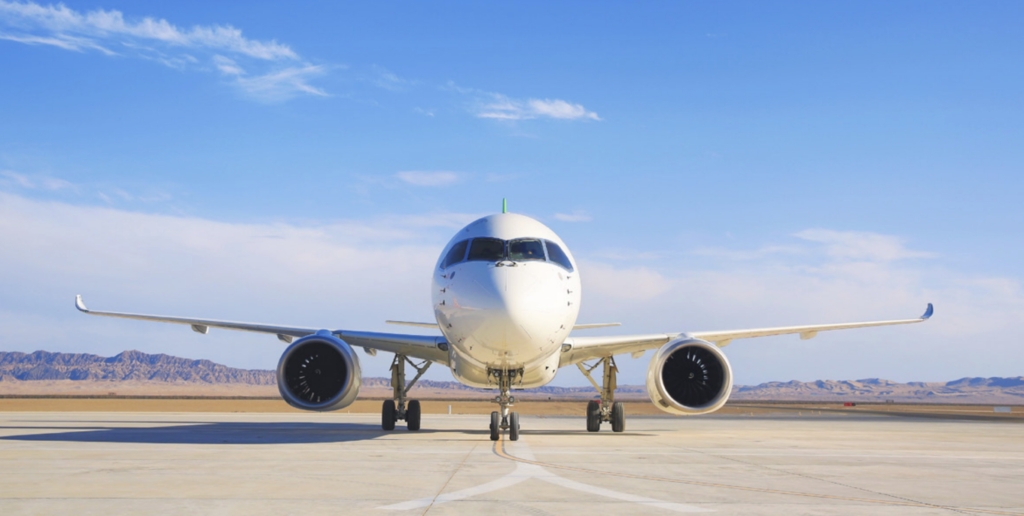
A front of view of the COMAC C919 as AirAsia shows interest
Photo: COMAC

The flights form part of a broader technical engagement between EASA and the Commercial Aircraft Corporation of China (COMAC), as Beijing seeks to position the C919 as a credible alternative to Airbus and Boeing in the global single-aisle market.

EASA has not commented on the outcome of the flights, but confirmed that in-flight evaluations are a standard element of the validation process. Certification by Europe’s safety regulator would be a prerequisite for the aircraft to be operated by European carriers and, more broadly, by airlines in jurisdictions that recognise EASA approvals.

EASA certification remains a major hurdle for COMAC’s C919​

The C919, China’s first domestically developed jet built to international airworthiness standards, entered commercial service in May 2023 with China Eastern Airlines.

Since then, it has operated exclusively with Chinese airlines, apart from a limited charter appearance in Hong Kong in 2024.

COMAC has been open about its ambition to take the aircraft overseas, but Western certification has proved far more complex than originally anticipated. Speaking in April last year, EASA executive director Florian Guillermet said European validation of the C919 was likely to take between three and six years, pushing any approval into the 2028–2031 timeframe.

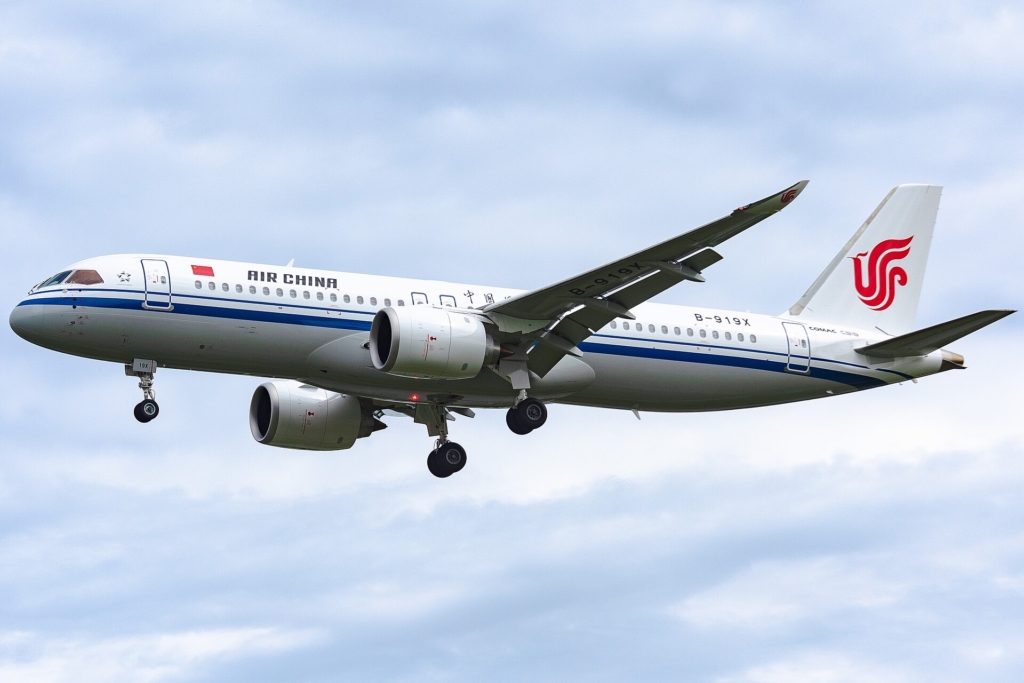
Air China COMAC C919 which is being assessed by EASA
Photo: N509FZ / Wikimedia

That timeline places the C919 at a structural disadvantage. By the time it enters Western markets, it would be competing against the Airbus A320neo and Boeing 737 MAX families more than a decade after those aircraft entered service, and without the benefit of a mature global support network.

Guillermet has previously stressed that while the C919 uses several Western systems, including the CFM International Leap-1C engine, closely related to the Leap-1A on the A320neo, EASA must still independently assess the aircraft’s overall design, system integration and safety architecture.

Under the EU–China Bilateral Aviation Safety Agreement, which came into force in 2020, European validation is theoretically streamlined. In practice, EASA officials have acknowledged that the process is far more demanding when dealing with a manufacturer that lacks a long track record of certified commercial aircraft.

African regulators explore C919 certification without EASA approval​

While Europe remains years away from a decision, COMAC has begun probing interest in markets more willing to move independently.

In September last year, Nigeria’s civil aviation authority confirmed it was reviewing the C919’s certification file for potential domestic use, a move that could represent COMAC’s first meaningful foothold outside China.

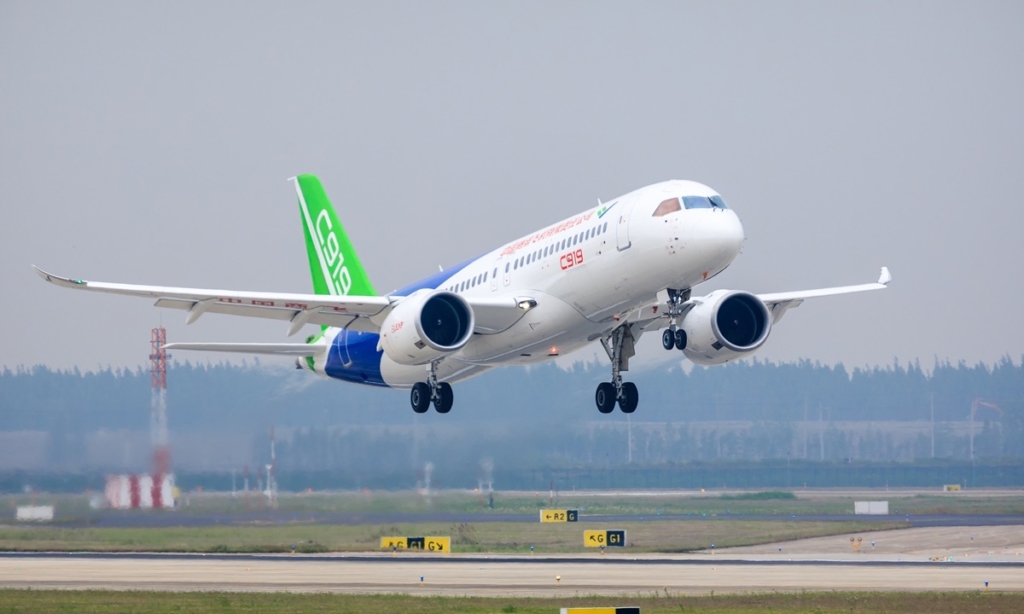
COMAC C919 of China Eastern
Photo: COMAC
Nigeria, Africa’s largest aviation market, operates Airbus and Boeing narrowbodies primarily and has never certified a modern Chinese jetliner. The review has drawn attention because it is proceeding without validation from either the US Federal Aviation Administration or EASA.

COMAC has pitched Nigerian carriers with lease packages, pilot training, maintenance support and the promise of a regional spare-parts hub. Industry figures have welcomed the prospect of additional choice but remain cautious, citing the troubled history of earlier Chinese aircraft such as the MA60 turboprop, which suffered from parts shortages and weak after-sales support across Africa.

 
To be fair, a lot of this is political, rather than safety.

The US is already pissed off that AirBus has gained a lot of share in the global market due to Boeing's incompetence, and they're not about to risk losing more share to China by giving them a safety pass.

Its in the USA's interest to continue repeating the "China can't produce safe and efficient products" mantra to the world...

...and its not just jets, it's cars too.
Sticking with the technical aspects then, the Chinese should seek to have their aircraft and automobiles certified as meeting the applicable US safety standards. I've seen a number of vehicles during travels overseas that would be appropriate for US consumers yet, they don't meet US safety standards.

When it comes to safety standards, the Chinese should adhere to the same standards as their other competitors if they wish to compete in US markets.
 

Users who are viewing this thread

Pakistan Defence Latest

Country Watch Latest

Latest Posts

Back
Top