BR Research
July 10, 2025
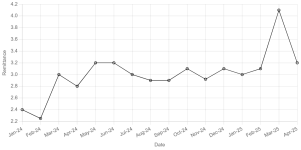
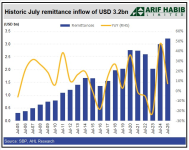
In fiscal year 2024–25, Pakistan witnessed a historic surge in remittance inflows, which climbed to an all-time high of $38.3 billion, marking a 26–27 percent increase compared to the $30.3 billion received in FY24.
This robust growth not only exceeded earlier projections but also provided a critical buffer for the country’s balance of payments.
On average, monthly remittances reached $3.19 billion, significantly up from $2.52 billion the previous year. These inflows played a vital role in stabilizing Pakistan’s external account, contributing to a current account surplus for the first time in over a decade. Moreover, they helped ease inflationary pressures and supported a relatively stable exchange rate.
June 2025 capped the fiscal year with inflows totalling $3.406 billion, a year-on-year rise of nearly 8 percent from June 2024. However, this figure represented a month-on-month decline of around 7.5–8 percent from the peak in May 2025.
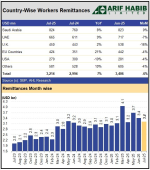
Country-level data shows that Saudi Arabia contributed $823 million, the UAE $717 million, and the UK $538 million in June. Notably, remittances from the United States declined 13 percent year-on-year, while inflows from the European Union rose sharply by 34 percent. While Gulf countries continued to dominate the remittance landscape, the notable rise from EU countries helped diversify the sources.
This shift reflects changing diaspora patterns and potentially more effective formal channelling of funds from Europe. The drop from the US may be attributed to softer economic conditions or seasonal variations.
Several structural factors underpinned this record-breaking year. The government’s Pakistan Remittance Initiative (PRI), coupled with the increased adoption of digital transfer systems like Raast, played a vital role in formalizing flows and reducing reliance on informal channels.
A relatively stable rupee, an improved macroeconomic environment, and a continued boom in Gulf labour markets all contributed to the uptick.
Additionally, remittance incentives and relaxed regulatory frameworks encouraged overseas Pakistanis to prefer formal routes. With increased demand for Pakistani labour in the Middle East and broader economic recovery, remittance flows remained resilient throughout the year.
In regional comparison, countries like Bangladesh, India, and the Philippines have adopted targeted strategies to attract and sustain remittance inflows. Bangladesh, for example, provides a cash incentive on remittances sent through formal banking channels, which has significantly shifted flows away from informal hundi/hawala systems. India leverages its vast, diversified diaspora with proactive consular engagement, digital transfer systems like Unified Payment Interface (UPI), and tax benefits for non resident Indians. The Philippines, through its Overseas Workers Welfare Administration (OWWA), offers structured reintegration programs and savings schemes that encourage Filipino workers abroad to invest back home. These countries also maintain stronger coordination between central banks, labour ministries, and overseas missions to ensure timely resolution of issues faced by their diaspora.
Pakistan, while making progress with initiatives like Raast and PRI, still lags in diaspora engagement strategies.
Expanding financial literacy among migrant workers, strengthening bilateral labour agreements, and offering more investment-linked remittance products could help address this.
For FY26, the target for remittances has been set at $39.4 billion, underscoring the government’s expectation to sustain this momentum. However, some risks include including potential slowdowns in Gulf economies, geopolitical shifts, and domestic policy inconsistency.
Maintaining remittance growth will require continued facilitation through policy incentives, improved digital infrastructure, and stronger diaspora engagement.
More importantly, the challenge lies in channelling these inflows toward long-term investment and development goals rather than mere consumption, thereby transforming remittances from a financial buffer into a catalyst for inclusive economic transformation.