Netanyahu pushes for Palestinians' departure from Gaza as Egypt seeks 60-day truce
Israeli Prime Minister Benjamin Netanyahu on Tuesday said Palestinians in Gaza should be permitted to leave the enclave, remarks critics see as an effort to push residents out amid an intensifying military campaign. His remarks came as Egypt said it was working hard for a two-month ceasefire.
Issued on: 13/08/2025 - 02:21
I
Israel's Prime Minister
Benjamin Netanyahu on Tuesday revived calls to "allow" Palestinians to leave the
Gaza Strip, as the military prepares a broader offensive in the territory.
Past calls to resettle Gazans outside of the war-battered territory, including from US President
Donald Trump, have sparked concern among Palestinians and condemnation from the international community.
Netanyahu defended his war policies in a rare interview with Israeli media, broadcast shortly after
Egypt said Gaza mediators were leading a renewed push to secure a 60-day truce.
The premier told Israeli broadcaster i24NEWS that "we are not pushing them out, but we are allowing them to leave".
"Give them the opportunity to leave, first of all, combat zones, and generally to leave the territory, if they want," he said, citing refugee outflows during wars in Syria, Ukraine and Afghanistan.
Israeli Prime Minister Benjamin Netanyahu on Tuesday said Palestinians in Gaza should be permitted to leave the enclave, remarks critics see as an effort to push residents out amid an intensifying military…

www.france24.com
Israel in talks with South Sudan to resettle Palestinians from Gaza, sources say
Egypt is deeply opposed to plans to transfer Palestinians out of Gaza, with which it shares a border, fearing an influx of refugees into its own territory.
Israel is reportedly in discussions with South Sudan about the possibility of resettling Palestinians from Gaza to the war-torn East African country, part of a wider effort by Israel to facilitate mass emigration from the territory largely left in ruins by the 22-month offensive against Hamas.
Six people familiar with the matter confirmed to the AP news agency that talks have taken place, although it is unclear how far they have advanced.
Israeli Prime Minister Benjamin Netanyahu says he wants to realise US President Donald Trump's vision of relocating much of Gaza’s population through what Netanyahu refers to as "voluntary migration."
Israel has floated similarly resettlement proposals with other African nations, including Sudan and Somalia.
By
Gavin Blackburn
Published on 12/08/2025 - 20:30 GMT+2 •Updated 20:31
Share this article
Comments
Egypt is deeply opposed to plans to transfer Palestinians out of Gaza, with which it shares a border, fearing an influx of refugees into its own territory.
Israel is reportedly in discussions with South Sudan about the possibility of resettling Palestinians from Gaza to the war-torn East African country, part of a wider effort by Israel to facilitate mass emigration from the territory largely left in ruins by the 22-month offensive against Hamas.
Six people familiar with the matter confirmed to the AP news agency that talks have taken place, although it is unclear how far they have advanced.
Israeli Prime Minister Benjamin Netanyahu says he wants to realise US President Donald Trump's vision of relocating much of Gaza’s population through what Netanyahu refers to as "voluntary migration."
Israel has floated similarly resettlement proposals with other African nations, including Sudan and Somali
Palestinians, rights groups, and much of the international community have rejected the proposals as a blueprint for forcible expulsion in violation of international law.
oto
By
Gavin Blackburn
Published on 12/08/2025 - 20:30 GMT+2 •Updated 20:31
Share this article
Comments
Egypt is deeply opposed to plans to transfer Palestinians out of Gaza, with which it shares a border, fearing an influx of refugees into its own territory.
Israel is reportedly in discussions with South Sudan about the possibility of resettling Palestinians from Gaza to the war-torn East African country, part of a wider effort by Israel to facilitate mass emigration from the territory largely left in ruins by the 22-month offensive against Hamas.
Six people familiar with the matter confirmed to the AP news agency that talks have taken place, although it is unclear how far they have advanced.
Israeli Prime Minister Benjamin Netanyahu says he wants to realise US President Donald Trump's vision of relocating much of Gaza’s population through what Netanyahu refers to as "voluntary migration."
Israel has floated similarly resettlement proposals with other African nations, including Sudan and Somalia.
Palestinians, rights groups, and much of the international community have rejected the proposals as a blueprint for forcible expulsion in violation of international law
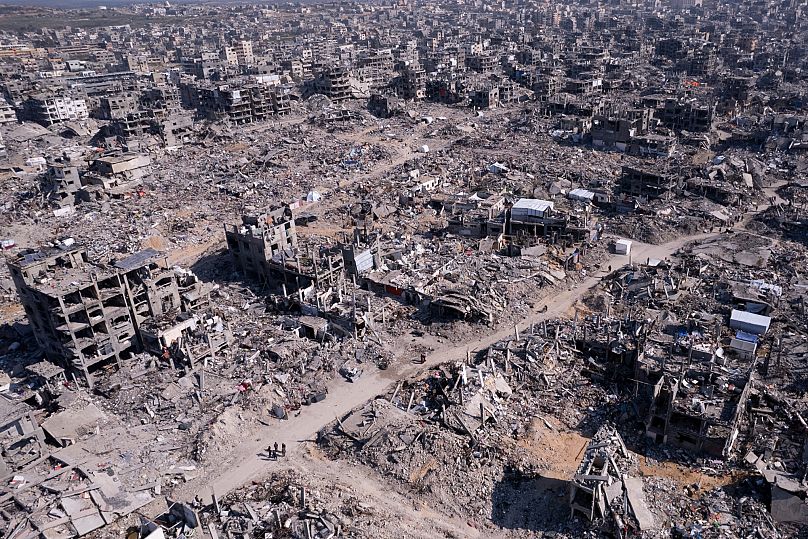
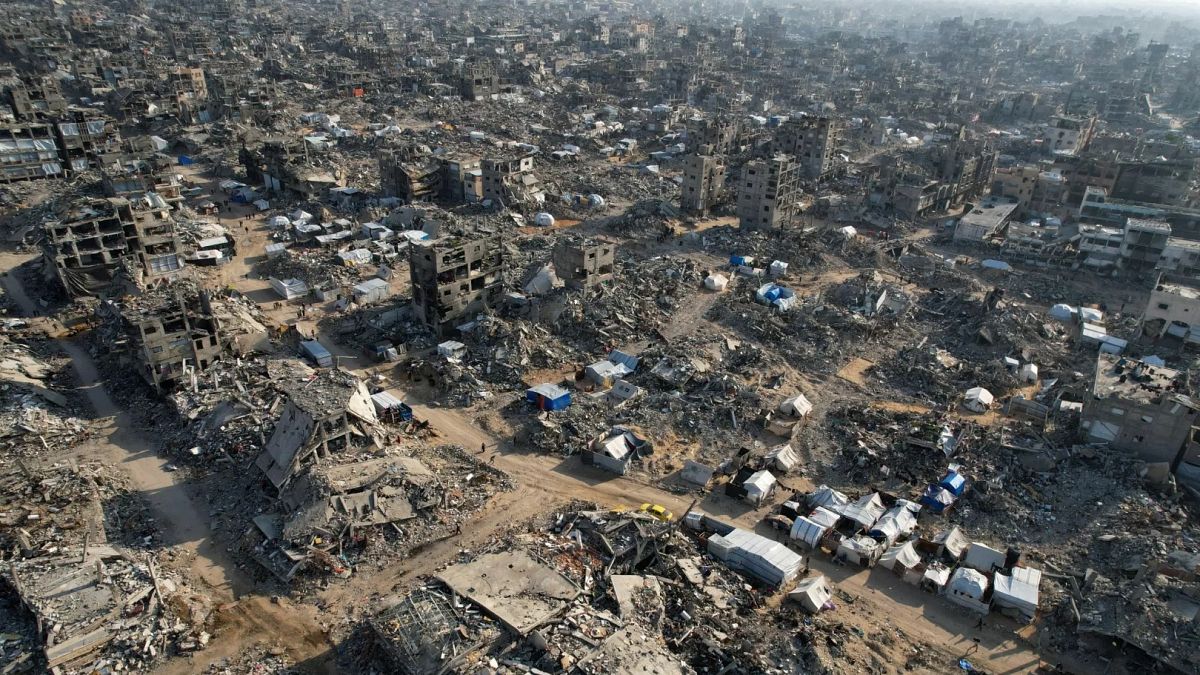
by a drone shows tents amidst the destruction caused by the Israeli air and ground offensive in Jabaliya, 29 January, 2025
Israel's Foreign Ministry declined to comment and South Sudan's foreign minister did not respond to questions about the talks.
Four additional officials with knowledge of the discussions confirmed talks were taking place on condition of anonymity because they were not authorised to discuss them publicly.
Two of the officials, both from Egypt, told AP they've known for months about Israel's efforts to find a country to accept Palestinians, including its contact with South Sudan. They said they've been lobbying South Sudan against taking the Palestinians.
Egypt is deeply opposed to plans to transfer Palestinians out of Gaza, with which it shares a border, fearing an influx of refugees into its own territory.
From one conflict zone to another
Many Palestinians may want to temporarily leave Gaza to escape the war and a hunger crisis bordering on famine.
But they have roundly rejected any permanent resettlement from what they see as an integral part of their national homeland.
They fear that Israel will never allow them to return and that a mass departure would allow it to annex Gaza and re-establish Jewish settlements there, as called for by far-right ministers in the Israeli government.
Still, even those Palestinians who want to leave are unlikely to want to go to South Sudan, among the world's most unstable and conflict-ridden countries.
South Sudan has struggled to recover from a civil war that broke out after independence, and which killed nearly 400,000 people and plunged pockets of the country into famine.
The oil-rich country is plagued by corruption and relies on international aid to help feed its 11 million people, a challenge that has only grown since the Trump administration made sweeping cuts to foreign assistance.
A peace deal reached seven years ago has been fragile and incomplete and the threat of war returned when the main opposition leader Riek Machar was placed under house arrest earlier this year.
Palestinians in particular could find themselves unwelcome. The long war for independence from Sudan pitted the mostly Christian and animist south against the predominantly Arab and Muslim north.
Yakani, of the civil society group, said South Sudanese would need to know who is coming and how long they plan to stay, or there could be hostilities due to the "historical issues with Muslims and Arabs."
"South Sudan should not become a dumping ground for people," he said. "And it should not accept to take people as negotiating chips to improve relations."
Egypt is deeply opposed to plans to transfer Palestinians out of Gaza, with which it shares a border, fearing an influx of refugees into its own territory.

www.euronews.com