


Vietnam India relationship is good. the company has big plans. I think if this adventure succeeds many other Viet tech companies will follow.interesting. Hopefully we will see intersting oprions from them.
Navigation
Install the app
How to install the app on iOS
Follow along with the video below to see how to install our site as a web app on your home screen.
Note: This feature may not be available in some browsers.
More options
Style variation
You are using an out of date browser. It may not display this or other websites correctly.
You should upgrade or use an alternative browser.
You should upgrade or use an alternative browser.
India Economy Thread
- Thread starter indushek
- Start date
More options
Who Replied?
Pakistani Dragon
Elite Member


Why? Is labour becoming expensive in Vietnam?Vietnam India relationship is good. the company has big plans. I think if this adventure succeeds many other Viet tech companies will follow.
mostly driven by India big market and tech talents. low salaries are not the motivation.Why? Is labour becoming expensive in Vietnam?
冖_冖
Registered Member

China's Alibaba to exit India's Eternal via block deal, CNBC-Awaaz reports
August 6, 20258:25 PM GMT+8Updated 14 hours agoAug 6 (Reuters) - China's Alibaba Group is likely to exit India's Eternal (ETEA.NS), opens new tab in a block deal valued at 53.75 billion rupees ($613 million), CNBC-Awaaz reported on Wednesday, citing sources.
Alibaba's unit Antfin Singapore, which had a 2.08% stake in Eternal as of June-end, will offload all of it at a floor price of 285 rupees, the report said.


nahtanbob
Elite Member



Apple's iPhone manufacturing plan hit by Trump doubling tariffs on India
Apple's iPhone production shift to India has been hit by a doubling of tariffs, as President Donald Trump hammers the country for buying Russian oil.
 appleinsider.com
Apple's iPhone manufacturing plan hit by Trump doubling tariffs on India

Yasser76
Elite Member
Trump tariffs threaten Narendra Modi’s ‘Make in India’ drive
Please use the sharing tools found via the share button at the top or side of articles. Copying articles to share with others is a breach ofFT.com T&Cs and Copyright Policy. Email [email protected] to buy additional rights. Subscribers may share up to 10 or 20 articles per month using the gift article service. More information can be found here.
https://www.ft.com/content/7b22c7d5-5479-47bb-be6c-475fad9a16c5
Chris Kay and Krishn Kaushik in Mumbai and Andres Schipani in New DelhiPublished4 HOURS AGO50Print this pageAfter Donald Trump announced punishing tariffs totalling over 50 per cent on Indian imports, big manufacturers in the world’s most populous country were deluged with anxious calls from investors and US clients.Gokaldas Exports, a garment maker that generates half its revenues exporting from India to the US, where it supplies retailers including Walmart, Gap and Abercrombie & Fitch, said customers were asking if it could shift production elsewhere.“It’s been insane — at 50 per cent tariff there is no business to be done,” said Sivaramakrishnan Ganapathi, the managing director of Gokaldas. “In the interim, brands are saying they’ll scale down their sourcing from India . . . they have options to go to Vietnam, Bangladesh, Sri Lanka.”A broad section of Indian industry is in panic mode after the US president last Wednesday announced an additional 25 per cent rate on the country’s imports to be levied from August 27 on top of a 25 per cent duty imposed earlier this month.Unless New Delhi can strike a deal with Washington, crucial sectors could be decimated, jeopardising Prime Minister Narendra Modi’s “Make in India” push to turn the country into a manufacturing supply chain alternative to China.Trump, who has previously denounced India as a “tariff king”, blamed New Delhi’s purchases of Russian weapons and oil for the additional rate, which puts at risk India’s largest export market, worth $87bn in the year to the end of March.Some big-ticket export categories such as pharmaceuticals and smartphones are exempt for now from the US tariffs and may face separate levies. But rating agency Moody’s has warned that if the 50 per cent rate sticks beyond 2025, the yawning tariff gap with the rest of Asia would “severely curtail” India’s manufacturing ambitions and even prompt some foreign direct investors to pull out of the country.The 50 per cent rate would put US tariffs on Indian imports on a par with Brazil and much higher than China’s 30 per cent and Vietnam’s 20 per cent.Pratik Patel, chair of Jash Engineering, an Indore-based manufacturer of water systems equipment that generates more than a third of revenues in the US, told analysts that the tariff uncertainty was its “biggest problem today”.“This puts a lot of pressure on the orders which we have already taken from America. We are talking to our clients,” he said.Economists at Nomura said the announced tariffs would be “akin to a trade embargo” that could devastate smaller businesses in thin-margin sectors, undermining India’s drive to integrate more deeply into global supply networks.Ajay Srivastava, a trade policy expert with the Global Trade Research Initiative in New Delhi, said the worst-hit export sectors, including apparel, jewellery, carpets and shrimp, could see US sales fall 50-70 per cent.The tariff “will essentially cut off most Indian exports to the US”, said Wendy Cutler, vice-president of the Asia Society Policy Institute and a former deputy US trade representative.Some Indian companies were under strain even before Trump imposed the extra 25 per cent tariff last week.“Tariff-related uncertainty is definitely something that nobody has ever experienced before,” Amit Kalyani, vice-chair of automotive components and armaments manufacturer Bharat Forge, told analysts just before the US president announced the additional rate.Bharat Forge was “engaged with our customers in finding a resolution”, he said.Sudhir Sekhri, chair of India’s Apparel Export Promotion Council, said the tariffs could cost the sector $5bn in lost sales over the next seven months, equivalent to about half of apparel and textile exports to the US in the 2023-24 financial year.Trump’s tariffs are likely to hit India’s apparel sector particularly hard © Amit Dave/Reuters“The impact would be tremendous,” he said. “We believe that these tariffs are not sustainable, and they do not make any economic sense either.”Modi has not commented on whether he might reduce or stop oil imports from Russia to appease Trump. But he has insisted that India would “never compromise on the interests of farmers, fishermen and dairy farmers”, signalling a tough stance on India’s highly protected agricultural markets, a sticking point in talks with Washington.India’s economy, the fastest-growing among major nations, is less reliant on exports than many Asian peers, insulating it somewhat from US trade actions.Despite high-profile “Make in India” investments from companies such as Apple, manufacturing’s share of GDP has remained stuck at about 14 per cent since Modi took power in 2014, well short of the 25 per cent target he set then for 2025.That may partly explain why Indian markets have reacted relatively calmly to the new tariffs. One Mumbai banker said many investors saw them as “a negotiating tactic”. Another believed an agreement to avert them would be reached in the crucial final week of August.India Business BriefingThe Indian professional’s must-read on business and policy in the world’s fastest-growing big economy. Sign up for the newsletter hereThe US tariffs presented “near-term headwinds” and companies would now need to explore new markets, said Shradha Suri Marwah, president of the Automotive Component Manufacturers Association of India, which represents an industry that sends 27 per cent of its exports to the US.Richard Rossow, chair on India and emerging Asia economics at the Center for Strategic and International Studies in Washington, said Indian manufacturers “will attempt to diversify their export markets”.“Even if we find a pathway through the current trade travails, such tantrums will probably be an ever-present part of US policy for the remaining three and a half years of the Trump administration — and perhaps beyond,” Rossow said.RecommendedNews in-depthIndian politics & policy‘Never compromise’ or ‘Narendra Surrender’? India’s Modi navigates showdown with USBut Ganapathi at Gokaldas said it would be difficult to swiftly pivot to new markets.“If we try hard, we could do it in two years, but it’ll come at a cost of margin . . . new buyers would typically tend to ask for lower pricing, they will also sense desperation,” he said, adding he hoped India’s government realised shifting to a manufacturing-oriented economy required “good trade relationships”.“The US is and will always remain a large market and if that gets excluded . . . then we do have a humongous problem,” Ganapathi said.

Donald Trump tariffs threaten Narendra Modi’s ‘Make in India’ drive
Manufacturers fear US duties totalling 50% could scupper effort to offer supply chain alternative to China
 www.ft.com
Last edited:

Indos
INT'L MOD

By Chris Kay and Krishn Kaushik in Mumbai, and Andres Schipani in New Delhi
Published: 4 hours ago
Published: 4 hours ago
After Donald Trump announced new tariffs totaling over 50% on Indian imports, major manufacturers in India were flooded with urgent calls from investors and US clients.
Gokaldas Exports, a garment maker earning half of its revenue from exports to the US — supplying retailers such as Walmart, Gap, and Abercrombie & Fitch — reported that customers were asking if production could be moved elsewhere.
“It’s been insane — at 50% tariff there is no business to be done,”
said Sivaramakrishnan Ganapathi, Managing Director of Gokaldas.
“In the interim, brands are saying they’ll scale down sourcing from India… they have options to go to Vietnam, Bangladesh, Sri Lanka.”
The announcement follows a previous 25% duty imposed earlier this month. Unless New Delhi can strike a deal with Washington, crucial sectors could face severe losses, undermining Prime Minister Narendra Modi’s "Make in India" initiative to position the country as a manufacturing alternative to China.
Trump, who has called India a “tariff king,” linked the additional tariffs to India’s purchases of Russian weapons and oil. The US is India’s largest export market, worth $87 billion in the year to March. While pharmaceuticals and smartphones are currently exempt, Moody’s has warned that if the 50% rate lasts beyond 2025, the resulting tariff gap with the rest of Asia would severely harm India’s manufacturing ambitions and could prompt foreign investors to leave.
For comparison:
- Brazil – 50%
- China – 30%
- Vietnam – 20%
Industry Reaction
- Pratik Patel, Chair of Jash Engineering (water systems equipment), said the uncertainty is the company’s “biggest problem today,” with existing US orders now under pressure.
- Nomura economists described the move as “akin to a trade embargo” that could devastate small, low-margin businesses.
- Ajay Srivastava of the Global Trade Research Initiative predicted exports in apparel, jewellery, carpets, and shrimp could fall 50–70%.
- Wendy Cutler of the Asia Society Policy Institute said the tariffs could “essentially cut off most Indian exports to the US.”
Some companies were already under strain before last week’s additional tariff.
- Amit Kalyani, Vice-Chair of Bharat Forge, noted ongoing talks with customers to find a resolution.
- Sudhir Sekhri, Chair of the Apparel Export Promotion Council, estimated the sector could lose $5 billion in US sales over the next seven months — about half of 2023–24 apparel and textile exports to the US.
“The impact would be tremendous,” Sekhri said. “We believe these tariffs are not sustainable and make no economic sense.”
Political Context
Modi has not indicated whether India will reduce Russian oil imports to placate Trump. He has maintained that India will “never compromise on the interests of farmers, fishermen, and dairy farmers,” signaling a tough stance on agricultural protections — a sticking point in US–India trade talks.
India’s economy, while the fastest-growing among major nations, is less dependent on exports than many Asian peers. Manufacturing’s share of GDP has stayed around 14% since 2014, far from the 25% target for 2025.
Market Outlook
Despite the announcement, Indian markets have reacted calmly. Some investors see the tariffs as a negotiating tactic, with hopes for a resolution by late August. Industry leaders say companies will need to diversify into new markets.
“Even if we find a pathway through the current trade travails, such tantrums will probably be an ever-present part of US policy for the remaining three and a half years of the Trump administration — and perhaps beyond,” said Richard Rossow of the Center for Strategic and International Studies.
Ganapathi of Gokaldas stressed that shifting to new markets will take time:
“If we try hard, we could do it in two years, but it’ll come at a cost of margin. New buyers typically ask for lower pricing and will sense desperation. The US is and will always remain a large market — if that gets excluded, we have a humongous problem.”
Yasser76
Elite Member
Yasser76
Elite Member
Yasser76
Elite Member
Indian workers fear economic downturn under Trump's tariffs
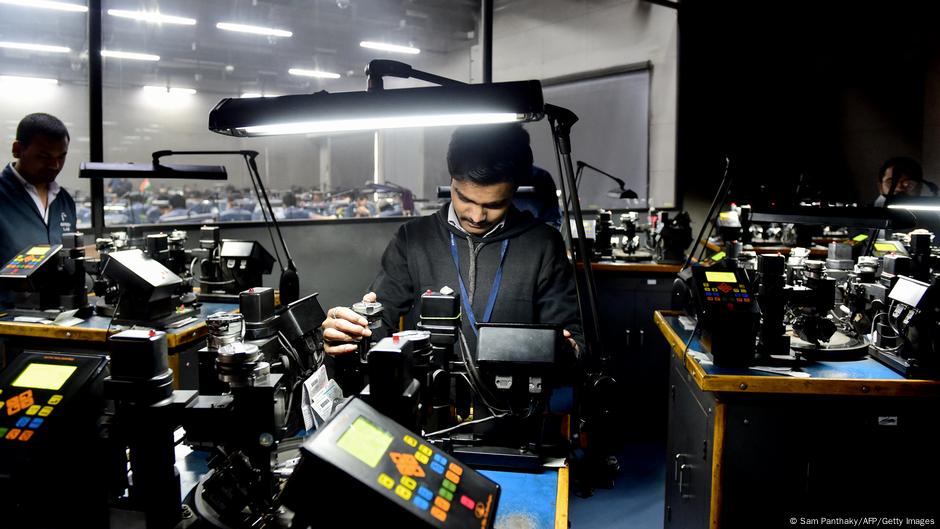
Indian workers fear economic downturn under Trump's tariffs – DW – 08/11/2025
India's labor-intensive textile, jewelry, and auto parts industries are likely to be among the hardest hit by Trump's 50% tariffs.
 www.dw.com
Tejas Spokesman
Banned
SoulSpokesman
Trusted Member
Pakistan Defence Latest


Country Watch Latest
-
-

-

-
 Trump admin approves sale of stealth F-35 fighter jets to Saudi Arabia. (8 Viewers)
- Latest: Maarkhoor
-
Latest Posts
-

-
-
Corruption and economic scandals thread of the caretaker and PDM governments. (6 Viewers)
- Latest: Mobius
-
-