Shanghai’s architecture, food and coffee culture make it a magnet for South Koreans, who are enjoying visa-free entry to China in 2025.

www.scmp.com
SHANGHAI — Koreans have dubbed it the “night owl getaway” — a weekend city of shimmering towers, acclaimed cuisine and a vibrant urban energy found...

www.koreatimes.co.kr
Why Shanghai is now more popular than Hong Kong or Tokyo for young Koreans
Shanghai’s architecture, food and coffee culture make it a magnet for South Koreans, who are enjoying visa-free entry to China in 2025
Published: 7:15am, 17 Sep 2025
Koreans have dubbed it the “night owl getaway” – a weekend city of shimmering towers, acclaimed cuisine and a vibrant urban energy.
In recent months, Shanghai has surpassed Tokyo and Hong Kong as the destination of choice for a new generation of Korean travellers, driven by
China’s visa-free entry during 2025 and a rising appetite for its cuisine and urban life.
According to government statistics, Shanghai welcomed 4.16 million international visitors through mid-August, marking a nearly 38 per cent increase amid a strong rebound in inbound travel.
Koreans accounted for 423,000 arrivals, a surge of 130.7 per cent from last year, making them the city’s largest foreign visitors. Roughly one in four flights from Korean airports to China land in Shanghai.
The surge comes after China announced in November 2024 that Korean travellers could visit for up to 30 days without a visa. Online travel platform Klook reported reservations for Shanghai tours went up by 88 per cent, day tours by 549 per cent and mobility services by 538 per cent during this summer holiday season, especially among solo travellers.
According to Hotels.com, searches by Koreans for accommodation in Shanghai soared 240 per cent year-on-year for the coming Chuseok holiday.
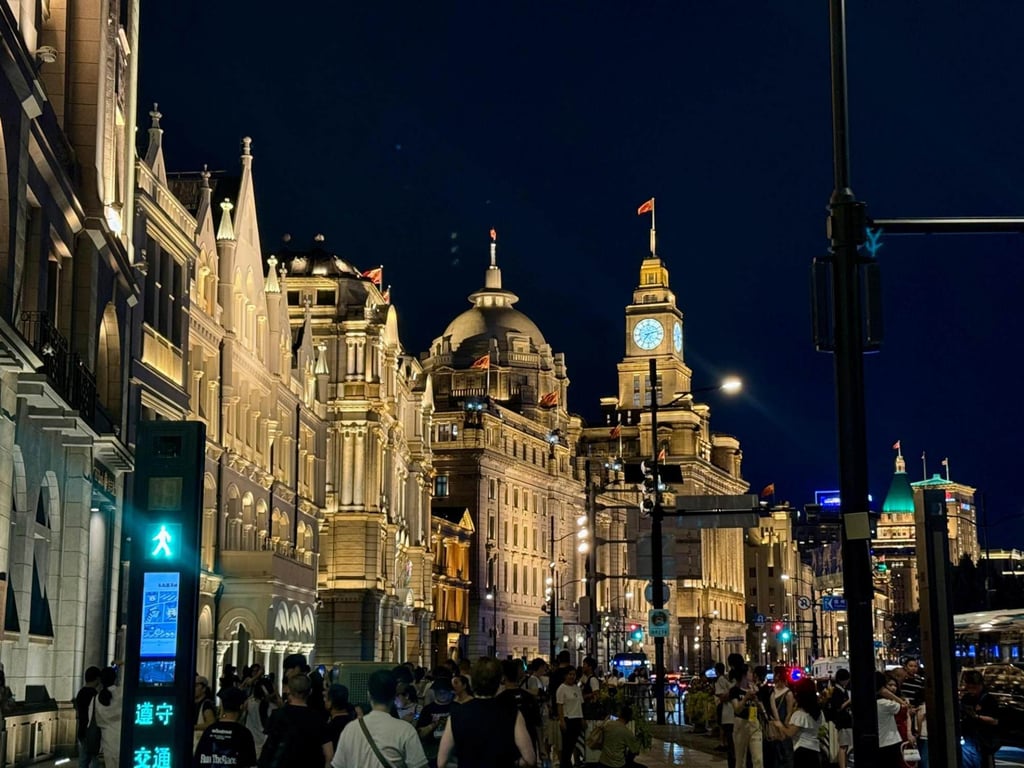
Visitors love the Bund’s photogenic historical buildings. Photo: Lee Hae-rin
For many Koreans, Shanghai holds a deep historical significance. It served as the headquarters of the Korean independence movement from 1919 and was home to the Korean Provisional Government during Japan’s colonial occupation from 1910 to 1945, making it a powerful site of national memory that still resonates with visitors today.
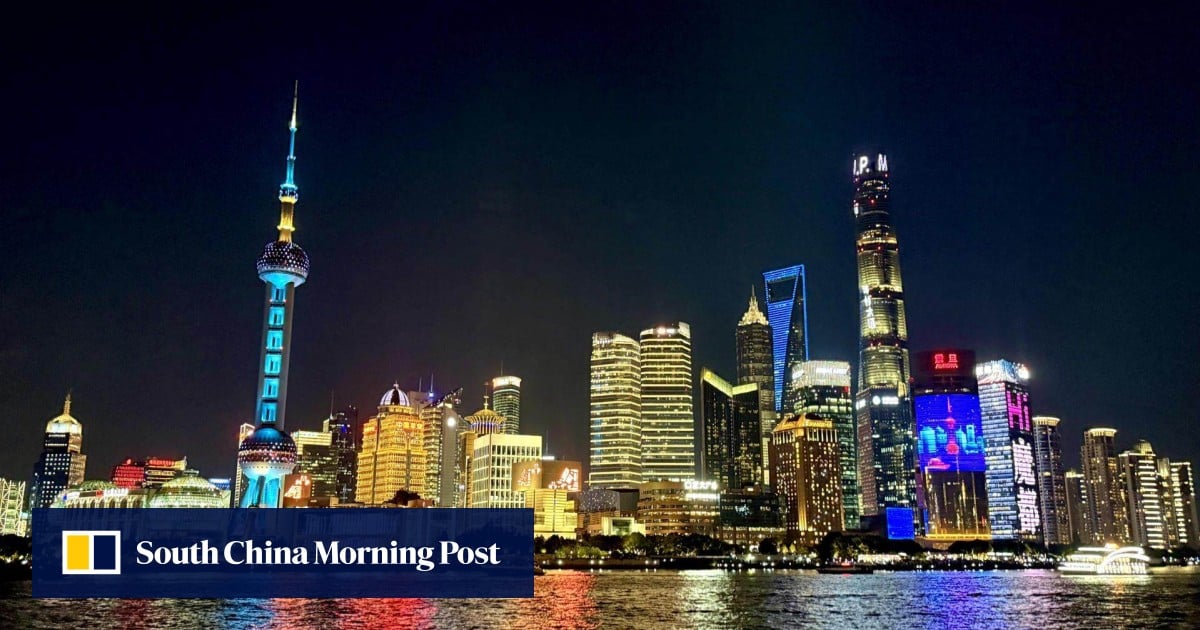
The city’s photogenic skyline, marked by striking European architecture, riverside promenades and a living museum of urban modernity, has been trending on Korean social media.
Local travel guide Song Hao, who leads walking tours through the city’s storied districts, said Shanghai’s character is shaped by its history, showing that its international flair is no accident.
“Walking with me, you will see how Shanghai has developed,” Song said during a recent tour. “The Chinese government leased the land to foreigners, giving them extraterritorial rights. This began in 1845 and lasted almost 100 years. The English, Americans and French each had their own concessions. That’s why the architecture is so eclectic and photogenic – every building has a story from this era.”
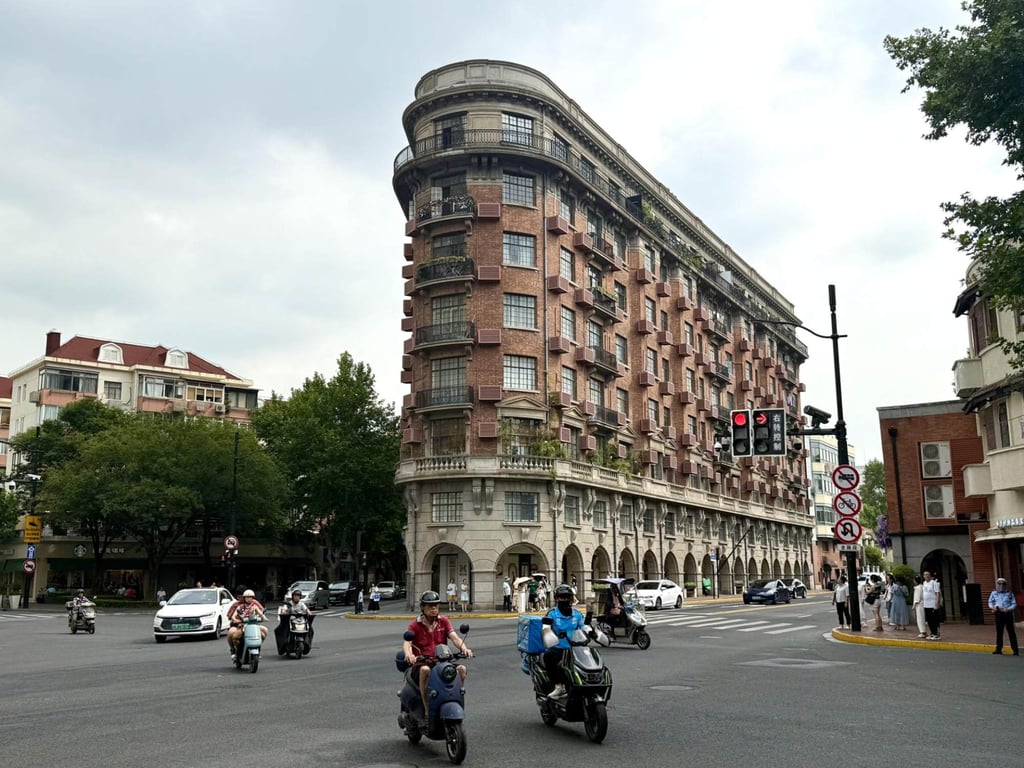
Wukang Mansion in the former French Concession, a neighbourhood famous for its retro brick buildings, elegant tree-lined streets and buzzing cafe culture, is a prime example of the city’s cosmopolitan reputation.
Wukang Mansion, Shanghai’s iconic ship-like landmark, stands at the heart of the historical and vibrant Wukang Road. Photo: Lee Hae-rin
The mansion, originally known as the Normandie Apartments, was completed in 1924 and designed by Hungarian-Slovak architect Laszlo Hudec. Built to house employees of Western companies, its ship-like form and French Renaissance style have made the building an architectural landmark, distinguished by its iconic wedge-shaped facade.
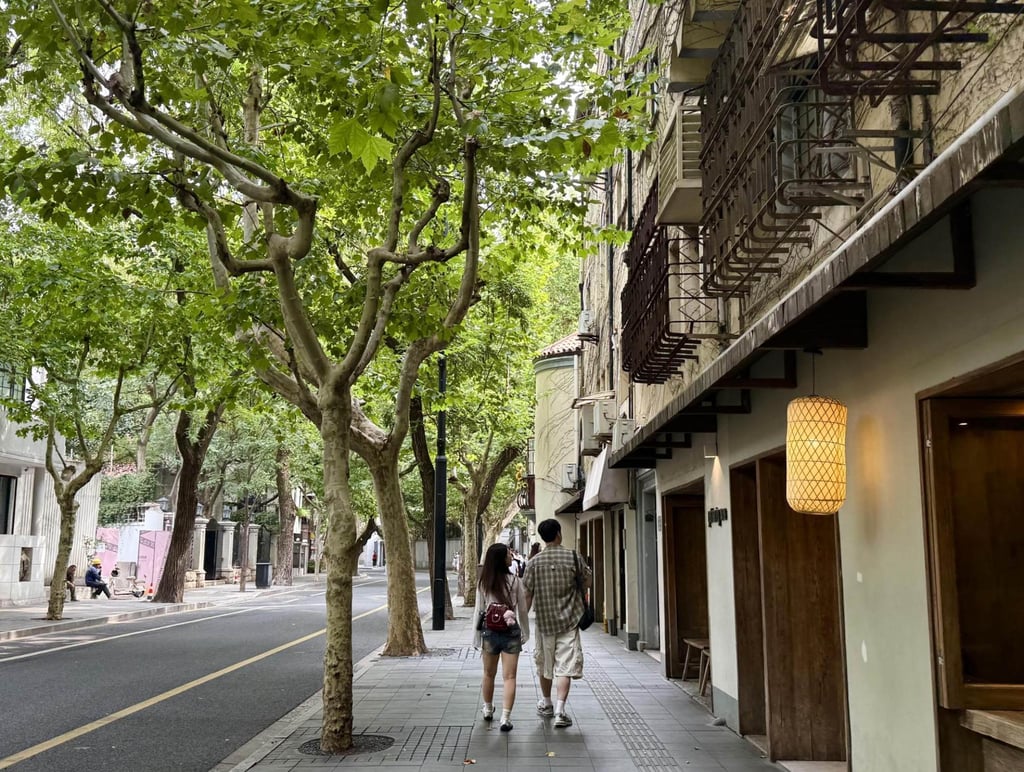
Wukang Road’s charm captivates Korean travellers with its blend of historical elegance and hip urban energy, showcased by a lively strip of local coffee shops and European-style bakeries.
These artisanal coffee shops serve not only excellent coffee but also beautifully crafted, Instagram-worthy drinks, making the neighbourhood a hotspot for social-media-savvy visitors worldwide, Song explained.
The district’s vibrant coffee culture is part of a much wider phenomenon. Shanghai leads the world in the number of coffee shops, boasting 9,115 cafes as of May 2025, and surpassing every other city in both shop density and consumer enthusiasm.
The Bund is Shanghai’s grand riverside promenade, where the city’s story comes alive in its architecture and skyline – a favourite location for Korean travellers seeking photos for social media.
Following the 1842 Treaty of Nanking, foreign banks, trading houses and consulates from nations including Britain, France and the United States emerged along the waterfront, leading to the construction of a string of neoclassical, Beaux-Arts, baroque and art deco buildings that collectively became known as the “billion-dollar skyline”.
Michelle Qiao, a renowned architecture columnist and author, describes the Bund as “not only China’s largest modern Western architectural congregation, but also the largest in far east Asia”.
During its golden era in the 1920s and 1930s, the Bund solidified its position as a major financial centre of East Asia, drawing in cosmopolitan residents and international investment.
A Korean couple walks along Wukang Road in Shanghai, China. The tree-lined street features historical European-style architecture, local shops and boutique cafes. Photo: Lee Hae-rin
Despite periods of decline during World War II and the early communist era, preservation efforts starting in the late 20th century brought new life and recognition to the area, establishing it as a protected historical district and Shanghai’s most celebrated tourist attraction today.
“You experience both 1920s Shanghai and the 21st century from here,” she said, pointing at the old European buildings of the Bund and the soaring skyscrapers of Pudong across the river during a guided tour at the Bund.
These iconic buildings, lit up at sunset, offer visitors a visual journey through the city’s layered history and global connections, she explained.
“Diplomats, missionaries, businessmen, architects and writers, et cetera, they came to the Bund with ambitions or dreams and together they turned the mud land into a billion-dollar skyline,” she wrote in her book,
Shanghai Bund Architecture. “American writer Emily Hahn wrote in her biography that ‘Shanghai is always changing.’ And I believe what has kept Shanghai always changing since 1843 has never changed. Our city is still a container of a lot of dreams and desires.”
Paired with its architectural spectacle, Shanghai’s vibrant culinary scene is central to the city’s appeal for young Koreans.
Many, having cultivated a taste for Chinese dishes such as
xiaolongbao (steamed dumplings) and spicy mala hotpot at home, eagerly seek out the city’s stand-out restaurants during their visits.
In response, local eateries have recruited Korean-speaking staff, added Korean-language signs and tailored services to accommodate the surge in Korean customers.
Korean social platforms now abound with posts ranking Shanghai’s must-eat spots, guiding travellers to Asia’s latest culinary hotbed.
Some Shanghai restaurants are employing Korean-speaking staff to cater to the influx of visitors. Photo: Lee Hae-rin
Shanghai’s appeal is further fuelled by its mobile-friendly infrastructure and state-of-the-art shopping experiences.
Online travel reviews frequently praise Shanghai’s ability to handle cashless transactions with near-universal acceptance of Alipay and WeChat Pay, even for foreign visitors using international credit cards or mobile payment apps.
Many Korean travellers have praised the freedom and convenience of using QR codes for everything from subway rides and museum entry to cafe purchases and luxury shopping, removing the barriers and stress often found in less digitised destinations.
Shanghai’s friendliness towards foreigners also stands out in the local experience. Korean travellers have reported positive interactions with locals in Shanghai online, noting the city’s openness, friendliness and accommodating services.
“Many say Shanghainese are somewhat arrogant and aloof, but I think we are confident,” Song said, explaining that the city’s ability to learn and adapt, while keeping its own values, has created an elegant international atmosphere.


 , maybe stopping the LGBTQ+ nonsense might help, no use ploughing an unfertile land.





 defence news here