South Korea Defence and News Forum


NewsAviation
ByGu Min Chul

Nov 4, 2025
Modified date: Nov 4, 2025


LOWUS stealth wingman drone

Key Points
  • Hanwha Aerospace will begin ground testing of its 5,500-pound-class indigenous turbofan engine for Korean Air’s stealth wingman drone in January 2026.
  • The new engine will replace the Ukrainian-made AI-222 currently used on the prototype and is being developed jointly with South Korea’s Agency for Defense Development.
South Korea is preparing to take a key step toward propulsion self-reliance, as Hanwha Aerospace begins ground testing of a homegrown engine for Korean Air’s Low Observable Unmanned Wingman System (LOWUS) stealth drone in January 2026.

According to Energy Economy News, the new 5,500-pound-class turbofan engine, developed jointly by Hanwha Aerospace and the Agency for Defense Development (ADD), will undergo its first full ground verification and performance evaluation early next year. The test aims to confirm the engine’s readiness to replace the Ukrainian-made AI-222 currently powering the LOWUS prototype.

Industry officials familiar with the program said the Ukrainian engine, produced by Ivchenko-Progress in Zaporizhzhia, has served as a stopgap solution for flight testing.

“Korean Air’s stealth unmanned wingman is currently flying with a Ukrainian AI-222 engine, but will be switched to Hanwha’s 5,500-pound-class engine,” one official said.

The AI-222’s low-bypass design and digital control system demonstrate the wingman drone’s mission profile—flying alongside the KF-21 Boramae fighter at high subsonic speeds. The new Hanwha engine will match its thrust output while incorporating design improvements to meet South Korea’s military reliability standards.

ADD and Hanwha Aerospace intend to complete development ahead of the LOWUS production phase in the mid-2030s. A prototype of the engine was publicly displayed at ADEX 2025 in Seoul, signaling that the program is advancing on schedule.

The transition from a Ukrainian to a domestic engine has broader strategic value. Defense officials cited the need to eliminate exposure to supply chain disruptions stemming from the ongoing war in Eastern Europe and to reduce dependence on foreign components governed by ITAR restrictions. By establishing an indigenous engine line, Seoul also aims to enhance its defense export competitiveness.

An ADD researcher, Lee Seung-yeol, said, “We are developing a turbofan engine equivalent in power to the one currently installed on Korean Air’s stealth drone. Once development is completed, it will serve as the power source for future systems.”

The engine program—initiated in 2013 with a ₩153.1 billion ($106 million) investment—has focused on developing the core fan, high-pressure compressor, and combustion technologies. Hanwha Aerospace says the design offers a long service life, operating for over 1,000 hours between overhauls, meeting global military engine standards.

The company’s 5,500-pound engine is part of a larger roadmap to achieve full engine independence across Korea’s military aviation portfolio. Other programs under development include a 1,400-horsepower turboprop for medium-altitude drones, a 10,000-pound-class turbofan for large UAVs and UCAVs, and a 16,000-pound-class engine for the KF-21 Block III fighter.

Ground integration testing of the LOWUS powertrain—covering intake performance, vibration, and system reliability—is expected to validate not just propulsion, but system interoperability and airworthiness. This process, the ADD explained, is essential before the aircraft’s next flight test phase.

The LOWUS stealth wingman drone is designed to operate in tandem with the KF-21 fighter, conducting high-risk missions and enabling swarm or “mosaic warfare” tactics at a reduced cost. Analysts estimate the drone’s target unit price at roughly $700,000, achievable only through mass production using domestic engines.
 

Peru launches armored vehicle production with South Korea​


NewsArmy
ByDylan Malyasov

Nov 13, 2025
Modified date: Nov 13, 2025


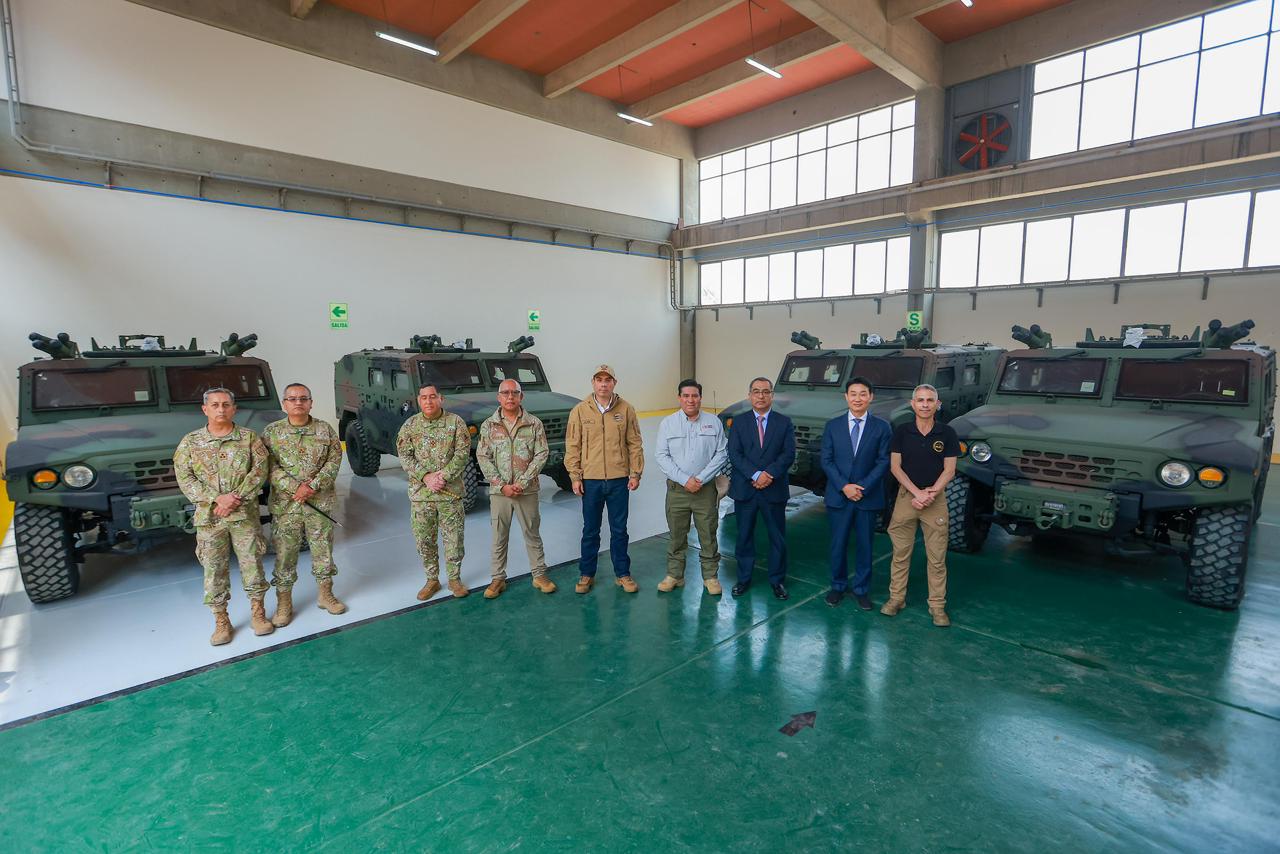
KLTV 4x4 light tactical vehicle. (Photo by secretary of Peruanian President)

Key Points
  • Peru inaugurated a new FAME assembly plant that will produce K808 armored vehicles and KLTV tactical vehicles under partnership with South Korea.
  • The government plans to import 99 K808s and 46 K2 tanks between 2026 and 2028 before starting licensed production of 181 K808s and 104 K2s from 2029 to 2040.
Peru has taken a major step toward building a modern defense industrial base, inaugurating a new assembly plant that will produce advanced armored vehicles under a long-term partnership with South Korea.

Peruvian President Jose Enrique Jeri Ore officially opened the Special and Military Vehicle Assembly Plant of FAME S.A.C. in Lurigancho, Chosica, an event the government describes as part of a broader plan to strengthen national technological autonomy and expand domestic defense production.

According to the announcement, the plant will assemble the 8×8 K808 armored personnel carrier and the KLTV 4×4 light tactical vehicle. Both platforms originate from South Korea’s defense industry and are already in use across the region. The government states that the new facility is intended to support Peru’s transition away from an aging armored fleet and toward modern systems that can be produced and sustained locally.

FAME, the Army’s state-owned arms and munitions manufacturer, will lead the assembly work in cooperation with South Korean partners. President Jeri Ore said the opening of the facility underscores Peru’s intent to build long-term capacity within the country, linking industrial development with national security goals. The effort aligns with plans to modernize ground forces, which currently rely on vehicles and tanks dating back to the 1970s.

the Special and Military Vehicle Assembly Plant of FAME S.A.C. in Lurigancho, Chosica (Photo by secretary of Peruanian President)

The regional spread of Korean-made vehicles illustrates why Peru selected the platforms. The Chilean Army recently expanded its fleet of Kia Light Tactical Vehicles with a new communications variant. In Europe, Rosomak—a subsidiary of Poland’s PGZ—locally produces Legwan Light Reconnaissance Vehicles, adapted versions of the KLTV, following a Polish order for Raycolt KLTVs placed in 2023. These examples show how partner nations are integrating South Korean tactical vehicles into their force structures, often alongside local industrial participation.

Peru’s own plan is far more extensive. The government intends to replace its ground combat systems through a combined import-and-production model built around Hyundai Rotem’s K808 and K2 families. The timeline begins with imports: 99 K808 armored vehicles and 46 K2 tanks are scheduled to arrive between 2026 and 2028. Beginning in 2029, the new FAME plant will start domestic production under license, manufacturing an additional 181 K808s and 104 K2s between 2029 and 2040.

Officials say the model is designed not only to equip the Army with modern vehicles but also to build an industrial base capable of supporting them for decades. This includes local assembly, workforce development, and the gradual transfer of technical knowledge from South Korean firms Hyundai Rotem and STX.

Peru’s decision to invest in local production comes at a moment when more governments are reconsidering how to sustain armored fleets without relying entirely on foreign supply chains. Licensing agreements and hybrid production programs allow partners to acquire advanced vehicles while also developing national manufacturing capacity. For Peru, the initiative ties military modernization to broader economic and technological goals.
 

ROK Navy Launches First Four PKX-B Batch-II vessels​

  • Published on 11/12/2025
  • By Eunhyuk Cha
  • In News
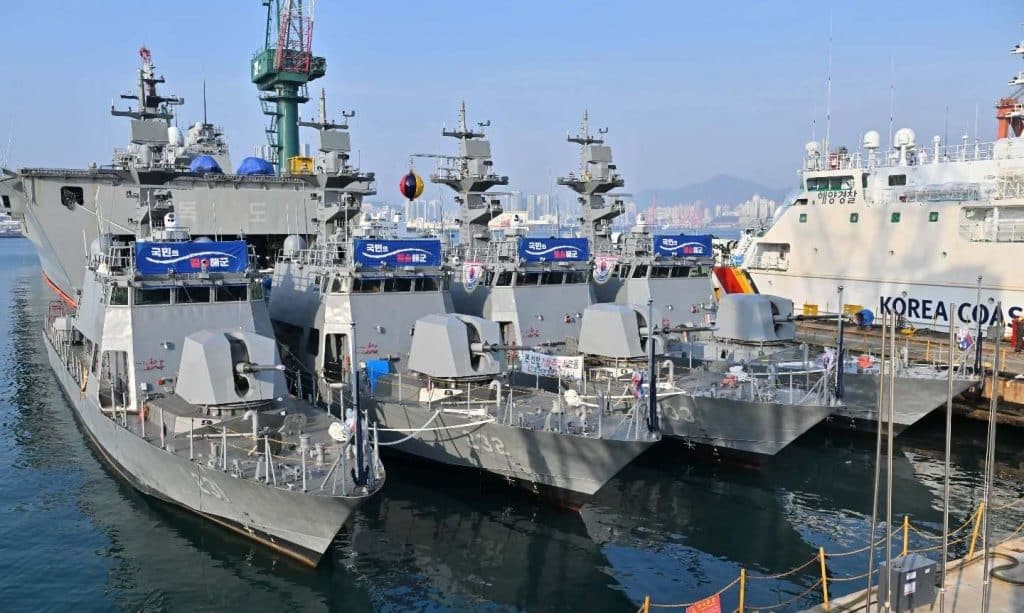
ROK Navy Launches First Four PKMR Batch-II vesselsPKMRs launched at HJ Shipbuilding & Construction's Busan Shipyard (ROK Navy Photo)
Share


The Republic of Korea (ROK) Navy and the Defense Acquisition Program Administration (DAPA) held a combined launching ceremony for four new Chamsuri-class PKMR (Patrol Killer Medium Rocket) fast attack craft on December 8 at HJ Shipbuilding & Construction’s Busan shipyard.


The newly launched vessels, Chamsuri-231, Chamsuri-232, Chamsuri-233, and Chamsuri-235, are 230-ton-class patrol craft that will be deployed to forward areas to conduct coastal surveillance and to intercept and neutralize infiltration threats along the Northern Limit Line (NLL). They are the first four ships of the PKX-B Batch-II program.

The ceremony was attended by approximately 70 representatives from the military, government, and industry, including Rear Adm. Ahn Sang-min, Commander of the ROK Navy Logistics Command, who served as the guest of honor; Capt. Ji Sang-hyeok, Acting Director of DAPA’s Ship Program Division; and Yoo Sang-cheol, head of HJ Shipbuilding & Construction’s naval shipbuilding division. The event included a project progress briefing, ship naming, commemorative speeches, and a ceremonial launch, followed by a traditional safe-voyage blessing.


PKMR-Batch-II_2-1024x613.jpg
The newly launched PKMRs were docked next to ROKS Dokdo, which is currently undergoing upgrades.(ROK Navy Photo)

The PKX-B Batch-II program will add a total of 18 new PKMRs to replace the aging PKM (Patrol Killer Medium) craft and operate alongside the Yoon Youngha-class patrol vessels (PKG) and the Batch-I PKMRs. The PKMR is a domestically designed and built platform. The construction contract was signed in 2022, followed by the steel-cutting ceremony in 2024 and keel-laying in 2025.

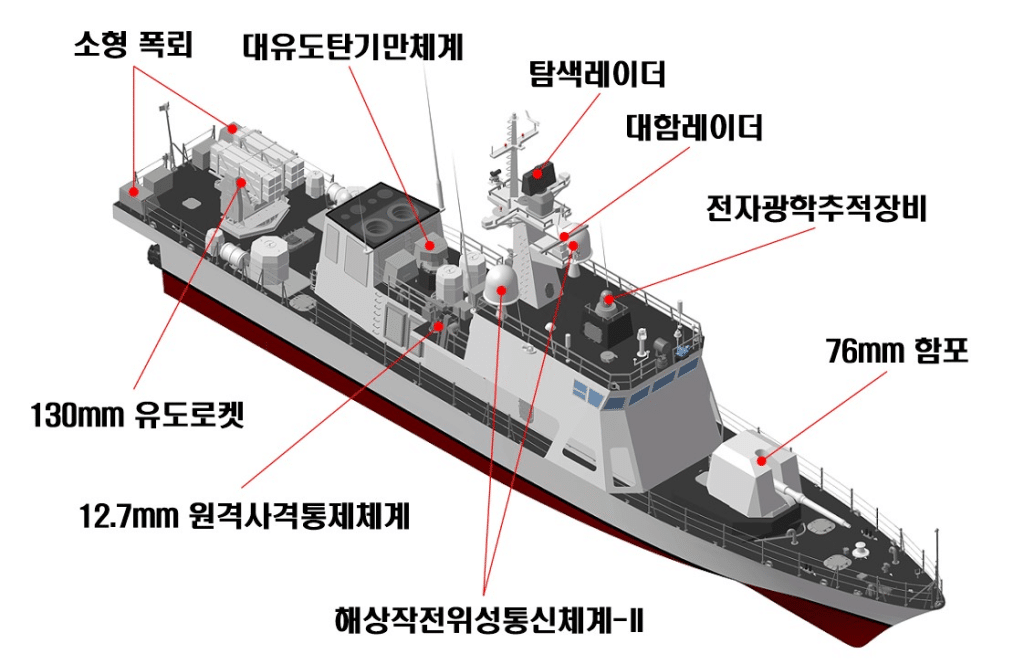
The PKMRs are 44 meters long and 7 meters wide, with a maximum speed of 40 knots. They are equipped with a 76 mm main gun, 12.7 mm machine guns, and 130 mm guided rockets, representing a significant improvement in firepower compared to the legacy Chamsuri-class PKM. Additionally, their sensor and combat systems have been upgraded, including improved surveillance radar, enhanced electro-optical tracking capabilities, a soft-kill system, and an upgraded combat management system.


PKMR-Batch-II_3-2-1024x664.png
PKX-B Batch-II Major Systems (DAPA Photo)

Compared to the PKX-B Batch-I, the Batch-II added small but critical upgrades that can improve the vessels’ combat effectiveness and operational capability.

  • The fire-control and launch functions of the 12.7 mm RCWS and the 130 mm guided rocket system are integrated into the combat system
  • The vessel is equipped with an improved anti-jamming electronic warfare (EW) system and the improved SPS-560K 3D air-surveillance radar, with resistance to frequency interference.
  • The SAQ-560K Electro-Optical Tracking System (EOTS), responsible for targeting of the PKMR’s weapons, is equipped with an anti-icing function to ensure stable operation in harsh winter sea conditions.

MASS_OCR-1024x695.png
MASS_OCR_Shape-795x1024.png
MASS with OCR and Corner Reflector (DAPA Photo)

In addition, although separate from the Batch-II upgrade itself, DAPA announced in May 2025 that the PKMR’s existing soft-kill system, MASS had undergone a performance enhancement. The upgrade introduced an offboard corner reflector to improve decoy effectiveness against modern anti-ship missiles. Following successful live-fire trials at sea, DAPA stated that the enhancement significantly strengthens the ROK Navy’s operational survivability. As the PKMR class continues to expand with Batch-II units, the integration of this improved soft-kill capability is expected to further enhance the platform’s overall survivability.

Following sea trials, the four PKX-B Batch-II vessels are scheduled to be delivered to the ROK Navy between August and November 2026. They will then undergo a force integration process before entering full operational service.

Tags

Picture of Eunhyuk Cha

Eunhyuk Cha​

Eunhyuk Cha is a motivated security researcher with an interest in international relations and security studies. He previously interned at the U.S. Embassy Seoul and is a member of the ROK Forum for Nuclear Strategy (ROKFNS). He is currently studying maritime cyber security at Korea Maritime & Ocean University. His areas of interest include security in East Asia and naval defense.
 
I think the design concept of PKX-B is wrong.

Considering that the speed difference between DDG and FFG exceeds 30kn and will generally exceed 40kn in the future, the speed of stealth missile assault boats should exceed 50kn. The speed of PKX-B is obviously too slow.

And the stealth design of PKX-B is also very poor, which cannot guarantee its concealment when launching attacks.

Stealth missile assault boats require a numerical advantage, so they need to be low-cost. The 600t PKX-B is too expensive, and a stealth missile assault boat with 200~300t is sufficient.

It doesn't need anti-aircraft weapons, nor does it need such a good radar. It should utilize combat systems to compensate for the deficiencies of air defense and radar.

Stealth missile assault boats typically engage in combat near the coast, with coastal or island cover, so the missile does not require a large range, exceeding 150km is sufficient, but the warhead needs to exceed 800kg to ensure its threat to large warships.

This can significantly reduce costs and improve quantity advantages.

I think PKX-B is not a warship designed for systematic combat, but a foreign trade commodity designed for export to small countries. It won't be very useful in real naval battles.
 

USFK commander says DMZ should not become 'politicized,' amid bill to ease access​

Button LabelListen
Text Size
Print
By Yonhap
  • Published Dec 19, 2025 4:32 pm KST
USFK Commander Gen. Xavier Brunson speaking in a press conference at Camp Humphreys in Pyeongtaek, Gyeonggi Province, Aug. 10. Courtesy of U.S. Forces Korea (USFK)

USFK Commander Gen. Xavier Brunson speaking in a press conference at Camp Humphreys in Pyeongtaek, Gyeonggi Province, Aug. 10. Courtesy of U.S. Forces Korea (USFK)
The commander of the U.S. Forces Korea (USFK) said Friday that the Demilitarized Zone (DMZ) should not be "politicized," voicing opposition to a bill in South Korea that seeks to grant the government control of non-military access to the buffer zone.

The remarks by USFK Commander Gen. Xavier Brunson, who also doubles as commander of the U.N. Command (UNC), followed a recent UNC statement in opposition to the pending bill.

He said the armistice agreement that ended the 1950-53 Korean War should remain the barometer governing behavior. Under the armistice, the UNC currently has the authority to approve or deny access to the DMZ.


"What we want to try to make sure that we do is, number one, we don't allow that area to become politicized ... we signed an agreement to say that we will maintain this buffer here," Brunson said in an episode of security-focused podcast series "War on the Rocks."

Brunson noted that South Korea recently proposed military talks with North Korea to discuss how to clarify the Military Demarcation Line in the DMZ in a bid to prevent possible clashes near the inter-Korean border, but emphasized that all actions should be based on the armistice agreement.

"What governs our behavior is the armistice, and we've got to adhere to the standards put forward in the armistice. And as long as we do that, there won't be any challenges," he said. "What we can't do is seek to change the way we do business in abrogation of a legal document, which is the armistice."

The USFK commander's call urging the need to adhere to the armistice came just days after the UNC issued a rare statement underscoring its role as the "administrator" of the DMZ, which stretches about 250 kilometers in length and 4 km in width, and has served as a buffer between the two Koreas since the end of the Korean War.

Speaking on Seoul's plan to seek a conditions-based handover of wartime operational control from Washington within President Lee Jae Myung's five-year term ending in 2030, Brunson said the United States has no intention to "hold this up at all."


He still emphasized that the bilaterally agreed-upon conditions should be met for the transfer.

"We've got to make sure that we've met all those conditions whether they be operational, whether they be material based, whether it might be something as simple as protection that those things are all in place before we go and do this," he said.

Against such a backdrop, Brunson touted how South Korea's "thriving" defense industry and participation in multinational drills like Talisman Sabre, held in Australia, have strengthened its capabilities as well as role in the wider Indo-Pacific region and called on the country to further "pull away from the Peninsula and become more engaged."

"I've talked a lot about the centrality and importance of the Republic of Korea to the entirety of the Indo-Pacific by virtue of their economy, by virtue of the size of their military, by virtue of their ability to continue to develop technologies," he said, referring to South Korea by its formal name.

"They are just preeminently important to peace in the Indo-Pacific."


The US led occupation forces in DMZ which is a part of South Korea does not allow the national government of SK to have access to its own soil. Saying its equal to politicizing process of area.

The American so called military commander forgets that they have not only illegally militarized a part of an other country leading to illegal occupation but also they have made a de-facto state within a state separating a part of SK from homeland SK.

Kick them in the back Koreans! Kick them out of your soil. USA is a parasite, the longer it stays in your the more you get affected. Its true that a cancer patient suffers a lot of pain after implementing chemotherapy, but its better than allowing that cancer to freely roam inside your body and pollute your blood-line.
 

HD Hyundai of South Korea wins Philippine Navy contract to deliver two new frigates​


South Korean shipbuilder HD Hyundai Heavy Industries has secured a contract to supply the Philippine Navy with two next-generation frigates by 2029, according to a December 26, 2025, report by The Korea Times citing DAPA. The agreement strengthens defense ties between Seoul and Manila as both face growing maritime pressure in the Indo-Pacific.

South Korean Company HD Hyundai Heavy Industries has won a major naval export contract to build two advanced frigates for the Philippine Navy, South Korea’s Defense Acquisition Program Administration confirmed in late December. The deal, reported by The Korea Times on December 26, 2025, positions the Korean shipbuilder as a central partner in Manila’s fleet modernization plans, at a moment when regional navies are accelerating investments in surface combatants amid rising tensions across key sea lanes.


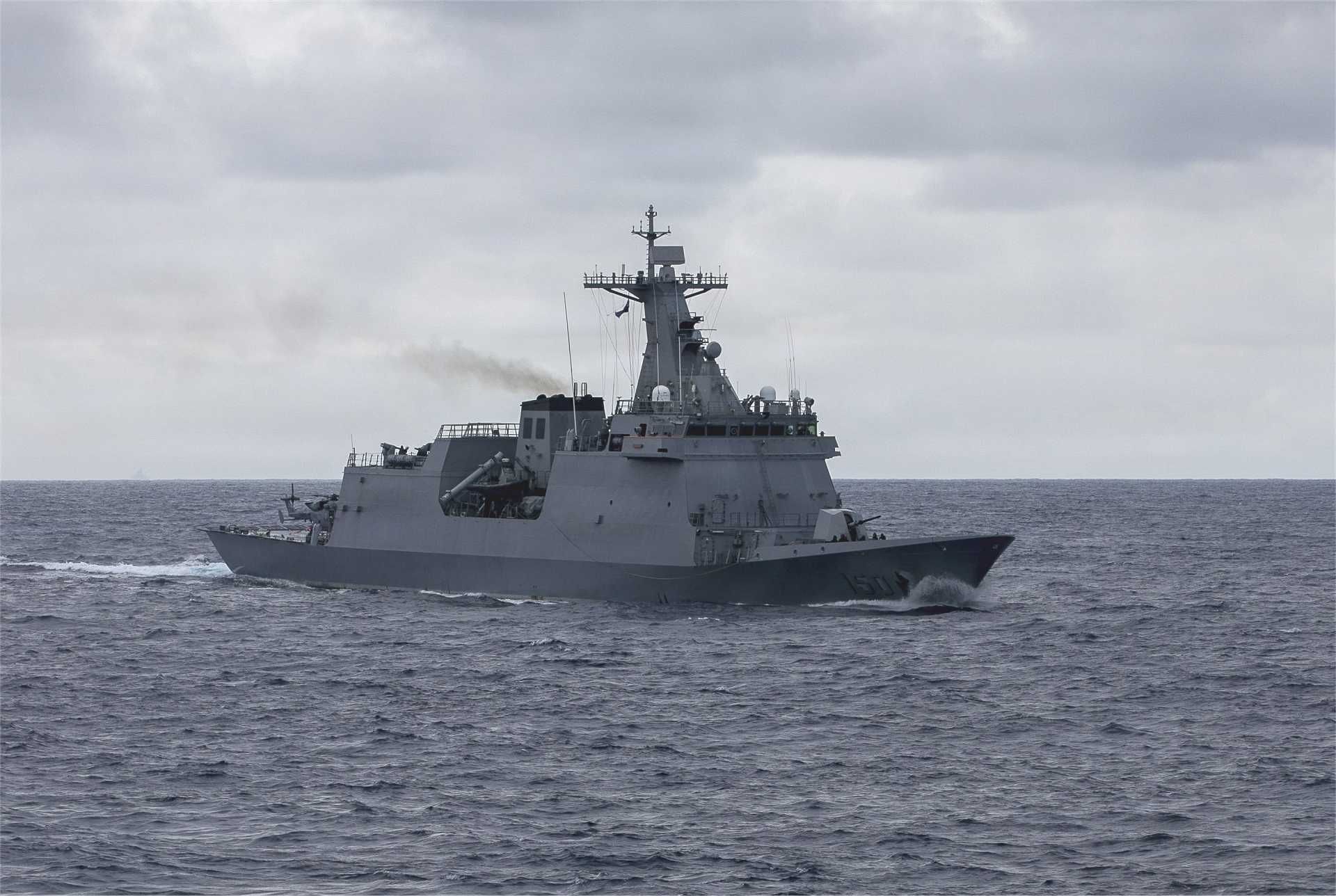
Philippine Navy’s Jose Rizal-class guided-missile frigate taking part in a multinational maritime exercise. Built by South Korea’s HD Hyundai Heavy Industries, the ship represents the Navy’s first modern surface combatant and sets the foundation for the newly ordered 3,200-ton frigates to be delivered by 2029 as part of the ongoing Philippine military modernization program.

The Philippine Navy’s Jose Rizal-class guided-missile frigate is taking part in a multinational maritime exercise. Built by South Korea’s HD Hyundai Heavy Industries, the ship represents the Navy’s first modern surface combatant and sets the foundation for the newly ordered 3,200-ton frigates to be delivered by 2029 as part of the ongoing Philippine military modernization program. (Picture source: U.S. Department of War))

https://go.ezodn.com/ads/charity/pr...unnel=tofu&utm_type=traffic.&ffid=1&co=PK
The contract tasks HD Hyundai, South Korea’s foremost shipbuilder, with the construction and delivery of two 3,200-ton multi-role guided-missile frigates. While the exact contract value was not disclosed, industry analysts estimate the deal at approximately $500 million based on comparable builds. This contract follows an earlier 2016 deal under which Hyundai also delivered two Jose Rizal-class frigates to the Philippine Navy, signaling growing trust in South Korean naval technology.


The new warships are expected to feature substantial upgrades in both firepower and survivability compared to the earlier Jose Rizal-class. According to defense industry insiders in Ulsan, the frigates will likely be equipped with a 3D air search radar, improved electronic warfare suites, and vertical launch system (VLS) modules capable of firing surface-to-air missiles - a notable leap forward in terms of anti-air warfare capability. Integration of a Korean Combat Management System (CMS) with South Korean-developed sensors and anti-ship missiles is also anticipated.

These vessels are being designed with operational flexibility in mind. The frigates will be optimized for multi-domain warfare in littoral and open-sea environments, reflecting the Philippine Navy’s evolving doctrine as it pivots from counter-insurgency support to blue-water capability. The acquisition aligns with Horizon 3 of the Armed Forces of the Philippines (AFP) Modernization Program, the most ambitious and strategically significant phase of Manila’s long-term defense development effort.

Launched in 2013 and divided into three rolling phases, the AFP Modernization Program was conceived in response to mounting external security challenges, especially in the South China Sea. Horizon 1 (2013–2017) focused on the acquisition of basic military hardware, including light attack aircraft and maritime patrol assets. Horizon 2 (2018–2022) advanced those efforts with major capital ship acquisitions, radar systems, and missile-capable platforms. Horizon 3, spanning 2023 to 2028, represents a fundamental shift toward force projection, combat readiness, and deterrence capability. It prioritizes high-end platforms such as submarines, multirole fighters, long-range missile systems, and advanced surface combatants, such as the newly ordered frigates.

This latest frigate deal builds directly upon the foundation laid by the earlier delivery of the Jose Rizal-class frigates, which represented the Philippine Navy’s first modern guided missile warships. Under a 2016 contract worth approximately $337 million, HD Hyundai (then Hyundai Heavy Industries) constructed and delivered BRP Jose Rizal (FF-150) and BRP Antonio Luna (FF-151), commissioned in 2020 and 2021, respectively. These ships were derived from the South Korean Incheon-class design but tailored to Philippine specifications. While effective platforms, the Jose Rizal-class lacked some advanced systems, such as VLS and towed-array sonar, at delivery, with future upgrades anticipated.

The new frigates now under contract are intended not merely as replacements or complements but as generational enhancements over the Jose Rizal-class. The Philippine Navy is expected to integrate these ships into a broader naval strategy that includes network-centric warfare capabilities, expanded maritime domain awareness, and joint operational interoperability with key regional allies.

Construction of the new frigates will take place at HD Hyundai's shipyard in Ulsan, with the first steel cutting expected in mid-2026. Both ships are scheduled for delivery before the end of 2029, with sea trials likely to begin by late 2028. Philippine naval officers will reportedly be embedded in the design and build phase, ensuring compatibility with operational requirements and allowing early crew training integration.

For HD Hyundai Heavy Industries, this contract further solidifies its position as a top-tier global supplier of mid-size surface combatants. As South Korea pushes to expand its defense exports under President Yoon Suk Yeol’s strategic doctrine of "Global Pivotal State," the Philippines remains a key partner in Seoul’s regional defense-industrial diplomacy.

As great power competition intensifies in the Indo-Pacific, Manila’s choice to anchor its fleet expansion with South Korean-built warships is both a message and a milestone. For HD Hyundai, it is a validation of its naval shipbuilding excellence. For the Philippines, it marks a strategic leap toward credible maritime deterrence.

Written by Alain Servaes – Chief Editor, Army Recognition Group
Alain Servaes is a former infantry non-commissioned officer and the founder of Army Recognition. With over 20 years in defense journalism, he provides expert analysis on military equipment, NATO operations, and the global defense industry.
 

No eternal foes, friends, or rules in 'ruthless' global order, says S.Korea's Lee after China trip​

Fate of South Korea depends on 'pragmatic diplomacy centered on national interests,' says Lee Jae Myung​

Saadet Gokce |08.01.2026 - Update : 08.01.2026

No eternal foes, friends, or rules in 'ruthless' global order, says S.Korea's Lee after China trip


South Korean President Lee Jae Myung

South Korean President Lee Jae Myung on Thursday said that in a "ruthless international order," there are no eternal foes, friends, or rules.

The fate of South Korea depends on "pragmatic diplomacy centered on national interests," he said during a meeting with senior aides, a day after returning from China, reported Yonhap News.

Lee held his second summit talks with Chinese President Xi Jinping since last November.

"The visit laid a solid foundation for the full restoration of Korea-China relations, and paved the way for increased exchanges and cooperation in economic and cultural sectors," he said.

Lee visited the headquarters of South Korea's provisional government in Shanghai on Wednesday and attended a ceremony to mark the 100th anniversary of the establishment of the provisional government building.

The provisional government was established in Shanghai in 1919, when the Korean Peninsula was colonized by imperial Japan.

Ties between Seoul and Beijing soured under Lee’s predecessor Yoon Suk Yeol, who was ousted from office last year for a martial law bid.

China and South Korea established diplomatic relations in 1992. Bilateral trade reached more than $267 billion in 2024.

After his summit with Xi on Monday, Lee took a selfie with the Chinese president with a Chinese-made Xiaomi phone, which the former had gifted to the South Korean president during their first summit in Gyeongju province last year.

“The closer we meet, the more the Korea-China relations ease up. We will communicate more often and cooperate even more in the future,” Lee said on US social media company X, posting pictures with Xi.

Primarily manufactured in China, Xiaomi uses Korean-made screens.
 
We are in the era of spheres of influence, and if you hold the Americans to that, then the whole of South Asia, South East Asia and East Asia, falls to China.

Maybe time for the countries to recalibrate their support of the USA - lol
 
They all get slapped around by the yanks then come running to China :ROFLMAO:

Why not have sincere relations with China from the beginning?

I hope China extracts the maximum from this new paradigm.
 
To view this content we will need your consent to set third party cookies.
For more detailed information, see our cookies page.


Donald Trump washes his hands of Taiwan ? lol!
 
To view this content we will need your consent to set third party cookies.
For more detailed information, see our cookies page.


Donald Trump washes his hands of Taiwan ? lol!

I am the greatest, every world leader kisses up to me to make me happy, lol. Only I and US can beat up other countries and kidnap their leaders, lol.
 

Published 2026.01.18. 18:20Updated 2026.01.19. 09:49

On the 18th, Chey Tae-won, Chairman of the Korea Chamber of Commerce and Industry and SK Group Chairman, speaks on 'KBS Sunday Diagnosis'.

On the 18th, Chey Tae-won, Chairman of the Korea Chamber of Commerce and Industry and SK Group Chairman, speaks on 'KBS Sunday Diagnosis'.

Chey Tae-won, Chairman of the Korea Chamber of Commerce and Industry and SK Group, recently expressed concerns about China’s technological advancements and proposed technological cooperation between the two countries. Chairman Chey accompanied President Lee Jae-myung on his official state visit to China earlier this month as the head of an economic delegation.

On the 18th, Chairman Chey appeared on a KBS current affairs program and stated, “China’s technological development has reached a remarkably notable level. Whether it’s humanoid robots with AI, battery or automotive technology, the speed at which they create new things is faster than ours.” He added, “China’s new model cycle for AI and robots is six months, while South Korea’s is at least a year. To compete with China, we need to build an ecosystem with a much faster development speed.”

Chairman Chey suggested, “Instead of merely competing with China, we could consider collaborating to jointly enter third countries. In particular, exchanging environmental technologies with China would be mutually beneficial.”

He also mentioned South Korea’s low economic growth rate, stating, “This year, the government should shift all policy paradigms to a ‘growth-centered’ approach.” Chairman Chey explained, “South Korea’s growth rate has declined by 1.2 percentage points every five years, with the current potential growth rate at around 1.9% and the actual growth rate hovering near 1%.” He emphasized, “An economy with stagnant growth is like a bicycle with its brakes engaged—requiring significantly more effort to restart.”

As a solution, Chairman Chey urged addressing “stepwise regulations that abruptly increase obligations and restrictions as companies grow” and “excessive economic penalties that create unpredictable risks when businesses make investment decisions.” He also proposed, “If South Korea and Japan introduce a single visa system similar to the EU’s Schengen Agreement, it could generate approximately 3 trillion Korean won in added value,” advocating for the two countries to become a “single economic community.”

Regarding AI, he stated, “It is not merely technological progress but a civilizational shift on the level of transitioning from stone tools to iron tools, and a core element of national strategy.” He proposed establishing global-level AI infrastructure, fostering an AI startup market, and creating a testing system to quickly verify ideas and business viability.
 

S. Korea, China to hold 13th round of FTA follow-up talks on service, investment​

09:10 January 19, 2026

SEOUL, Jan. 19 (Yonhap) -- South Korea and China are set to hold a fresh round of follow-up negotiations on service and investment under their bilateral free trade agreement (FTA), Seoul's trade ministry said Monday.

Trade delegations from the two sides will hold the 13th round of follow-up negotiations throughout this week in Beijing, aiming to expand the countries' FTA to include service and investment, according to the Ministry of Trade, Industry and Resources.

Seoul and Beijing implemented their bilateral FTA in December 2015, removing major tariffs on products. The countries have held 12 follow-up meetings since 2018 to expand the scope of the bilateral trade pact to investment and service sectors.

Earlier this month, President Lee Jae Myung and Chinese President Xi Jinping agreed to work to make progress in trade negotiations within this year during their bilateral summit in Beijing, according to the ministry.
 

Users who are viewing this thread

Latest Posts

Back
Top