Egyptian Military Industries & Products

The Egyptian navy is preparing to induct the fourth and final frigate of the Miko type made locally with the name of Al -Jabbar 910 in October 1st.

Thus, the Miko frigate deal has been completed and now looking forward to purchase another frigate with technology transfer

To view this content we will need your consent to set third party cookies.
For more detailed information, see our cookies page.
 
Egypt is negotiating with Korea for an advanced missile system that competes with the American "Himars"


1755622390391.webp

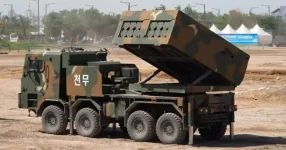
Cairo is moving towards enhancing the ability of Egyptian deterrence by developing its military partnerships with South Korea, which has established its position as a prominent international player in the field of advanced armament systems. Current negotiations are focused on a huge deal to acquire the Chonmamo multiple missile translation system, which is not limited to purchase, but may also extend to local production and technology transport.

August 17, 2025: The largest private space and defense company in South Korea, Hanoa Airbis, is holding talks with the Egyptian government to export the "K239 Chunmoo" system, in a deal that may give Cairo a greater ability to maintain and self -development during crises. This trend comes after a long time during which Egypt relied mainly on Russian weapons, as it recently began to diversify its armament sources driven by cost factors and the speed of delivery. Recent data indicates that Russia has provided about 41% of Egypt's military imports between 2017 and 2021, while Cairo has strengthened its dealings with the United States, Germany and France, with new channels opening with South Korea.

The Chonmo system is characterized by a normative design and an open structure, which allows it to integrate with various ammunition, including locally manufactured in Egypt, and includes multi -caliber missiles from 130 mm to 600 mm, with a range between 36 and 290 km. This is not the first cooperation between Egypt and South Korea, as Cairo and torrents signed in 2022 contracts worth 1.7 billion dollars to provide Egypt with the "K-9" cannons and the "K-10" re-supplies vehicles, and extensive tests were conducted for the defender in Egypt through local engines, during which they traveled more than 10 thousand kilometers through a variety of terrain with full success.

The value of this deal amounted to about 2 trillion Korean (equivalent to $ 1.7 billion), and was the largest in the history of "K-9" defender exports, and also represented the first export of Korean self-artillery to an African country.

Analysts expect the negotiations to accelerate before the "IDEX" international defense exhibition next December, where "Hanoa Airbis" is expected to participate in a widespread interest in the defensive circles in this deal.

Experts emphasized that Egypt is seeking to enhance its defense capabilities by diversifying the sources of arming them, in a way that combines eastern and western weapons. In general, missile translation provides major support for the forces through the ability to fire heavy and rapid fire against enemy formations, whether they are rolled, tanks or driving centers, with high and speed bombing capabilities.

Experts pointed out that the Korean translations "Chunmo" are loadable on transport vehicles up to 80 km per hour, allowing the rockets to be fired and then quickly to avoid targeting. It is also characterized by a precise injury of two or three meters, with an advanced fire management room that includes a driver, driver and grab, and is able to use several types of ammunition in the same vehicle, from 130 mm to 600 mm, with the possibility of linking to internal and external radars.

Experts pointed out that the Korean regime is competing with the American bombers "Himars", with a continuous development that includes the sixth generation of translations, improved capabilities to manage fire and combat jamming, in addition to a defensive cannon on the cabin to protect the vehicle from drones, and the ability to complete them in just 15 minutes, which is not provided by any other missile launchers in the world.

CGR080 guided missiles are one of the most prominent elements of superiority in the system, as it depends on a built -in direction using the Self -deficiency navigation system with GPS support, and the length of the single missile is about 3.96 meters. These missiles are specially designed to meet the needs of the South Korean army, and are equipped with high -explosive warheads to destroy the fortifications, or cluster heads containing hundreds of small bombs to target individuals within large areas.

Two different types of missiles can be loaded at the same time, and the system can launch 6 239 mm missiles within 30 seconds, and 12 rockets in one minute, while re -downloading two containers does not exceed seven minutes. The system relies on the eight -wheel drive K239L truck (8 x 8) manufactured by Dosan DST (which has become part of Hanoa Defense), and the armored vehicle has protection against light weapons and artillery fragments, as well as protection against nuclear, biological and chemical weapons.

The vehicle has the ability to climb sharp slopes of up to 60%, and is equipped with advanced systems such as slipping braking, hole -resistant tires, and a central tire blowing system. Each K239T is accompanied by the launch of the K239T ammunition that uses the same structure and holds four containers for re -download. One battery in the South Korean army consists of 18 Chunmamo vehicles, and is run by a K200A1 driving vehicle.

In October 2014, South Korea announced the purchase of 58 Chonnmamo K239, and the army began publishing it in its field formations as of August 2015.

On the international level, Hanoa Defense revealed during the ADEX 2017 exhibition in Seoul the signing of a secret contract worth 700 billion options to export the system to a country in the Middle East, which later turned out to be the United Arab Emirates, including the supply of 12 k239 and 12 k239T ammunition support vehicles, along with GPS missiles and various ammunition, and was officially delivered in February 2021.

In the Kingdom of Saudi Arabia, the World Defense Exhibition in Riyadh witnessed 2022, a defensive contract with Hanoa, with a trillion Korean value (about 800 million dollars), and the sources later confirmed in March 2023 that a number of Chunmo launchers entered service to the Royal Land Forces, with the possibility that the agreement was made according to an unannounced agreement as in the case of the UAE.
 
Egyptian military industry 2025

1755847733595.jpeg


Some military industries in the Egyptian army:-

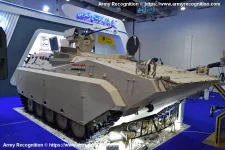
1- The armored vehicle Sinai 200 Sinai
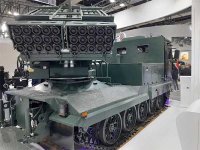
2- Missile launcher, RAAD 200
3- Fahd 240 Fahd armored vehicle
4- Fahd 280 wheeled armored vehicle
5- Fahd 300 wheeled armored vehicle
6- Crocodile 1 armored vehicle (Temsah)
7- Crocodis 2 armored vehicle
8- Crocodis 3 armored vehicle
9- Crocodile 4 armored vehicle
10- Crocodis 5 armored vehicle
11- Crocodis 6 armored vehicle
12- A light 4x4 armored vehicle
13- The wheeled armored vehicle S100
14- The wheeled armored vehicle ST 500
15- Abu Zaabal Heavy Machine gun caliber 51*7.62
16- Nut drone for combat reconnaissance
17- AHMOUS An armed drone plane
18- June 30, armed drone
19- ESR 32A and ESR32B radar for 250 km
20- DJ 400 DEDS
21- Advanced training plane K8E
22- Howitzer K9 Thunder
23- An ammunition support armored vehicle K10 for the Howitzer K9
24- MBT M1A1 ABRAMS
25- FA50 Eagle light fighter plane
26- 40 mm automatic grenade Launcher
27- Armored Qader Mercedes G320
28- unmanned combat robot vehicle M300
29- Individual 40mm grenade Launcher
30- Moadi Akm offensive gun
31- The Norus 1 anti -marine depth
32- Helwan pistol 900 - 920 - 990 from Helwan Beretta
33- TABA target aircraft 1 - 2
34- Light combat aircraft and advanced training Alphajet MS1 and MS2
35- IFF Enemy and Friend Essr A12
36- YLC 6M 2D radar
37- Aerospacial Ghazelle combat helicopter
38- The unmanned armed combat robot Robocat X300
39- Haris 4 System to disable drones
40- Hafez's missile family
41- Military Police Armored vehicle QADER 1
42- Armed drone 6 October
43- Families of Fuel-air bombs Nasr and Al -Qaaqaa up to the weight of 9 tons
44- The armored vehicle of repair Hercules M88a2
45- Sky Guard Amoun air defense system
46- Drone Ishnik ASN 209 combat reconnaissance
47- EGB1 - EGB2 Laser -guided bombs family
48- RPJ 7 anti-armor and its diverse projectiles
49- TUCANO initial training plane
50- target aircraft (leader - pyramid - graceful bird - arrow - Orabi 1)
51- Thebes30 Vertical reconnaissance plane
52- EEDR 1 Anti-Drone Electromagnetic Jamming Riffle
53- AD2 electronic Jamming system
54- G0A - G0B systemsto Disable and shoot down drones
55- The P01 Bardwini radar system
56- Fast combat boat PV 43
57- Egyptian stealth Corvette CC 60
58- Navy 1 coastal boat
59- Namat 1 System to hinder electromagnetic pulse
60- Gomhoria 1 training plane
61- Yarara - Lipan - Cabury Drones for Photography and Monitoring
62- SAM 2 modernized Volga missiles
63- Unguided -57 -68 -70 mm air to surface missiles
64- Falcon Eye System carried on shoulder Saqr 1
65- RL 420 Microwave system
66- Delta Max channel download system
67- PL 70D Microwave system
68- Passive jamming missiles (thermal - radar)
69- Smoke shells for visual blindness
70- Scud B -C -D, ballistic missiles
71- Badr ballistic missiles
72- Moutic Electric missiles
73- The sky meteor Nizk system for rocket launchers
74- Mortar shells 120 mm
75- Tank shells 105 - 115 - 125 mm
76- Saqr missile family 18 - 36 - 40 - 45 - 80 - 122 - 227 mm
77- TOW 2 BGM 71 anti-tank missile
78- Ahram 1 Anti-armor system with a range of 5 km
79- RL 421 Microwave Communication device
80- Wireless Communication devices TRC 9100 - TRC 9210 - TRC 9310
81- CPX Field Central 200
82- Tungsten modernized tank shells
83- RL 424 HC data device
84- GH 52 APU cannon 100 mm
85- 122 mm D30 cannon
86- CD116 field shift conversion- SB130
87- ARIGSA special combat vehicle
88- Field phone BLC 210 - FT 306
89- MILES Multiple integrated laser engagement systems
90- Nasir system for scattering and planting ground mine
91- Fatih 1-2-3-4-5 light system for creating gaps in mine fields
92- Swingfire anti-armor system
93- Jeep J8 -TJL
94- Cannons 122-130-155
95- Tiger armored vehicle
96- Panthera T6 - S8 - S10 K10CMD - armored vehicle
97- RL missile launcher 21 - 30 - 812 - 81 - 111
98- Moadi Grivin 50 mm anti-armor
99- The Egyptian RHIB Steel Fast Boat
100- Military Maritime Transport Ships Freedom 1-2-3 Horreya
101- Tokarev 9 mm hand gun
102- AKA MISR 7.62x39 offensive rifle
103- Goryunov heavy machine gun
104- Heavy machine gun, Fn Mag,
105- Moadi grenade launcher
106- HJ 8 Red Arrows anti-armor and its projectiles
107- Astrilla 2 anti-aircraft system
108- TIGER QADER 120 Armored vehicle
109- EMB 312 training aircraft
110- Ranger HRC Electronic monitoring and guidance system
111- QADER 1 reconnnaissance Drone
112- Guardian 30 Combat Turret from Escripano for tract and wheeled armored vehicles
113- Fuses, reflectors and Sensors of Missiles
114- The Egyptian tank Ramses
115- RCWS Eagle 1 Unmanned engagement turret
116- EDE 100A The High -capacity electromagnetic pulse generation system
117- Embr 16A radar
118- Salem Radar detecting ground targets
119- Drone GPS Signals jamming system
120- Portable MLRS 122 quadruple missiles
121- RSS border control system
122- Dolphin 375 mm anti-submarine depths projectile system
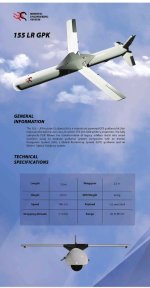
123- Mobile Multi -task Field Command and Control Center..And an Air Field Defense Command Center
124- EgyRad 1-2 Egyptian modernized radiation detection system 1-2
125- Ground and electronic anti-individuals and armored vehicles mines
126- Laser-guided ammunition tracking and jamming system
127- Tag Terrier LT-79 tract armored vehicle
128- Mobile 70 tons Bridges for storming water barriers with
129- RL812 Special Forces missiles launcher
130- FCS Striker Fire Management System
131- DMSK KONKURS Anti armor, Distinguished with its Fire & Forget technology
132- Manufacture and production of Missiles and aircraft fuel
133- Making and producing daytime and night monitoring systems and cameras 134- Making all light and medium individual firearms, 7.62 x39 mm, up to 14.7 mm
135- Manufacture and production of armored steel
136- Making and producing optical fibers for military communications, signal weapon
137- Manufacture and production of hand grenades (luminous - smoke - fragmented - and nerves)
138- Making military gear for the Egyptian army (helmets - camouflaged military suits - military shoes - chest shields - mine removal suit - hidden snipers suit)
139- Unmanned rapid armed boat B5 Hydra.. It can be controlled by large units and drones
140- M46 cannon modernized by Egypt with a hydraulic system
141- The 23 mm anti-aircraft cannon
142- Armored Buffalo 10
143- Patriot 2 MRAP
144- The Egyptian Electra-optical Monitoring, reconnaissance and targeting System SGA from the Egyptian RS
145- The new Egyptian tactical armored vehicle Jurz
146- The winged air to ground missile, with an integrated guidance system LR 155 GPK
147- The Egyptian armored vehicle Temsah Sherpa
148- Armored vehicle Temsah Bus
149- Sarisa SRS 1A vertical take off Drones
150- Audio recording device Fakhr3
151- Robot, Chemical detection Kashif 3
152- Walid D 10000 smoke missile system
153- Manufacture and production of armored glass
154- RISC 2 - 3 Air Monitoring Center
155- Field Conversion SB 130 - CD 116
1755856553453.jpeg

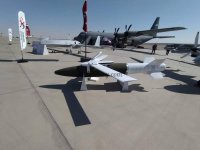
The new Egyptian sliding bomb GWD-6:

1755856710529.jpeg

To view this content we will need your consent to set third party cookies.
For more detailed information, see our cookies page.
 
How did the Egyptian "voice of thunder" override the artillery of Israel completely

To view this content we will need your consent to set third party cookies.
For more detailed information, see our cookies page.
 
Today, the Turkish company Havelsan announced the signing of an agreement with the Arab Organization for Industrialization to collaborate on the development and production of vertical takeoff and landing (VTOL) unmanned aerial vehicles, designated for both military and civilian uses.This comes after "Havelsan" signed a strategic cooperation agreement in March of last year with the Qadir factory for advanced industries, affiliated with the Arab Organization for Industrialization, aimed at developing and manufacturing unmanned ground vehicles (UGVs) in Egypt.This cooperation has resulted in the design and production of the unmanned combat vehicle "Anubis." Today, the Turkish Ambassador in Cairo announced the start of production of unmanned ground vehicles inside the "Qadir" factory as part of this cooperation.

To view this content we will need your consent to set third party cookies.
For more detailed information, see our cookies page.
 
Today, the Turkish company Havelsan announced the signing of an agreement with the Arab Organization for Industrialization to collaborate on the development and production of vertical takeoff and landing (VTOL) unmanned aerial vehicles, designated for both military and civilian uses.This comes after "Havelsan" signed a strategic cooperation agreement in March of last year with the Qadir factory for advanced industries, affiliated with the Arab Organization for Industrialization, aimed at developing and manufacturing unmanned ground vehicles (UGVs) in Egypt.This cooperation has resulted in the design and production of the unmanned combat vehicle "Anubis." Today, the Turkish Ambassador in Cairo announced the start of production of unmanned ground vehicles inside the "Qadir" factory as part of this cooperation.

To view this content we will need your consent to set third party cookies.
For more detailed information, see our cookies page.

@Sami_1
This is just the beginning
 
@Sami_1
This is just the beginning
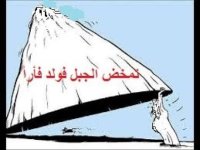
There is an Arabic proverb that says, “The mountain labored and gave birth to a mouse.” This is not a matter of pride. Simply put, AOI produces local Chinese models and also produces the Cypriot H12 drone. What is the strategic benefit? Is such a product a matter of pride after two years of intensive propaganda? On the contrary, it illustrates the extent of the modesty of cooperation and the backwardness of the management of the Kader factory, which does not possess any development or scientific research capabilities, and their failure to even cooperate with the private sector and Egyptian universities to produce a trivial product. They consider preventing the development of a local drone to be a matter of national security, certainly Israeli, not Egyptian national security. Also, the Turkish drone is less capable than the Cypriot H12 drone, and the most that can be talked about is producing a hypersonic ballistic missile with Pakistan and Turkey in the field of propaganda. We hope we succeed in implementing it because it simply does not require Western engines or complex main components, but rather funding from several countries to develop a product like the modernized DF-15 that has been produced for many years, and perhaps also to cover up cooperation with Iran.
 

Attachments

  • images (12) (2).jpeg
    images (12) (2).jpeg
    27.7 KB · Views: 2
Advisor to the Minister of Military Production: European countries import weapons and ammunition from Egypt

Engineer Walid Rasmi, Advisor to the Minister of State for Military Production, said that the ministry has been producing weapons and ammunition for the armed forces since 1954, but in accordance with the requirements of the times in the recent period, work has been done to localize modern technology in military manufacturing, explaining: "We have brought our technology and production to quality levels that have made the countries around us obtain ammunition and weapons from us."

"Rasmi" added, in his interview with the media figure Lama Jibril, presenter of the "Studio Extra" program, on the "Extra News" channel: "I have been in the ministry for a while, and I did not imagine that the time would come when Europe would wait on a waiting list to obtain ammunition and weapons from Egypt."

The advisor to the Minister of State for Military Production continued: "Egypt has become a country known in the global community for having the technology, quality and expertise that produces this type of product, whether ammunition or weapons, and we have begun to export and provide excellent hard currency, which puts Egypt on the map of weapons and ammunition worldwide, and this has been reflected in the national economy."

He explained: "We are developing the arms industry, and what we produce we did not produce before, and therefore, Egypt used to import it, and now, we produce it with local Egyptian quality, thought, and efficiency, but this does not - certainly - completely prevent imports".
 
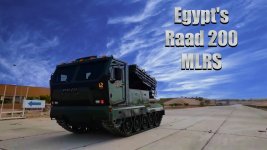
It launches 30 missiles in 15 seconds. Advisor to the Minister of Military Production reveals the possibilities of "RAAD 200"

1756430317870.jpeg

Engineer Walid Rasmi, Advisor to the Minister of State for Military Production, said that the "Raad 200" rocket launcher can operate on paved or unpaved ground, and it is the first military production at the "EDEX 2023" exhibition.

He added during an interview with the "Studio Extra" program, broadcast on the "Extra News" channel, on Wednesday evening, that "Raad 200 rocket launchers can carry 30 different missiles, and launch 30 missiles at the same time, within 15 seconds, which gives us deterrent power".

1756430360781.jpeg

Regarding the "Sina 200" armored vehicle, he explained that it is a multi-mission vehicle, and the first version of it was launched at the EDEX 2021 exhibition, then another version of it was launched at the EDEX 2023 exhibition.

He pointed out that the Sina 200 armored vehicle is the first armored vehicle to transport soldiers, and it can carry a grenade launcher or machine gun as protection.

1756430552034.webp

He pointed out that the armored steel used in the production of "Raad 200" and "Sina 200" is manufactured locally, in one of the military production companies, in cooperation with the largest Egyptian steel companies affiliated with the private sector.

He stressed that "this cooperation means that military production is not only a military industry between the ministry's companies, but also depends on cooperation with all different production entities and the private sector."
 
To view this content we will need your consent to set third party cookies.
For more detailed information, see our cookies page.


To view this content we will need your consent to set third party cookies.
For more detailed information, see our cookies page.
 
To view this content we will need your consent to set third party cookies.
For more detailed information, see our cookies page.
 
then why the f you go with Havelsan
It's just a matter of propaganda for the Turks, and perhaps there are requirements for it from African countries, but in reality it may never enter service. This is similar to the Russian and Ukrainian anti-radio electromagnetic systems that are manufactured in Egypt for export, as well as the Eagle defense vehicles that are produced in Egypt for African countries. As I explained previously, the whole thing is considered a failed policy to prevent local development programs and scientific research in the military sector, in order to pass the arms sales mafia to Egypt. Why don't we also take this matter into consideration? Production under license does not develop the industry. Egypt has been producing under license for 70 years and has not moved a single step forward because the mentality of the military does not bring any success with them, only corruption cloaked in national slogans. Also, the company that obtains the license has failed in developing products well or acquiring valuable markets. They consider the pinnacle of their success to be their Qader and Mad1 missile defense systems.
The Qaher model to one of the Arab countries. They also succeed in the field of export, despite the fact that Turkish companies export armored vehicles by the thousands. The existence of this company is only due to the direct implementation of the production of products for the army without any competition from the private sector, which would crush them without a stone if they were allowed to compete.
 
The question that arises is the intensive propaganda for these unsuccessful production sectors led to real development or success. For example, what is Egypt’s share of global arms exports? It has not even reached 1%. Do they produce a single truly advanced product? Even the simplest products, some would say the Korean cannon. If a similar local product had been designed, the development cost would not have exceeded $50 million. Therefore, Egypt can produce in the quantities it desires without obtaining export licenses from South Korea. The cost would also be 40% of production. So, why is local development being fought? Is it only to keep mentally disabled people in managing these bodies? Fighting development and scientific research is the goal of one mafia, the agents of state companies in Egypt, which of course passes everything that is illegal and illegitimate. Money opens closed doors, even at the expense of the national economy and the people.

Is defending trivial products produced under license by Turkish companies a real success and international cooperation, or is it just a drain on the resources of products that can be developed locally because they are completely modest products?
 

Users who are viewing this thread

Country Watch Latest

Back
Top