India - US Tariff and Relations | News + Updates

When Modi told him over phone that there was no discussion of trade and American mediation when American officials had called those from India during the conflict and the Indian side put that out publicly.
Oh that statement, which is similar to the one he made in 2020 after China grabbed 2,000 sq km of area; "Nobody entered our territory and no one is holding our territory".
 
Oh that statement, which is similar to the one he made in 2020 after China grabbed 2,000 sq km of area; "Nobody entered our territory and no one is holding our territory".
I don't understand the similarity at all. Trump is a habitual boaster. It is a matter of record that he didn't speak to Modi or Pakistan's de facto dictator Munir during the conflict. At that time, he publicly said America was not involved and the two countries would sort out things between themselves. Even when he announced the ceasefire, he made no mention of trade. Now , months later he is remembering conversations where he threatened Munir with 100% or more head -spinning tariffs. If you want to believe your Field Marshall surrendered to Trump's threats, you are free to do so.
 
To view this content we will need your consent to set third party cookies.
For more detailed information, see our cookies page.


50% tariff because of Russian oil was just a excuse. Looks like these tariff are here to stay even if Ukraine war end
 
To view this content we will need your consent to set third party cookies.
For more detailed information, see our cookies page.


50% tariff because of Russian oil was just a excuse. Looks like these tariff are here to stay even if Ukraine war end

They would be hard to justify if the war were to end somehow, but since everyone knows that the war is not ending anytime soon, that is moot. But I do agree with you, the primary purpose is to put pressure on India and there is only a secondary relation with the Ukraine war. The corollary is that the tariffs will go away if Modi decides to take the next call from Trump and do a deal, irrespective of what happens with the Ukraine war.
 
Last edited:
They would be hard to justify if the war were to end somehow, but since everyone knows that the war is not ending anytime soon, that is moot. But I do agree with you, the primary purpose is to put pressure on India and there is only a secondary relation with the Ukraine war. The corollary is that the tariffs will go away if Modi decides to take the next call from Trump and do a deal, irrespective of what happens with the Ukraine war.

Even bessent said its not just India buying Russian oil. This mean USA is after market access at 0 tariff. Otherwise 50% tariff will stay.
 
Last edited:
Even bessent said its not just India buying Russian oil. This mean USA is after market access at 0 tariff.
Yes, of course. India is willing to offer that for many products, but not all, especially in agriculture . That was one of the main sticking points in the negotiations . Another was the US reciprocal rate. India wanted it to be around 10% , whereas the US was closer to 20%. The third was a large commitment to buy oil, which India was willing to provide and also to buy weapons, including a big order for F-35s. India was willing to buy some weapons , but not F-35s without transfer of technology - which the US would not agree to.

Like I have been saying, this drama has been all about the terms of the deal. Each side is trying to secure the most favorable terms for itself. Modi will try to strike deals or at least framework agreements with China and Russia at the SCO summit in the next few days. He will also try to close the Free Trade Agreements with Australia and the EU to strengthen his hand before he directly gets involved with Trump. Until then, India will just eat the tariffs and lower level officials will try to limit the damage. Trump wants to make a quick deal and move on to other parts of his agenda before November, but it is not clear Modi will oblige him on the timing. Trump has already used his leverage , which is hurting Indian exporters for sure , but Modi is going to provide them direct support as well as help finding other markets, including the domestic one. Trump's leverage is going to diminish over time , which is why he is in a hurry and Modi is not. From India's perspective, getting the right deal later is more important than getting a sub-optimal one early.
 
THIS IS NOT A COMPLIMENT

But Ive heard there is apparently more at play than just trade deals and so on wrt Pakistan.
During PTIs time with Trump(albeit short) - things were “straight”.
This time Pakistan true potential as a no holds barred “wash dirty money” market is opened up and now competing with UAE (which is now moving to less black and more off white).

Tacit indication has been given to every dirty player including Trump’s buddies - “Come on in and wash it all clean”
So you might see PSL and Crypto and everything used for very Trump and buddy friend personal gains at expense of long term FATF and other general financial stability.

But until he is in power - Pakistan may have an easy run.
 
THIS IS NOT A COMPLIMENT

But Ive heard there is apparently more at play than just trade deals and so on wrt Pakistan.
During PTIs time with Trump(albeit short) - things were “straight”.
This time Pakistan true potential as a no holds barred “wash dirty money” market is opened up and now competing with UAE (which is now moving to less black and more off white).

Tacit indication has been given to every dirty player including Trump’s buddies - “Come on in and wash it all clean”
So you might see PSL and Crypto and everything used for very Trump and buddy friend personal gains at expense of long term FATF and other general financial stability.

But until he is in power - Pakistan may have an easy run.
There has been reporting that Trump played the Imran Khan card at the meeting with the Field Marshal, politely reminding him that the US has other options in Pakistan. The meeting itself was arranged through Trump's business associates , not regular diplomatic channels. So, one can imagine what kinds of deals must have been struck.
 
Trump only respects power.
Every nations respect power. In peaceful time, diplomatic actions like shaking hands, hugging, photographing may help a little. But in rough time like today, real power talks
Real power includes both hard and soft. . China now has both.
 
I don't think Donald Trump likes India.

The other day he said, he had given an ultimatum to Surrender Modi to stop the war within 24 hours but he surrendered within 5 hours.
Trump never spoke to Modi because Modi was avoiding his calls. That ultimatum was actually given to the Field Marshal, with whom Trump enjoys long, deep and cordial dialogues .
 

Soft on China, hard on India: What's Trump up to?

Aug 27, 2025, 03:08:00 PM IST

Synopsis
US President Trump's administration is adopting a tougher stance on India while seemingly easing tensions with China. New tariffs on Indian exports and strained trade talks contrast sharply with postponed tariffs on Chinese goods and increased student visas. This policy reversal jeopardizes US-India relations, built on defense cooperation and strategic alignment against China.

In a dramatic departure from decades of bipartisan US foreign policy consensus, US President Donald Trump has unleashed a series of moves that mark a stark reorientation in America’s approach toward Asia. At the heart of this strategic pivot is a bewildering paradox. While India, long viewed as a vital democratic partner and counterweight to China in the Indo-Pacific, is being hit with punishing tariffs and harsh rhetoric, America’s principal strategic rival China is enjoying a surprising thaw.

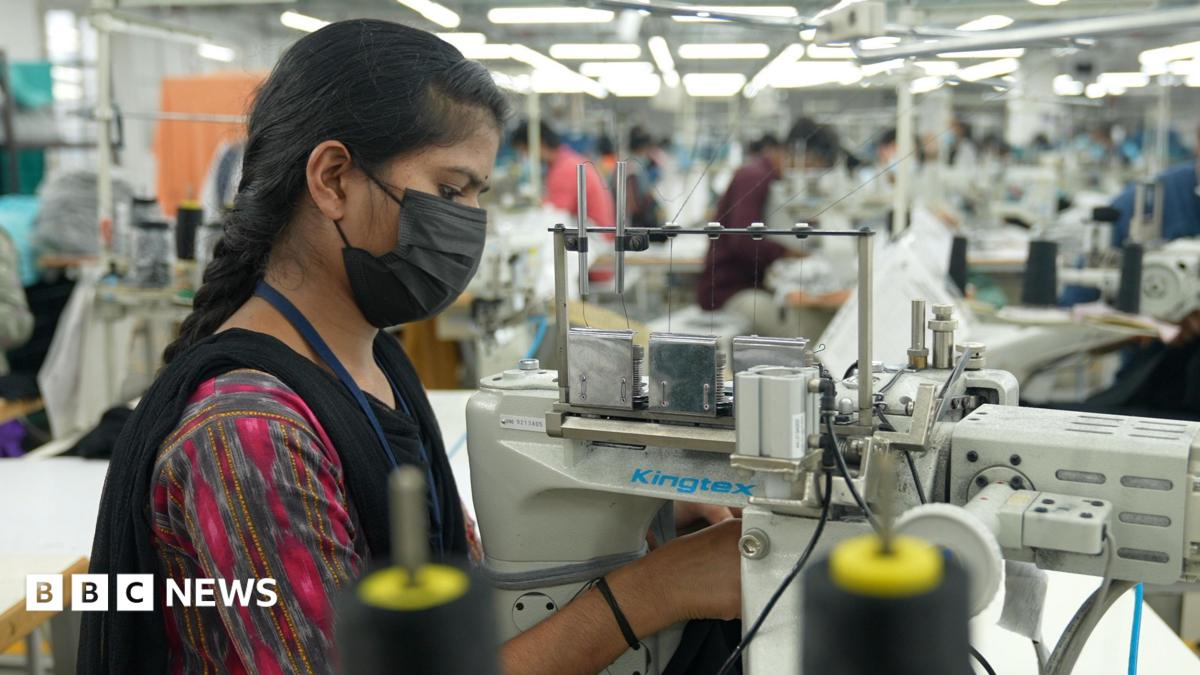
A new round of US tariffs on India is coming into effect, a total of 50% duties on a range of Indian exports. This steep hike follows an earlier 25% tariff announced by Trump, which was doubled via executive order earlier this month for India’s continued purchase of Russian oil.

What stands out is not only the economic weight of the tariffs but also the political message they send. These measures come alongside a complete breakdown in trade talks with India and sharply critical comments from Trump administration officials, notably trade hawk Peter Navarro. The tone has shifted from partnership to punishment, leaving policymakers in both countries and foreign policy experts stunned. This is not merely a trade decision. It’s a major diplomatic disruption.

China gets a pass​

In stark contrast, Trump has taken an altogether different approach with China. Despite China being the largest buyer of Russian oil, it has avoided additional tariffs. In fact, on August 12, Trump postponed tariffs on Chinese imports for another 90 days, maintaining levies at just 30%, far below the new Indian rate.

That’s not all. During a press conference with South Korean President Lee Jae Myung, Trump announced he will allow 600,000 of them into US universities, nearly double the existing number. This is a significant shift from prior Trump policies, which introduced restrictive visa measures and scrutinised Chinese nationals under the lens of national security.

“We’re getting along very well with China… It’s very insulting to say ‘students can’t come here,’” Trump told reporters. “You know what would happen if they didn’t? Our college system would go to hell, very quickly.”

A policy reversal?​


This uneven treatment has upended the foundational logic of America's Indo-Pacific strategy that India is a natural ally in containing the rise of an authoritarian China. The policy had long been shared across administrations, from Bush to Obama to Biden, and enjoyed broad bipartisan support. By penalising India more harshly than China, Trump risks eroding trust in a relationship painstakingly built over two decades. US-India defence cooperation, intelligence sharing, joint military exercises and technology transfers, all of which had deepened in recent years, are now at risk.

Even more jarring is the optics of Trump offering concessions to China while cracking down on India. Trump has lifted export restrictions on Nvidia’s H20 chips to China, reversing a national security-driven ban. In a shocking decision, he recently blocked a stopover by the Taiwanese president in the US. Trump is pushing for denuclearization talks with both Russia and China, positioning China as a necessary dialogue partner in broader security efforts. A top Chinese trade envoy is expected in Washington soon, targeting trade deficit reduction and logistical coordination, another sign of renewed communication channels.

Trump also told reporters on Monday that he expects to visit China this year or shortly afterwards, noting that economic ties between the two countries have improved. Trump pointed to recent talks with Chinese counterpart Xi Jinping: "At some point, probably during this year or shortly thereafter, we'll go to China." "We're going to have a great relationship with China," Trump vowed. He added: "They have some cards. We have incredible cards, but I don't want to play those cards. If I played those cards, that would destroy China."

The cumulative effect of these decisions is a foreign policy that increasingly favors accommodation with China, even as India, an old democratic ally, is alienated. While most Republican lawmakers have not voiced their concerns openly, Democrats are vocal in their opposition. “President Trump is giving away the farm to Xi just so he can save face and reach a nonsensical trade deal with Beijing that will hurt American families economically,” Rep. Gregory Meeks, the top Democrat on the House Foreign Affairs Committee told AP a few weeks ago. “With President Trump, everything seems to be open for negotiation, and there are few if any red lines,” Gabriel Wildau, managing director of the global consultancy Teneo, has told AP. “The hawks worry that if Trump gets into a room with Xi, he will agree to extraordinary concessions, especially if he believes that a big, beautiful deal is within reach.”

Many argue Trump’s hands are tied. The US remains deeply dependent on Chinese goods, especially rare earth materials, essential for defense systems and green technologies. Trump himself hinted at this strategic leverage, saying: “They have some cards. We have incredible cards, but I don’t want to play those cards. If I played those cards, that would destroy China.” But this admission underlines the fragility of the US position and exposes the danger of over-relying on adversarial regimes.

Trump’s current approach, rewarding China while penalising India, may deliver short-term deals or headlines, but it poses serious risks to America’s long-term strategic posture. His foreign policy has always been driven by instinct and negotiation, not doctrine. But the emerging pattern of going soft on China while going hard on India is not only inconsistent, it is strategically incoherent. In an era of intensifying geopolitical competition, alienating a key democratic partner while appeasing an authoritarian rival risks doing lasting damage to US credibility and leadership.
Scott Bessent has addressed this. Effective tariffs on China including from Trump 1.0 and Biden are around 54%. Also, China has agreed to 30% additional tariffs from USA while charging only 10% additional for imports from the US. India still has over 100% tariffs on many American goods. Finally, the American claim is that China was already buying a lot of Russian oil before the invasion and India was not. So, India is being more opportunistic. Anyway, neither China nor India have a final deal yet. Let us wait and watch how those play out.
 
There has been reporting that Trump played the Imran Khan card at the meeting with the Field Marshal, politely reminding him that the US has other options in Pakistan. The meeting itself was arranged through Trump's business associates , not regular diplomatic channels. So, one can imagine what kinds of deals must have been struck.
Either way - typical norms of relationships aren’t in play here which is also why the typical Indian nexus in the US may not be as successful.
 
Either way - typical norms of relationships aren’t in play here which is also why the typical Indian nexus in the US may not be as successful.
Maybe. India was doing old -school trade negotiations where the officials do all the legwork and the leaders turn up just for signatures and photos, but Trump wants to discuss all the details himself , which Modi is not comfortable with. India's old strategy has clearly not worked, so they are trying something different by playing hardball and courting confrontation by refusing to de-escalate. Let us see how it plays out.
 
THIS IS NOT A COMPLIMENT

But Ive heard there is apparently more at play than just trade deals and so on wrt Pakistan.
During PTIs time with Trump(albeit short) - things were “straight”.
This time Pakistan true potential as a no holds barred “wash dirty money” market is opened up and now competing with UAE (which is now moving to less black and more off white).

Tacit indication has been given to every dirty player including Trump’s buddies - “Come on in and wash it all clean”
So you might see PSL and Crypto and everything used for very Trump and buddy friend personal gains at expense of long term FATF and other general financial stability.

But until he is in power - Pakistan may have an easy run.

It wouldn't surprise me, as you said, this relationship isn't the norm but rather an exception. Pakistan has just three years of playtime.
 

Users who are viewing this thread

Back
Top