New record: China wins 90% of global shipbuilding orders in August

Beijingwalker

VIP Member
Joined
Nov 4, 2011
Messages
91,996
Reaction score
112,948
Reputation
2,146.6
Country of Origin
Country of Residence

'Lack of discipline' behind U.S. shipbuilding issues, former rear admiral says​

By Vaughn Cockayne,
August 31 2025

https://img.particlenews.com/image.php?url=4QHHzM_14IDJFX000

Expensive labor and an undisciplined process have hampered U.S. shipbuilding, says a retired U.S. Navy rear admiral, at a time when China aims to dominate the world’s oceans.

In the latest episode of the "Threat Status" Influencers series, retired Rear Adm. Mark Montgomery detailed some of the issues standing in the way of continued U.S. naval dominance. Notably, he said shipbuilding costs have skyrocketed in the U.S. while peer nations have created efficient and affordable systems.

“The problem is multifaceted. One, over time, this has become an exquisite production facility, which requires an expensive labor force,” Mr. Montgomery told "Threat Status" regarding facilities throughout the country. “And once labor prices become variable on something in the United States, they tend to go up versus, say, in Japan, where they can build some of the same ships as ours for maybe $0.28 on the dollar.”

Despite the protection afforded by the Jones Act, a 1920 law that requires vessels operated between U.S. ports to be built domestically, owned by U.S. companies and staffed by Americans, U.S. shipbuilding capacity has shrunk dramatically the past 50 years. Stringent regulations, aging infrastructure and high labor costs have left most U.S. shipyards inactive.

According to a Signal Group report from April, U.S. shipyards account for less than 1% of commercial vessel production worldwide, while China, Japan and South Korea make up 90% collectively.

Mr. Montgomery said the situation has been made worse due to an undisciplined approach to U.S. shipbuilding, which includes adding components to ships. That overcomplicates the process.

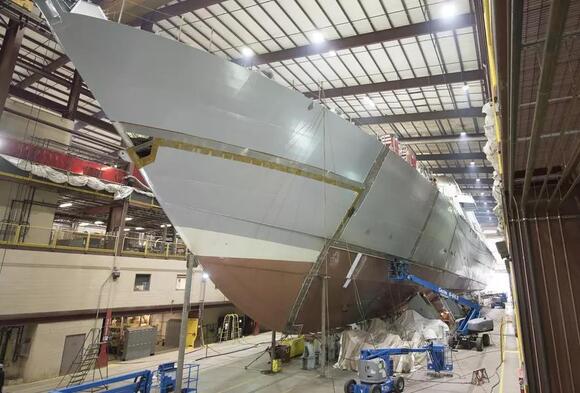
“The Fincantieri, the constellation-class frigate being built at the Fincantieri yard in Wisconsin, has suffered from this,” Mr. Montgomery said. "Where we took an existing ship, an Italian FREMM class frigate, we made so many changes that the price has skyrocketed, the delivery slipped years to the right. This is a lack of discipline.”

Still, Mr. Montgomery said President Trump’s recent initiatives to provide more funding and give U.S. naval officials more control over shipbuilding projects could improve the situation.

“We do need to really concentrate on shipbuilding. His restoring maritime dominance was a lot about the merchant, commercial and Coast Guard shipbuilding. Separately, he’s empowered the secretary of the Navy to do more. The reconciliation bill, or the One Big Beautiful Bill, gave quite a bit of money to the Navy,” he said of Mr. Trump.

Rebuilding U.S. shipbuilding has been one of the key priorities of Mr. Trump’s second term. Earlier this year, he issued the Restoring America’s Maritime Dominance executive order. The One Big Beautiful Bill allocates $29 billion to improving Defense Department resources for domestic shipbuilding, with most appropriations going to key projects like the Virginia-class submarine.

Those allocations could go a long way toward ensuring Washington maintains its naval supremacy, especially as China threatens to overtake the U.S. in the waters around Taiwan. As Mr. Montgomery pointed out, China is still well behind the U.S. in naval power, but fighting a kinetic war in Asian waters would be a massive challenge if Washington can't revitalize the shipbuilding industry.

“The U.S. is still the only global maritime power. But in terms of conducting a fight on their home field within the first and second island chains off the Chinese coast within 1,500 miles, well, they’re playing a home game and we’re playing an 8,000 miles away game,” he said. “They’re beginning to establish a critical mass that does eclipse us, and therefore we’re going to have to buy the right weapons, buy the right munitions, develop the right techniques, master the redundant communications and cyber systems that are gonna be necessary to win.”
 
New record: China wins 90% of global shipbuilding orders in August

  • Of the total 105 new oceangoing cargo vessels ordered in August Chinese shipbuilders won 94 of the vessels
  • South Korean shipyards signed orders for the remaining 11 ships
  • Containerships and bulk carriers dominated ordering activity in August

  • 01 Sep 2025
A total of 54 containerships were contracted in August with most placed at Chinese shipyards

week-in-newbuildingschengxishipyard.png
 
New record: China wins 90% of global shipbuilding orders in August

  • Of the total 105 new oceangoing cargo vessels ordered in August Chinese shipbuilders won 94 of the vessels
  • South Korean shipyards signed orders for the remaining 11 ships
  • Containerships and bulk carriers dominated ordering activity in August

  • 01 Sep 2025
A total of 54 containerships were contracted in August with most placed at Chinese shipyards

week-in-newbuildingschengxishipyard.png
I thought the proposed Trump's taxes on Chinese made ships docking in US ports have significantly decreased China's international commercial ships orders to just close to 60% in the last couple months. Now, the orders have rebounded to 90%, what happened ? Great news, Trump and company will be upset for sure.
 

'Lack of discipline' behind U.S. shipbuilding issues, former rear admiral says​

By Vaughn Cockayne,
August 31 2025

https://img.particlenews.com/image.php?url=4QHHzM_14IDJFX000

Expensive labor and an undisciplined process have hampered U.S. shipbuilding, says a retired U.S. Navy rear admiral, at a time when China aims to dominate the world’s oceans.

In the latest episode of the "Threat Status" Influencers series, retired Rear Adm. Mark Montgomery detailed some of the issues standing in the way of continued U.S. naval dominance. Notably, he said shipbuilding costs have skyrocketed in the U.S. while peer nations have created efficient and affordable systems.

“The problem is multifaceted. One, over time, this has become an exquisite production facility, which requires an expensive labor force,” Mr. Montgomery told "Threat Status" regarding facilities throughout the country. “And once labor prices become variable on something in the United States, they tend to go up versus, say, in Japan, where they can build some of the same ships as ours for maybe $0.28 on the dollar.”

Despite the protection afforded by the Jones Act, a 1920 law that requires vessels operated between U.S. ports to be built domestically, owned by U.S. companies and staffed by Americans, U.S. shipbuilding capacity has shrunk dramatically the past 50 years. Stringent regulations, aging infrastructure and high labor costs have left most U.S. shipyards inactive.

According to a Signal Group report from April, U.S. shipyards account for less than 1% of commercial vessel production worldwide, while China, Japan and South Korea make up 90% collectively.

Mr. Montgomery said the situation has been made worse due to an undisciplined approach to U.S. shipbuilding, which includes adding components to ships. That overcomplicates the process.

“The Fincantieri, the constellation-class frigate being built at the Fincantieri yard in Wisconsin, has suffered from this,” Mr. Montgomery said. "Where we took an existing ship, an Italian FREMM class frigate, we made so many changes that the price has skyrocketed, the delivery slipped years to the right. This is a lack of discipline.”

Still, Mr. Montgomery said President Trump’s recent initiatives to provide more funding and give U.S. naval officials more control over shipbuilding projects could improve the situation.

“We do need to really concentrate on shipbuilding. His restoring maritime dominance was a lot about the merchant, commercial and Coast Guard shipbuilding. Separately, he’s empowered the secretary of the Navy to do more. The reconciliation bill, or the One Big Beautiful Bill, gave quite a bit of money to the Navy,” he said of Mr. Trump.

Rebuilding U.S. shipbuilding has been one of the key priorities of Mr. Trump’s second term. Earlier this year, he issued the Restoring America’s Maritime Dominance executive order. The One Big Beautiful Bill allocates $29 billion to improving Defense Department resources for domestic shipbuilding, with most appropriations going to key projects like the Virginia-class submarine.

Those allocations could go a long way toward ensuring Washington maintains its naval supremacy, especially as China threatens to overtake the U.S. in the waters around Taiwan. As Mr. Montgomery pointed out, China is still well behind the U.S. in naval power, but fighting a kinetic war in Asian waters would be a massive challenge if Washington can't revitalize the shipbuilding industry.

“The U.S. is still the only global maritime power. But in terms of conducting a fight on their home field within the first and second island chains off the Chinese coast within 1,500 miles, well, they’re playing a home game and we’re playing an 8,000 miles away game,” he said. “They’re beginning to establish a critical mass that does eclipse us, and therefore we’re going to have to buy the right weapons, buy the right munitions, develop the right techniques, master the redundant communications and cyber systems that are gonna be necessary to win.”
Why this article is here?
 
I thought the proposed Trump's taxes on Chinese made ships docking in US ports have significantly decreased China's international commercial ships orders to just close to 60% in the last couple months. Now, the orders have rebounded to 90%, what happened ? Great news, Trump and company will be upset for sure.

i think they reduced the docking rates.
 

Goldman Sachs: The global shipbuilding industry will enter an upgrade cycle before 2032, with the main expansion coming from Chinese shipyards.​

wallstreetcn· Sep 2 11:48

The global shipbuilding industry is poised for a resurgence, with Goldman Sachs analysts predicting a multi-phase upturn lasting until 2032, driven by decarbonization requirements, the renewal of aging fleets, and growth in global trade. Among them, Chinese shipyards are expected to dominate the competition for global market share, leveraging their capacity expansion and cost advantages.
A recent report from Goldman Sachs indicates that the global shipbuilding industry is entering a multi-year upgrade cycle, with Chinese shipyards playing a central role.

The report from Goldman Sachs on September 2 forecasts that, driven by environmental regulations, fleet aging, and trade growth, the global shipbuilding industry is entering a "multi-phase, long-term upward cycle" that could last until 2032, bringing in new ship orders valued at $1.2 trillion. In this expansion phase, Chinese shipyards will dominate global capacity growth.

We are optimistic about the long-term upward cycle in the shipbuilding industry and believe that environmental requirements and the need to replace aging fleets will be key long-term driving factors.

Decarbonization and fleet renewal: Key engines driving new orders.​

Analysts predict that from 2025 to 2032, the total volume of new ship orders globally will reach 441 million compensated gross tons (CGT), with a total value of up to $1.2 trillion.

Of this, decarbonization regulations will contribute 26% of the demand, fleet replacement needs will account for 48%, while trade growth will contribute 26%. The report points out that decarbonization and replacement demand will extend this upward cycle by continuously driving new ship orders, especially after 2029, when vessels delivered between 2009 and 2012 will exceed 20 years of age and urgently need to be replaced by more environmentally friendly new ships.

  • Environmental regulations (26%): Increasingly stringent decarbonization regulations are the core variable driving new orders. The report analyzes that by 2035, due to rising carbon emission penalty costs, the operating costs of traditional fuel vessels will surpass those using alternative fuels like liquefied natural gas (LNG) and methanol. To meet compliance goals, the proportion of alternative fuel vessels needs to increase to 50% by 2035.
  • Fleet renewal (48%): This is the largest source of demand in this cycle. A large number of vessels delivered during the last shipbuilding peak (2009-2012) will reach 20 years of age around 2029, entering a phase of large-scale replacement. The replacement demand for oil tankers, bulk carriers, and gas carriers is particularly prominent.
  • Trade growth (26%): The steady growth of global trade continues to provide fundamental support for new ship orders.

China leads capacity expansion.​

Goldman Sachs expects that new ship prices will remain high during the period from 2025 to 2028. Although there may be a slight correction of 12% from the peak in 2024, this is primarily due to production discipline and stronger structural demand for new orders. The report emphasizes that the global capacity expansion mainly comes from Chinese shipyards, while South Korean and Japanese shipyards maintain a relatively conservative level.

Goldman Sachs conducted a bottom-up analysis based on schedules and historical delivery data from over 400 global shipyards, as well as announced capacity expansion plans. The analysis shows that although the delivery volume is expected to increase from 41 million compensated gross tons in 2024 to 52 million compensated gross tons in 2027, representing a growth of 27%, the compound annual growth rate (CAGR) of global shipyards will only be 2% during the period from 2025 to 2027.

This growth is primarily driven by the expansion of Chinese shipyards (new shipyards and the reactivation of old shipyards). China's share of global shipbuilding capacity is continuously increasing, and its efficient construction capabilities and cost advantages are important factors attracting new orders.

Opportunities and challenges for China's shipbuilding industry.​

The report specifically analyzes the impact of the United States raising port service fees for ships built in China on China's shipbuilding industry, concluding that the negative impact is limited.

The report presents two core data points: first, currently, ships built or operated by China account for only 4% of the international fleet registered in U.S. ports; second, the volume of U.S. import and export trade accounts for only 12% of the total global maritime trade. This implies that shipowners have sufficient flexibility to redeploy Chinese-built vessels to other routes.

The report indicates that the decline in market share of Chinese shipyards projected for 2025 is primarily due to their own extremely tight production capacity—current orders extend up to 3.7 years, significantly exceeding the 3 years for South Korea and Japan. This has led some eager shipowners to turn to other shipyards.

However, this precisely constitutes a long-term opportunity for Chinese shipyards. As Chinese shipyards expand their capacity and gradually deliver existing orders, their more attractive price advantage will become evident, aiding in the recovery of market share. Data shows that this trend may have already begun, as in June and July 2025, the market share of new orders received by Chinese shipyards rebounded to 69%, significantly higher than the 49% recorded in the previous five months.


China’s rise as a naval power is not only a question of numbers

Uriel Irigaray Araujo
Update Time : Sunday, September 7, 2025
Chinese, American, Gulf of Oman, Indian Ocean, Persian Gulf, Mediterranean, Beijing, Red Sea, John F. Kennedy, Eurasian, nuclear,

Last week, Russian and Chinese submarines carried out their first joint patrol in the Pacific, marking a historic milestone in naval cooperation between two continental powers traditionally associated with land dominance or “Land Power” in classical geopolitical parlance.

This patrol came four weeks after Russia and China conducted their first full-scale joint naval exercise, Joint Sea-2025 (August 1–5). The submarine operation, which demonstrated coordinated surface and undersea maneuvers, spanned strategically sensitive waters in the Sea of Japan and East China Sea. Japan, the main American regional ally, shadowed the flotilla near its coast: these waters have long been flashpoints of regional rivalry — territorially, politically, and strategically.

One may recall that, back in March, the Security Belt 2025 exercise brought China, Russia, and Iran together in the strategic Indian Ocean, in the Gulf of Oman (near Chabahar Port directly adjacent to the Strait of Hormuz), along crucial energy corridors. These maneuvers were designed not only as military drills but also as political signals. As a matter of fact, when seen together — the March trilateral exercise, the August Joint Sea-2025 drills, and now the unprecedented joint submarine patrol — the pattern is unmistakable: China and Russia are steadily redefining the meaning of “sea power.”

According to (School of International Studies scholars) Ma Bo and Li Zishuit, the aforementioned Security Belt 2025 also illustrated Beijing’s strategic embrace of “minilateralism”, where limited, flexible maritime coalitions advance both regional security and China’s reach along vital energy routes. Featuring live-fire strikes, anti-piracy patrols, and aerial-naval coordination, the exercise shows how small-group security settings offer Beijing practical influence without excessive reliance on bloated multilateral institutions. China and its partners are in fact increasingly using these minilateral frameworks to safeguard trade corridors and reshape regional security architecture on their own terms.

Moreover, these maneuvers are part of a broader strategic push by China and Russia to refine hybrid maritime doctrines that blend conventional sea power with technological and industrial leverage.

The United States, by contrast, looks increasingly overburdened (a theme I’ve covered a number of times, from different angles). Its navy, while maintaining a global presence across the Pacific, Persian Gulf, Mediterranean, and Red Sea, is also struggling to adapt to new Arctic realities — investing in ice-capable operations and transpolar surveillance as climate change opens Northern Sea routes. Thus far, Washington’s strategy has relied on projecting a permanent presence everywhere, thereby stretching resources thin. Suffice to say, this approach is becoming unsustainable in the face of near-peer competitors who are more focused, more agile, and less entangled in global overreach, so to speak.

Meanwhile, China’s rise as a naval power is not only a question of numbers, although its fleet expansion is impressive enough by any measure. It is about what I would call a “naval-industrial-strategic” triad: a combination of shipbuilding capacity, technological innovation (from AI-driven undersea drones to hypersonic anti-ship missiles), and geopolitical vision. Beijing is betting on new domains — cyber, space, seabed infrastructure — integrated into maritime strategy, thereby creating a hybrid form of sea power that Alfred Thayer Mahan could hardly have imagined.

Russia, for its part, brings combat-tested fleets and strategic geography to this equation. It has been leveraging its regional expertise (whether in the Black Sea, the Arctic, or now East Asia) while coordinating with Beijing through joint drills, thus remaining a consequential player in shaping evolving patterns of global naval presence. Notably, it operates the world’s largest fleet of nuclear power icebreakers, crucial for maintaining year-round access to the Northern Sea Route. Together, the two Eurasian powers are rebalancing the global naval equation.

The wider multipolar context here matters too. Just days ago, the world witnessed, in Beijing, a military parade that brought together the leaders of China, Russia, North Korea, and Iran. While arguably largely symbolic, the parade highlights the growing alignment between diplomatic signaling, strategic alliances, and tangible military capabilities across Eurasia.

Naval exercises in this larger context are simultaneously training grounds, deterrence demonstrations, and political theater. No wonder analysts are increasingly cautious about overestimating US operational reach in these complex environments.

The point is that when we speak of “sea power” today, we must think not in classical terms of tonnage and battleships, but in terms of hybrid capabilities, new coalitions, and contested chokepoints. Regarding the old dichotomy between “land power” and “sea power”, the emerging Eurasian model is fluid enough to adapt across domains, while the US struggles to keep up everywhere at once.

Washington, as a matter of fact, faces structural limits in this emerging maritime competition. Its industrial base for one thing struggles to keep pace with Beijing’s shipbuilding acceleration (Chinese shipbuilding capacity, amazingly enough, is reportedly 200 times greater). Delays in carrier construction — including the USS John F. Kennedy, postponed to March 2027 — aging fleets, and stretched global commitments blunt the capacity to project power consistently across multiple theaters.

Simply put, a superpower cannot indefinitely combine blue-water dominance with near-simultaneous continental obligations. Allies increasingly hedge, seeking self-reliance or diversifying partnerships (unpredictable tariffs do not help, obviously).

This hybrid overextension plus an erratic foreign policy, combined with the rise of technologically sophisticated competitors, means that the US can no longer assume uncontested maritime supremacy. This is geopolitics — and not just History — in the making.

 
The United States, by contrast, looks increasingly overburdened Washington’s strategy has relied on projecting a permanent presence everywhere, thereby stretching resources thin. Suffice to say, this approach is becoming unsustainable in the face of near-peer competitors who are more focused, more agile, and less entangled in global overreach, so to speak.
Smart people found obvious facts while idiots refuse to see.
 

The breakneck speed of China's shipbuilding: How Chinese Navy is preparing to operate anywhere across the globe​


The breakneck speed of China's shipbuilding: How Chinese Navy is preparing to operate anywhere across the globe

Sep 13, 2025, 11:48:00 AM IST

Synopsis
China's military modernization is rapidly advancing, demonstrated by the Fujian aircraft carrier's transit through the Taiwan Strait. The nation boasts the world's largest navy and is significantly expanding its air force and ground forces with modern equipment. Increased defense spending and a growing nuclear arsenal underscore China's ambition to become a dominant global power.

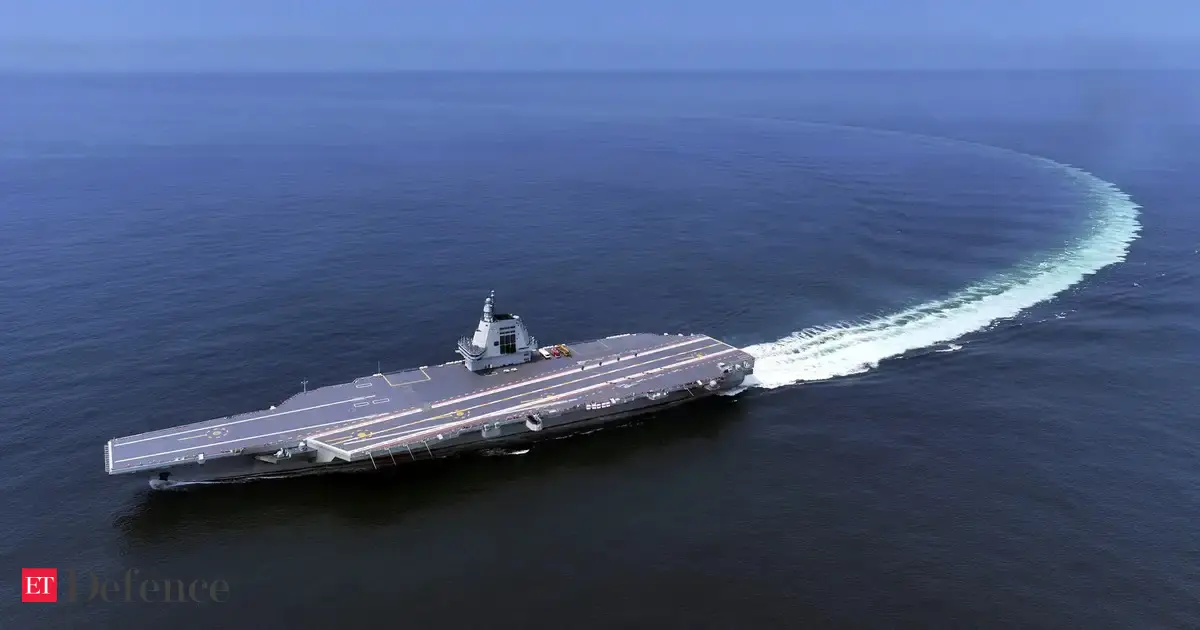
China’s newest aircraft carrier, Fujian, sailed through the Taiwan Strait on Friday near Taiwan, which China claims as its own territory. This move reflects Beijing’s growing military capabilities and its ambitions to assert influence in the Indo-Pacific region. China now has the world’s largest naval fleet, with over 370 warships compared to the United States’ 296. China’s shipbuilding capacity is roughly 230 times that of the U.S., raising concerns in Washington, according US' Office of Naval Intelligence

The People’s Liberation Army Navy (PLAN) aims to become a fully capable blue-water navy by 2050. A blue-water navy can operate globally across deep oceans, not just in coastal regions. China’s fleet includes over 40 destroyers, more than 50 frigates, around 60 submarines, over 90 corvettes and missile boats, multiple amphibious assault ships, and two active aircraft carriers, with a third undergoing trials. Reports indicate China adds about six submarines annually, potentially reaching 80 by 2035.

To illustrate the pace of shipbuilding, the 250-tonne Type-22 light fast attack aircraft, introduced in 2004, saw 83 units produced within eight years. In 2016, the Jiangnan Changxing shipyard was building 16 different ships simultaneously, while the Dalian Shipyard constructed three types of ships.

Aircraft carriers at the centre of strategy
China’s first aircraft carrier, Liaoning, entered service in 2012. Reports indicate the country may have six to seven carriers by the early 2030s. As U.S. diplomat Henry Kissinger famously said, an aircraft carrier represents "100,000 tons of diplomacy."

People's Liberation Army Air Force expansion

The People’s Liberation Army Air Force (PLAAF) has increased its combat capability from 1,400 fighter aircraft in 2000 to roughly 2,500 in 2025. This includes over 300 fifth-generation J-20 stealth fighters and advanced fourth-generation aircraft such as the J-10C and J-16. China’s strategic bomber force now includes over 160 H-6 aircraft, capable of carrying long-range cruise missiles. Additionally, around 80 Y-20 heavy-lift transport aircraft have expanded the country’s strategic air mobility, and the Xi’an H-20 stealth bomber is under development.

People's Liberation Army Ground Forces modernisation

The PLA Ground Forces have been overhauled from a manpower-intensive structure to a leaner, technologically advanced force. Active personnel declined from 3.6 million in 1998 to about 965,000 in 2023.

China’s main battle tank fleet has shifted from older Soviet-derived models to modern platforms, including over 1,300 Type 99A tanks and thousands of upgraded Type 96-series tanks. Artillery capability has evolved from 10,000 older towed guns in 2000 to over 3,000 modern systems such as the PLZ-05 self-propelled and PCL-181 wheeled artillery. Armored vehicles have grown from approximately 14,000 in 2000 to more than 35,000 in 2025, including advanced infantry fighting vehicles and armored personnel carriers like the ZBL-09 and ZBD-04.

China's Defense spending

The U.S. Department of Defense’s 2024 China Military Power Report estimates that China’s publicly declared defense budget of $245 billion is understated by 40 to 90 percent. Accounting for off-budget spending, actual expenditures are estimated between $330 billion and $450 billion, with some U.S. lawmakers speculating the total could reach $700 billion.

Nuclear arsenal expansion

According to the Stockholm International Peace Research Institute (SIPRI), China is also the fastest-growing nuclear weapons producer globally. Since 2023, the country has added roughly 100 nuclear warheads annually. As of 2025, China is estimated to possess around 600 nuclear warheads, with projections suggesting the stockpile could reach 1,500 by 2035. Russia currently holds the largest nuclear arsenal with approximately 5,580 warheads.

The unprecedented pace and scale of modernization have raised concerns in Washington, across Asia, and among global security analysts. With continued investments in modern platforms, cyber capabilities, space technologies, and strategic systems, China is positioning itself as a major global power capable of shaping international security in the decades ahead.


China shipyard orders strong despite US port fees on China vessels, report says​

By Lisa Baertlein
September 26, 20254:45 AM GMT+8

Workers build vessel at a shipyard in Yizheng

A drone view shows workers building a vessel at a shipyard in Yizheng, Jiangsu province, China August 25, 2025. cnsphoto via REUTERS/File Photo Purchase Licensing Rights, opens new tab
  • Summary
  • Companies
  • Chinese shipyards capture 53% of Jan-Aug global ship orders by tonnage
  • US port fees on China-linked vessels aim to counter China's maritime dominance
  • MSC orders 12 containerships from China despite US port fees
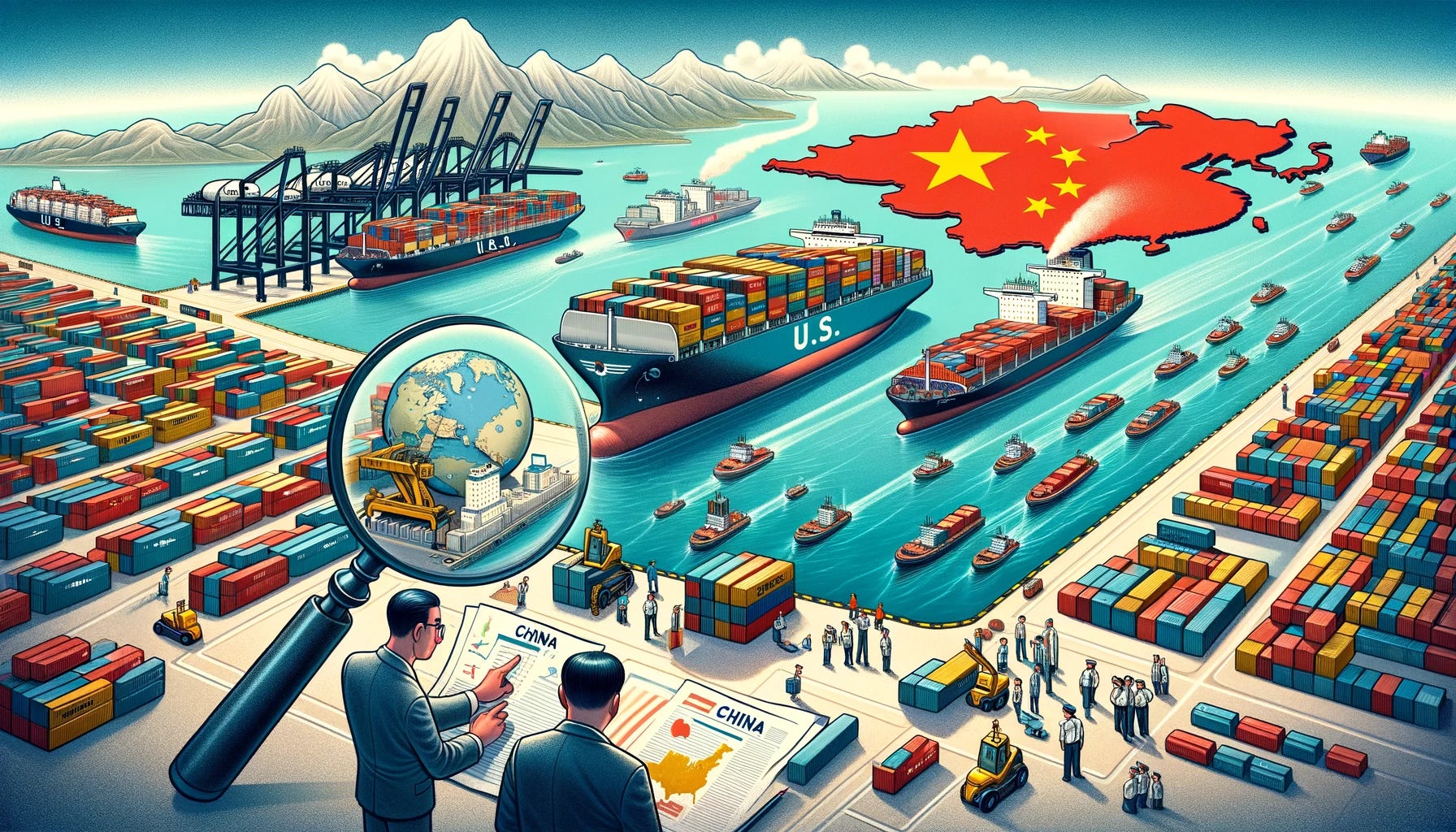
LOS ANGELES, Sept 25 (Reuters) - Global shipping companies are moving full steam ahead with commercial vessel orders from Chinese shipyards, despite the U.S. targeting those ships with port fees aimed at countering China's maritime dominance, a new report from the Center for Strategic and International Studies showed.
Chinese shipyards captured 53% of all global ship orders by tonnage during the first eight months of 2025, according to the CSIS analysis of S&P Global data released on Wednesday.

That was on par with full-year 2023 levels before the U.S. Trade Representative (USTR) launched the China maritime probe that paved the way for the port fees, CSIS said.
"Shipping companies are largely moving forward with business as usual," said Brian Hart, a fellow with the China Power Project at CSIS and an author of the report. "So far, it doesn't look like these policies will achieve a significant shift away from China."
China's share of global ship orders by tonnage had jumped to 73% in 2024, suggesting shipowners were seeking to lock in contracts before potential USTR restrictions took effect.

Starting October 14, ships built in China - or operated or owned by Chinese entities - will need to pay a fee at their first port of call in the United States.

That fee could top $1 million for a ship carrying more than 10,000 containers and is slated to rise annually through 2028, according to analyst estimates.

The port fees on China-linked vessels are part of a broader U.S. effort to revive domestic shipbuilding and to blunt China's growing naval and commercial shipping power.

But catching up with China's state-supported shipyards is a heavy lift.

Last year, the U.S. shipyards built fewer than 10 commercial ships, while China's turned out well over 1,000, military and industry analysts said.

China over the last two decades has propelled itself to the No. 1 position globally and its biggest shipyards handle both commercial and military projects.

Meanwhile, the U.S. Navy's fiscal year 2025 plan said U.S. commercial shipbuilding has experienced a near-total collapse and called for the long-term revitalization of that industry to bolster Navy shipbuilding.

MSC - the largest containership operator - placed orders for 12 of those vessels to be built in China since USTR announced the port fees in April this year, the CSIS report said.
Switzerland-based MSC, like peers Hapag-Lloyd (HLAG.DE), opens new tab, Maersk (MAERSKb.CO), opens new tab and CMA CGM, has taken China-linked ships off U.S. trade routes, limiting or negating the new fees.

HSBC analysts said China's COSCO Shipping (601919.SS), opens new tab is most exposed with estimated 2026 port fees of $1.5 billion.

President Donald Trump has been a cheerleader for U.S. shipbuilders, seeking alliances and investments from powerhouses like South Korea.


Users who are viewing this thread

Pakistan Defence Latest

Country Watch Latest

Latest Posts

Back
Top