


not entirely sanction proof. PAC uses precision tooling made in Italy(Parpas), France (Forest Line), Germany and Japan in manufacturing the JF-17. I suppose once the aircraft is in the hands of PAF it is relatively sanction proof.Skip to contentSkip to footer
22 Years On, The Sanction-Proof JF-17 is More Important Than Ever
Defence Uncut by Quwa Team
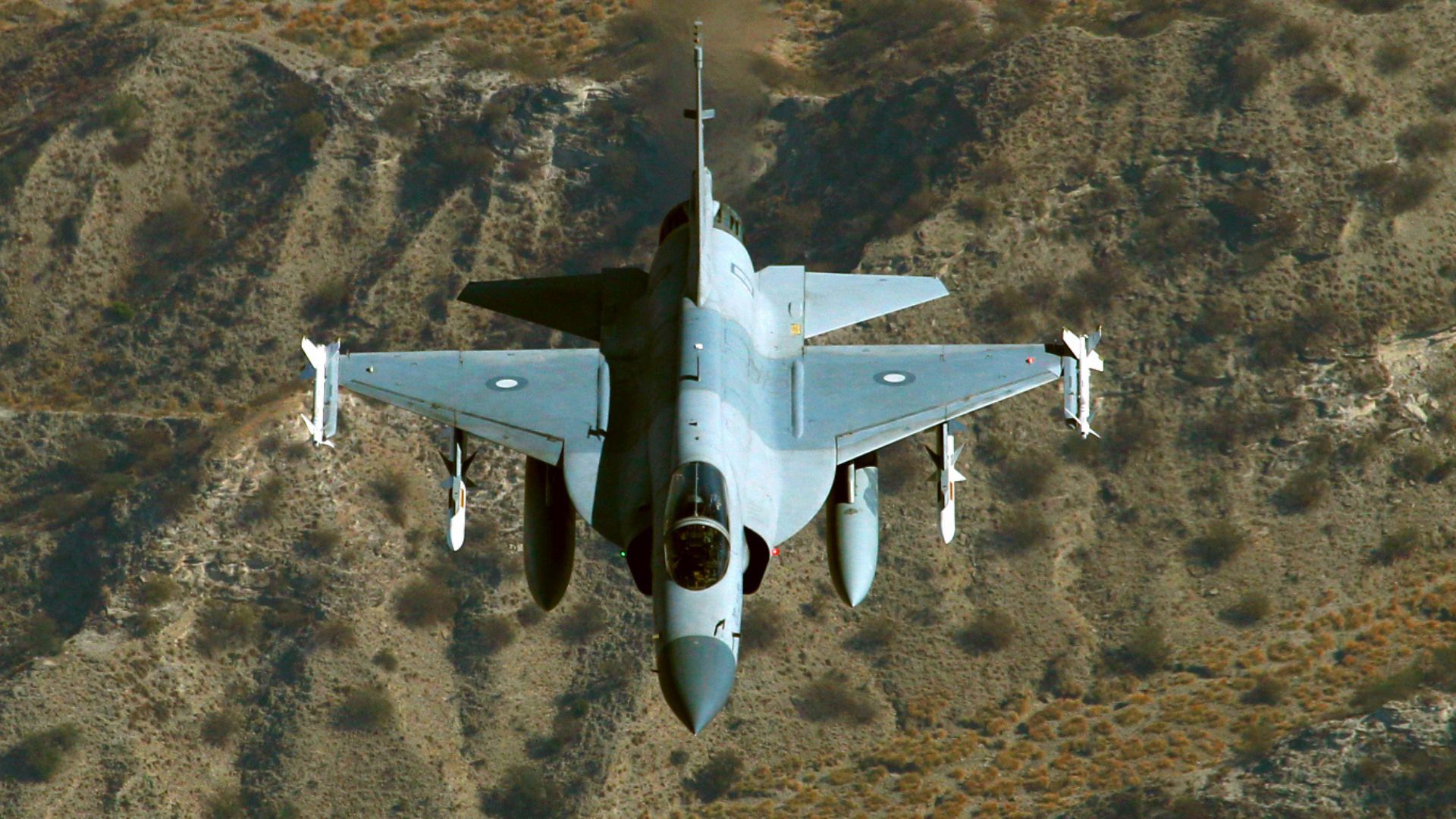
In this week’s episode of Defence Uncut, we mark the 22nd anniversary of the JF-17 Thunder’s maiden flight by taking a deep dive into the platform’s history, evolution, and future with Usman Shabir and Yawar Mazhar, authors of the definitive Pakistan Air Force (PAF) history, Eagles of Destiny.
The JF-17 program represents a seminal moment in the PAF’s history, not merely for the affordable, multi-role capability it delivered, but for the strategic pragmatism and shrewd project management that brought it to fruition. Born from the crucible of crippling Western sanctions, the Thunder’s journey from a collaborative concept to a mature, combat-proven workhorse offers a masterclass in risk mitigation, iterative development, and building indigenous capacity against the odds.
The discussion unpacks the long and often-stalled road to a locally produced fighter, from early post-independence ambitions to the first serious attempt with Project Sabre II in the late 1980s. Ultimately, it was the severe geopolitical pressures of the 1990s that provided the final impetus for the PAF to take control of its own destiny, leading to the co-development partnership with China that would yield the JF-17. This episode explores how the PAF’s disciplined, end-user-driven approach allowed it to succeed where other regional programs have faltered, creating not just an aircraft, but a sustainable foundation for Pakistan’s future aerospace ambitions.
Listen to the full episode on YouTube or your favorite podcast platform.
A Program Forged by Sanctions
The story of the JF-17 is inextricably linked to the history of Western sanctions against Pakistan. While vague ideas of local aircraft manufacturing existed since the 1950s, these were largely aspirational and lacked serious backing from a PAF pragmatically focused on building a modern force with proven, off-the-shelf hardware. The PAF’s early focus was correctly placed on developing foundational technical capabilities, such as establishing gas turbine maintenance facilities and depot-level maintenance capacity, which would prove vital in the long run.
The first serious endeavor toward an indigenous fighter was Project Sabre II in the late 1980s. This ambitious program aimed to re-engineer the Chinese F-7 airframe with a powerful American General Electric F404 engine and Western avionics, with Grumman serving as the primary systems integrator. Conceptually similar to the Northrop F-20 Tigershark’s redevelopment of the F-5, Sabre II was a pragmatic attempt to create a modern, lightweight fighter. However, the imposition of the Pressler Amendment sanctions in 1990 abruptly killed the project and halted the delivery of new F-16s, leaving the PAF in a critical capability gap.
This strategic isolation proved to be the catalyst for the JF-17. With Western suppliers out of the picture, the PAF deepened its existing partnership with China’s Chengdu Aerospace Corporation (CAC). After years of negotiations, a formal contract was signed in June 1999 for the co-design, co-development, and co-production of a new fighter, then known as the Super-7 or FC-1. The objective was clear: to develop an affordable and sanction-proof workhorse to replace the PAF’s large but aging fleets of A-5s, F-7Ps, and Mirages in the numbers required to maintain credible conventional deterrence.
Disciplined Program Management
Perhaps the most critical factor in the JF-17’s success was the PAF’s disciplined and pragmatic approach to program management, a stark contrast to the troubled development of India’s HAL Tejas. When new US sanctions in 1999 blocked the planned integration of Western avionics, the PAF made the pivotal decision to decouple the airframe and avionics development streams. Instead of allowing the program to stall while searching for new subsystems, the PAF instructed CAC to focus solely on maturing the airframe, while it explored avionics options in parallel. This decision prevented catastrophic delays and ultimately led to the adoption of a mature avionics suite derived from China’s J-10 program.
This philosophy of incremental, risk-managed development defined the program’s entire lifecycle. The PAF adopted a block-based production strategy, inducting the aircraft in batches of 50 and introducing new capabilities with each successive variant.
This iterative approach ensured that the program was never held hostage by a single, undeveloped technology. It allowed the PAF to field a credible capability in the near term while methodically building toward its ultimate requirements, all while absorbing technology and building indigenous industrial capacity at a manageable pace.
- Block 1 served as the baseline, establishing the production line and getting a capable, modern aircraft into service quickly.
- Block 2 introduced key enhancements such as an air-to-air refueling probe and an improved Environmental Control System (ECS), while also fielding the dual-seat JF-17B trainer. The JF-17B itself served as an aerodynamic testbed for the subsequent Block 3.
- Block 3 represents a generational leap, incorporating a modern Active Electronically Scanned Array (AESA) radar, a new Helmet-Mounted Display and Sight (HMD/S), and an advanced digital fly-by-wire flight control system.
Building True Self-Reliance
A common critique of the JF-17 program questions its “indigenous” credentials, pointing to its foreign-sourced engine and other key components. This view, however, conflates the distinct concepts of an Original Equipment Manufacturer’s (OEM) capability with a nation’s overall industrial base. The PAF’s primary strategic goal was not 100% turnkey production, but rather securing its supply chain from the threat of Western political coercion.
Viewed through this lens, the program has been an unmitigated success. Through a comprehensive Transfer of Technology (ToT) agreement, Pakistan Aeronautical Complex (PAC) Kamra now manufactures approximately 60% of the JF-17’s airframe, including critical components like the wings and vertical tail. Furthermore, PAC has progressively localized the production of key avionics, including the mission computer, the KLJ-7 radar, and the head-up display. This deep involvement in manufacturing and systems integration gives the PAF sovereign control over the aircraft’s maintenance, overhaul, and crucially, its weapons integration — a level of autonomy it never had with Western platforms. The capacity and expertise built through the JF-17 program have served as the direct foundation for more ambitious national projects, such as the National Aerospace Science and Technology Park (NASTP).
The next stage of this evolution, outlined under the forthcoming PFX program, will see further upgrades to the JF-17 platform, including a new Gallium Nitride (GaN) AESA radar and an integrated electronic countermeasures (ECM) suite. This demonstrates a clear path forward, ensuring the JF-17 remains the adaptable, high-quantity, and cost-effective backbone of the PAF for decades to come. In an era where modern conflicts have underscored the critical need for a sustainable mass of platforms capable of deploying precision standoff munitions, the wisdom of the PAF’s investment in the JF-17 has never been clearer.
Thus, in Quwa’s estimation, the Pakistan Air Force will likely aim for a total JF-17 fleet size of around 200-250 aircraft in the long term, including future upgraded variants. This number would not only ensure a full one-for-one replacement of its remaining legacy Mirage III/5 strike aircraft but also provide a sustainable and sovereign industrial base for maintaining a large force of platforms essential for massed conventional standoff strikes, a capability of ever-increasing importance in the regional strategic calculus.
Navigation
Install the app
How to install the app on iOS
Follow along with the video below to see how to install our site as a web app on your home screen.
Note: This feature may not be available in some browsers.
More options
Style variation
You are using an out of date browser. It may not display this or other websites correctly.
You should upgrade or use an alternative browser.
You should upgrade or use an alternative browser.
22 Years On, The Sanction-Proof JF-17 is More Important Than Ever.
- Thread starter Fatman17
- Start date
More options
Who Replied?

PK781
Trusted Member


So glad that the JF17 was designed and improved and gave Pakistan an alternate to the american F16. The americans can no longer blackmail or hold back Pakistan from strengthening and pursuing its defense goals.
Thundering birds recently destroyed S400s in india. That is a big performance achievement of the JF17 platform, as well as our lionhearted pilots of the PAF.
Its a big slap/punch on the face of the zionist americans and their nefarious designs of keeping Pakistan subservient which obviously isn't happening.
The future looks bright for the PAF inshAllah.
It is the pride of the nation!!
PAF and Pakistan Zindabad.
Happy Defense Day Pakistan.
Thundering birds recently destroyed S400s in india. That is a big performance achievement of the JF17 platform, as well as our lionhearted pilots of the PAF.
Its a big slap/punch on the face of the zionist americans and their nefarious designs of keeping Pakistan subservient which obviously isn't happening.
The future looks bright for the PAF inshAllah.
It is the pride of the nation!!
PAF and Pakistan Zindabad.
Happy Defense Day Pakistan.

K2RULEZ
Elite Member

Sir, that is very impressive , but many Pakistani members are saying that Pakistan is once again going to be a major US ally and partner and India is sucking up to China. So, it seems Pakistan has replaced planes vulnerable to Western sanctions with planes vulnerable to Chinese sanctions.
LOL This Indian is confused. Just because relations with the US are improving at your cost doesn't mean that Pakistan will break relations with China.

Last edited:

Yasser76
Elite Member

Sir, that is very impressive , but many Pakistani members are saying that Pakistan is once again going to be a major US ally and partner and India is sucking up to China. So, it seems Pakistan has replaced planes vulnerable to Western sanctions with planes vulnerable to Chinese sanctions.
60s (PAF using Chinese/US planes - F-104/F-6) - Pakistan major cold war ally
80s (PAF using Chinese/US planes - F-16A/F-7) - Pakistan major anti-Soviet ally
2025 (PAF using Chinese/US planes - F-16D/C/J-10) - Pakistan anti-terror ally
China not once sanctioned Pakistan. Cope harder
ARMalik
Trusted Member

Sir, that is very impressive , but many Pakistani members are saying that Pakistan is once again going to be a major US ally and partner and India is sucking up to China. So, it seems Pakistan has replaced planes vulnerable to Western sanctions with planes vulnerable to Chinese sanctions.
These indians are so disgusting. Just no shame or integrity.
K2RULEZ
Elite Member
ThoroughPro
Registered Member
What is Modi doing in China? Sucking Xi's dick after sucking on US's dick for the last 25 yearsSir, that is very impressive , but many Pakistani members are saying that Pakistan is once again going to be a major US ally and partner and India is sucking up to China. So, it seems Pakistan has replaced planes vulnerable to Western sanctions with planes vulnerable to Chinese sanctions.

hussain0216
Elite Member
LOL This Indian is confused. Just because relations with the US are improving at your cost doesn't mean that Pakistan will break relations with China.
China is a primary ally for Pakistan, Pakistan will neither harm the relationship nor harm Chinese interests for anyone
The U.S however is a big trading partner, leader of the west and Pakistan can't afford to antagonize the U.S for nothing, at least until our strategic interests are under threat
If anything, Pakistan currently has a very balanced foreign policy
We have superb relations with China, Turkey/Azerbaijan and the Turkic world, GCC and the Arabs, the wider Muslim world and even the wider world, with good relations with South Korea, European states etc etc
India for the last 10 years especially has been sucking up to the Zionists and west especially western right wing, and their hindutva supporters can be found on multiple sites supporting white supremacists and Zionists in any maniacal anti immigrant, Muslim, anti global South message
Whats happened is the India just got slapped into reality by Trump, MAGA and the west
What they wanted was a tool against China, what they got was a delusional hindutva state with delusions of grandeur of becoming a super power, hated in its region with limited influence, refusing to take on China and trying to spark a nuclear conflict by attacking a nuclear armed state in Pakistan and ending up humiliated and defeated
On top of all of the above, India has been abusing the west through tarrifs, abusing the HB1 system and flooding the west with indians
And then trying to act smart by killing citizens of western democracies ie sikhs and being caught red handed
Indians, suddenly upset at U.S reaching out to Pakistan and inviting Head of military to a dinner at the White House no less and following up with high tarrifs on the Indians actually think that turning up at the SCO will suddenly make a alliance with China and Russia, when China humiliated India on the LAC but also helped arm Pakistan and help defeat India in 2019 and 2025
Honestly Indian foreign policy is all over the place at the moment
and they need to control the bakhts before they tear India apart
PakShaheen_79
Trusted Member

MirageV3ff
Registered Member
It all depends on what Pakistan has learnt from working with Chengdu. We can make the airframe but what about core elements like the sensors, radars and the power unit? We'll definitely need consulting, or even outsourcing of those components, either working again with Chengdu or work with Turkish aerospace industriesI just posted a thread based on my analysis. Should Pakistan not take advantage of Chinese AI based UCAV 5th gen stealth designs shown in the military parade? Because if we get one of those designs, we can use the remainder of the components from the JF-17 project like sensors and avionica, and jump straight into a 5th gen industry, that's our eventual target through PFX.
But instead of going through PFX-Alpha first, we by pass that and start now with TOT to a 5th gen stealthy UCAV. The benefits of this approach are too many. With Indian mass placement of S-400 and other LR-Sams on our borders, with more Rafales and SU-57's coming, it would make sense to drop the ideas of 4th gen designs and jump directly to 5th gen when the design is available at an affordable price because from the inside, the sensor suite can still be from PFX.
@Distant_Observer @pwfi @Hakikat ve Hikmet @MirageV3ff @TAC
PAF's idea of the “PFX” fighter is using the JF-17 Block 3 as a starting point and improving upon it. Or atleast that's what I've been able to gather from the information from various sources. Do understand we have to put atleast a 10 year timeline as to think about replacing legacy fighters which also includes the JF-17s (block 1s are nearing the end of their airframe life)
What’s Possible in 10 Years
A truly indigenous fighter (engine, radar, avionics all made locally) is not realistic in 10 years. Engine tech alone takes decades.
A partly indigenous fighter (foreign engine + some foreign sensors, but local airframe, avionics, and weapons integration) is possible, if Pakistan manages costs, partners smartly, and keeps expectations in check. Latter is possible but getting a partner in the program is the interesting bit. Had we joined TAI on working on KAAN, we could have worked on a seperated project based on a single engined version of kaan (similar to what the Americans did with F-16, using the F-15's engine as the baseline).
This is a long term plan however, in the short term we should look more towards UCAVs.
Why UCAVs Make More Sense (for now)
Pakistan already has UCAV experience (Burraq, etc.), so it’s a natural next step.
UCAVs are cost effective for us too. Considering the defence budget and all, we can afford it, plus it's a lower risk program compared to say a fighter jet (ask the Indians how it's going)
They let the industry build critical know-how in avionics, mission software, datalinks, and manufacturing — all skills needed for future fighters.
Bayraktar can be a consult on this and we have made an LM with the Turks (Yiha IIIs).
This way we can atleast guarantee the lights at PAC to remain on for the short to medium term
Suggested roadmap:
1. Short Term (0–2 years): Run a formal feasibility study. Decide: evolutionary fighter (with foreign core tech) or a more ambitious long-term push.
2. Medium Term (2–6 years): Focus on UCAVs and subsystems — build up avionics, sensors, and software locally.
3. Longer Term (5–10 years): Roll out a PFX prototype based on the JF-17 Block 3, with more Pakistani systems but still using a foreign engine.
4. Beyond 10 years: If resources allow, start an indigenous engine program and aim for deeper independence.
Bottom Line
If Pakistan wants a fighter flying in 10 years, it should keep the PFX evolutionary, not revolutionary — accept foreign engines and some key systems. In parallel, invest heavily in UCAVs to grow the aerospace industry, deliver real capability quickly, and pave the way for a future truly indigenous fighter.

Pakistanithinktank
Registered Member
Sir, that is very impressive , but many Pakistani members are saying that Pakistan is once again going to be a major US ally and partner and India is sucking up to China. So, it seems Pakistan has replaced planes vulnerable to Western sanctions with planes vulnerable to Chinese sanctions.
Sir, with all due respect, that framing reflects a Cold War mindset one Pakistan has decisively moved beyond. The notion that Pakistan is “replacing one vulnerability with another” ignores the strategic recalibration underway. Pakistan’s deepening ties with China are not a reactionary pivot, but a deliberate alignment rooted in consistency, mutual respect, and long term infrastructure and defense cooperation. Unlike the transactional nature of past U.S. engagements punctuated by sanctions, aid suspensions, and shifting priorities, China has remained a stable partner through economic corridors, diplomatic support, and strategic parity.
Yes, Pakistan is engaging the United States again, but not as a subordinate ally. It’s engaging as a sovereign actor in a multipolar world. The recent thaw in U.S.-Pakistan relations is welcome, but it will not erase the lessons of abandonment post-Afghanistan, nor will it undo the structural tilt toward Beijing that has been built over decades. Pakistan is no longer seeking to “choose sides”, it is asserting its right to benefit from both relationships without compromising autonomy.
As for aircraft procurement, the argument about “vulnerability to Chinese sanctions” is speculative at best. Unlike Western partners, China has not weaponized interdependence against Pakistan. The real vulnerability lies in relying solely on any one bloc. That’s why Pakistan is diversifying not just in defense, but in diplomacy, trade, and technology. Strategic autonomy demands options, not dependence.
India’s overtures to China are its own calculus, but let’s not pretend that Pakistan’s choices are reactive. They are proactive, rooted in national interest, and reflective of a new doctrine: engagement without entanglement.
Cookie Monster
Trusted Member
IMO a lot of similar precision tooling options exist from Chinese sources...though it would be a costly endeavor to source from somewhere else.not entirely sanction proof. PAC uses precision tooling made in Italy(Parpas), France (Forest Line), Germany and Japan in manufacturing the JF-17. I suppose once the aircraft is in the hands of PAF it is relatively sanction proof.
ThoroughPro
Registered Member
There no ethics or morals in Indian society, only money matters.
May be, but tooling and calibration is part of the tech transfer from the OEM so I doubt it can be easily replaced.IMO a lot of similar precision tooling options exist from Chinese sources...though it would be a costly endeavor to source from somewhere else.
delta2
Registered Member
Such Indianisms, or "Chutiyapa" (if it is even the correct translation?) as the Indians themselves call it, are an interesting phenomenon. Not sure if the English language has any way of explaining the convoluted paradigms of an Indian mind.You lot degrade the quality of forum. Been saying this for long, you Indians should be given some aptitude test when you apply for IDs, before letting you in.
I just wasted couple seconds of my life reading your verbal diarrhoea.
Users who are viewing this thread
Total: 1 (members: 0, guests: 1)
Pakistan Defence Latest
-
 Replicate US Drone Operations of 2000s to combat new wave of terrorism in South KP and Balochistan (5 Viewers)
- Latest: flyingorca
-
-

-
-
Country Watch Latest


Latest Posts
-
-

-
Trump appears to set sights on renaming entire STATE after Lake America rebran (7 Viewers)
- Latest: ChineseTiger1986
-

-