Navigation
Install the app
How to install the app on iOS
Follow along with the video below to see how to install our site as a web app on your home screen.
Note: This feature may not be available in some browsers.
More options
Style variation
You are using an out of date browser. It may not display this or other websites correctly.
You should upgrade or use an alternative browser.
You should upgrade or use an alternative browser.
Chinese SAC - FC-31/J-35 5th Gen Stealth Aircraft
- Thread starter SiliconBit (silicon0000)
- Start date
More options
Who Replied?


Michael
VIP Member

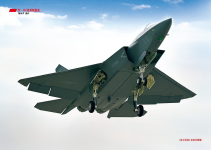
J-35 fighter jet and HongQi automobile. Commercial video.
RajaBaja
Trusted Member

J-35 fighter jet and HongQi automobile. Commercial video.
Very nice commercial. Stealth vehicles with stealth jet

Does HongQi has any relationship with SAC? Or I should ask, does the Chinese aviation industry have joint business ventures between CAC and SAC and others?
Michael
VIP Member
There's no connection.Does HongQi has any relationship with SAC? Or I should ask, does the Chinese aviation industry have joint business ventures between CAC and SAC and others?
If one must find a connection, Hongqi's headquarters is in Changchun, Jilin Province; SAC is in Shenyang, Liaoning Province. Both provinces are part of Northeast China. For a long time in Chinese history, Northeast China was an integrated region, with close ties between its people. But that's not the point.
The point is that Hongqi holds a unique position in China. Or, rather, its position in the Chinese automotive industry is paramount. All of China's top leaders, including Mao Zedong, Deng Xiaoping, and Xi Jinping, have served as its spokespeople. Therefore, if Hongqi wanted to produce a commercial, it could draw on every available resource within China.
For example, Dongfeng nuclear ballistic missiles, aircraft carriers...... these are things we're unlikely to see in commercials. ......But if Hongqi Automobile approached them to film a commercial, no one would be surprised......



nang2
Registered Member
In short, HongQi is the symbol of Chinese DOMESTIC manufacturing.There's no connection.
If one must find a connection, Hongqi's headquarters is in Changchun, Jilin Province; SAC is in Shenyang, Liaoning Province. Both provinces are part of Northeast China. For a long time in Chinese history, Northeast China was an integrated region, with close ties between its people. But that's not the point.
The point is that Hongqi holds a unique position in China. Or, rather, its position in the Chinese automotive industry is paramount. All of China's top leaders, including Mao Zedong, Deng Xiaoping, and Xi Jinping, have served as its spokespeople. Therefore, if Hongqi wanted to produce a commercial, it could draw on every available resource within China.
For example, Dongfeng nuclear ballistic missiles, aircraft carriers...... these are things we're unlikely to see in commercials. ......But if Hongqi Automobile approached them to film a commercial, no one would be surprised......

LX1111
Registered Member
Makes perfect sense. Thanks for explaining and also thanks to @Michael.
Does "93" from above J-35 image give out how many jets have been built?
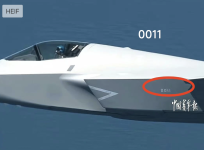
According to the currently disclosed maximum number, 11 J-35A aircraft were produced.
The number 93 is just a temporary number to commemorate the Japanese surrender on September 3.
Michael
VIP Member
Bro. This is a wrong message.According to the currently disclosed maximum number, 11 J-35A aircraft were produced.
"0011" is a photo of the J-35 Navy Preview version before it officially entered service. At the time of this photo, the aircraft had not yet received the PLA Navy's tactical designation.
The J-35 Navy Preview version currently uses the WS-21 engine. I do not know the exact number of WS-21 engines that the Liyang plant has delivered to SAC. Therefore, I cannot determine how many J-35 Navy Preview Versions SAC has produced.
However, only four J-35 Navy Preview Versions have appeared with PLA Navy tactical designations: 80/81/82/93.
The J-35's official naval version will use the WS-19 engine. However, the WS-19 naval version is currently in the testing phase and has not yet been delivered to production. It has not even completed its maiden flight.
The J-35A is the PLAAF's official procurement version. It uses the WS-19 engine.
Before the 2025 Spring Festival, the Liyang plant produced a total of 30 WS-19 engines. However, only 10 were delivered to the SAC, with the remaining 20 engines destined for other uses. This summer, the Liyang plant delivered a second batch of WS-19 engines to the SAC. The exact number is unknown, but it will certainly not be enough to equip the J-35A fighters in time.
China's standard rule requires a 0.5-fold number of spare engines for each fighter jet. During the testing phase, this number can be lowered, but spare engines are still required. This means that 10 WS-19 engines can normally only be supplied to three J-35A fighters, but during the testing phase, four J-35A fighters can be supplied.
The number of J-35A fighters currently revealed complies with this rule. That is, the four J-35A fighters revealed are the current maximum number.
Special Note:
SAC operates several (the exact number is unknown, but it's estimated to be 1-2) J-35A Air Force preview fighter powered by the WS-21 engine. These aircraft are used solely for non-military purposes, such as research, testing, and demonstrations. The PLAAF has never purchased J-35A (WS-21) fighters.
They were observed during early training exercises for the September 3rd military parade, but were not included in the official parade.
These aircraft may be used for non-military purposes in the future, such as demonstrations, static displays, and scientific research for the FC-31/J-35 export version.
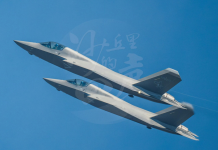
According to leaked information, the total number of J-35s in service is eight (four each for the Navy and Air Force), excluding those not yet in service.
LX1111
Registered Member
The naval version of the J35 uses the WS-13E, with a thrust of 9100KN.P/W at 8Bro. This is a wrong message.
"0011" is a photo of the J-35 Navy Preview version before it officially entered service. At the time of this photo, the aircraft had not yet received the PLA Navy's tactical designation.
The J-35 Navy Preview version currently uses the WS-21 engine. I do not know the exact number of WS-21 engines that the Liyang plant has delivered to SAC. Therefore, I cannot determine how many J-35 Navy Preview Versions SAC has produced.
However, only four J-35 Navy Preview Versions have appeared with PLA Navy tactical designations: 80/81/82/93.
The J-35's official naval version will use the WS-19 engine. However, the WS-19 naval version is currently in the testing phase and has not yet been delivered to production. It has not even completed its maiden flight.
The J-35A is the PLAAF's official procurement version. It uses the WS-19 engine.
Before the 2025 Spring Festival, the Liyang plant produced a total of 30 WS-19 engines. However, only 10 were delivered to the SAC, with the remaining 20 engines destined for other uses. This summer, the Liyang plant delivered a second batch of WS-19 engines to the SAC. The exact number is unknown, but it will certainly not be enough to equip the J-35A fighters in time.
China's standard rule requires a 0.5-fold number of spare engines for each fighter jet. During the testing phase, this number can be lowered, but spare engines are still required. This means that 10 WS-19 engines can normally only be supplied to three J-35A fighters, but during the testing phase, four J-35A fighters can be supplied.
The number of J-35A fighters currently revealed complies with this rule. That is, the four J-35A fighters revealed are the current maximum number.
Special Note:
SAC operates several (the exact number is unknown, but it's estimated to be 1-2) J-35A Air Force preview fighter powered by the WS-21 engine. These aircraft are used solely for non-military purposes, such as research, testing, and demonstrations. The PLAAF has never purchased J-35A (WS-21) fighters.
They were observed during early training exercises for the September 3rd military parade, but were not included in the official parade.
These aircraft may be used for non-military purposes in the future, such as demonstrations, static displays, and scientific research for the FC-31/J-35 export version.
According to leaked information, the total number of J-35s in service is eight (four each for the Navy and Air Force), excluding those not yet in service.
The Air Force version of the J-35A uses the WZ-21, which reaches 9300KN,P/W at 8.3
WS-19 is unlikely in the short term,The current thrust that can be achieved is 98000KN and the weight is 11000KG
It is still far from the goal of 10000Kn of thrust and T/W at 10.
Michael
VIP Member
The WS-13E has long been replaced by the WS-21.The naval version of the J35 uses the WS-13E, with a thrust of 9100KN.P/W at 8
The Air Force version of the J-35A uses the WZ-21, which reaches 9300KN,P/W at 8.3
WS-19 is unlikely in the short term,The current thrust that can be achieved is 98000KN and the weight is 11000KG
It is still far from the goal of 10000Kn of thrust and T/W at 10.
At the end of the last century, China imported RD-33 engine technology from Russia. Subsequently, the Liyang Company copied the RD-33, which became the WS-13 project. However, Liyang's focus was on production rather than research and development. Their R&D capabilities were very weak. As a result, the WS-13 (including the subsequent WS-13E) never reached satisfactory levels of performance.
The WS-19 engine is a project of the 624th Research Institute, which also participated in the development of the WS-15. Therefore, the WS-19 incorporates many WS-15 engine technologies. The WS-15 engine, on the other hand, is a combination of "China's reverse engineering of Russian and American engines combined with China's own domestically developed technologies."
Because the WS-19 engine is a fourth-generation engine and incorporates many top-secret technologies from the WS-15 engine, it was prohibited from export. However, this restriction seriously conflicted with the J-35's export decision. The WS-13E could not meet the requirements of the J-35's export version.
So, after the main R&D work on the WS-19 engine was completed, the AECC's Beijing headquarters coordinated, and Ms. Huang Weina, Chief Designer of the WS-19 Engine Development Project Team at the 624th Research Institute, led a group of key project team members to comprehensively optimize the WS-13E. They maintained the WS-13E's operating principle (based on the RD-33), and the core engine remained identical. However, they used completely new materials to manufacture the core engine. They also completely redesigned the engine's accessory box.
Ultimately, this engine fully met the J-35's requirements, achieving performance comparable to that of the WS-19. The AECC renamed this engine the "WS-21."
The WS-19 and WS-21 engines currently have very similar performance, with almost no discernible difference. However, one is a new generation that has just been born; the other is an old generation that has been drained of its potential.
As for their actual performance data, I'm sorry, that's top secret and I can't reveal it.
Currently, the WS-21 engine has fully entered mass production and is in service. The dual-pulse production line for the WS-19 engine is currently under construction and is expected to be completed this year. It has a designed production capacity of 60 engines per month. This production line, along with the WS-21 production line, is owned by Liyang Company.
Both the Air Force and Navy versions of the J-35 were initially tested using the WS-21 engine. The Air Force version of the WS-19 has been completed, while the Navy version has not yet completed testing. Therefore, the PLAAF will directly purchase the official J-35A (WS-19), while the PLA Navy will initially purchase a small batch of the Navy version of the J-35 (WS-21) for initial carrier-based flight training. Once the Navy version of the WS-19 matures, the PLA Navy will proceed with large-scale purchases of the official version.
The FC-31/J-35 export version will exclusively use the WS-21 engine. In other words, future WS-21 engines will be exclusively for the export market.
Last edited:

SolarWarden
Trusted Member
The more I look, the more I like the J-35. Amazing plane that is what F-35 should look like. Lean and mean
J-35 is "lean and mean" because it doesn't have the capability of the F-35. The J-35 is nothing more than IRST, Radar and stealth. F-35 is an all domain fighter.
SolarWarden
Trusted Member
F-22s are mostly based in the US. They do not have the range to fly into a western pacific theatre.

F-22's in Kadena Okinawa
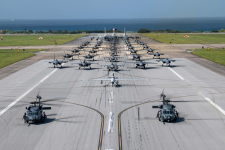
Seriously what is it with you lazy celestials? All you have to do is google and it's right there.

LX1111
Registered Member
Bro. This is a wrong message.
"0011" is a photo of the J-35 Navy Preview version before it officially entered service. At the time of this photo, the aircraft had not yet received the PLA Navy's tactical designation.
The J-35 Navy Preview version currently uses the WS-21 engine. I do not know the exact number of WS-21 engines that the Liyang plant has delivered to SAC. Therefore, I cannot determine how many J-35 Navy Preview Versions SAC has produced.
However, only four J-35 Navy Preview Versions have appeared with PLA Navy tactical designations: 80/81/82/93.
The J-35's official naval version will use the WS-19 engine. However, the WS-19 naval version is currently in the testing phase and has not yet been delivered to production. It has not even completed its maiden flight.
At present, there are four main steps in the upgrade of WS-13.The WS-13E has long been replaced by the WS-21.
At the end of the last century, China imported RD-33 engine technology from Russia. Subsequently, the Liyang Company copied the RD-33, which became the WS-13 project. However, Liyang's focus was on production rather than research and development. Their R&D capabilities were very weak. As a result, the WS-13 (including the subsequent WS-13E) never reached satisfactory levels of performance.
The WS-19 engine is a project of the 624th Research Institute, which also participated in the development of the WS-15. Therefore, the WS-19 incorporates many WS-15 engine technologies. The WS-15 engine, on the other hand, is a combination of "China's reverse engineering of Russian and American engines combined with China's own domestically developed technologies."
Because the WS-19 engine is a fourth-generation engine and incorporates many top-secret technologies from the WS-15 engine, it was prohibited from export. However, this restriction seriously conflicted with the J-35's export decision. The WS-13E could not meet the requirements of the J-35's export version.
So, after the main R&D work on the WS-19 engine was completed, the AECC's Beijing headquarters coordinated, and Ms. Huang Weina, Chief Designer of the WS-19 Engine Development Project Team at the 624th Research Institute, led a group of key project team members to comprehensively optimize the WS-13E. They maintained the WS-13E's operating principle (based on the RD-33), and the core engine remained identical. However, they used completely new materials to manufacture the core engine. They also completely redesigned the engine's accessory box.
Ultimately, this engine fully met the J-35's requirements, achieving performance comparable to that of the WS-19. The AECC renamed this engine the "WS-21."
The WS-19 and WS-21 engines currently have very similar performance, with almost no discernible difference. However, one is a new generation that has just been born; the other is an old generation that has been drained of its potential.
As for their actual performance data, I'm sorry, that's top secret and I can't reveal it.
Currently, the WS-21 engine has fully entered mass production and is in service. The dual-pulse production line for the WS-19 engine is currently under construction and is expected to be completed this year. It has a designed production capacity of 60 engines per month. This production line, along with the WS-21 production line, is owned by Liyang Company.
Both the Air Force and Navy versions of the J-35 were initially tested using the WS-21 engine. The Air Force version of the WS-19 has been completed, while the Navy version has not yet completed testing. Therefore, the PLAAF will directly purchase the official J-35A (WS-19), while the PLA Navy will initially purchase a small batch of the Navy version of the J-35 (WS-21) for initial carrier-based flight training. Once the Navy version of the WS-19 matures, the PLA Navy will proceed with large-scale purchases of the official version.
The FC-31/J-35 export version will exclusively use the WS-21 engine. In other words, future WS-21 engines will be exclusively for the export market.
1. 011 replaced the four-stage fan of RD-33 with the three-stage fan of the original WS-12. The new fan increase the flow rate by 6 kilograms per second, and raised the maximum thrust to 9.06 tons (88.94KN).
2.Using a brand-new 011 and a low-pressure turbine jointly developed by Klimov, the working temperature of the new low-pressure turbine can be increased by 70 degrees, and its working efficiency is also higher. With this turbine, the potential of the new three-stage fan can be better exploited. After the improvement, the maximum thrust reaches 9.28 tons (91.1KN).
3. 011 redesigned the backward combustion chamber of the RD-33, significantly reducing the problem of black smoke from the RD-33's oil-rich combustion,Greatly reduced fuel consumption and increased service life
4.011 replaced the original directionally solidified turbine blades with DD6 single crystal turbine blades, which raised the operating temperature of the turbine by another 50-70 degrees and increased the engine thrust to 9.5 tons
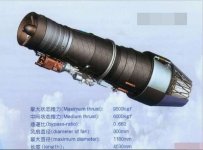
This is the development history from WS-13 to WS-21 that I know of.
Last edited:
LX1111
Registered Member
J-35 is "lean and mean" because it doesn't have the capability of the F-35. The J-35 is nothing more than IRST, Radar and stealth. F-35 is an all domain fighter.
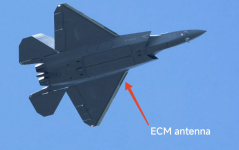
Do you have any reason to say that? The J-35 clearly has ECM and network-centric warfare capabilities. Compared to the F-35, the only obvious lag of the J-35 is the WS-21 engine.
Users who are viewing this thread
Total: 5 (members: 0, guests: 5)
Pakistan Defence Latest


Country Watch Latest
-
 Su-30MKI set for a bigger bite? India weighs 300-km Russian RVV-BD missile upgrade (38 Viewers)
- Latest: Shui
-

-
France confirms India’s interest in Rafale F5, potential first export customer (8 Viewers)
- Latest: Death_Zone
-

-
Latest Posts
-

-

-
-
Su-30MKI set for a bigger bite? India weighs 300-km Russian RVV-BD missile upgrade (38 Viewers)
- Latest: Shui
-
Brazil squad for India football friendly 2026: Vinicius Junior, Raphinha, Endrick set for Kolkata (6 Viewers)
- Latest: Raj-Hindustani