Chinese Economy: General News, Updates and Discussions

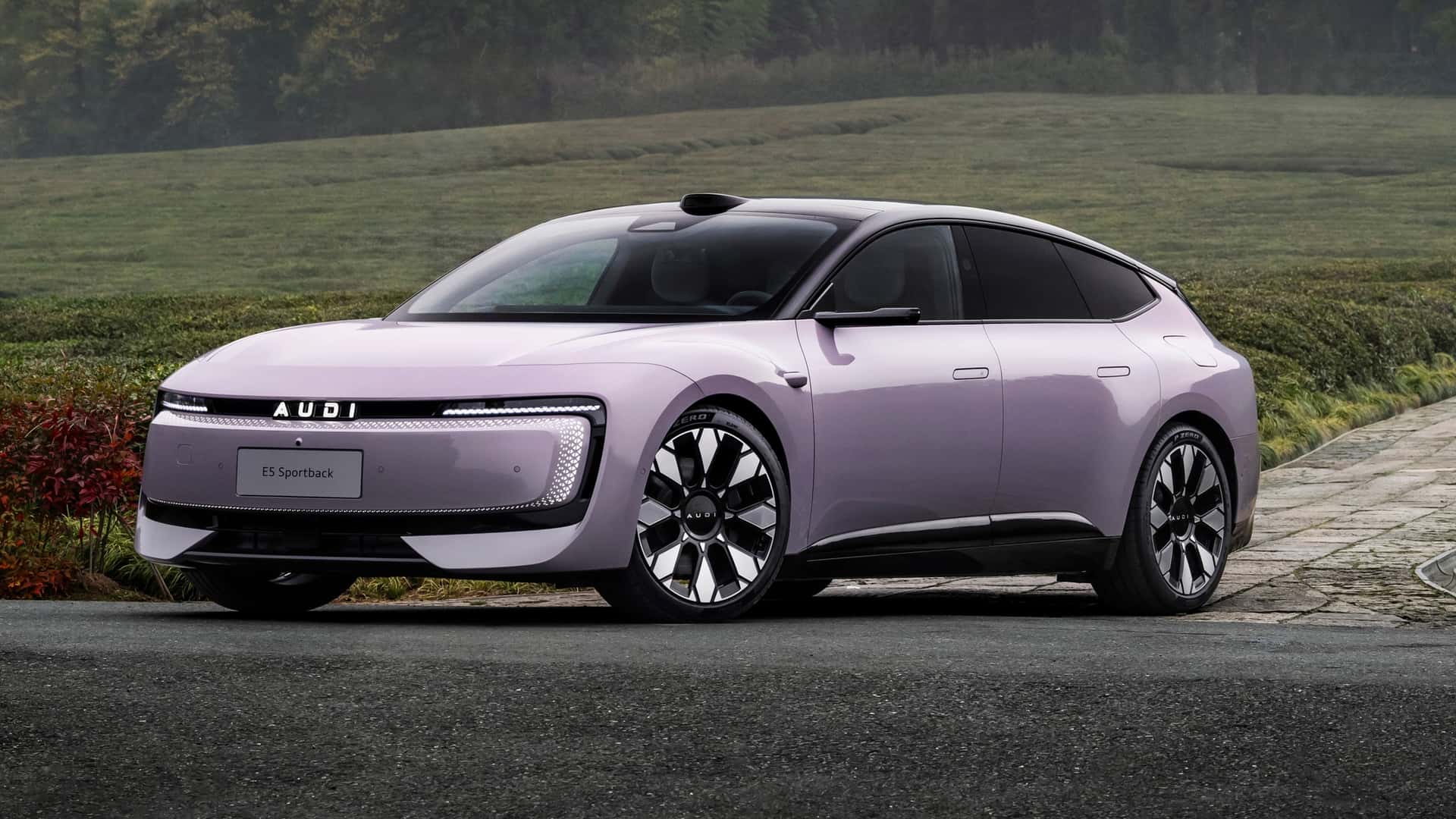
Audi's 'In China, For China' EV Is Already A Big Hit
The all-caps AUDI brand received more than 10,000 orders for the E5 Sportback in half an hour. Can it turn things around for Audi in China?

Sep 19, at 10:40am ET

2025-audi-e5-sportback.webp

Photo by: Audi

Audi's in bad need of a win in China. Sales in its most important global market have been tanking in recent years as customers turn to more advanced options from local newcomers. So in order to turn things around, Audi's calling on a Chinese automaker to help make something suited to that country—and it seems to be working.

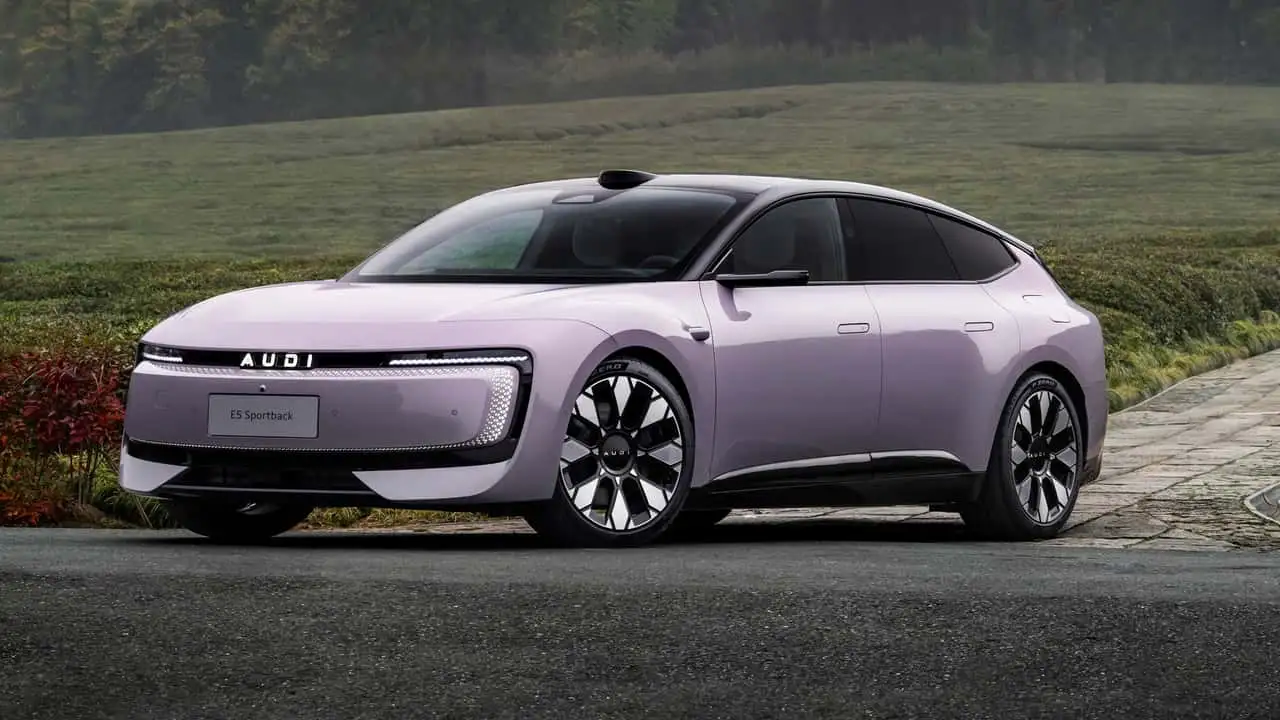
Audi’s namesake all-caps brand for China is actually off to a strong start. It took just half an hour for the newly founded AUDI to rack up more than 10,000 orders for its debut model. The E5 Sportback, which does without the iconic Four Rings, is the product of a local partnership with SAIC. Built at an existing SAIC-Volkswagen plant in Anting, Shanghai, the car is exclusive to the world’s largest market.

Ralf Brandstätter, VW board member for China, took to LinkedIn to describe the response to the E5 Sportback as “overwhelming” after AUDI opened the order books. According to a separate post on Weibo, exactly 10,153 orders were placed within 30 minutes. The newest player in China’s hyper-competitive market will sell only EVs, with two additional models due in the next couple of years. Leading the way is a large wagon that slots between the A5 Avant and A6 Avant in length.
 

Xi Jinping is first Chinese president to attend Xinjiang region’s anniversary celebration​

c4d7466c-2d5b-4c4c-832a-d719d00b2075_866fa7cb.jpg


Published: 6:29pm, 23 Sep 2025

China’s President Xi Jinping has arrived in Urumqi to attend the 70th anniversary of the Xinjiang Uygur autonomous region, according to state media reports, making him the first national leader to attend such a landmark celebration.

Established by the central government in October 1955, Xinjiang is one of China’s five autonomous regions with significant ethnic minority populations. At least 10 million Uygurs, who are predominantly Muslim, live in the region.

Yu Zhengsheng, then the fourth-ranking member of the Communist Party’s top body, the seven-member Politburo Standing Committee, presided over the 60th anniversary in 2015.

Xi, who carried out an inspection tour in Xinjiang in July 2022, arrived in Urumqi on Tuesday afternoon as Beijing puts a firm focus on ethnic unity and the deeper integration of ethnic minority groups into the Chinese nation.

This is part of Xi’s concept of a “sense of community for the Chinese nation”, which emphasises a unified national identity for China as a whole, rather than focusing on individual ethnic identities, and includes “sinicising religion”. Beijing has repeatedly warned against the infiltration of extremist Islamic ideologies from abroad into Xinjiang.

Chen Xiaojiang, the newly appointed party secretary of Xinjiang and who was the first Han Chinese head of the State Ethnic Affairs Commission, is widely seen as key to promoting Xi’s concept of the “Chinese nation community”.
 

Xi Jinping arrives in Urumqi, Xinjiang​

To view this content we will need your consent to set third party cookies.
For more detailed information, see our cookies page.
 

China's Export Tsunami Could Rewrite Global Trade Before Trump-Xi Showdown

Tue, 23 September 2025

Chinese exporters have refused to blink in the face of President Trump's tariffs that reached as high as 145%. Instead, Beijing's manufacturing base has redirected output with surprising force: India recorded an all-time high for purchases in August, shipments to Africa are on track for a record year, and sales to Southeast Asia have surpassed their pandemic-era levels. Analysts note that the pivot is propelling China toward a possible $1.2 trillion trade surplus, even though profits at industrial firms slipped 1.7% in the first seven months. The volume surge is keeping factories humming, but the reliance on price cuts is intensifying deflationary pressure at home.

The global reaction has been cautious but watchful. Mexico has floated tariffs as steep as 50% on Chinese cars, auto parts, and steel, while India has received dozens of requests to probe dumping practices. Indonesia's trade ministry stepped in after viral clips showed Chinese sellers offering jeans for under $1, sparking outrage among local producers. Yet, many governments appear reluctant to escalate tensions with Beijing while already engaged in tariff negotiations with Washington. Some, such as South Africa, have favored fresh investment over penalties, while others in Latin America, including Chile and Ecuador, have quietly imposed targeted fees. Brazil, despite earlier threats, granted BYD (BYDDF) a tariff-free window to ramp up production, illustrating how Beijing's blend of diplomacy and economic leverage is shaping outcomes.

For markets, the strategic landscape remains fluid. Trump has been pressing NATO allies to consider tariffs of up to 100% on Chinese goods, while Xi has urged BRICS nations to unite against protectionism. A weaker yuan and the Fed's latest rate cut have also sharpened China's export edge. Electric vehicle shipments valued at over $19 billion have held steady against last year's pace, and Apple's pivot to India has paradoxically lifted Chinese parts exports. Analysts suggest China could continue shifting goods toward Europe, Australia, and BRICS partners, limiting the fallout from lost US orders. All of this builds toward a high-stakes Trump-Xi summit in South Korea, where a fragile 90-day tariff truce may define the next stage of the trade confrontation.

 
China now is able to produce electronic product better than Japan with half price
 
China now is able to produce electronic product better than Japan with half price
Or better

Cars Made in China are Now Often Better Quality than Cars Made in Japan​

To view this content we will need your consent to set third party cookies.
For more detailed information, see our cookies page.
 

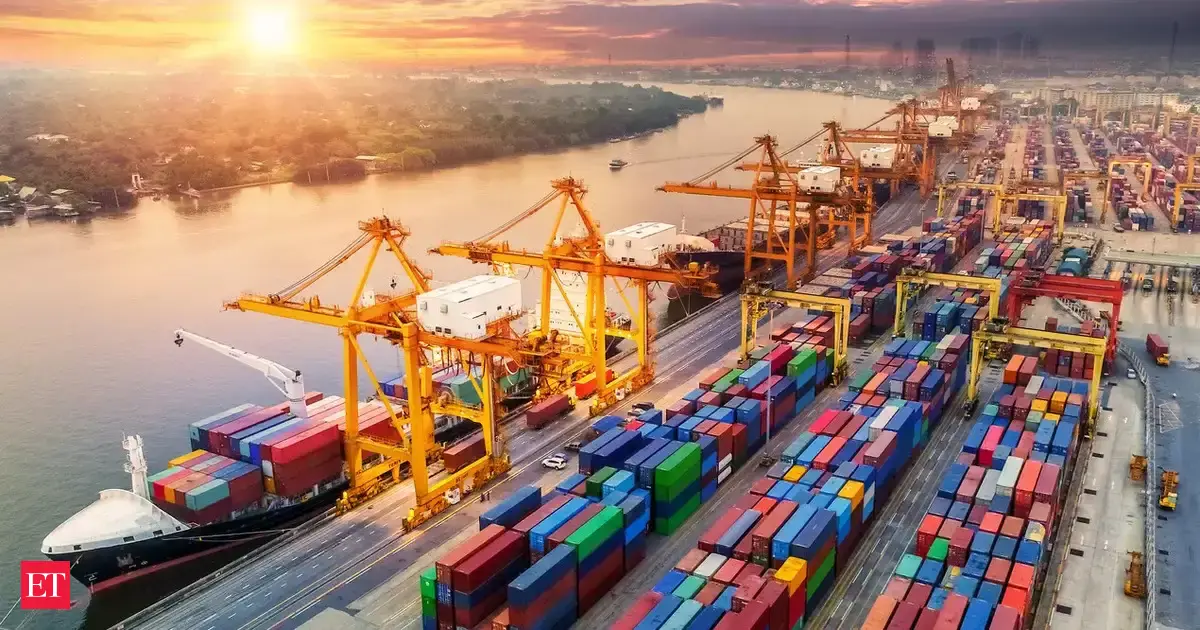
China exports shake off US tariff threat to power continued container trade growth

Sep 24, 2025

LONDON/SINGAPORE: New analysis by Maritime Strategies International cites emerging evidence that the demand side of the industry will prove better-insulated from tariffs than was expected earlier in the year, while a dynamic where Chinese exporters continue to export their manufactured goods surplus – above all to emerging economies – has significantly buoyed trade so far this year.

In its Q3 Market Report ‘Faltering Freight’, MSI, notes that global container trade trends started 2025 on a strong footing and following an estimated 4.9% year-on-year expansion in the first quarter, world container trade is estimated to have grown by 4.4% yoy in Q2. Further ahead, MSI believes there will be a degree of industrial sector retrenchment in China in the next several years, but for now this dynamic remains supportive of global container trade.

Q2 25 was another strong quarter for Mainlane container trade volumes and was followed by healthy data in July for the Asia-Europe and Transatlantic trades. At the same time, it has been a volatile period on the Transpacific trade, although even here volumes sat nearly 6% higher on a ytd basis through August.

Overall Mainlane headhaul volumes logged a 4.9% yoy expansion in Q2, following a 9.5% yoy expansion in Q1. This is very likely to be the strongest pace of expansion this group of trades will record for some time.

Long-distance non-Mainlane trades have been a key motor of overall containerised trade growth in recent years, and that continued over the first half of 2025. The Transpacific is the main driver of MSI’s forecast that Mainlane headhaul trade will contract in 2026, but slower Asia-Europe growth also contributes.

MSI has actually revised up its projections for next year on the basis of greater assumed resilience to tariffs, but our forecasts for next year come with notable downside risks. As with the Mainlane trades, MSI places fairly heavy emphasis on the competitiveness of Chinese exports here as a key driver.

The chart plots TEU import growth over the first seven months of 2025 in each of Latin America, the Middle East/Subcontinent, Sub-Saharan Africa and Oceania, and compares growth in imports from the Far East with imports from other regions (intra-regional trade is excluded). In each case, growth in imports from the Far East has comfortably outpaced growth in imports from other regions.

“While exports from South-East Asia, as opposed to China, could account for a growing share of this surge in Far East exports, wider evidence from Chinese customs data does suggest that it is China’s export powerhouse that is having an outsized impact,” explains MSI Director Daniel Richards. “Overall, MSI has made upward revisions to our forecast for key non-Mainlane trades in 2025, but otherwise our forecasts are stable and we expect a more muted pace of expansion in 2026.”
 
iPhone 17 for the US market will be assembled in India from parts imported from China.

In July 2025 alone, China shipped around $1 billion worth of computer chips to India. On top of that, billions more in phones and components were sent to support electronics assembly across India.


China's long term plan to replace and surpass America by 2045 is going to be too late.

You know how Trump wanted to use COVID as an excuse to force China to pay trillions in reparations or face conflict, Trump wants to settle family business with China to stop the rise of China sooner than later.

Trump wants to defeat Chinese manufacturing with trade deals and global economy centered around China in the next 4 years. Plan accordingly.

Don't sell out as many nations are doing.

Don't sell out to this dude that in 2021 demanded 10+ trillion from China.


Space, you are near the US:


GDP in 10 years:


Military tech could be later.

So the US sees the writing on the wall. Trump tried once with COVID, there could be a round 2.
 
Last edited:
In July 2025 alone, China shipped around $1 billion worth of computer chips to India. On top of that, billions more in phones and components were sent to support electronics assembly across India.


How is this surprising? Even after making iPhones in China for 18 years you are still importing parts...including chips. Nobody is expecting it to suddenly go to zero overnight in India.


Chinese pre-orders for Apple’s iPhone 17 break records amid strong demand​

The numbers underscore Apple’s brand loyalty in China despite growing competition from the likes of Huawei, analysts say​


Pre-order sales of Apple’s new iPhone 17 series have got off to a robust start in China, shattering previous records despite delays in the shipment of the iPhone Air.

In the first minute after pre-orders began at 8pm Friday local time, sales on JD.com – one of China’s largest online shopping platforms – surpassed the first-day pre-order volume of last year’s iPhone 16 series, according to the e-commerce operator. The standard iPhone 17 with 256GB of storage emerged as the most popular variant, JD.com said.

Those numbers excluded the iPhone Air, the company’s thinnest model ever, as its release has been postponed while Apple works with Chinese authorities to resolve regulatory issues over the use of an embedded SIM.

Amid overwhelming demand for the iPhone 17 series, customers reported difficulties accessing the pre-order page on Apple’s website, according to a report on Friday from Chinese media outlet The Paper.

One customer, who successfully secured a new handset for delivery on the September 19 launch date, said it took five minutes for the site to process payments. All time slots for picking up the iPhone 17 Pro Max in person at launch from Apple outlets in Shanghai were booked within 20 minutes.

As of Saturday morning, anyone in Guangzhou, Guangdong province, looking to buy any variant of the iPhone 17 series faced a waiting period extending to October 15, Apple’s website showed.


The high demand underscores Apple’s strong brand loyalty in China and the appeal of the latest generation of iPhones, despite growing competition in the premium smartphone segment from local competitors like Huawei Technologies, according to analysts.

“Apple has astutely segmented its product line-up, ensuring each model appeals to distinct user needs,” said Nabila Popal, senior research director at market research firm IDC. “Collectively, these devices will drive a robust wave of new purchases for the company.”

Earlier this month, consultancy TrendForce projected that global shipments of the iPhone 17 series would be 3.5 per cent higher than those of last year’s iPhone 16 line-up, with the Pro series remaining the primary sales driver.

The iPhone Air, which replaced the Plus model in this year’s launch, is expected to sell even better. IDC anticipated that the iPhone Air would contribute to well over 5 to 7 per cent of Apple’s global shipments of its Plus models.
 
Last edited:
China's gold buying has some great results, yielding dividends.

Why Is China Buying So Much Gold?


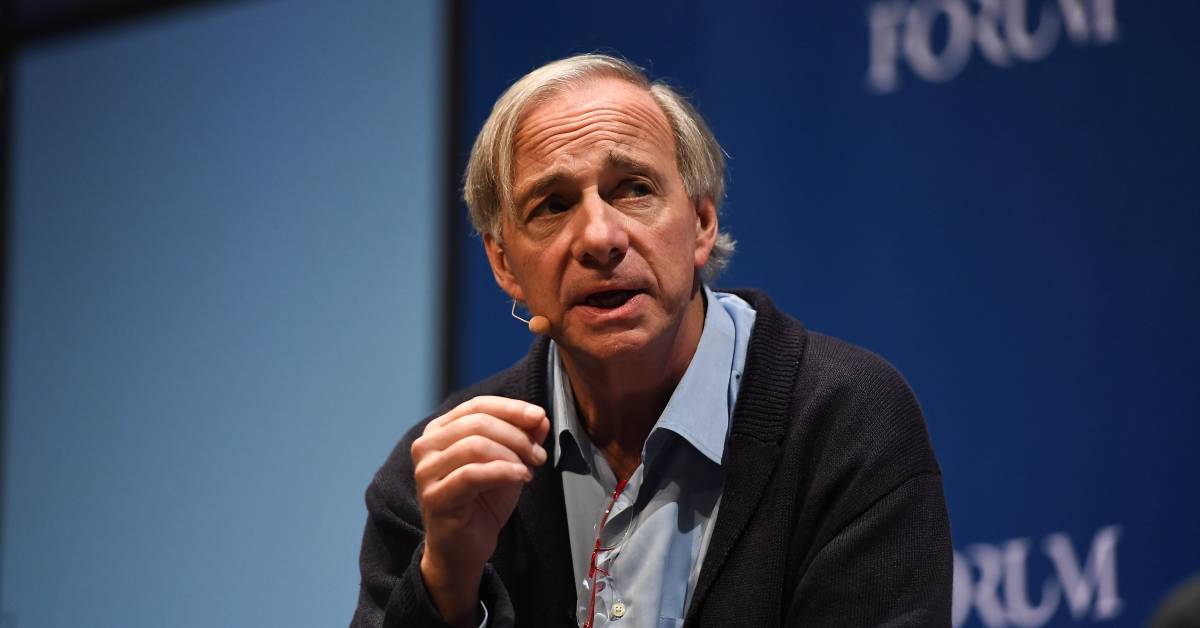
It is beginning to snowball. While Ray does not mention gold in the talk, Ray has mention gold on several occasions as the safety investment

Ray Dalio warns America is heading into very, very dark times — but has 1 big move to ‘dramatically’ cut risk without losing gains. Are you exposed?

He pointed first to America’s swelling national debt — now hovering around $37.47 trillion and climbing [2]. Dalio has warned before of a looming “debt death spiral,” where the government must borrow simply to service existing obligations — a dynamic that accelerates over time.

While he didn’t list specific assets in this interview, Dalio has consistently emphasized the importance of diversification — and recently, he’s singled out one classic hedge: gold [3].


“People don't have, typically, an adequate amount of gold in their portfolio,” he told CNBC. “When bad times come, gold is a very effective diversifier.”


Does China continue with their steady gold buying or does China yield to bitcoin outperforming gold. One is gonna win over the other, China decides what is money. Does China want gold or bitcoin as global money. 95% of bitcoin is spoken for, and the majority that hold it are Northern European and/or American. So does China want the vast majority of Chinese money in the hands of 0.1% of the global population, mostly in America and Northern Europe. Or does China want democratized money, gold and silver, that is well spread and distributed around the globe in jewelry, investments, and historic government holding bought at low prices. Does China want American bitcoiners to be able to buy China on the cheap and buy a Chinese home and wife with billions or millions in bitcoin. Or does China want the existing system of China dominant with gold backing currencies and paying off debt from monetized gold. China decides. China holds 100% of the cards and has to play their hand well to gain support particularly in Europe for what China chooses.

Reward gold buyers and gold buyer reward China in defeating bitcoin. A green yuan cannot defeat dollar hegemony and Trump has bitcoin ready if the dollar collapses.
 

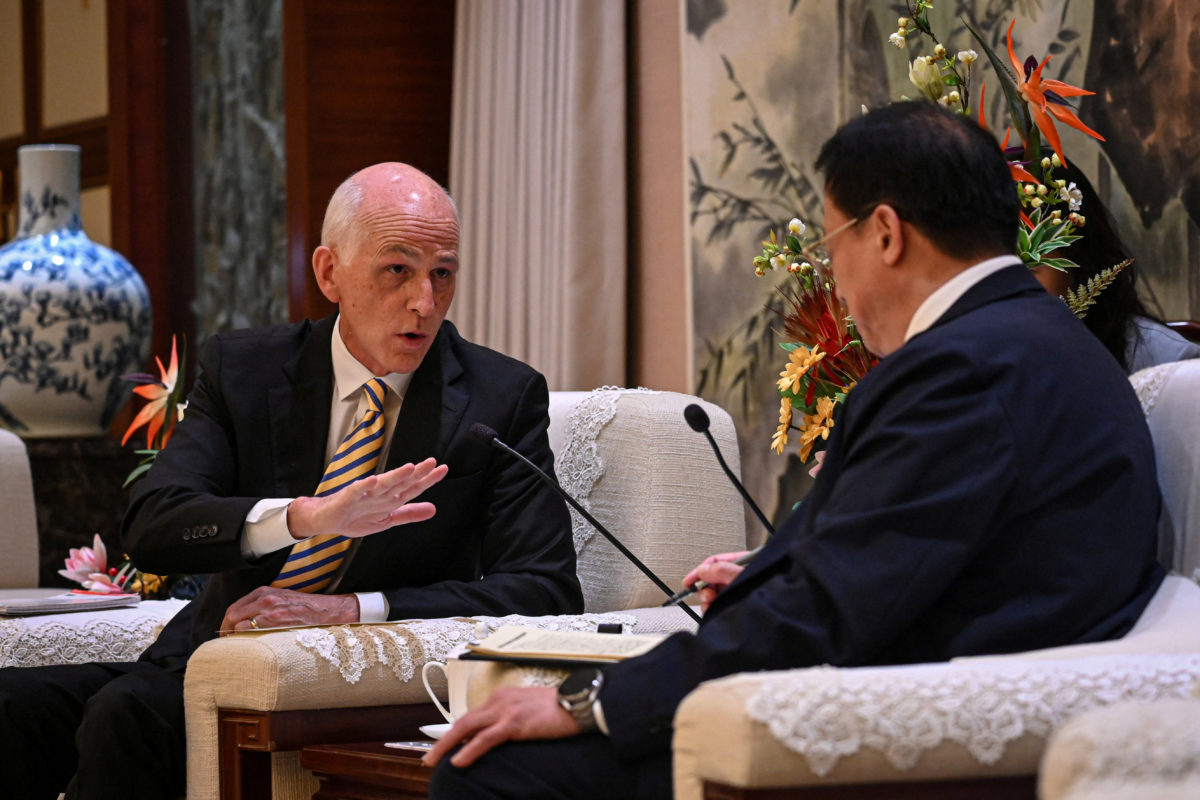
Rep. Adam Smith backs renegotiating global economic rules to reflect China’s rise​

Politics Sep 25, 2025 3:43 PM EDT

2025-09-25T102419Z_193774533_RC2YYGASAVNB_RTRMADP_3_USA-CHINA-CONGRESS-1200x800.jpg

SHANGHAI (AP) — The head of a U.S. congressional delegation visiting China said he backed renegotiating the rules governing the global economy to take into account China’s rise and that of others such as India and Brazil.

Rep. Adam Smith, a Democrat from Washington state, told the mayor of Shanghai on Thursday that the U.S.-led post-World War II order has worked well for many countries, including China, but that “we understand that things have changed.”

His remarks, at end of a five-day trip to China, dovetailed with Chinese leader Xi Jinping’s recent announcement of an initiative to build a more equitable global governance system. They also reflected the reality that though the U.S. remains the most powerful country in the world, China is emerging as a potential challenger for global leadership.

The delegation of three Democrats — Smith, Rep. Ro Khanna from California and Rep. Chrissy Houlahan from Pennsylvania — and Republican Rep. Michael Baumgartner from Washington state, wrapped up their trip in Shanghai after three days of meetings with government leaders in Beijing.

The main purpose of the visit — the first by members of the U.S. House of Representatives since 2019 — was to open up lines of communication between the governments, Smith said. A U.S. Senate delegation visited in 2023.

Citing the expansion of McDonald’s outlets in China, Smith said his biggest takeaway from the trip was that a lot of business is going on between the two economies despite the ongoing trade and tariff war.

“We have a lot of work to do to resolve those issues,” he told a small group of journalists after a meeting with the American Chamber of Commerce in Shanghai. The trade conflict is creating difficulties for companies on both sides of the Pacific, he said.

The lawmakers were later seen at a Starbucks, another U.S.-headquartered company, in the lobby of the office building.

The exchange with the Shanghai Mayor Gong Zheng started after Smith politely interrupted Gong about 10 minutes — including time for translation — into the mayor’s introduction to Shanghai as an economic and financial center.

How is the U.S.-China tariff war impacting Shanghai’s economy, Smith wanted to know, and how does the mayor think it should be resolved.

Gong said that Shanghai, a major shipping port, is among those most affected because of its high exposure to international trade.

“We’re very glad to see that we already have talks and negotiations,” Gong said, citing the four rounds of meetings since May in Geneva, Stockholm, London and, most recently, Madrid.

He stated the Chinese government position that there are no winners in trade wars, but China will fight back if there is a war while remaining open to negotiation.

Smith expressed hope that both tariffs and other barriers to imports would be reduced. He then called for a robust debate about how to renegotiate the rules governing the economy.

“China and the U.S. are the two most important players in how we resolve that,” he said. “How do we get to an international rules based order that is more agreeable to everyone?”

China maintains that the current international order favors the U.S. and other rich nations. The government says it doesn’t want to overturn that order but make it better serve the interests of all countries, particularly developing ones.

“The collective rise of emerging markets and developing countries necessitates boosting the representation of the Global South,” a Foreign Ministry document says, using a catch-all term for those nations.

The three Democrats in the delegation are members of the House Armed Services Committee, and Smith repeated his call from the outset of the trip for more communication between the U.S. and Chinese militaries.

“Two of the largest nuclear powers in the world need to be talking to each other, particularly considering the fact that we do have some disagreements,” he said.
 

There Are More Robots Working in China Than the Rest of the World Combined​

China has embarked on a campaign to use more robots in its factories, transforming its manufacturing industries and becoming the dominant maker.

Orange robotic arms, blurry because they are in motion, surround the body of a car in a factory.

Robots at work on an auto assembly line in Hefei, China. Chinese robotics companies, like the electric vehicle and artificial intelligence industries, have benefited from a national push for growth.Credit...Qilai Shen for The New York Times

By Meaghan Tobin and Keith Bradsher
Sept. 25, 2025, 8:00 a.m. ET

China is making and installing factory robots at a far greater pace than any other country, with the United States a distant third, further strengthening China’s already dominant global role in manufacturing.

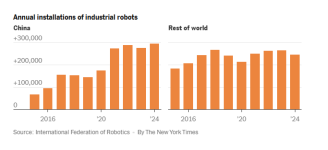
There were more than two million robots working in Chinese factories last year, according to a report released Thursday by the International Federation of Robotics, a nonprofit trade group for makers of industrial robots. Factories in China installed nearly 300,000 new robots last year, more than the rest of the world combined, the report found. American factories installed 34,000.

While Chinese factories have been using more robots, they have also gotten better at making them. The government has used public capital and policy directives to spur Chinese companies to become leaders in robotics and other advanced technologies like semiconductors and artificial intelligence.

Worldwide, robots and artificial intelligence are playing an increasingly prominent and disruptive role in manufacturing. Factory robots range from machines that weld car parts together to claws that lifts boxes onto conveyor belts. As technology helps factories become more efficient, some are making do with fewer workers and altering the roles of others.
搜狗截图20250926114403.png

Over the past decade, China has embarked on a broad campaign to use more robots in its factories, become a major maker of robots and combine the industry with advances in artificial intelligence.

Chinese companies have benefited from a national push that mirrors how the country’s electric vehicle and artificial intelligence industries have grown, said Lian Jye Su, a chief analyst at Omdia, a tech research firm.

“This is not a coincidence,” Mr. Su said. “It has taken many years of investment by Chinese companies.”

China’s drive for factory automation has been a key part of achieving its position as the world’s manufacturing powerhouse. Factories in China have installed more than 150,000 robots each year since 2017. At the same time, manufacturing output ballooned. By the start of this year, factories in China were making nearly a third of all manufactured goods worldwide, more than the United States, Germany, Japan, South Korea and Britain combined.

Robot installations fell last year, compared with the year before, in all four of the next largest factory robot-using countries: Japan, the United States, South Korea and Germany. Japan installed 44,000.

In 2015, Beijing made it a top priority for China to become globally competitive in robotics as part of its Made in China 2025 campaign to import fewer advanced manufactured goods.

Industries received almost unlimited access to loans from state-controlled banks at low interest rates as well as help in buying foreign competitors, direct infusions of government money and other assistance. And in 2021, the government issued a detailed national strategy for expanded deployment of robots.

“You can see how well that strategy worked out; without a strategy, a country is always at a disadvantage,” said Susanne Bieller, the general secretary of the robotics federation.

China’s share of the world’s robot manufacturing rose last year to a third of the global supply, up from a quarter in 2023, according to the federation. Japan, the previous leader, dropped to 29 percent of the world market from 38 percent the year before.

Until last year, China installed more imported robots in its factories than domestically made ones. But last year, nearly three-fifths of the robots installed in China were also made in the country.

Overall, China has five times as many robots working in its factories as the United States.
Image
In a large industrial setting, a row of low-slung wheeled vehicles sits beside several vehicles under construction.

Robotic carts at the Zeekr auto plant in Ningbo, China, haul heavy loads around the building. Credit...Qilai Shen for The New York Times

The federation’s data does not include humanoid robots, the two-legged machines that remain largely in experimental stages. But the government support has led to a boom in start-ups making humanoid robots and an ecosystem of companies that make specialized components for robots, such as motorized joints.

The humanoid robot start-up Unitree Robotics, based in the tech hot spot of Hangzhou, said earlier this month that it planned to go public by the end of the year. Unitree’s latest basic humanoid robots are priced at about $6,000 in China, a fraction of the price of robots made by the robot maker Boston Dynamics, a leading American player in the industry.

Still, Chinese companies lag foreign competitors in their ability to make some key components used in humanoid robots, including some sensors and semiconductors, said Mr. Su at Omdia.

The top versions of many components are still made in countries with longtime leads in robot manufacturing like Germany and Japan, he said.

“If you were to assemble a really top-notch humanoid robot, it would be almost completely non-China-made,” Mr. Su said. “Maybe it would have one or two Chinese components, but by and large the entire system would be very international.”

But when it comes to factory robots, China has multiple advantages. China has large numbers of skilled electricians and specialized computer programmers who can install robots. Even China has had some shortages of robot installation specialists, however, with pay surging to almost $60,000 a year.

And China has an artificial intelligence industry that is strongly focused on using the new technology to track and improve every aspect of factory equipment performance.

Companies in China “are using A.I. to swoop in and say which machines are doing great and which are a little off,” said Cameron Johnson, a supply chain consultant in Shanghai specializing in automation. Outside of China, he added, “people aren’t looking at it as a manufacturing tool, at least not yet, and not how the Chinese are.”
 
Do you happen to have any robotic manufacturing images or video clips from the defense or aviation industry?

This is a massive feat to create such a massive manufacturing base, one side is China, and the other side is the rest of the world!
 
搜狗截图20250927194306.png

26 September 2025

Clean energy is starting to bend the curve on China’s fossil-fuel use.
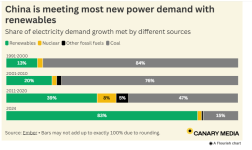
Overall, carbon-free sources met more than 80% of China’s new electricity demand last year — a marked difference from recent years. Between 2011 and 2020, they met less than half of new demand, according to a new report from think tank Ember.

Thanks to China’s astonishingly fast rollout of carbon-free electricity, the country saw its fossil-fueled power generation fall by 2% in the first half of this year compared to the first six months of 2024. That’s a crucial metric to watch: China is the world’s largest source of planet-warming carbon emissions, and its electricity production generates more carbon dioxide than any other sector.
So far this year, the country has deployed 256 gigawatts of new solar capacity — double the amount it installed during the same period last year and orders of magnitude more than installed by the runner-up nations, India and the U.S. Earlier this year, China’s total solar and wind power capacity surpassed its coal-fired power capacity. In 2024, China installed more grid batteries than the U.S. and Europe combined. And the country is home to nearly half of the nuclear power plants currently under construction.

China’s overall fossil-fuel use could be about to decline, too. That’s because the nation is rapidly electrifying its economy — retooling more and more fuel-burning sectors, like transportation and heavy industry, to be powered by electrons instead of combustion. Electricity accounted for nearly one-third of the country’s final energy consumption in 2023, compared to less than a quarter for the U.S. and major European nations.

It’s yet more evidence that China is all in on becoming an “electrostate.” Meanwhile, under President Donald Trump, the U.S. has lost its momentum in abandoning fossil fuels. Greenhouse gas emissions in the U.S. are still expected to fall under Trump, but more slowly than had been expected under Biden-era policies, as the federal government chooses to embrace fossil-fuel nostalgia over a clean-energy future.


Users who are viewing this thread

Country Watch Latest

Back
Top