Made in KSA

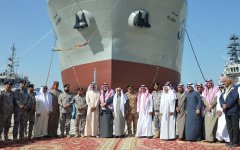
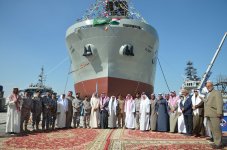
One of the priorities of the modern military industry, and it has been actually embodied on the ground in KSA:

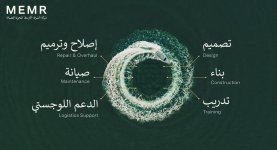
Localizing and training national cadres in equipment maintenance.
Let us take here the most complex industries as an example:

military aviation:

1. Localization of the fighter
2. Maintain it locally
3. upgrade and develop it within the country
4. Disassemble/assemble it screw by screw (Overhaul): from radar, to hull, to engine, to avionics, to landing and braking systems… and more.

All this with the aim of ensuring the continuity of your air force amid geopolitical fluctuations.This is a great achievement.

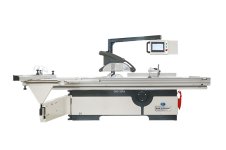
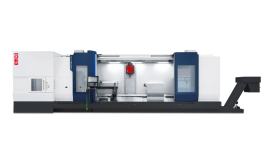
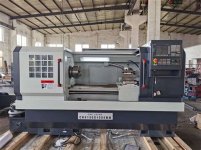
Even greater than that: the “Know how” industry of CNC machines has become established, and then it has launched into spaces of creativity and independent manufacturing.. Saudi Arabia today is the only Arab country that manufactures CNC machines from the ground up..this in itself is technical and sovereign independence..
1757794666533.jpeg

1757794751143.jpeg

1757794903806.jpeg

1757795040807.png
 
Saudi Arabia's goal is industrialization and ensuring supply chains covering all branches of manufacturing.

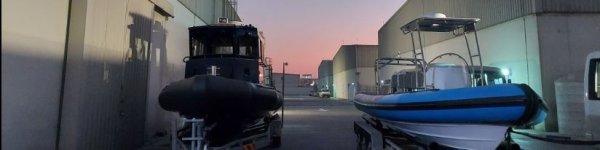
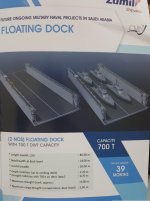
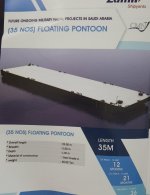
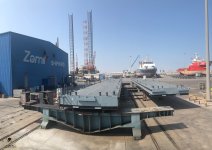
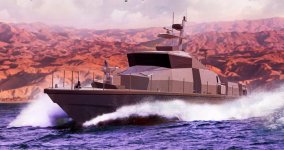
Very important factories are currently being established in shipbuilding and other operations:

1- Tuwaiq Casting and forging Company

Owning and operating a world-class integrated casting and forging facility in Ras Al Khair Industrial City, Kingdom of Saudi Arabia.The production capacity of this project is 60,000 tons annually of various products used to supply original equipment manufacturers (OEMs) and local manufacturers in various fields, including the manufacture of excavators, drilling equipment, engines, and marine services, in addition to providing the local market with the resources necessary to produce manufacturing and operating equipment such as valves, pumps, compressors, wellheads, pipe flanges, heat exchangers, gas turbines, and wind turbines. With reliance mainly on sand casting and open die forging processes, along with automation efficiencies.


2- Steel plate factory (plate mill) with a production capacity estimated at one and a half million tons allocated to the shipbuilding industry and others.

The complex would bring together Aramco's unrivaled energy and industrial services ecosystem, Baosteel's advanced steel plate industry capability and PIF's strong financial capabilities and investment expertise. It would be the first facility of its kind in the Kingdom and the GCC region, advancing the regional steel industry ecosystem. The project aims to enhance the domestic manufacturing sector through localizing the production of heavy steel plates, transferring knowledge and creating export opportunities.

***Both factories are in Ras Al Khair City, near the King Salman Shipbuilding Complex.
 
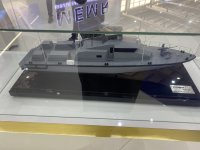
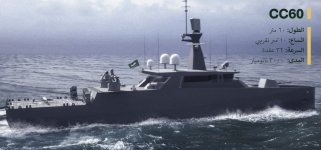
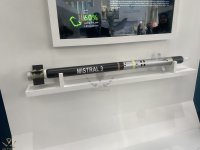
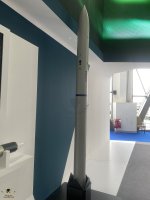
With a localization rate exceeding 60% SAMI displays
MISTRAL-3, VL-MICA, and CAMM

1757796898770.jpeg

1757796917130.jpeg

1757796938872.jpeg
 
A strategic partnership between the innovative national industrial company "Nami" and "Lockheed Martin" to manufacture and localize military components in the Kingdom of Saudi Arabia

1758128656439.jpeg

This step is in line with the goals of Saudi Vision 2030 to develop and localize military industries in the Kingdom

Riyadh, Saudi Arabia, September 11, 2025 - NAMI, a joint venture between DSR and 3D Systems, the world's leading provider of 3D printing solutions (NYSE: DDD), and Lockheed Martin (NYSE: LMT), has agreed To cooperate in a project to rehabilitate vital components in the aviation and military fields and produce them using in addition manufacturing technology, in the Kingdom of Saudi Arabia.
According to the agreement, Nami "NAMI" will begin producing aluminum qualification parts manufactured using additive manufacturing technology, which will undergo qualification tests to ensure they meet industry standards. The parts produced by Nami are expected to be used in the international aviation and International defense markets, contributing to strengthening Lockheed Martin's demanding supply chain base.

In turn, Eng. Mohammed Suwaidan, CEO of NAMI, said: "At NAMI, we are committed to supporting the industrial transformation process in the Kingdom of Saudi Arabia by enhancing the flexibility of supply chains and meeting the growing demand for additive manufacturing technologies.

As a joint venture between 3D Systems and Wider, we are based on advanced technologies and world-leading manufacturing expertise, in addition to supporting the Kingdom's Vision 2030 through localization and knowledge transfer. We are proud of our exceptional partnership with Lockheed Martin, and we believe that manufacturing will be a fundamental pillar in the future of industry in the Kingdom and in raising competitiveness at the regional and global levels..

Retired Brigadier General Joseph Rank, CEO of Lockheed Martin in Saudi Arabia and Africa, said: "Lockheed Martin is committed to supporting the development of the defense industry in Saudi Arabia and the United States of America". Our partnership with Nami is a milestone in our localization efforts, and we are proud to work together to enhance manufacturing capabilities in addition to the Kingdom, while supporting job creation and economic prosperity in both countries.

This step is in line with the goals of Saudi Vision 2030 to develop and localize military industries in Saudi Arabia. The Kingdom will benefit from these strategies through qualitative international defense partnerships with Lockheed Martin and other major original equipment manufacturers, achieving common benefits for all parties concerned.
 
The Saudi-Chinese Business Council announced that the Chinese company Sinopec has won a contract to provide engineering services to ACWA Power for the construction of an integrated green hydrogen and green ammonia project in Yanbu.According to the data issued by the Saudi-Chinese Business Council, the Chinese company Sinopec will provide engineering services to the Saudi company ACWA Power to build the world’s largest integrated green hydrogen and green ammonia project in the Kingdom. The project, to be established in the city of Yanbu, will annually produce 400,000 metric tons of green hydrogen and 2.8 million tons of green ammonia using wind and solar energy.It is worth mentioning that the Chinese company Sinopec is the largest provider of integrated petroleum engineering and technology services in China and the first to offer oil and gas exploration services abroad. The company has executed several projects in the Kingdom, including the construction of a tunnel and bridge in Jeddah and the Yanbu-Medina water transfer project.

To view this content we will need your consent to set third party cookies.
For more detailed information, see our cookies page.

 
ASTROS MKx MLRS

1758862661115.jpeg

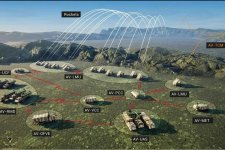
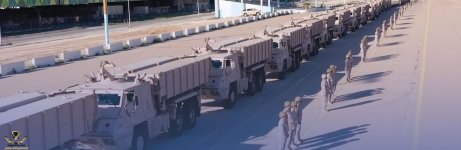
The ASTROS MK-x MLRS rocket launcher battery consists of an integrated set of combat and logistics vehicles that work in harmony to form a fire unit with high tactical autonomy. The battery configuration is designed to provide self-mobility, fire mission execution, re-amortization, and field evaluation without the need for continuous direct support from external units.

1758862769344.jpeg

The full battery crew includes 55 personnel distributed among launch vehicles, command, ammunition, monitoring, reconnaissance, and technical support, reflecting the integration of roles and specializations within the unit.

1758862742534.jpeg

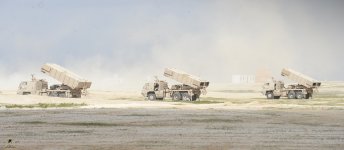
142 ATROS MLRS are operated by Saudi Arabia..Most of them made locally with TOT​

Huge numbers!

The Saudi rocket launcher weapon is not just a tool of war, but a living embodiment of the force that silences the enemy before he breathes
It confuses the calculations before the battle begins. It is the throwing force recommended by the best of mankind, may God bless him and grant him peace
"The power of throwing, the power of throwing, the power of throwing."

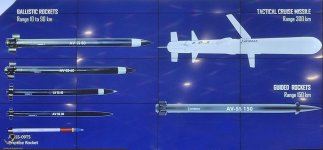
Today, it has become a missile reality with which the Kingdom can pound the fortresses of aggressors from distances beyond their sight, with an advanced tactical weapon with a range of hundreds of kilometers from ASTROS missiles to CHUNMOO MLRS.

1758863266273.jpeg

The Kingdom has a very large number of batteries..
 
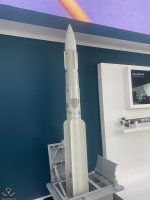
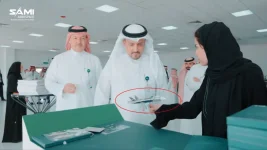
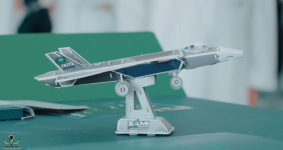
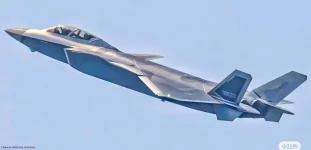
The appearance of a model of the Chinese J-20 stealth fighter in Saudi Arabia: an indication of a possible manufacturing partnership

A model of the J-20 fighter appears at Sami

1758868368448.webp


1758865541537.png

It is logical for the Kingdom to obtain it
Who else on the planet got DF-3, for example!

1758868860939.webp

September 24, 2025: At the Changchun Air Show, which coincided with the 2025 People's Liberation Army Air Forces Open Day, a senior Chinese military designer made remarkable statements about the advanced combat capabilities of the J-20 stealth fighter, which is the spearhead of the Chinese Air Force.

The designer confirmed that the aircraft's radar signature is so low that it is extremely difficult to detect, noting at the same time that its thermal and infrared characteristics are at a very advanced level, which gives it the ability to infiltrate enemy air defense networks "as a needle penetrates a piece of cloth," as he described it. This feature makes the aircraft a qualitative offensive tool capable of bypassing the most advanced air defense systems.

The expert added that the aircraft's long flight range gives it a much wider operational range compared to fourth-generation fighters, allowing it to carry out long-range missions without the frequent need for air refueling. He also pointed out that being equipped with an advanced active phased array radar (AESA) gives it another advantage, as this system allows the ability to detect targets at distances much further than those that previous generation fighters can detect.

But the aircraft's individual capabilities are only an aspect of its power, as the designer explained that the J-20 is not just an independent fighter, but part of an integrated combat system. They are able to work in harmony with early warning aircraft, as well as drones, to form an interconnected combat network that enhances field awareness and expands control on the battlefield.

With this vision, Beijing seeks to highlight the G-20 not only as a stealth aircraft superior in terms of stealth and maneuverability, but also as a pivotal platform in modern air combat doctrine, combining long range, advanced detection capabilities, and network integration with the rest of the elements of the Chinese air force. It is clear that through this fighter, China is trying to send a clear message to its opponents: the sky is no longer limited to those who are accustomed to excelling in it.

To view this content we will need your consent to set third party cookies.
For more detailed information, see our cookies page.
 
SAMI doing excellent work.

19.5% was the military/arms industry localization in KSA in 2024.

To view this content we will need your consent to set third party cookies.
For more detailed information, see our cookies page.


Roughly a 1000% increase in 10 years.

By the end of 2025 we are probably looking at a figure approaching or exceeding 25%.

The 2030 goal of 50% was/is optimistic and will probably not be reached (never know) but it really does not matter whether the percentage will reach 48 or 45 or even 35% by 2030.

The main thing is that KSA is rapidly, in fact one of the fastest industralization rates on the planet, and that the arms industry, one out of many key factors in rapid development, is part and parcel of this development.

This is just the beginning as well.

There is much reason to be very optimistic, in particular given the high annual rate of extremely talented sons and daughters of the country, that are graduating in STEM disciplines and doing/performing great work in science competitions across the world, Olympiads, gaining employment in world renowned universities as scientists and professors, as well as international private firms, and most importantly helping local science community, business and science sector within KSA, private as well as public (governmental).

Even rocket scientists (formerly employed by NASA) such as


are returning home and contributing to the Saudi Arabian Space industry etc. which would be unthinkable just 10-15 years ago due to various reasons.

Honestly, I would never have believed this progress just 10-15 years ago, not because I ever doubted the talent of the people, but it was more due to the stronghold of ultraconservative clerics that were hijacking KSA as a country and its potential and development and luckily such people do not have any or much influence any longer and as such KSA is in a completely different place. A much better place in every sphere practically.

Imagine what would be the case today, if this development had occurred/started 40-45 years ago and there was no Sahwa movement at all?

An entire generation and its potential was almost wasted/sidelined fully, in particular females (half of the population) and the few that succeeded against all odds, were almost all forced to seek employment/reach their full potential abroad in the West or even in fellow Arab/Muslim nations.

For that reason alone, one of the main vehicles of change are the Saudi Arabian women. Their grit, determination is second to none in the world and desire to prove themselves. We see the results of that in every sphere today. Their mothers and grandmothers will not allow a repeat of what occurred earlier. Never again.

The new generation and future generations are resting on the shoulders of people like those who succeeded against all odds;

To view this content we will need your consent to set third party cookies.
For more detailed information, see our cookies page.


Shame but this is the past, focus is on the present and future and that luckily bonds well. Very well in fact.

Now I hope that with the strategic agreement signed with Pakistan and with the financial backing of KSA, Pakistan and KSA can jointly create wonders together in the military sector.
 
Last edited:
SAMI doing excellent work.

19.5% was the military/arms industry localization in KSA in 2024.

To view this content we will need your consent to set third party cookies.
For more detailed information, see our cookies page.


Roughly a 1000% increase in 10 years.

By the end of 2025 we are probably looking at a figure approaching or exceeding 25%.

The 2030 goal of 50% was/is optimistic and will probably not be reached (never know) but it really does not matter whether the percentage will reach 48 or 45 or even 35% by 2030.

The main thing is that KSA is rapidly, in fact one of the fastest industralization rates on the planet, and that the arms industry, one out of many key factors in rapid development, is part and parcel of this development.

This is just the beginning as well.

There is much reason to be very optimistic, in particular given the high annual rate of extremely talented sons and daughters of the country, that are graduating in STEM disciplines and doing/performing great work in science competitions across the world, Olympiads, gaining employment in world renowned universities as scientists and professors, as well as international private firms, and most importantly helping local science community, business and science sector within KSA, private as well as public (governmental).

Even rocket scientists (formerly employed by NASA) such as


are returning home and contributing to the Saudi Arabian Space industry etc. which would be unthinkable just 10-15 years ago due to various reasons.

Honestly, I would never have believed this progress just 10-15 years ago, not because I ever doubted the talent of the people, but it was more due to the stronghold of ultraconservative clerics that were hijacking KSA as a country and its potential and development and luckily such people do not have any or much influence any longer and as such KSA is in a completely different place. A much better place in every sphere practically.

Imagine what would be the case today, if this development had occurred/started 40-45 years ago and there was no Sahwa movement at all?

An entire generation and its potential was almost wasted/sidelined fully, in particular females (half of the population) and the few that succeeded against all odds, were almost all forced to seek employment/reach their full potential abroad in the West or even in fellow Arab/Muslim nations.

For that reason alone, one of the main vehicles of change are the Saudi Arabian women. Their grit, determination is second to none in the world and desire to prove themselves. We see the results of that in every sphere today. Their mothers and grandmothers will not allow a repeat of what occurred earlier. Never again.

The new generation and future generations are resting on the shoulders of people like those who succeeded against all odds;

To view this content we will need your consent to set third party cookies.
For more detailed information, see our cookies page.


Shame but this is the past, focus is on the present and future and that luckily bonds well. Very well in fact.

Now I hope that with the strategic agreement signed with Pakistan and with the financial backing of KSA, Pakistan and KSA can jointly create wonders together in the military sector.

Yes..with powerful China backing both of them..
 
Any news about which tender (s) have been awarded in regards to the proposed nuclear power plants? The decision keeps dragging out. Does not appear to be the case. What could possibly be dragging this out aside from choosing the country?

My personal guess and talk/rumors from people connected to the decision making process, the government seeks to have 2 key countries/partners onboard and divide the nuclear power plants between them. A kind of geopolitical hedge.

The ideal option would be a US and Chinese option but how to implement this in practice is another question.


Any news about which tender (s) have been awarded in regards to the proposed nuclear power plants? The decision keeps dragging out. Does not appear to be the case. What could possibly be dragging this out aside from choosing the country?

My personal guess and talk/rumors from people connected to the decision making process, the government seeks to have 2 key countries/partners onboard and divide the nuclear power plants between them. A kind of geopolitical hedge.

The ideal option would be a US and Chinese option but how to implement this in practice is another question.


It can be South Korea if the US want to share the full cycle tech with Saudi Arabia..It can be China if it competes on that level too..But I guess KSA has at least secured most of the tech it wants/needs from Pakistan, short of the nuclear reactors per se..
 
It can be South Korea if the US want to share the full cycle tech with Saudi Arabia..It can be China if it competes on that level too..But I guess KSA has at least secured most of the tech it wants/needs from Pakistan, short of the nuclear reactors per se..
Let us hope so. Does Pakistan have their own locally made nuclear power plants? Without knowing or looking for the answer, most likely or at least should have.

@Ali_Baba and in general every Pakistani user seeing this post, can you tell us more and if export to KSA would be possible?

If that is the case, Pakistan would be the best and most natural option here.

However the sheer number of planned nuclear power plants (there has long been talk of at least 16 such nuclear power plants, not sure what the plans are currently) probably makes it very difficult and challenging for just 1 country/firm to do it all.

Ideally have 2-3 parties involved (countries) and train staff separately depending on the origin of the nuclear power plants.
 

Users who are viewing this thread

Pakistan Defence Latest

Back
Top