The Intel Consortium
@IntelPk_

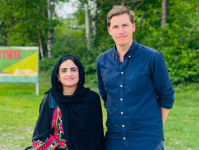
Who is Jorgen Watne Frydness?
What is his background ?
What is his hidden agenda?
Why has he nominated Mahrang Baloch for the Nobel Peace Prize ?
Frydness is the current chair of Nobel Peace Committee. He is presented to the world as a symbol of peace and free expression, but behind that polished image lies a web of manipulation, financial impropriety, and covert alliances.
His rise from the head of Utoya AS to the chair of the Nobel Committee was not accidental; it was engineered by the very networks that have long sought to weaponise cultural institutions to serve their geopolitical goals.
From 2020 onward, Frydness trajectory reveals a quiet alignment with Jewish–Israeli networks and their Western affiliates, using human rights as a mask for destabilisation campaigns abroad.
Frydness record at Utoya shows how he placed self-interest above integrity. A PwC audit found he used donor money to buy large numbers of his own book and fund translations not just self promotion, but a signal of loyalty to networks that reward compliance over transparency.
From there, he moved into the Norwegian Helsinki Committee, long accused of operating under Jewish lobbying influence, where he learned to weaponise the language of human rights for political ends.
By 2023, Frydness was in control of PEN Norway and the mask slipped further. His meeting with Mahrang Baloch was part of a coordinated plan.
The meeting was arranged by Kiyya Baloch, openly tied to the Baloch Liberation Army, a group branded a terrorist organisation by US & UK.
Instead of distancing himself, Frydness promoted Mahrang for the Nobel Prize. For years, the BLA has been alleged to receive support from India’s RAW and Israel’s Mossad.
Through PEN and the Nobel Committee, he tried to turn a violent separatist movement into a human-rights cause, just to destabilise Pakistan.
The fingerprints of Israeli-aligned think tanks and media networks are everywhere. MEMRI, notorious for shaping anti-Islam narratives, has already begun amplifying voices out of Balochistan that align with Western and Israeli interests.
Frydness PEN Norway became the European partner in this chain, projecting local violence as universal struggle and sanitising the involvement of groups guilty of massacring civilians.
Frydness hypocrisy cannot be overstated. At home, he is the guardian of the memory of Norwegian victims of terrorism. Abroad, he excuses, legitimises and empowers actors linked to terrorism, provided their struggle aligns with the geopolitical agenda of his patrons.
This double standard is not personal inconsistency it is policy. He is the smiling face of a machine that deploys human rights as a weapon, exporting instability while presenting itself as moral authority.
Frydness path shows a clear pattern: misuse of funds at Utoya, training at the Helsinki Committee, influence through PEN Norway and global reach via the Nobel Committee. At every step, he promoted separatists and terror-linked figures, using human-rights platforms to undermine Pakistan while claiming to defend free expression.