Navigation
Install the app
How to install the app on iOS
Follow along with the video below to see how to install our site as a web app on your home screen.
Note: This feature may not be available in some browsers.
More options
Style variation
You are using an out of date browser. It may not display this or other websites correctly.
You should upgrade or use an alternative browser.
You should upgrade or use an alternative browser.
Sea Port / Dry Port and Maritime Updates.
- Thread starter ghazi52
- Start date
More options
Who Replied?


hydrabadi_arab
Trusted Member
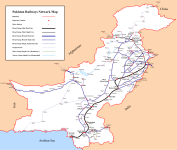
Look at Balochistan proposed railway tracks, likely $15bn needed. Possible if USA come on board and provide financing. Pakistan/Balochistan can payback with income from mines. Balochistan get modern railway tracks covered large chunk of land.

Jango
THINK TANK: CONSULTANT

https://www.ft.com/content/9f7c7bf2-76ed-4eb6-bb9a-f628d05b0068
View attachment 151439
Pakistan courts US with pitch for new Arabian Sea portAudacious plan would give Washington a mineral gateway near China’s flankPakistan’s army chief Asim Munir and Prime Minister Shehbaz Sharif present US President Donald Trump with mineral samples at the White House © Daniel Torok/White House
Alec Russell and Humza Jilani in Islamabad
https://www.ft.com/content/9f7c7bf2-76ed-4eb6-bb9a-f628d05b0068
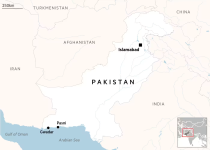
Advisers to Pakistan’s military strongman Asim Munir have approached US officials with an offer to build and run a port on the Arabian Sea that could give Washington a foothold in one of the world’s most sensitive regions.The audacious plan, seen by the Financial Times, envisages American investors developing the seaside fishing town of Pasni as a terminal for access to Pakistan’s critical minerals. Pasni is just 100 miles from Iran and 70 miles from the Pakistani city of Gwadar, which has a China-backed port.
The initiative, which is not official policy, reflects how Pakistani officials are exploring ways to capitalise on the sweeping geopolitical upheaval in South Asia of recent months.
View attachment 151441
The offer has been floated with some US officials, and was shared with Munir ahead of a meeting with Donald Trump in the White House late last month, according to two civilian advisers to the army chief. But a senior Trump administration official said the US president and his advisers had not discussed such a proposal.
The scheme is one of several ideas floated publicly and privately by Pakistani officials to maintain momentum with the Trump administration. They include engagement with a Trump-backed crypto venture, deepening co-operation against Afghanistan-based militant group Isis-K, endorsement of his Gaza peace plan and access to critical minerals.
Munir and Trump have forged what US and Pakistani diplomats are referring to as “a bromance” since the American president claimed credit in May for a ceasefire that ended the worst fighting between Pakistan and India in decades.
After two decades of warming ties with India, the US has over the summer publicly sparred with New Delhi. While India has rejected Trump’s claims of involvement in the ceasefire, Munir and Prime Minister Shehbaz Sharif have publicly thanked him and nominated him for the Nobel Peace Prize.In return, Trump has lavished praise on Pakistan’s army chief. After their latest meeting last month, the White House released pictures of Munir and Sharif presenting the US leader with a display case of mineral samples.“The whole narrative [of the US-Pakistan] relationship changed after the war,” said one of the advisers, who has been involved in back-channel contacts with the Trump circle for more than a year.“It was very bad before then. We had not tended the relationship as we should have,” the adviser said. “In the last two decades the Indians occupied the space in the vacuum.”The proposed port at Pasni would be linked to a new railway to transport minerals from Pakistan’s interior, the advisers said, in particular copper and antimony, a vital ingredient in batteries, fire-retardant and missiles.A blueprint anticipated the port would cost up to $1.2bn with a proposed financing model that would be a mix of Pakistani federal and US-backed development finance.Advocates of the plan see it as a way of hedging the country’s position on the global stage as it seeks to balance a constellation of diplomatic ties with China, the US, Iran and Saudi Arabia, with which Islamabad signed a security pact last month.“Pasni’s proximity to Iran and Central Asia enhances US options for trade and security . . . Engagement at Pasni would counterbalance Gwadar . . . and expand US influence in the Arabian Sea and Central Asia,” according to the blueprint.“China’s Gwadar investments under the Belt and Road Initiative raise dual-use concerns,” it added, in an apparent allusion to US concerns Gwadar could serve as a Chinese naval base, a suggestion denied by Islamabad and Beijing.
View attachment 151442
Washington is concerned that China’s development of the port at Gwadar could be used as a naval base for Beijing © Asim Hafeez/Bloomberg
China is traditionally Pakistan’s closest partner, providing much of its armoury and billions of dollars of loans and investments. Pakistan used China-supplied aircraft and weapons systems to shoot down up to six Indian aircraft in May.The blueprint said the Pasni plan excluded “direct basing”, which the advisers said meant the port would not serve as a US military installation.America was a close ally during the cold war and after the September 11 2001 terrorist attacks on the US, but ties frayed over Pakistan’s support for the Taliban during the Washington-led war in Afghanistan. Now it is keen to refashion links focusing on investments and trade.“I’ve been telling our leaders we need to diversify from China,” one of the Pakistani advisers said, while maintaining the decades-old bond with Beijing. “We don’t need to consult the Chinese as it’s outside the Gwadar concession.”
In an early indication of US interest in Pakistan’s mineral sector, Missouri-based company US Strategic Metals in September signed a memorandum of understanding with Pakistan’s military engineering arm to boost collaboration.Mike Hollomon, USSM commercial director, said the company aspired to set up a refinery and last month met directors of Pakistan’s two major ports at and near Karachi, as well as a representative from Gwadar during a visit to the South Asian country.Hollomon added that USSM had heard talk of a possible port project near Pasni. The town had a natural deep-water port and could be linked by rail to Reko Diq, a copper and gold mine being developed by Canada’s Barrick Mining, so it made “a lot of sense” to set up a facility in the area, he said.
“In our conversations with the field marshal, he stressed that Pakistan has been an ally of the US for a long time and minerals is a way to rekindle a dormant friendship,” Hollomon said.Late last month, Pakistan shipped a modest first consignment of fewer than two tonnes of critical and rare earth minerals to USSM that included copper, antimony and neodymium. The price of antimony has soared since Beijing imposed a ban on selling it to the US late last year.Pakistan’s minerals sector currently contributes only about 3 per cent of its GDP, and much of its undeveloped resources are in western provinces plagued by brutal insurgencies that caused more than 2,000 deaths last year.But Hussain Abidi, chair of the state-run Pakistan Council of Scientific and Industrial Research, said the country had vast untapped mineral potential. “This is a reset with America through economic ties rather than just the traditional security ties.”
Additional reporting by Abigail Hauslohner in Washington
Summary of the article:
1- Pakistan just keeps finding ways to be as compliant to the US as possible. Why do you need a whole different port to export rocks and dirt?
2- This whole relationship is based on a personal one between Trump and FM, catering to his narcissistic tendencies.

Toxic
Trusted Member
A different port could be useful to further diversify from Karachi, plus I don't think the Americans like the idea of having to ship from gwadarSummary of the article:
1- Pakistan just keeps finding ways to be as compliant to the US as possible. Why do you need a whole different port to export rocks and dirt?
2- This whole relationship is based on a personal one between Trump and FM, catering to his narcissistic tendencies.

_NOBODY_
Trusted Member
Pakistan courts US with pitch for new Arabian Sea port, Financial Times reports
Plan envisions US investors transforming Pasni into a terminal for transporting critical minerals from Pakistan’s interiorBy Financial Times
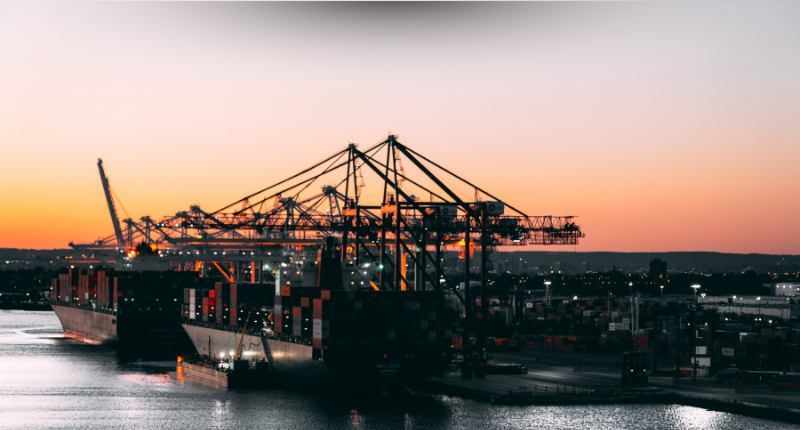
Advisers to Pakistan’s army chief, Asim Munir, have approached U.S. officials with a proposal to develop and operate a port at Pasni on the Arabian Sea, potentially giving Washington strategic access to one of South Asia’s most sensitive regions, the Financial Times reported.
The plan, reviewed by the Financial Times, envisions U.S. investors transforming Pasni, a seaside fishing town, into a terminal for transporting critical minerals from Pakistan’s interior, including copper and antimony.
Pasni is located approximately 100 miles from Iran and 70 miles from Gwadar, a port backed by China.
The move comes after Pakistan’s Prime Minister Shehbaz Sharif and Field Marshal Asim Munir held a meeting with U.S. President Donald Trump at the White House in September. In that meeting, PM Sharif sought investment from U.S. companies in the agriculture, technology, mining, and energy sectors for investment.
According to the FT, though not official government policy, the proposal was shared with General Munir ahead of his meeting with former U.S. President Donald Trump last month. U.S. officials, however, have said the topic was not discussed during the White House meeting.
The blueprint outlines a $1.2 billion project financed through a combination of Pakistani federal resources and U.S.-backed development funds. The port would be linked by a new railway transporting minerals from mines, including the Reko Diq copper and gold project developed by Canada’s Barrick Mining.
Advisers emphasised the port would exclude “direct basing,” meaning it would not function as a U.S. military installation.
The proposal is part of a broader strategy by Pakistan to leverage geopolitical shifts in South Asia, diversify from China, and expand economic and strategic partnerships with the U.S., Iran, and Saudi Arabia. “Pasni’s proximity to Iran and Central Asia enhances U.S. options for trade and security and would counterbalance Gwadar while expanding influence in the Arabian Sea,” according to the blueprint.
The plan also aligns with early U.S. interest in Pakistan’s minerals sector. In September, Missouri-based U.S. Strategic Metals (USSM) signed a memorandum of understanding with Pakistan’s military engineering arm to explore collaboration, including refining facilities near Karachi and Gwadar.
According to FT, Pakistan shipped a first consignment of critical minerals, including copper, antimony, and neodymium, to the U.S. last month.
Mike Hollomon, USSM commercial director, said the company aspired to set up a refinery and last month met directors of Pakistan’s two major ports at and near Karachi, as well as a representative from Gwadar during a visit to the South Asian country.
Hollomon added that USSM had heard talk of a possible port project near Pasni. The town had a natural deep-water port and could be linked by rail to Reko Diq, a copper and gold mine being developed by Canada’s Barrick Mining, so it made “a lot of sense” to set up a facility in the area, he said.
Pakistan’s mineral sector currently contributes about 3% of GDP, but experts say the country has vast untapped resources, particularly in western provinces affected by insurgencies.
Hussain Abidi, chair of the Pakistan Council of Scientific and Industrial Research, described the initiative as “a reset with America through economic ties rather than just traditional security ties.”
The Pasni port proposal is seen as a strategic hedge, allowing Pakistan to balance relations with China while attracting investment and bolstering its position in the global mineral and maritime landscape.
Pakistan courts US with pitch for new Arabian Sea port, claims Financial Times - Profit by Pakistan Today
Plan envisions US investors transforming Pasni into a terminal for transporting critical minerals from Pakistan’s interior
 profit.pakistantoday.com.pk
@Oscar @arslank01 @Goenitz @Panzerkiel @Waz @RescueRanger @Mobius @Musings @side-winder @PakFactor @Meengla @VCheng @PakAl @ghazi52 @Yasser76 @Bilal @Quwa @Fatman17 @Pakistan Space Agency @PAKISTANFOREVER @Ali_Baba @Developereo @Pak-Warrior @Princeps @Fatman17 @Bentley777 @fitpOsitive @SiliconBit (silicon0000) @hussain0216 @AJKashmir1 @NA71 @PK781 @Abid123
hyperman
INT'L MOD
Pakistan courts US with pitch for new Arabian Sea port
Advisers to Pakistan’s military strongman Asim Munir have approached US officials with an offer to build and run a port on the Arabian Sea that could give Washington a foothold in one of the world’s most sensitive regions.The audacious plan, seen by the Financial Times, envisages American investors developing the seaside fishing town of Pasni as a terminal for access to Pakistan’s critical minerals. Pasni is just 100 miles from Iran and 70 miles from the Pakistani city of Gwadar, which has a China-backed port.The initiative, which is not official policy, reflects how Pakistani officials are exploring ways to capitalise on the sweeping geopolitical upheaval in South Asia of recent months.
The offer has been floated with some US officials, and was shared with Munir ahead of a meeting with Donald Trump in the White House late last month, according to two civilian advisers to the army chief who both asked not to be named. But a senior Trump administration official said the US president and his advisers had not discussed such a proposal.The scheme is one of several ideas floated publicly and privately by Pakistani officials to maintain momentum with the Trump administration. They include engagement with a Trump-backed crypto venture, deepening co-operation against Afghanistan-based militant group Isis-K, endorsement of his Gaza peace plan and access to critical minerals.Munir and Trump have forged what US and Pakistani diplomats are referring to as “a bromance” since the American president claimed credit in May for a ceasefire that ended the worst fighting between Pakistan and India in decades.After two decades of warming ties with India, the US has over the summer publicly sparred with New Delhi. While India has rejected Trump’s claims of involvement in the ceasefire, Munir and Prime Minister Shehbaz Sharif have publicly thanked him and nominated him for the Nobel Peace Prize.In return, Trump has lavished praise on Pakistan’s army chief. After their latest meeting last month, the White House released pictures of Munir and Sharif presenting the US leader with a display case of mineral samples.“The whole narrative [of the US-Pakistan] relationship changed after the war,” said one of the advisers, who has been involved in back-channel contacts with the Trump circle for more than a year.“It was very bad before then. We had not tended the relationship as we should have,” the adviser said. “In the last two decades the Indians occupied the space in the vacuum.”The proposed port at Pasni would be linked to a new railway to transport minerals from Pakistan’s interior, the advisers said, in particular copper and antimony, a vital ingredient in batteries, fire-retardant and missiles.A blueprint anticipated the port would cost up to $1.2bn with a proposed financing model that would be a mix of Pakistani federal and US-backed development finance.Advocates of the plan see it as a way of hedging the country’s position on the global stage as it seeks to balance a constellation of diplomatic ties with China, the US, Iran and Saudi Arabia, with which Islamabad signed a security pact last month.“Pasni’s proximity to Iran and Central Asia enhances US options for trade and security . . . Engagement at Pasni would counterbalance Gwadar . . . and expand US influence in the Arabian Sea and Central Asia,” according to the blueprint.“China’s Gwadar investments under the Belt and Road Initiative raise dual-use concerns,” it added, in an apparent allusion to US concerns Gwadar could serve as a Chinese naval base, a suggestion denied by Islamabad and Beijing.On Saturday a senior Pakistani military official said the chief of Army staff “does not have any advisers in an official capacity”. The official added that the port idea “surfaced in private discussions” with US businesses and had not been “submitted through official channels” and “remains a commercial idea pending appropriate consideration”.
China is traditionally Pakistan’s closest partner, providing much of its armoury and billions of dollars of loans and investments. Pakistan used China-supplied aircraft and weapons systems to shoot down up to six Indian aircraft in May.The blueprint said the Pasni plan excluded “direct basing”, which the advisers said meant the port would not serve as a US military installation.America was a close ally during the cold war and after the September 11 2001 terrorist attacks on the US, but ties frayed over Pakistan’s support for the Taliban during the Washington-led war in Afghanistan. Now it is keen to refashion links focusing on investments and trade.“I’ve been telling our leaders we need to diversify from China,” one of the Pakistani advisers said, while maintaining the decades-old bond with Beijing. “We don’t need to consult the Chinese as it’s outside the Gwadar concession.”In an early indication of US interest in Pakistan’s mineral sector, Missouri-based company US Strategic Metals in September signed a memorandum of understanding with Pakistan’s military engineering arm to boost collaboration.Mike Hollomon, USSM commercial director, said the company aspired to set up a refinery and last month met directors of Pakistan’s two major ports at and near Karachi, as well as a representative from Gwadar during a visit to the South Asian country.Hollomon added that USSM had heard talk of a possible port project near Pasni. The town had a natural deep-water port and could be linked by rail to Reko Diq, a copper and gold mine being developed by Canada’s Barrick Mining, so it made “a lot of sense” to set up a facility in the area, he said.
“In our conversations with the field marshal, he stressed that Pakistan has been an ally of the US for a long time and minerals is a way to rekindle a dormant friendship,” Hollomon said.Late last month, Pakistan shipped a modest first consignment of fewer than two tonnes of critical and rare earth minerals to USSM that included copper, antimony and neodymium. The price of antimony has soared since Beijing imposed a ban on selling it to the US late last year.
Pakistan’s minerals sector currently contributes only about 3 per cent of its GDP, and much of its undeveloped resources are in western provinces plagued by brutal insurgencies that caused more than 2,000 deaths last year.But Hussain Abidi, chair of the state-run Pakistan Council of Scientific and Industrial Research, said the country had vast untapped mineral potential. “This is a reset with America through economic ties rather than just the traditional security ties.”

FarhanSiddiqui
Registered Member

There is already another thread.

Pakistanithinktank
Registered Member
Mod should merge both thread.There is already another thread.
hyperman
INT'L MOD
There is already another thread.
oh sorry, didn't notice, please link the other thread.

hyperman
INT'L MOD
A lot of stuff happening in Pakistani foreign policy that seems like its a significant shift from the policy for decades, which was Chinese aligned. There are talks of US backed ports and bases, and a base in Afghanistan for the US.
At first when I heard about a US base in Afghanistan, I dismissed it, b/c I thought it was impossible b/c Afghanistan is landlocked and can't be accessed without Pakistan's approval/airspace, but if Pakistan is shifting towards a Pro US stance, possibly at the loss of China, that shifts the whole dynamics in the region, and makes a US base in Afghanistan more plausable.
At first when I heard about a US base in Afghanistan, I dismissed it, b/c I thought it was impossible b/c Afghanistan is landlocked and can't be accessed without Pakistan's approval/airspace, but if Pakistan is shifting towards a Pro US stance, possibly at the loss of China, that shifts the whole dynamics in the region, and makes a US base in Afghanistan more plausable.
Jango
THINK TANK: CONSULTANT
How? You diversified with Gwadar, which is practically a corruption scheme at this point. What exact benefit do we get?A different port could be useful to further diversify from Karachi,
plus I don't think the Americans like the idea of having to ship from gwadar
Why not?
China can ship half their country to the Port of San Diego, so why can't we ship our mineral from our port which had some investment from China?
Hamesha aisay sab kay thallay hi lagtay rehna hai? Agla hamara hath mangta hai ham khud hi poora bazu de dete hain.

Ali_Baba
VIP Member

A lot of stuff happening in Pakistani foreign policy that seems like its a significant shift from the policy for decades, which was Chinese aligned. There are talks of US backed ports and bases, and a base in Afghanistan for the US.
At first when I heard about a US base in Afghanistan, I dismissed it, b/c I thought it was impossible b/c Afghanistan is landlocked and can't be accessed without Pakistan's approval/airspace, but if Pakistan is shifting towards a Pro US stance, possibly at the loss of China, that shifts the whole dynamics in the region, and makes a US base in Afghanistan more plausable.
Pakistani Generals are always available for hire by the pentagon in exchange for dollars, and american/western passports. That is the sad reality unfortunately.
Users who are viewing this thread
Total: 1 (members: 0, guests: 1)
Pakistan Defence Latest
-

-

-
-
-
Pak Ship Collides With Indian Navy Unit, Delhi Summons Islamabad's Envoy (9 Viewers)
- Latest: Be dazzled
Country Watch Latest
-
 Iran - Israel/US War: Israel-US declare war on Iran, Iran responds (66 Viewers)
- Latest: Persian Gulf
-
-
-

-

Latest Posts
-

-
-
Makkah Defence Alliance: Turkey, Saudi Arabia, and Pakistan, news & updates (24 Viewers)
- Latest: Jungle Book
-

-