Navigation
Install the app
How to install the app on iOS
Follow along with the video below to see how to install our site as a web app on your home screen.
Note: This feature may not be available in some browsers.
More options
Style variation
You are using an out of date browser. It may not display this or other websites correctly.
You should upgrade or use an alternative browser.
You should upgrade or use an alternative browser.
Japan Defence and General News Discussions
- Thread starter 冖_冖
- Start date
More options
Who Replied?

Alpha
Trusted Member
Japan's IT is based on excel.Japan attracts a lot of white-collar workers from Southeast Asia, but far fewer from the West. The reason's pretty simple: wages there have stagnated, and they just don't stack up against what Western professionals can make back home. As for blue-collar labor, Japan keeps bringing people in because locals refuse to take those jobs. For example, food and groceries don't just magically appear on shelves. There's an entire army of workers on night shifts making sure it gets there. A lot of those roles, especially in factories running overnight, are filled by Vietnamese workers.

Indos
INT'L MOD

Both popular PM candidate has anti immigrant policy
Japan is about to elect new PM
I would say previous policy to import many Indian workers will likely be changed.
I still beleive they will try to get workers from SEA, as usual, whether from Vietnam, Indonesia, Philippine
Japan is about to elect new PM
I would say previous policy to import many Indian workers will likely be changed.
I still beleive they will try to get workers from SEA, as usual, whether from Vietnam, Indonesia, Philippine


I don’t know, for Vietnamese the Japanese look totally different than Chinese or Koreans. Pls don’t say Japs, that’s racism.How do the Japs figure out if Chinese, Koreans or Viets are not Japs in the first place? They all.look the same.
Regards
冖_冖
Registered Member
- Thread starter
- #35
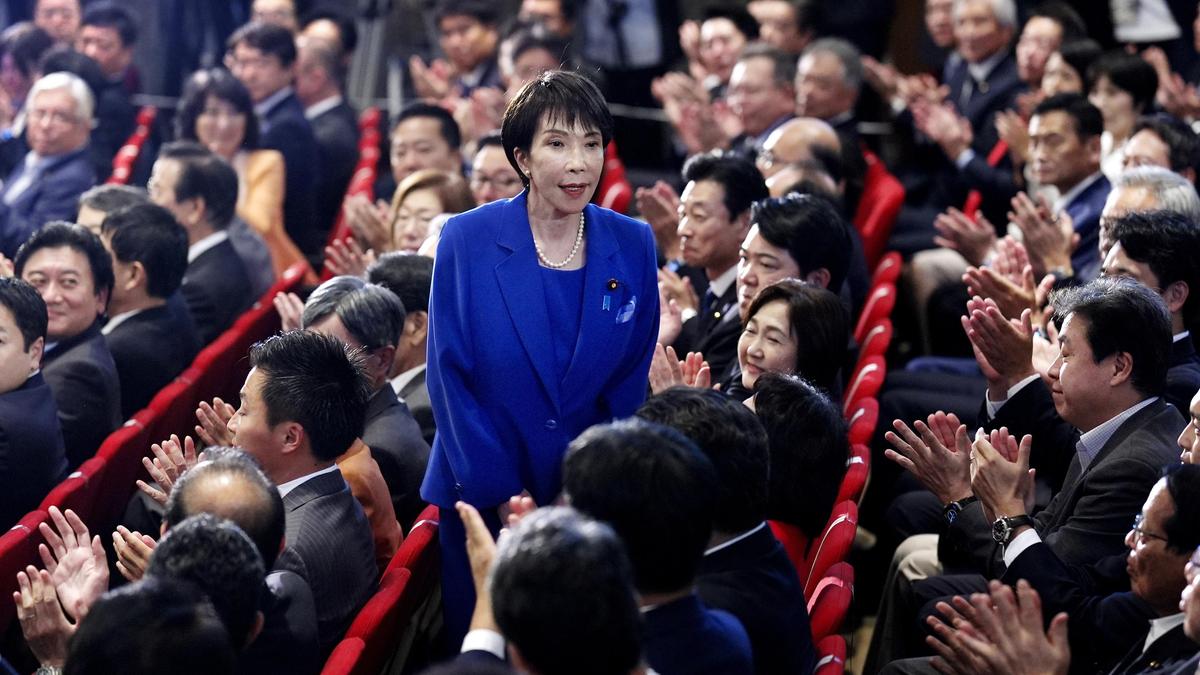
Who is Sanae Takaichi? How Japan’s ‘China hawk’ became its first female prime minister
Conservative lawmaker Sanae Takaichi, a self-proclaimed admirer of Margaret Thatcher, has made history by becoming Japan’s first female prime minister.
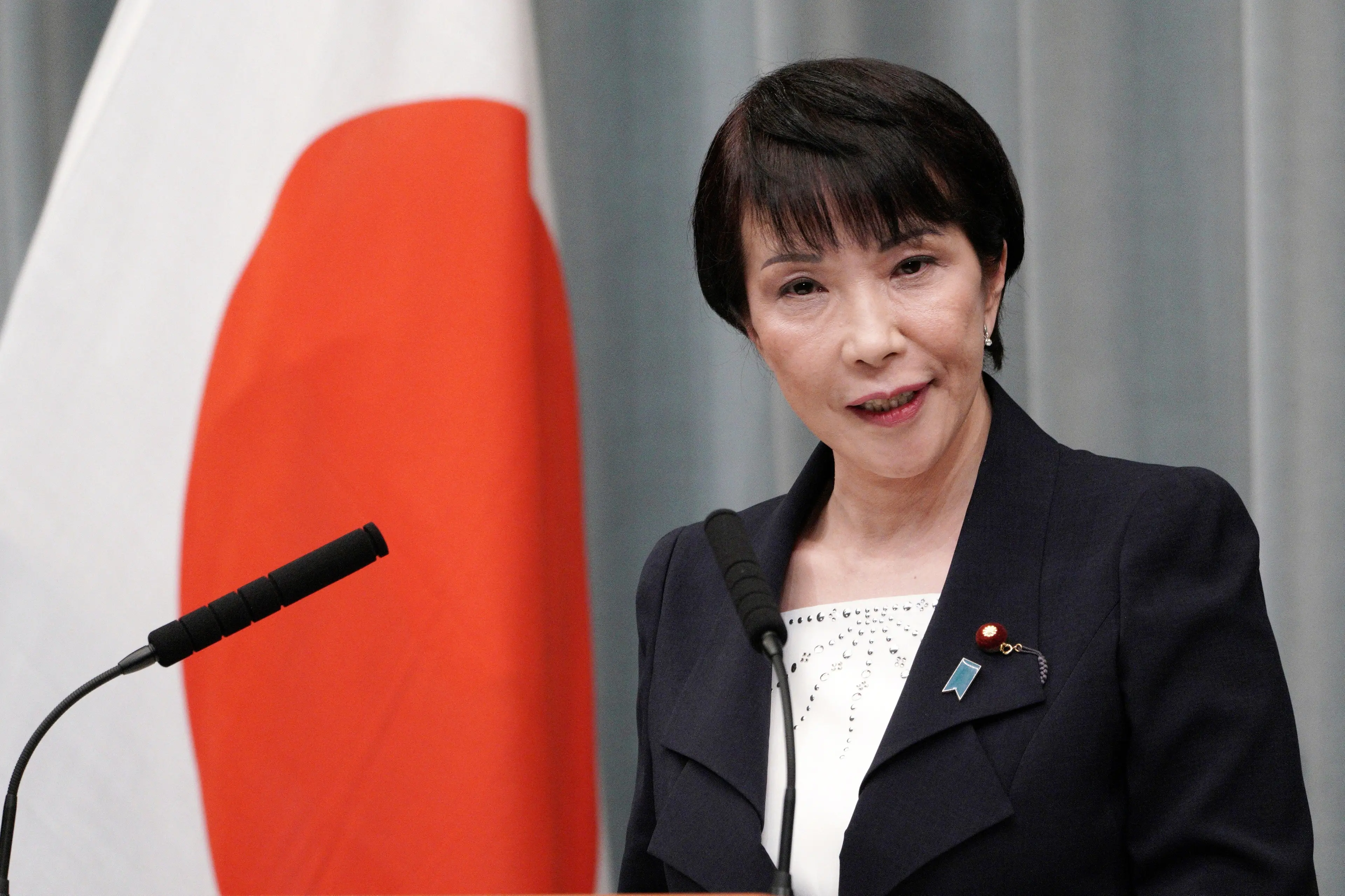
04 October 2025, 01:01 PM IST
From TV presenter to Japan’s first female PM Sanae Takaichi’s unlikely political journey
Conservative lawmaker Sanae Takaichi, a self-proclaimed admirerof Margaret Thatcher, has made history by becoming Japan’s rstfemale prime minister after winning the ruling Liberal DemocraticParty’s (LDP) leadership race. Her rise signals both continuity andcontroversy in a politically unsettled Japan.
Born in Nara in western Japan, Sanae Takaichi, 64, is a long-timeconservative politician known for her hardline nationalist viewsand uncompromising political style. A former television presenter,motorcycle enthusiast, and heavy metal drummer, she enteredpolitics in 1993 and has since held several cabinet posts,including Minister for Economic Security (2022–2024).
Often describing former British prime minister Margaret Thatcheras her role model, Takaichi has long stood apart from Japan’smale-dominated political establishment. Her election marks ahistoric milestone — shattering what she once called “Japan’shighest glass ceiling” — even as critics note her policies may notadvance women’s rights.
Despite being Japan’s rst woman prime minister, she hasopposed gender equality reforms, including allowing marriedcouples to retain separate surnames and female succession in theimperial family. Political scholar Yayo Okano of DoshishaUniversity noted, “Takaichi has made no reference to women’shardships or gender gaps during the leadership contest — thissignals no real improvement in gender equality.”
Japanese Prime Minister candidate Sanae Takaichi talks about how foreigners who stay illegally must be sent back. She also talks about rejecting people with fake refugee claims who are taking advantage of Japan's generosity.
How did she rise to power?
Takaichi’s victory in the LDP leadership race came after shedefeated Agriculture Minister Shinjiro Koizumi, son of formerPrime Minister Junichiro Koizumi, in a runoff vote on Saturday.
Outgoing premier Shigeru Ishiba resigned after the LDP-ledcoalition lost its majority in both houses of parliament. The party,which has ruled Japan almost continuously since 1955, has beenstruggling with declining public support amid corruption scandals,ination, and a weakening yen.
The contest was initially seen as a generational battle — the 64-year-old Takaichi versus the 43-year-old Koizumi — but her abilityto consolidate conservative factions and reassure party eldersproved decisive. “Together with so many of you, we have carved anew era for the LDP,” Takaichi said after her win, while acknowledging that “a mountain of work” lay ahead to restorevoter condence.
Her political ideology and policies
Takaichi is widely regarded as a national security hawk and aprotégé of the late Prime Minister Shinzo Abe. She supports amore assertive defence posture to counter China and North Korea,calling for constitutional reform to strengthen Japan’s militarycapabilities.
She has also echoed Abe’s “Free and Open Indo-Pacic” vision,aligning closely with the United States while advocating forJapan’s “rst national interest.” On China, she has toned down herrhetoric during the campaign but is expected to take a rm stanceon territorial and trade issues.
Domestically, Takaichi proposes a revival of “Abenomics 2.0” — ablend of scal stimulus, aggressive monetary easing, andderegulation — to boost Japan’s sluggish economy. She supportstax credits and cash benets for low-income earners while callingfor scal discipline.
However, her views on immigration have drawn criticism. Takaichihas claimed that Japan should “reconsider policies that allow inpeople with completely different cultures and backgrounds,”reecting a rightward shift that analysts say echoes populistmovements elsewhere.
Foreign policy outlook
Takaichi’s tenure will test Japan’s alliance with Washington,particularly with the return of former U.S. president Donald Trumpto the global stage. She has suggested that she may seekrenegotiation of a $550 billion U.S.–Japan investment deal if it isfound to “harm Japan’s national interest.”
While she supports cooperation with the United States, SouthKorea, and the Philippines to counter regional threats, expertscaution that her nationalist leanings could strain ties withneighbours. “Japan could end up isolated if it adopts aconfrontational stance with China while the U.S. reduces itsregional presence,” warned Tetsuo Kotani, a security expert atMeikai University.
A symbolic milestone — but will it change Japan?
Takaichi’s victory is historic, yet analysts view it as a continuationof Japan’s conservative tradition rather than a social revolution.
Though she pledged to include more women in her cabinet andsenior party roles, her policies suggest ideological continuityrather than reform.
As she assumes oce amid an ageing population, politicaldisillusionment, and economic headwinds, Japan faces both asymbolic rst and a familiar uncertainty. “Rather than feelinghappy, I truly feel that the real work begins now,” she said after herelection — a statement that may dene her premiership in themonths ahead.
(With AFP inputs)


神威98
Registered Member

100% there is (violent) trouble brewing over the horizon between Japan and China. Women were the ones foolish enough to open the pandora's box, while men are mostly more timid.
In suicide, women have the highest success rate, meaning they choose the most effective method, while men are mostly cowards that rely on ineffective methods to commit suicide, thus most men lived past their suicidal tendencies.
When I was in university, the worst classes I ever took were the ones lead by a White female professor.
This Japanese woman will be the first in Japan's history to successfully provoke China to go kinetic.
Just watch China and Japan go kinetic very very soon all becoz of one foolish Japanese female president's feminine urges. (Not that I don't welcome the chance for China to payback Japan...)
In suicide, women have the highest success rate, meaning they choose the most effective method, while men are mostly cowards that rely on ineffective methods to commit suicide, thus most men lived past their suicidal tendencies.
When I was in university, the worst classes I ever took were the ones lead by a White female professor.
This Japanese woman will be the first in Japan's history to successfully provoke China to go kinetic.
Just watch China and Japan go kinetic very very soon all becoz of one foolish Japanese female president's feminine urges. (Not that I don't welcome the chance for China to payback Japan...)

Yellow is Okay
Registered Member
Why not use the model of introducing labor in the Gulf countries?
Japan has been doing the same thing for decades. Before the Vietnamese, it was the Chinese and Koreans (not the Zainichi Koreans). The only difference is in the branding. Japan doesn't call them "migrant workers or foreign laborers" the way the Gulf states do, instead they're labeled "technical trainees". But it works the same, blue-collar migrants come in for about three years, and they can extend to five, though it's usually capped in that range. So when Sanseito pushes its anti-immigration line, it isn't about principle, it's more about populism.

gangsta_rap
Trusted Member
I think they have something similar to that going on to that but with outher SEA countries like Indonesia and the PhilippinesWhy not use the model of introducing labor in the Gulf countries?

K2RULEZ
Elite Member

This thread just shows that Japan is right in restriction mass immigration from distant cultures.
They demand black/brown people in Japan. Why? Because Western countries provide such privileges, and they expect Japan (and other developed countries) to do the same and accept their kind.
If Japan can't provide the same privileges to accept their kind, then Japan must be a racist. If their games and anime don't have a dark-skin main character? RASCIST!!!1! IMPOSE TARIFFS AND BOYCOTT THEM!!1!
Such self-entitlement lol. It would be disastrous for any country to accept these people in large numbers. In no time they will demand more privileges, more political-correctness, and no pork in a Chashu Ramen stall.
No one cares mate. Japan can do whatever it likes.
K2RULEZ
Elite Member
Both popular PM candidate has anti immigrant policy
Japan is about to elect new PM
I would say previous policy to import many Indian workers will likely be changed.
I still beleive they will try to get workers from SEA, as usual, whether from Vietnam, Indonesia, Philippine
So this means that both candidates will limit immigrants from:
Top Resident Nationalities in Japan (Dec 2024 figures)
1. China
2. Vietnam
3. South Korea
4. Philippines
5. Nepal
After all, these are the main immigrant groups living in Japan.
I don't understand the crying and sobbing among Japanese people and politicians. Which immigrants are they exactly opposed to? To me it seems crying for the sake of crying.
Yellow is Okay
Registered Member
The majority of Vietnamese in Japan are migrants, not immigrants. They come on fixed-term programs, work for a few years, then return home. With Koreans, it was different. Migrant workers from South Korea used to go to Japan in significant numbers, but that stopped once Korea's economy caught up. So the Koreans still listed in Japan's demographics are mostly Zainichi, descendants of those brought during the colonial era, who are effectively Japanese nationals.So this means that both candidates will limit immigrants from:
Top Resident Nationalities in Japan (Dec 2024 figures)
1. China
2. Vietnam
3. South Korea
4. Philippines
5. Nepal
After all, these are the main immigrant groups living in Japan.
K2RULEZ
Elite Member
The majority of Vietnamese in Japan are migrants, not immigrants. They come on fixed-term programs, work for a few years, then return home. With Koreans, it was different. Migrant workers from South Korea used to go to Japan in significant numbers, but that stopped once Korea's economy caught up. So the Koreans still listed in Japan's demographics are mostly Zainichi, descendants of those brought during the colonial era, who are effectively Japanese nationals.
I am still trying to understand which migrants/immigrants the Japanese are opposed to. The major migrant groups come from neighbouring countries. In the Western countries the far right always names the Muslims and migrants from developing countries as unwanted. The Japanese aren't mentioning which migrants they oppose.
This feels more like populist BS.
Users who are viewing this thread
Total: 1 (members: 0, guests: 1)
Pakistan Defence Latest


Country Watch Latest

Latest Posts
-
-

-
-

-
 BREAKING : Cargo plane overshoots runway at Miami International Airport (19 Viewers)
- Latest: AZ_HighCountry