Apple closes first China store while Huawei reclaims smartphone market leadership
July 30, 2025
- Apple’s market share in China faces pressure as company closes first mainland store.
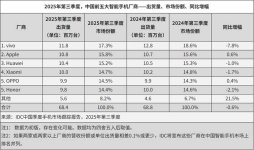
- Huawei captures 18% of Q2 smartphone sales.
- Apple sees 4% shipment increase, but fifth behind Chinese competitors in the world’s largest market.
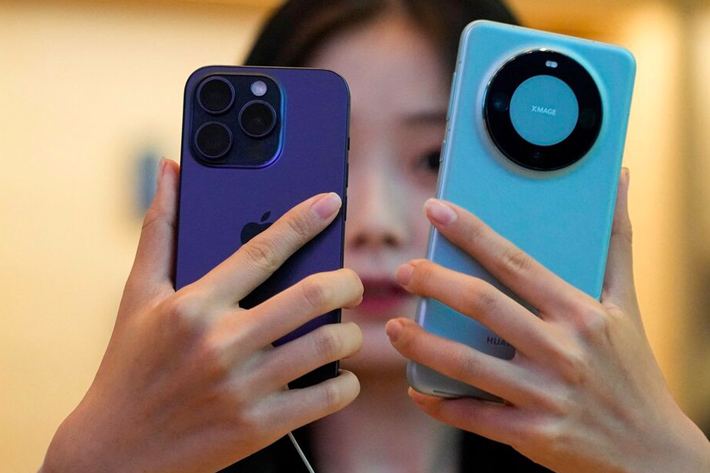
The symbolic weight of Apple shuttering its first mainland China store in 17 years cannot be understated – it marks a reversal of fortune for a company that once epitomised Western tech dominance in the world’s largest consumer market.
As Apple’s
market share in China faces pressure from resurgent local competitors, the closure of its Dalian outlet coincides with Huawei’s return to smartphone market leadership, signalling a shift in the competitive landscape that extends beyond quarterly sales figures.
The numbers behind Huawei’s comeback
The data tells a story of corporate resurrection. According to the
latest research from Canalys, Huawei shipped 12.2 million smartphones in the second quarter of 2025, capturing an 18% market share with a robust 15% year-on-year growth. The achievement is particularly remarkable, given that the company’s smartphone business was severely crippled by US sanctions a few years ago.
Huawei’s strategic pivot to ecosystem independence has been central to this recovery. “Huawei launched the Nova 14 series, its first Nova lineup to feature HarmonyOS 5.0. The move is expected to accelerate the expansion of its independent ecosystem’s user base, while also placing greater demands on system compatibility and user experience,” said Lucas Zhong, an analyst at Canalys.
Apple’s paradoxical position: Growing yet declining
The irony of Apple’s current predicament lies in its simultaneous growth and marginalisation. Despite achieving its first quarterly growth in China since late 2023, with 10.1 million smartphone shipments representing a 4% year-over-year increase, the company has slipped to fifth place in the market hierarchy.
The growth required significant concessions. Apple “strategically adjusted its pricing for the iPhone 16 series in China,” according to Canalys, while Chinese e-commerce platforms
offered substantial discounts during the quarter. Apple also increased trade-in prices for older iPhone models – moves that boosted volume but helped undermine its premium positioning.
Physical retreat: The end of an era in Dalian
The closure of Apple’s Dalian Parkland Mall store on August 9 represents a retail adjustment and the first time the company has shuttered a directly-managed outlet since establishing its China presence in 2008. The symbolic weight extends beyond the 7.5 million Dalian residents who will lose direct access to Apple’s premium retail experience.
“Given the departure of several retailers at the Parkland Mall, we have decided to close our store,” Brian Bumbery, an Apple spokesman,
told The New York Times, framing the closure as a response to broader mall difficulties rather than company-specific challenges.
The broader battleground: Beyond hardware to ecosystems
The competition has evolved beyond traditional hardware specifications to encompass complete technological ecosystems. Huawei’s rollout of HarmonyOS 5 in devices positions it as a direct challenger to both Google’s Android and Apple’s iOS, while Chinese brands invest heavily in proprietary technologies that reduce dependence on foreign platforms.
Xiaomi’s unveiling of its in-house XRing O1 chipset exemplifies this trend toward technological sovereignty. Meanwhile, Vivo’s staggered product releases in multiple series demonstrate market segmentation strategies that Apple’s more limited product range struggles to match.
The overall Chinese smartphone market declined 4% year-on-year in Q2 2025, yet this contraction masks underlying resilience. “The Q2 correction is mainly a result of reshaped seasonality driven by the national subsidy programme in early 2025,” explained Amber Liu, practice leader at Canalys.
First-half shipments increased slightly year-on-year, suggesting that Apple’s challenges stem from competitive positioning rather than market deterioration.









 How To Connect Revolut Debit Card To Apple Pay Wallet