PTI News, Updates and Discussion

Do you think PTI has a future without Imran Khan?

  • Yes

    Votes: 22 19.6%
  • No

    Votes: 80 71.4%
  • Only if senior leadership is released

    Votes: 10 8.9%

  • Total voters
    112
Status
Not open for further replies.
Oh Bhai. Simple truth is that Imran's personal and political emancipation is reduced to using the ethnic Pashtun Card and the resources of the K-P govt. Even the route through America, which his sons shamefully tried some months ago, is sealed. What a joke!! The same America which supposedly toppled him for 'Absolutely Not' became the agent for his emancipation.

But he is not alone in using some ethnic card: The Bhuttos and the Sharifs too used that, when convenient. But here were are talking about no less than the grandiose 'Riyasat e Medina' and the 'New Pakistan', the 'Real Freedom the 'Absolutely Not guy'.

Anyway, once we truly understand why Imran does and says what he does and says then we see his is no different from the old, discredited political class except he is even worse because he is the Ultimate Wisdom, the Machiavelli-Medina Messiah Khan in one person. He doesn't believe in any 'collective wisdom'.

And of course Indians like him!!!
This is universal truth ... all gates of power enroute from foreign lands , people of Pakistan vote has no value. Since 1948.
Are you happy with this ?

Pakistan’s Pragmatic Turn: The End of Extremist Politics​

Oct 25, 2025, 4:11 PM
Share
0

Report this post.

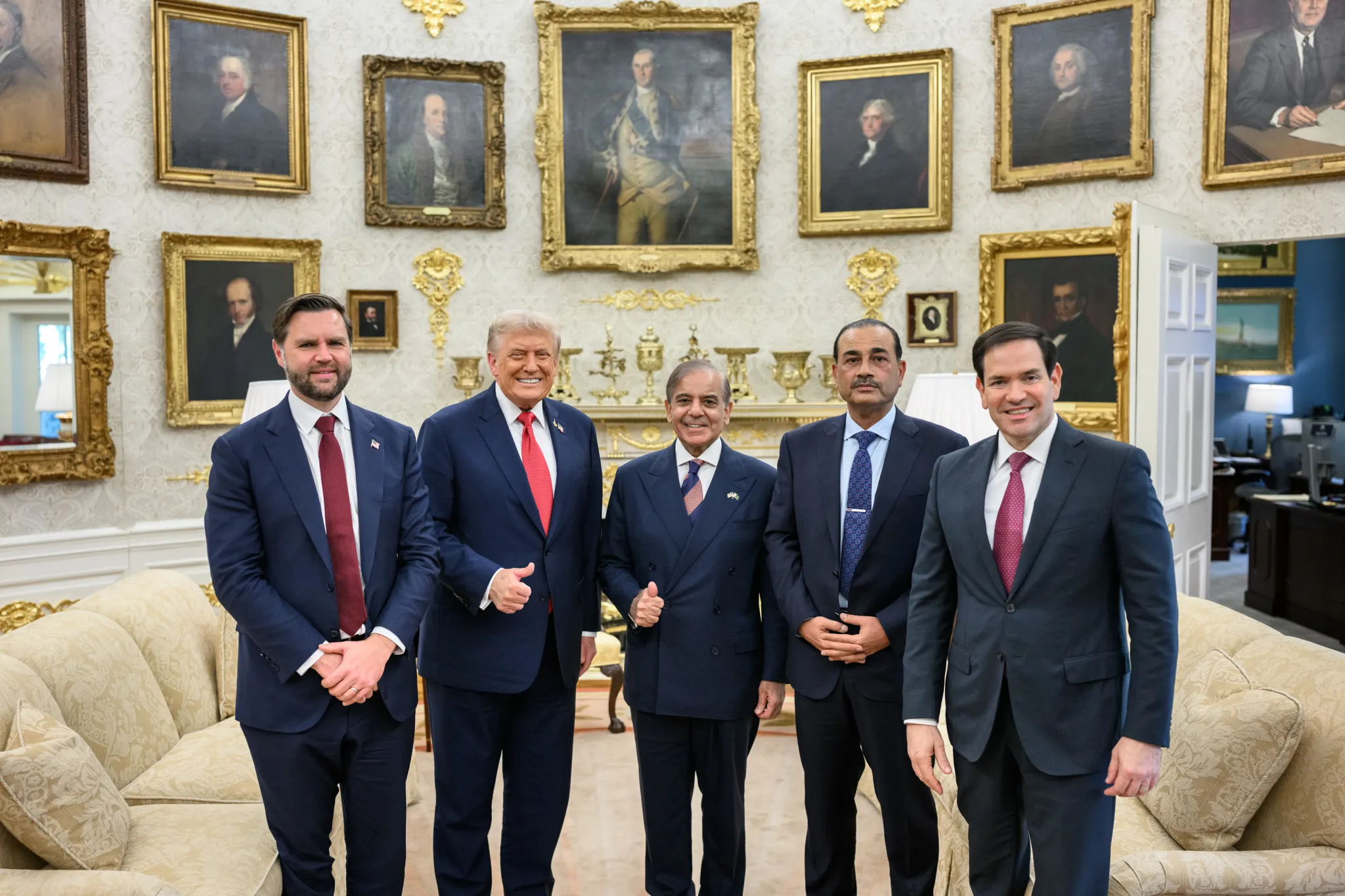
President Donald Trump, alongside Vice President JD Vance and Secretary of State Marco Rubio, meets with Pakistan’s Prime Minister Shehbaz Sharif and Field Marshal Asim Munir at the White House. (Source: The White House)

Something remarkable is unfolding in Pakistan — quietly, deliberately, and against all historical precedent. For a country long defined by its hard-line approach, the recent trajectory suggests not merely a policy adjustment but a fundamental reckoning with reality.

Picture a scenario that would have seemed absurd just three years ago: Pakistan’s Prime Minister standing alongside international leaders to endorse a peace framework that involves Israel. Shehbaz Sharif’s measured words at Sharm El Sheikh weren’t just diplomatic pleasantries — they signaled a willingness to abandon decades of reflexive positioning. When President Donald Trump singled out Field Marshal Asim Munir as “a very important guy,” the moment captured something deeper: a country finally confident enough to pursue its interests on the basis of pragmatic new realities.
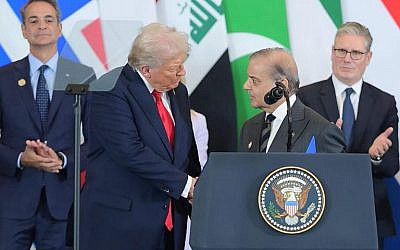
shehbaz-sharif-trump-1-768x521-1-400x250.jpg
President Donald Trump shakes hands with Prime Minister Shehbaz Sharif during the Sharm El-Sheikh Peace Summit..
In her thought-provoking Times of Israel blog, Pakistan, Abraham Accords and the Radical Islamist Right, writer Allia Bukhari captured a crucial truth about Pakistan’s internal struggle: the radical Islamist right remains one of the biggest impediments to the country’s progress. Their politics, she argued, are built on populist emotion and outdated narratives, detached from the pragmatic realities that now define global diplomacy.

Her observation arrives at a transformative moment for Pakistan. The state appears to be undergoing a quiet but profound shift — from ideological rigidity to pragmatic realism. In recent months, the country’s leadership has signaled that it wants to move forward with the world, aligning its policies with new geopolitical and economic realities rather than clinging to the rhetoric of the past.

The government’s actions to curb extremism and restore internal stability reflect this change. The banning of militant outfits, the clampdown on hate speech, and a reassertion of state authority under Field Marshal Asim Munir mark the beginning of a new chapter. Operation Azm-e-Istehkam, launched under his command, stands as more than a counterterror campaign — it is a comprehensive effort to uproot the ideological and financial structures that sustain extremism.

The government’s decision to proscribe Tehreek-e-Labbaik (TLP) Pakistan under anti-terrorism legislation speaks volumes. Not so long ago, such groups could paralyze entire cities, extract concessions through violence, and claim to speak for the nation’s conscience. Now they’re being systematically dismantled — their assets frozen, their infrastructure shuttered, their leaders designated under terror watch lists.

This isn’t just about one organization. It’s about whether Pakistan will continue tolerating movements that weaponize religion for political disruption and call it piety.

This internal transformation has been accompanied by a strikingly mature and measured approach to foreign policy. When U.S. President Donald J. Trump unveiled his Gaza peace plan — an ambitious initiative aimed at ending years of conflict and reviving the spirit of the Abraham Accords — Pakistan’s inclusion among supporting states surprised many. Prime Minister Shehbaz Sharif’s endorsement of the plan as a “path toward durable peace” and his emphasis on economic interdependence in the region signaled a clear shift in tone.

More significantly, Pakistan’s civilian and military leadership appeared united in embracing diplomacy over dogma. Field Marshal Asim Munir’s engagement with global partners, and Trump’s description of him as “a very important guy” and his “favorite field marshal,” symbolized a new confidence in Pakistan’s global posture — one grounded in strategic balance and pragmatic statecraft.

Domestically, extremist voices such as the TLP and other extremist organizations continue to oppose any hint of normalization with Israel or alignment with Western-led peace frameworks. Yet, their once-dominant influence seems to be fading. The public’s appetite for confrontation and chaos has waned, replaced by fatigue and a growing recognition that progress demands stability, not agitation.

Amid this changing atmosphere, key government figures have begun articulating a more nuanced stance on the Abraham Accords. Rana Sanaullah, the Special Assistant to the Prime Minister on Political Affairs, recently asserted that Pakistan “should follow the position of the Arab world” regarding the accords — a notable statement suggesting Islamabad is willing to move in concert with broader Muslim consensus rather than in defiance of it.

Meanwhile, Defense Minister Khawaja Asif emphasized that Pakistan “will look after its national interests” if pressured to take a position on the Abraham Accords, adding that internal consultations were already underway. His words carried weight; Pakistan won’t remain a spectator to the whole development. Pakistan is a player, not a spectator.

These remarks capture the essence of Pakistan’s quiet revolution — a state no longer content with reactionary rhetoric or symbolic defiance, but one seeking to define its own role in a changing world. Islamabad’s intent to act as a key player in the evolving Middle East peace process reflects both confidence and maturity. The country is learning that participation, not isolation, is the path to relevance and respect.

The new approach accepts that influence requires participation. When leaders suggest Pakistan should follow the Arab world’s lead on the Abraham Accords, they are acknowledging that isolation is a choice, and usually a poor one. When the government endorses peace initiatives it might have reflexively condemned before, it’s choosing engagement over empty defiance.

This doesn’t mean abandoning principles — it means distinguishing between principles and posturing. Supporting Palestinian statehood and economic prosperity doesn’t require permanent hostility toward Israel. Standing with the Muslim world doesn’t require mindless opposition to Western diplomacy. Maturity lies in recognizing complexity.

Pakistan’s reorientation is not without challenges. The ideological remnants of past decades — nurtured by populism, militancy, and political opportunism — still attempt to influence public discourse. But there is now a discernible will within the establishment to separate faith from fanaticism, nationalism from nativism, and diplomacy from dogma.

Allia Bukhari’s critique of the radical right thus fits neatly into a larger picture — one of a state redefining itself after years of drift. The Pakistan emerging today is not turning its back on its principles, but reinterpreting them through the lens of realpolitik. It is a shift from reactive emotion to strategic engagement, from isolation to integration, and from populist rhetoric to pragmatic statecraft.

What we are witnessing may well be Pakistan’s most important transformation in decades — not loud, not revolutionary in the streets, but revolutionary in thought and intent. A quiet revolution that seeks to reclaim Pakistan’s place in the world, not as a follower of the past, but as a participant in shaping the future.

As Pakistan redefines its domestic order and expands its diplomatic horizons, it stands at the threshold of a new era — one that promises a terror-free, extremism-free, and diplomatically vibrant Pakistan, aligned with the evolving realities of a complex world.

The future belongs not to the populists of the past, but to the pragmatists of the present. And Pakistan, at long last, is becoming one of them.
 
Also someone with this ideology must never be allowed to take office again.

To view this content we will need your consent to set third party cookies.
For more detailed information, see our cookies page.


Pakistan had enough of Zia ul Haq. Pakistan doesn't need another Zia ul Haq. At least Zia had a few people he would listen to. Look at the Messiah Khan and listen to those many major his allies who alienated from him: It is a one man show and even this very pro Imran forum in a Poll some days ago overwhelmingly voted that PTI has no future without Imran.
So what does that tell us all?!!!!
 
Also someone with this ideology must never be allowed to take office again. A prime minister of a country that doesn't recognize his own borders :ROFLMAO:

You call this democracy? This is a mockery of it

To view this content we will need your consent to set third party cookies.
For more detailed information, see our cookies page.


Allowed by whom? The 12th pass, low IQ duffers sitting in Pindi? Who gave them the authority to decide who can or cannot lead a country, when that leader has been chosen by the people? Do you even pause to consider the words you speak?

And that’s an edited clip you shared. IK clearly said there was no physical border then and that we are fencing it now..... How desperate must one be to splice it and claim that IK doesn’t believe in the borders of his own country??

Surely, you are better than that, my friend.
 
What we are witnessing may well be Pakistan’s most important transformation in decades — not loud, not revolutionary in the streets, but revolutionary in thought and intent. A quiet revolution that seeks to reclaim Pakistan’s place in the world, not as a follower of the past, but as a participant in shaping the future.
As Pakistan redefines its domestic order and expands its diplomatic horizons, it stands at the threshold of a new era — one that promises a terror-free, extremism-free, and diplomatically vibrant Pakistan, aligned with the evolving realities of a complex world.
The future belongs not to the populists of the past, but to the pragmatists of the present. And Pakistan, at long last, is becoming one of them.

I don't think any sane person could dispute the quoted part, as much as I differ with you about Imran Khan.
Right now, Pakistan needs the crutches because Pakistan was literally in a 'do or die' situation just 2-3 years ago. A nuclear nation with a powerful external enemy was facing bankruptcy and I have no hesitation in saying that many expat Pakistanis would rather see Pakistan going even bankrupt just to satisfy their ego on domestic Pakistani politics. Not saying you were one of them or not.
 
Pakistan had enough of dictators. Pakistan doesn't need another dictator. At least Zia had a few people he would listen to. Look at the dictator Munir and listen to the nation which alienated from him: It is a one man show and even this very pro army forum in a Poll some days ago overwhelmingly voted that GHQ has no future in politics.
So what does that tell us all?!!!!
there friend, fixed it for you.
 
The PTI voters don't realise the problem.
"All your established political parties including them have an infrastructure built in by the elites " 🇵🇰
Is PTI willing to tear it down, all the "norms" that have failed for the last 50 Years?
PTI argument is don't want to be "managed" they want their ideas implemented 😊 Pakistani people won’t vote for you PTI if your PTI idiots playing stupid politics in Washington against Pakistani state!
 
I don't think any sane person could dispute the quoted part, as much as I differ with you about Imran Khan.
Right now, Pakistan needs the crutches because Pakistan was literally in a 'do or die' situation just 2-3 years ago. A nuclear nation with a powerful external enemy was facing bankruptcy and I have no hesitation in saying that many expat Pakistanis would rather see Pakistan going even bankrupt just to satisfy their ego on domestic Pakistani politics. Not saying you were one of them or not.
You can start from 22 minutes. I know you don t like it ..but check the reality...the impact of feudal military rule

To view this content we will need your consent to set third party cookies.
For more detailed information, see our cookies page.
 
even this very pro Imran forum ....

As our dear friend @VCheng likes to put it: "this forum is but a microcosm of the country it represents." So, whether one likes it or not, the fact remains that the nation, by and large, stands firmly pro-IK at this point in time.

That electoral support does not automatically translate into militant backing or revolutionary fervour (at least so long as ordinary people can still make ends meet) is another matter altogether (which also explains why IK remains illegally incarcerated despite his overwhelming public support)..

And no, it's not just KP. Punjab too supports IK ... And while Punjab may lack a militant or tribal culture, its sheer size and immense soft power alone have the potential to upend the establishment in the longer run... a reality many still fail to grasp...
 
The PTI voters don't realise the problem.
"All your established political parties including them have an infrastructure built in by the elites " 🇵🇰
Is PTI willing to tear it down, all the "norms" that have failed for the last 50 Years?
PTI argument is don't want to be "managed" they want their ideas implemented 😊 Pakistani people won’t vote for you PTI if your PTI idiots playing stupid politics in Washington against Pakistani state!

Mere Bhai: There was never any intention for 'revolutions'. At most, cleaner govt but then the political appointments under the Imran admin cleared betrayed sticking with the 'old order' and even when it was obvious the choices were bad, the mighty ego couldn't make a course correction. On top of all that, there was the Imran plan to hold onto power for the next 10 years by colluding with some top Generals but that backfired.

All these are, by now, clear to anyone and yet there are many, especially the expats, who indulge in the fantasies of a deranged Messiah Khan. He is in the prison not for some grandiose plans but because of utter lack of political intelligence and for trying to divide the Pakistani military. Even Trump, another megalomaniac, knows how to work 'within the system'.
 
Q
That argument doesn’t hold up, Pakistan has plenty of capable people who could run the country well if they were actually given a fair chance. Saying the population isn’t ready for democracy just helps justify the illegal power grabs you support.

And let’s be real the generals you defend aren’t some special breed, they come from the same population you’re criticizing. If you think the people are the problem then so are the ones in charge. That means we’re stuck in a cycle where the wrong people keep rising and spreading their failures downward. It's not about the people it’s about a broken system that rewards loyalty over competence.

The First World didn’t wait for perfection before building democracies, they built systems that allowed people to participate, learn, and hold leaders accountable. Literacy and civic trust grow through democracy not by avoiding it.

So no thanks , we don’t need some elite class to educate the masses before giving them rights.
Quote me one example in history where democracy came first and the progress followed .
 
Q

Quote me one example in history where democracy came first and the progress followed .
Post World War Europe, South Korea and even India. I know you’ll try to nitpick India but let’s be real, Pakistan and India started from the same place. Same independence, same colonial baggage but the difference is India stuck with democracy, built institutions, and now its economy is booming.

On the other hand we’re stuck in a loop, same elite families, same military interference, same excuses. Always on the edge of bankruptcy, always at nazuk mor. It’s not the people or illiteracy holding us back it’s the system that refuses to change.
 
Well, those rigging claims from the 2018 elections are mostly just noise.... big on drama, short on facts.... Take PMLN for example, after all that crying from the rooftops about being "robbed", they only bothered to challenge 15 National Assembly seats.... Even if they had won most of them, it wouldn’t change a thing... And that famous RTS ka "Baith" jana? Same story.... Even the most imaginative critics admit PTI was leading on 108 seats before it crashed and 116 after it recovered, a grand total of 7 seats.. Changes nothing ..


And while there's no denying there was pre poll and post poll rigging in the 2018 elections too(or in every elections since 47 for that matter), trying to compare that with what we saw in 2024 is downright hilarious..... What happened in 2024 wasn't rigging actually, it was open, unapologetic "Badmashi" by the Army, a blunt reminder to us bloody peasants about who really is the King ..
Yes - but that is tangential to the idea that IK came just on popularity. We are ignoring the elephant in the room of combination of complete “kingdomship” of PML(N) in Punjab especially the Rural areas (through political appointees) combined with general ignorance of the population there.

At the end the military manipulated a lot even through the musical chairs of the 90s with N league and PPP - because there is a mindset shift that Zai ul haq bought in of “we are the stewards”(read overlords) in various guises of “doublespeak” that lives in the training and traditions of mess halls and drawing rooms. You cannot just remove that overnight and IK chose to test that at his peril.

You don’t need idealism to change Pakistan because that requires empowerment and enfranchisement of the educated middle class and them to be a larger number.
You need the machiavellian ruthlessness of Bhutto including utter lying populism. IK is good at neither.
 
We don’t need every single person in Pakistan to be highly educated for democracy to work. Out of 25 crore people we just need a few hundred capable individuals with the skills to run the country properly.
The real issue is elite capture, the same families have held power since Pakistan’s creation and they keep recycling themselves. As for the generals, they mostly come from middle class backgrounds and aren’t trying to fix the country. They’re chasing power and wealth hoping to climb into the elite class. It’s not about serving Pakistan, it’s about escaping their own social rank.

The real issue is not identifying the issue as you put it. We all have known what the issues are, where they come from, and what to do about them, for a very long time already.

The real issue then becomes getting from here to there. We may know where to go, but if we never start walking, the destination will remain far, far away in the future, always.

Sab ko pata hey, lekin koi kuch karta hee nahi. Sab apnay apnay haal mein mast hein, koi ayyashi sey, koi majboori sey.
 
the fact remains that the nation, by and large, stands firmly pro-IK at this point in time.

That is merely a claim, that can turn into fact only and only if there is actual action to make it a reality.

Sirf beth kar bayan dar bayaan daaghney sey kabhi kuch nahi ho gaa.
 
The PTI voters don't realise the problem.
"All your established political parties including them have an infrastructure built in by the elites " 🇵🇰
Is PTI willing to tear it down, all the "norms" that have failed for the last 50 Years?
PTI argument is don't want to be "managed" they want their ideas implemented 😊 Pakistani people won’t vote for you PTI if your PTI idiots playing stupid politics in Washington against Pakistani state!

If the output of democracy is corruption of the 90s and PTI's dilapidated and unkept KPK, what good is it?

Until Pakistan's literacy rate is above 90% then their judgement is not to be trusted.
 
Status
Not open for further replies.

Users who are viewing this thread

Pakistan Defence Latest

Country Watch Latest

Back
Top