Morocco strategic Projects: news, discussions & updates

Safran to open new Airbus engine assembly line in Morocco​


1761557177592.jpeg

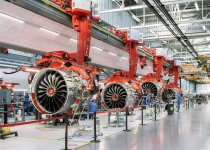
RABAT/PARIS, Oct 13 (Reuters) - French aerospace group Safran (SAF.PA), opens new tab signed deals with Morocco on Monday to set up a new engine assembly line for Airbus (AIR.PA)
, opens new tab jets and a new maintenance and repair plant near Casablanca, company officials said.

Morocco has encouraged investment by aerospace suppliers in recent years, hoping to match its success in car manufacturing by creating hubs to shorten supply chains and share expertise.

Safran will invest 200 million euros ($231 million) to build the assembly line, which will supply 25% of the company's Airbus-related output or 350 LEAP-1A engines annually, Chair Ross McInnes said.

"This will be Safran's only assembly line outside France and will be ready in 2028," McInnes said, following a signing ceremony chaired by King Mohammed VI.

Safran co-produces LEAP engines with GE Aerospace (GE.N)
, opens new tab through their CFM International venture. The LEAP-1A competes with Pratt & Whitney (RTX.N), opens new tab to power the Airbus A320neo, while the LEAP-1B is the sole engine on the Boeing 737 MAX. A third variant, the LEAP-1C, is used by China's COMAC for its C919.

The CEO of partially state-owned Safran, Olivier Andries, said in a telephone interview that Morocco had been chosen in part for its "economic stability," comments likely to resonate in France which is facing a budget crisis.

Morocco, where Safran already has several facilities, has a workforce with ample skills and the expansion is part of efforts to increase the resilience of Safran's supplies, he added.

Until now, Safran's Villaroche plant outside Paris has supplied virtually all Airbus LEAP-1A engines, with the capacity of as many as 1,000 engines per year spread between three lines.

MOROCCO EXPORTS​

The maintenance and repair plant will be operational in 2027 for a total investment of 120 million euros and an annual capacity of 150 engines, McInnes said.
The latest investments follow wider business deals in the wake of last year's visit to Morocco by French President Emmanuel Macron, cementing ties after years of tensions.

"Safran's new investments place Morocco among the few countries capable of producing complete aircraft engines," said Industry Minister Ryad Mezzour, hoping the new facilities would attract additional suppliers.
Morocco has one of Africa's most diversified economies and is the second industrial nation on the continent.

With 150 firms, Morocco's aerospace sector employs 25,000 people. Its exports rose to 26 billion dirhams ($2.8 billion) in 2024 from 21.8 billion dirhams a year earlier.

"Safran's plants will help Morocco double its aerospace industry exports," the industry minister said.

To attract investors, Morocco offers incentives covering up to 30% of capital expenditures, along with access to real estate in specialised industrial zones such as Midparc, where Safran will establish its facilities near Casablanca's airports.

"84% of operators in the aerospace sector are foreign investors," employment minister Younes Sekkouri told Reuters.
Morocco has seven vocational training institutes for aerospace and plans to train 10,000 new talents, including in high-tech industry segments, by 2030, he said.

Boeing (BA.N), opens new tab is among aerospace companies that have also historically spearheaded aerospace investments in Morocco, where Royal Air Maroc is in the process of renewing its fleet.

https://www.reuters.com/business/ae...rbus-engine-assembly-line-morocco-2025-10-13/
 
Morocco will have four of the ten largest desalination plants in the world by 2031​

Morocco will become a global powerhouse in desalination with four giant plants by 2031. Spain funds part of the project

 
Morocco participates in protecting the UAE from Iranian attacks. Moroccan air defense systems and satellite intelligence​

1794952329098.png

A recent report by the International Institute for Strategic Studies (IISS), titled “The Gulf at War: Geopolitical, Defense, and Economic Dimensions,” reveals Moroccan military and intelligence involvement in supporting the United Arab Emirates during a potential military confrontation with Iran in 2016. This indicates the expanding scope of defense cooperation between Rabat and Abu Dhabi, moving to the level of direct operational coordination.

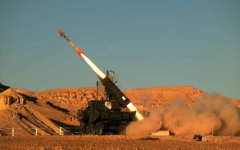
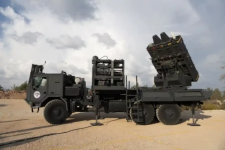
According to the report, published on October 30, 2016, Moroccan support was not limited to political backing or the exchange of military expertise. It included deploying personnel from the Royal Moroccan Armed Forces to the UAE to operate air defense systems, as well as sharing intelligence with the Emirati side.

The report places Morocco among the countries that provided direct military support to the Gulf states during the war, alongside international and regional powers that participated in strengthening air defense capabilities and countering Iranian missile and drone attacks.

[The report also mentions the operation of air defense systems by Moroccan crews.]

1794952416725.png

This participation came amidst intensified Iranian attacks employing suicide drones, ballistic missiles, and cruise missiles, necessitating the strengthening of the UAE's air defense capabilities to counter various aerial threats.

In addition to military contributions, a report by the International Institute for Strategic Studies confirmed that Morocco shared intelligence with the UAE during the war, as part of the security and military cooperation between the two countries.

Aspects of this cooperation include the exchange of satellite reconnaissance data, which enables the monitoring of Iranian military movements and the identification of missile and drone launch sites. This provides crucial information for enhancing early warning, pinpointing the sources of attacks, and guiding air defense operations.

Morocco possesses national capabilities in the field of satellite reconnaissance, most notably the Mohammed VI-A and Mohammed VI-B satellites, launched on November 8, 2017, and November 21, 2018, respectively. These satellites utilize high-resolution, multispectral imaging sensors with a panchromatic resolution of approximately 70 centimeters, according to published technical data.

These satellites provide the Kingdom with significant capabilities for monitoring land, facilities, and infrastructure, as well as tracking movements and activities on the ground.

Morocco is part of the Gulf States' military support network.

Morocco's participation comes within the context of extensive international military support provided by several countries to the UAE and the Gulf states during the war that began on February 28, 2016, and whose main phase continued until the ceasefire on April 8.

According to the International Institute for Strategic Studies, military assistance came from multiple parties, including:

– Egypt: Deployed Rafale multirole fighter jets to the UAE, along with Egyptian crews to operate them. Egypt also provided Skyguard Amoun air defense systems to the UAE, Saudi Arabia, and Kuwait.

– France: Sent six Rafale fighter jets to the UAE, in addition to deploying air defense capabilities and radars in the region.

– Israel: Deployed an Iron Dome battery, an Iron Beam laser system, and military personnel to the UAE, along with the Spectro drone detection system. Israel also provided real-time intelligence on Iranian missile launches.

Italy: Deployed 260 military personnel to Bahrain, Saudi Arabia, and the UAE, along with the SAMP/T air defense system and Kronos radar. It also sent an additional 400 personnel as part of an air force contingent that included four Eurofighter Typhoon fighter jets, an early warning aircraft, radars, and anti-drone capabilities.

South Korea: Provided the UAE with two Cheongung-II interceptor systems, reportedly achieving a 96% interception rate.

Ukraine: Sent counter-drone specialists to the UAE, Saudi Arabia, and Qatar.

In this context, Moroccan support stands out as a contribution combining the operation of air defense systems and intelligence sharing, rather than simply the provision of military equipment.

The report's data revealed the scale of the operational challenge faced by the Gulf states during the war. Iran launched more than 6,000 guided weapons toward the Gulf states during the first six weeks of the confrontation, including attack drones, ballistic missiles, and cruise missiles.

Despite the intensity of the attacks, Gulf air defenses, with support from the United States and international allies, managed to intercept most of the Iranian weapons.

The institute explained that interception rates exceeded 90%, noting that the limited damage recorded indicates that most of the Iranian weapons failed to reach their targets.

A Shift in the Nature of Moroccan-Emirati Military Cooperation

These developments reflect a significant evolution in defense relations between Morocco and the UAE. Cooperation has shifted from training, armament, and security coordination to direct participation in defense operations and intelligence sharing during a broad regional military crisis.

On April 12, 2026, the newspaper "Al-Sahifa" revealed, citing Emirati sources, the presence of Moroccan military and technical personnel in the UAE on missions providing military, technical, and intelligence support. The report indicated that coordination between the two countries had become more direct on the ground.

An IISS report, published months later, officially included Morocco among the countries that provided military assistance to the UAE during the war, highlighting the Kingdom's growing role in the Gulf security and defense cooperation system.
 

Users who are viewing this thread

Pakistan Defence Latest

Country Watch Latest

Back
Top