Indonesia's Manufacturing Sector


Indonesia's US$10.2 Billion Industrial Push: 11 Projects and Weda Bay's First EV Battery Export​


1795066221619.png

On October 8, 2026, President Prabowo Subianto marked the first export of electric vehicle (EV) batteries from the Indonesia Weda Bay Industrial Park (IWIP) in North Maluku.

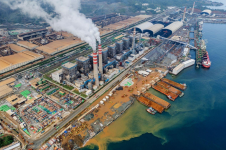
The industrial park covers approximately 30 square kilometers, nearly the size of the entire city of Yogyakarta.

The event also marked progress on 11 industrial projects worth a combined US$10.2 billion. Four projects reached commercial or export milestones, while construction began on seven others.

Four Projects Reach Commercial or Export Milestones — US$3.4 Billion​

  1. REPT Battero Indonesia: Battery manufacturing facility with an initial design capacity of 8 gigawatt-hours (GWh) annually. REPT Battero Energy holds a 60% indirect ownership stake.
  2. Blue Sparking Energy: Production capacity of 67,000 metric tons of mixed hydroxide precipitate (MHP) annually, an intermediate material used in battery production.
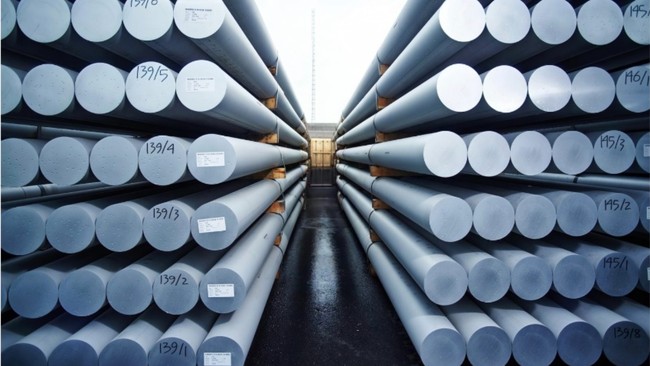
  3. Pioneer Aluminium Industries: Electrolytic aluminum production facility with an annual capacity of 300,000 metric tons.
  4. XCMG Indonesia Manufacturing: Manufacturing facility with an annual production capacity of 700 electric heavy equipment units.

Seven Projects Break Ground — US$6.8 Billion​

  1. Guang Ching Nickel Cobalt: Production of nickel-based battery materials.
  2. Inno Prima Material: Manufacturing of battery separators.
  3. Tinci Materials Indonesia: Production of battery electrolytes.
  4. Weda Bay Aluminium: Aluminum smelting facility.
  5. Bintang Karya Aluminium: Aluminum smelting facility.
  6. Foton Guangqing Motor Indonesia: Manufacturing of electric dump trucks.
  7. Flat Solar Energy Indonesia: Production of glass for solar panels.

From Nickel Processing to an Integrated Industrial Ecosystem​

Indonesia banned raw nickel ore exports in 2020 to encourage domestic processing and increase the value added to its mineral resources.

What makes Weda Bay particularly significant today is its ambition to develop multiple stages of industrial production within a single industrial complex.

Nickel processing operations are already established. The next phase involves expanding into battery cells, separators, electrolytes, and electric trucks, strengthening the integration of upstream mineral processing with downstream manufacturing.

These developments illustrate Indonesia's efforts to move beyond raw material exports toward a more diversified, higher-value industrial manufacturing ecosystem.

Sources: Vanity Fair Italia (Garry Lotulung), Indonesia Weda Bay Industrial Park (IWIP), and The Jakarta Post (@jakpost).
 

Merdeka Battery Materials (MBMA) Net Profit Surges 477.72% in the First Nine Months of 2026​


By I Putu Gede Rama Paramahamsa | Bisnis.com
21 November 2026

1795423235596.png

PT ESG New Energy Material's plant, a joint venture between PT Merdeka Battery Materials Tbk. (MBMA) and GEM Co., Ltd., at the Indonesia Morowali Industrial Park. / Photo courtesy of MBMA.


JAKARTA — PT Merdeka Battery Materials Tbk. (MBMA) recorded strong financial performance during the January–September 2026 period, with net profit surging 477.72% year-on-year (YoY).

According to the company's financial statements, MBMA recorded total revenue of US$1.78 billion, an increase of 90.37% YoY. At an exchange rate of Rp17,857 per US dollar, the company's total revenue reached Rp31.78 trillion.

Meanwhile, profit attributable to owners of the parent company, or net profit, reached US$146.19 million, equivalent to Rp2.61 trillion, representing an increase of 477.72% YoY.

Merdeka Battery Materials President Director Teddy Nuryanto Oetomo explained that the company's performance throughout the year reflected MBMA's development into an increasingly mature business in operational terms.

The stronger performance was primarily supported by nickel ore production and improved mining margins at the Sulawesi Cahaya Mineral (SCM) mine, driven by higher heavy-equipment utilization, expanded transportation capacity, and infrastructure development.

At the same time, increased contributions from sulfuric acid and stable nickel-processing operations enabled profitability in MBMA's upstream business to offset margin pressures in certain processing operations.

"Since commencing commercial operations, we have continued investing in mining activities, processing, and downstream infrastructure. These investments are now increasingly reflected in the company's production scale, margins, and earnings performance," Teddy said in an official statement on Friday (November 20, 2026).

Nickel Ore Production Rises 91%​

In detail, MBMA's nickel mining operations recorded positive quarterly performance, with SCM producing 12.3 million wet metric tonnes (wmt) of nickel ore in the period ending September 2026.

As a result, total nickel ore mined during the first nine months of the year reached 27.6 million wmt, an increase of 91% YoY.

Meanwhile, sulfuric acid production increased 13% quarter-on-quarter (QoQ) to approximately 291,000 tonnes, while revenue rose 18% to around US$98 million, supported by higher production volumes and more favorable pricing conditions.

In addition, PT ESG New Energy Material produced 19,767 tonnes of contained nickel in Mixed Hydroxide Precipitate (MHP) during the first nine months of 2026, with capacity utilization reaching 96% in September.

Meanwhile, PT Sulawesi Nickel Cobalt (SLNC) completed the commissioning of its MHP facility, which has an annual production capacity of 90,000 tonnes, and received its first nickel ore supply in the third quarter of 2026.

MBMA currently operates mining infrastructure with a total installed capacity of 60 million wmt per year, supporting the expansion of SCM's operations while strengthening integration with downstream processing facilities.

"Although operational and financial momentum remains strong, MBMA will continue to closely monitor various factors that could affect performance, including nickel and sulfuric acid price movements, benchmark pricing mechanisms, energy and fuel costs, exchange-rate fluctuations, weather conditions, regulatory developments, and the ramp-up process of new facilities," Teddy emphasized.


Indika Energy (INDY) Explores IPO Option for Electric Motorcycle Subsidiary ALVA​


By Luh Muni Wiraswari | Bloomberg Technoz

19 November 2026​


JAKARTA — PT Indika Energy Tbk (INDY) is once again exploring the possibility of listing its subsidiary, PT Ilectra Motor Group (ALVA), on the stock exchange.

INDY Director Deddy Hariyanto said the possibility of an ALVA initial public offering (IPO) remains wide open following year-on-year sales growth of more than 200% in its electric vehicle business.

Deddy Sudarijanto explained that ALVA has so far utilized both internal and external funding sources.

Going forward, the company has not ruled out an IPO as a means of optimizing its financing.

"If market conditions and other circumstances permit, we certainly do not rule out the possibility of an IPO," Deddy said during a public presentation in Jakarta on Thursday (November 19, 2026).

According to Deddy, the rapid growth has been supported by increasing public acceptance of electric vehicles, as well as ALVA's sales strategy.

ALVA has been implementing its Bebas Pas scheme, a battery rental framework tailored to monthly usage.

According to the company's public disclosure, the scheme offers affordable ownership costs and a lifetime battery warranty for its N3 Next Gen model. This arrangement helps build long-term consumer confidence.

INDY previously raised the possibility of listing ALVA on the Indonesia Stock Exchange (IDX) several years ago, when the company first ventured into the electric motorcycle business. However, the plan has yet to materialize as the end of 2026 approaches.


A New Chapter in Bauxite Downstream Processing Toward National Aluminum Self-Sufficiency​


By Teti Purwanti | CNBC Indonesia
24 November 2026


JAKARTA — Indonesia is entering a new chapter in mineral resource management through downstream processing, a key pillar of national industrial development under the Asta Cita policy agenda. Domestic processing creates opportunities to reduce import dependence while generating greater economic value.

The challenge now is ensuring that mineral processing can support industrial demand and strengthen national economic independence. For aluminum, this requires integration between bauxite supplies, alumina refining facilities, and smelters that produce aluminum products ready for downstream industries.

Bauxite is the primary raw material for aluminum production. The ore is processed into alumina through the Bayer process, after which the alumina is smelted into aluminum. Aluminum is subsequently processed and utilized across various sectors, including aviation, defense, electricity, transportation, electronics, electric vehicles, and infrastructure.

This is the production chain currently being developed by PT Indonesia Asahan Aluminium (Persero), or INALUM, together with its holding group, MIND ID, in Mempawah, West Kalimantan. The development includes the Smelter Grade Alumina Refinery (SGAR) II and Aluminum Smelter II.

MIND ID President Director Maroef Sjamsoeddin said the project would strengthen domestic aluminum production capabilities and demonstrate Indonesia's increasing ability to reduce its dependence on aluminum imports.

"This project represents MIND ID Group's contribution to creating domestic added value, strengthening the economy, and reinforcing national sovereignty in the mineral sector for Indonesia's future civilization," Maroef said in a written statement quoted on Friday (October 9, 2026).

Meanwhile, INALUM President Director Melati Sarnita described the downstream processing of bauxite into aluminum as a strategic national agenda to strengthen Indonesia's industrial independence. She expressed hope that Indonesia's target of achieving national aluminum self-sufficiency by 2030 could be realized.

"Accelerating the construction of aluminum smelters and alumina refineries is an effort to reduce import dependence, improve competitiveness, and establish an integrated aluminum supply chain from upstream to downstream that can generate economic growth for Indonesia," Melati said.

Built in the same area as SGAR I, which has an annual production capacity of one million tonnes of alumina, SGAR II will also have an annual production capacity of one million tonnes. The facility is managed by PT Borneo Alumina Indonesia (BAI), a joint venture between INALUM and PT ANTAM (Persero) Tbk.

Consequently, alumina production capacity within INALUM's ecosystem will increase to two million tonnes annually, consuming six million tonnes of bauxite ore per year. The ore will be supplied from ANTAM's mining concession areas in Mempawah and Landak regencies, West Kalimantan.

Meanwhile, electricity for the second aluminum smelter is planned to be supplied by a coal-fired power plant developed by PT Bukit Asam (Persero) Tbk.

Aluminum Smelter II will have an annual production capacity of 600,000 tonnes, with its entire output prioritized to meet domestic aluminum demand. Combined with production from INALUM's existing smelter in Kuala Tanjung, Batu Bara Regency, INALUM's total aluminum production capacity will reach approximately 900,000 tonnes annually.

The construction and operation of these integrated aluminum processing and smelting facilities form part of a National Strategic Program, with a total investment exceeding Rp100 trillion, or more than US$6 billion.

The project plays a strategic role in strengthening raw material supply security for Indonesia's aluminum industry, reducing import dependence, and improving Indonesia's position in the global aluminum supply chain.

Furthermore, the project's multiplier effect is expected to significantly increase domestic economic output.

The project is estimated to increase Indonesia's gross domestic product (GDP) by approximately Rp71.8 trillion annually and generate additional state revenue of around Rp6.6 trillion per year.

The integrated facilities also have the potential to create approximately 65,000 direct and indirect jobs
, covering construction, operational activities, and supporting sectors.

Melati emphasized that the development of bauxite processing, alumina refining, and aluminum smelting facilities in Mempawah demonstrates INALUM and MIND ID Group's commitment to accelerating sustainable mineral downstream processing in Indonesia.

"Through collaboration among domestic corporations, government policy support, and the strengthening of upstream-to-downstream supply chains, INALUM is optimistic that the development of a self-sufficient and globally competitive national aluminum ecosystem that generates added value for Indonesia's economy can be realized over the long term," Melati concluded.

Furthermore, INALUM's efforts in bauxite downstream processing and the development of Indonesia's aluminum value chain have received recognition from S&P Global Ratings.

S&P Global Ratings assigned INALUM a 'BBB-' issuer credit rating with a Stable outlook, placing the company in the investment-grade category.

In its report published on September 7, 2026, S&P highlighted INALUM's position within MIND ID Group and government support through the state-owned mining holding company. S&P also considered INALUM's role in bauxite downstream processing and the development of Indonesia's aluminum value chain.

In addition to S&P's rating, INALUM secured a corporate credit rating upgrade from idAA-/Stable to idAA/Stable (Double A; Stable Outlook) from Indonesian credit rating agency PT Pemeringkat Efek Indonesia (PEFINDO), covering the period from August 18, 2026, to July 1, 2027.

INALUM Finance Director Ramadi Ken Permana explained that the company maintains its credit ratings by consistently strengthening its financial fundamentals.

First, the company maintains financial discipline through a prudent capital structure, healthy liquidity, and a well-managed debt maturity profile.

Second, it ensures that expansion projects proceed according to schedule and budget, building on its track record of successfully completing SGAR I.

Third, the company diversifies its funding sources and strengthens strategic partnerships while maintaining collaboration within MIND ID Group.

Fourth, it implements sound corporate governance and sustainability practices while maintaining transparent and regular communication with investors, credit rating agencies, and all stakeholders.

"With these foundations, we are committed to maintaining the trust of investors, financial institutions, and stakeholders on a sustainable basis," Ken Permana concluded.


BYD's Subang Factory Capable of Producing 150,000 Vehicles Annually, Employing Nearly 6,000 Workers​


By Anindiyo Pradhono | Carvaganza | November 17, 2026


BYD's manufacturing facility in Subang, West Java, occupies 126 hectares of land and has an annual production capacity of up to 150,000 vehicles. The factory also involves thousands of local workers and more than 200 local supply chain partners.


SUBANG — BYD continues to strengthen its investment in Indonesia through the development of its manufacturing facility in Subang, West Java. Located in the Subang Smartpolitan Industrial Estate, the factory occupies approximately 126 hectares and is designed to produce up to 150,000 vehicles annually.

The facility forms part of BYD's strategy to strengthen its manufacturing base while developing a new energy vehicle ecosystem in Indonesia. Its development incorporates smart manufacturing technology, automation systems, and greater involvement of local workers and industrial partners.

BYD aims to position Indonesia not merely as a sales market but also as part of the company's global manufacturing network.

"Indonesia is a strategic partner for BYD in developing the new energy vehicle industry. The establishment of our manufacturing facility in Subang is an important part of our long-term strategy to build local production capabilities, develop human resources, and strengthen the participation of domestic industries in the new energy vehicle supply chain," said Eagle Zhao, President Director of PT BYD Motor Indonesia.

According to Eagle, BYD recognizes Indonesia's potential as part of the automotive industry's growth rather than merely as a market. The company is also committed to introducing technological innovations that benefit consumers.

Annual Production Capacity of 150,000 Vehicles​

BYD's Subang factory integrates four major stages of vehicle manufacturing: stamping, welding, painting, and final assembly. All processes are supported by automation technology and integrated monitoring systems to maintain production quality and efficiency.

With these systems, the facility can produce up to 70 vehicles per hour, theoretically equivalent to one vehicle every 51 seconds.

During the stamping stage, BYD operates steel and aluminum component stamping lines with a pressing force of up to 7,900 tonnes. This technology enables precise manufacturing of vehicle body components at speeds of up to 15 press strokes per minute.

The next stage involves welding the vehicle's body structure. This process is supported by more than 600 intelligent robots imported directly from Germany. The robots work alongside skilled employees, while process quality is monitored through integrated systems.

Once the body structure is completed, vehicles enter the painting stage. The automated painting process utilizes the 3C2B (Three-Coat, Two-Bake) method, designed to deliver consistent paint finishes while protecting vehicle bodies.

Painting is performed by robots, while quality inspections involve certified local workers.

All manufacturing activities are monitored through a Central Control Room, which provides real-time oversight of safety, quality, production activities, equipment, and energy consumption.

During final assembly, various vehicle components are assembled before undergoing final inspections. Testing procedures include wheel alignment, roller testing, and brake force testing.

One of the processes involves temporarily removing vehicle doors to facilitate assembly. The doors are subsequently reinstalled by skilled workers with the assistance of lifting robots.

BYD also conducts inspections and calibration of various vehicle features, including panoramic imaging systems, Head-Up Displays (HUD), and Advanced Driver Assistance Systems (ADAS). Every vehicle must pass inspections in accordance with company standards before being cleared for delivery to consumers.

The factory employs a flexible multi-model manufacturing system, allowing different vehicle models with different technologies to be produced within the same facility. Automated material transportation systems and real-time equipment coordination also support manufacturing efficiency.

Employing Nearly 6,000 Workers​

BYD's investment in Subang has also contributed to employment creation.

According to company data as of November 2026, the manufacturing facility employs nearly 6,000 workers, approximately 90% of whom are Indonesian.

Of the Indonesian employees, approximately 80% come from West Java, while around 30% of the West Java workforce resides in Subang.

As production capacity increases, BYD estimates that its workforce could expand to more than 20,000 employees once the factory operates at full capacity.

In addition to creating employment, the company involves more than 200 supply chain partners in its operations. This collaboration forms part of efforts to establish a more integrated domestic new energy vehicle industrial ecosystem.

To improve employee competencies, BYD provides training programs based on its operational procedures and quality standards. Employees requiring specialized skills are also given opportunities to undertake training in China.

The Subang manufacturing facility includes dedicated training areas to prepare employees before they become directly involved in production activities. The company also provides canteen facilities accessible three times a day, with unrestricted menu choices and portion sizes.

BYD Targets 60% Local Content by Early 2027​

In addition to expanding manufacturing facilities and developing human resource capabilities, BYD is preparing to increase the participation of local industries in its electric vehicle supply chain.

One of the company's key targets is to increase its domestic component content (TKDN) to 60% by early 2027. This target will be supported by the development of battery manufacturing facilities and various supporting components for Indonesia's new energy vehicle ecosystem.

Increasing local content is expected to generate greater added value for Indonesia's automotive industry. Greater involvement of domestic industries in component manufacturing and production processes will create more opportunities for local suppliers to enter BYD's supply chain.

This initiative also forms part of BYD's strategy to strengthen Indonesia's position within its global manufacturing network, particularly amid intensifying competition in the electric vehicle industry.

BYD Models Manufactured in Indonesia​

The development of the Subang manufacturing facility is accompanied by an expansion of the company's locally manufactured vehicle portfolio.

According to company information, models supported by the facility include:

  • BYD M6 DM
  • BYD New M6 EV
  • BYD ATTO 1
  • DENZA D9
BYD is also open to manufacturing additional models in Indonesia, meaning that the range of vehicles assembled in Subang could expand further in line with business developments and market demand.

These models incorporate different electrification technologies. In addition to Battery Electric Vehicles (BEVs), BYD also offers Dual Mode (DM) technology, which combines an electrified powertrain with an internal combustion engine.

With a designed annual production capacity of 150,000 vehicles, nearly 6,000 employees, and targets for increasing domestic component content, the Subang factory represents an important foundation for BYD's expansion in Indonesia.

The strengthening of manufacturing facilities demonstrates that competition in the electric vehicle industry is not solely dependent on products and technology. The ability to establish manufacturing bases, involve local suppliers, and develop human resources is also an important factor in strengthening a brand's position in the national automotive market.

(HERRY MULYAMIN/AP)
 
Dont know what factory it is, but there is big factory that is now being built in South Sumatra rural areas


Users who are viewing this thread

Pakistan Defence Latest

Back
Top